
 Worksheets
Geomorphology and Geologic Forces
Total questions: 62
Worksheet time: 31mins
What is the study of the relief features of the earth's crust called?
Geology
Geomorphology
Volcanology
Erosion
Fill in the blank: There are three primary geologic forces that continually alter the planet’s surface: Diastropism, Erosion, and _________.
Volcanism
Sedimentation
Metamorphism
Weathering
Which of the following is NOT one of the three primary geologic forces that continually alter the planet’s surface?
Diastropism
Erosion
Volcanism
Photosynthesis
Fill in the blank: _________ is one of the three primary geologic forces that continually alter the planet’s surface, along with Erosion and Volcanism.
Diastropism
Sedimentation
Weathering
Deposition
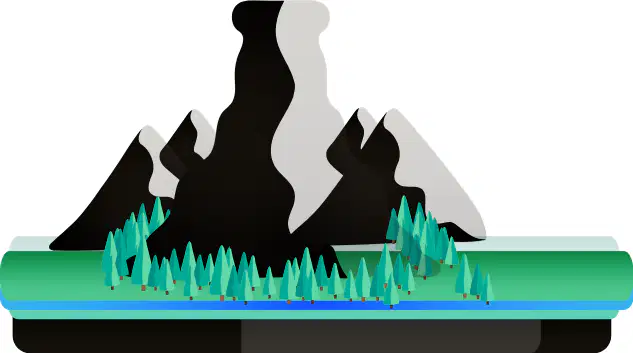
What does diastropism refer to?
The movement of water in the ocean
The vertical and horizontal movement of the crust that typically produces mountains
The rotation of the earth
The formation of clouds

Diastropism is characterized by the large movement of part of the earth’s _____?
crust
core
mantle
atmosphere
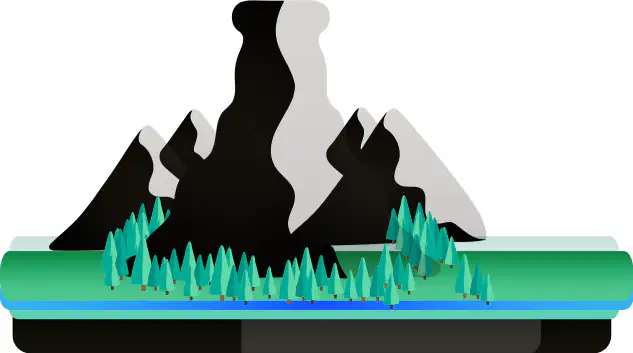
Diastropism can occur due to internal pressures.
True
False
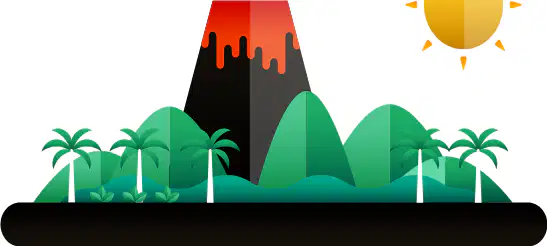
What is erosion? Fill in the blank: Erosion is the physical removal of ______ or wearing down of landmasses by geomorphic agent such as running water, glacial ice, and wind.
rock
water
air
plants

Which of the following is NOT a geomorphic agent that causes erosion?
Running water
Glacial ice
Wind
Fire
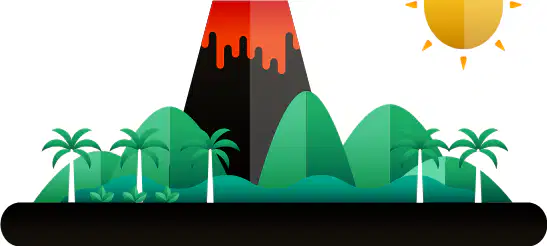
What does weathering refer to? Fill in the blank: Weathering refers to the decomposition of ______ and other materials, which are exposed to the surface of the earth and come in contact with the atmosphere.
rocks
plants
water
clouds
What is another name for volcanism?
Volcanicity
Erosion
Sedimentation
Metamorphism
Which of the following is NOT associated with volcanism?
A) Volcanoes
B) Geysers
C) Fumaroles
D) Tornadoes
Volcanism is the phenomenon related to various processes associated with the surface discharge of magma or hot water and steams including volcanoes, geysers, fumaroles, and hot springs.
True
False

What produces the processes associated with volcanism?
The strong heat source found in the underground.
The movement of ocean currents.
The rotation of the Earth.
The presence of surface winds.
Two features associated with volcanism are:
Lava flows and volcanic ash
Sand dunes and coral reefs
Glaciers and fjords
Caves and sinkholes
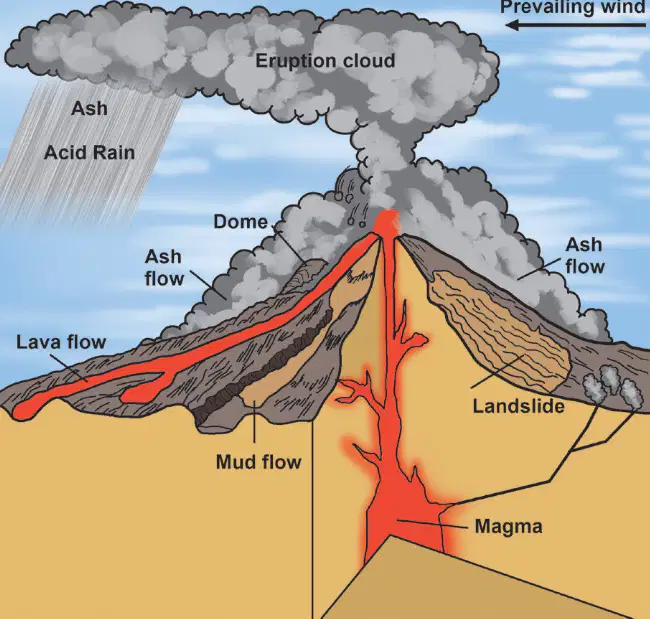
Fill in the blank: A ______ is a triangle shaped hill formed as material from volcanic eruptions piles up around the volcanic vent, or opening in Earth’s crust.
Cone
Crater
Plateau
Valley
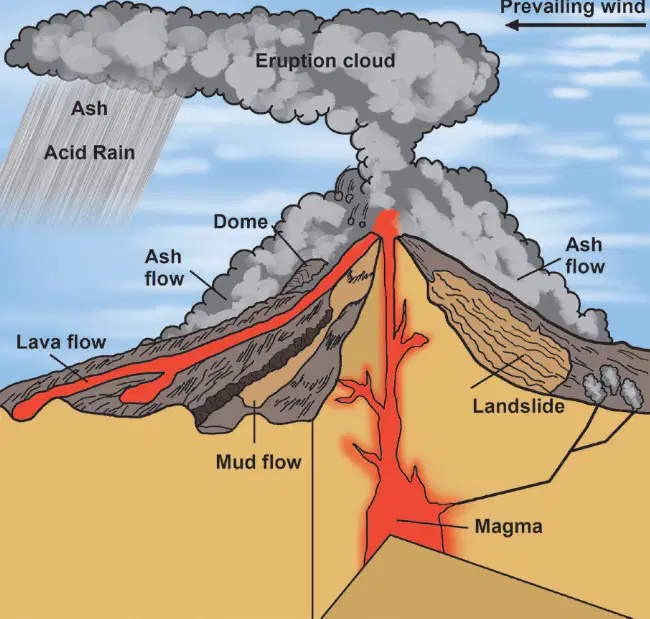
Fill in the blank: A ______ is an opening in Earth’s surface through which volcanic materials escape.
Vent
Crater
Fault
Basin
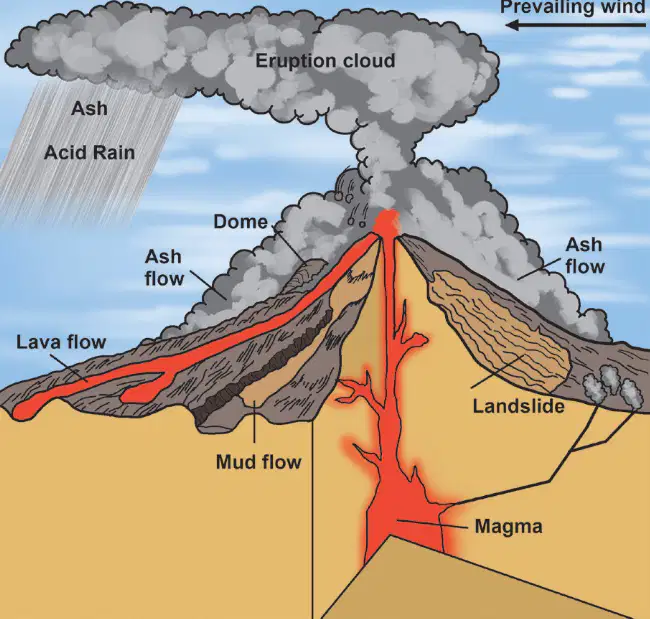
What is a large pool of liquid rock beneath the surface of the Earth called?
Magma Chamber
Lava Lake
Crustal Plate
Sedimentary Basin
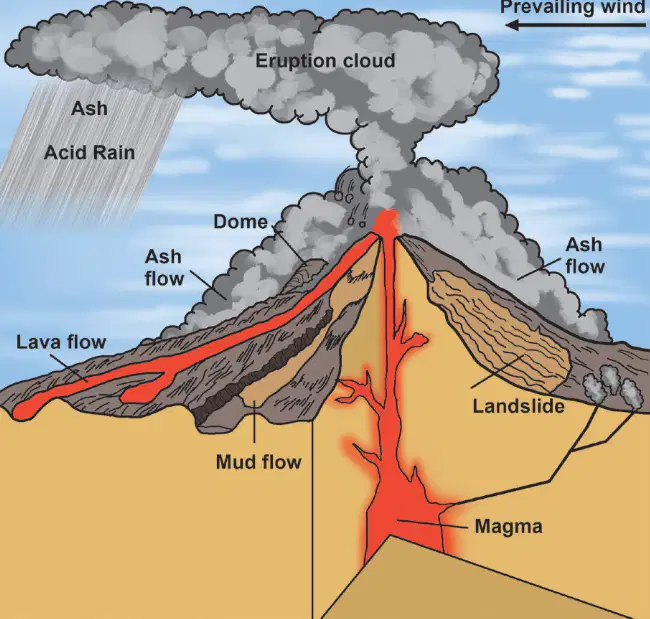
What is a bowl-shaped depression, or hollowed-out area, produced by the impact of a meteorite, volcanic activity, or an explosion called?
Crater
Valley
Plateau
Ridge
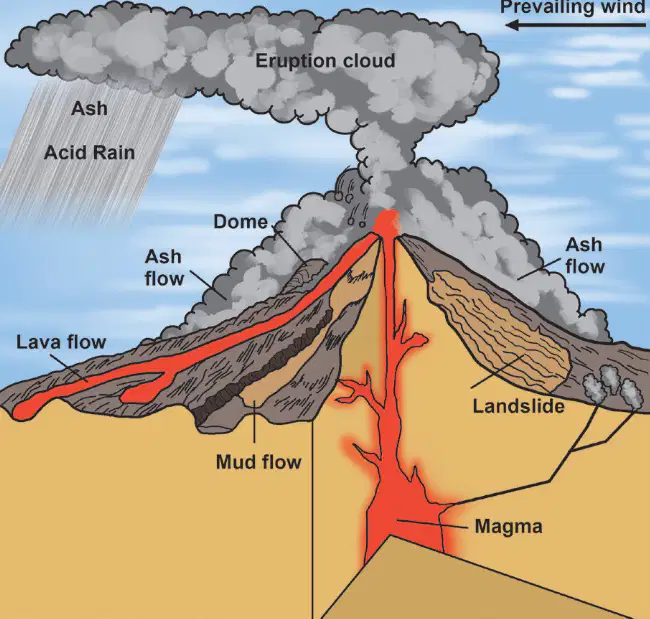
What is a caldera? Fill in the blank: A caldera is a volcanic feature formed by the collapse of a volcano into itself, making it a large, special form of volcanic _______.
crater
mountain
valley
island
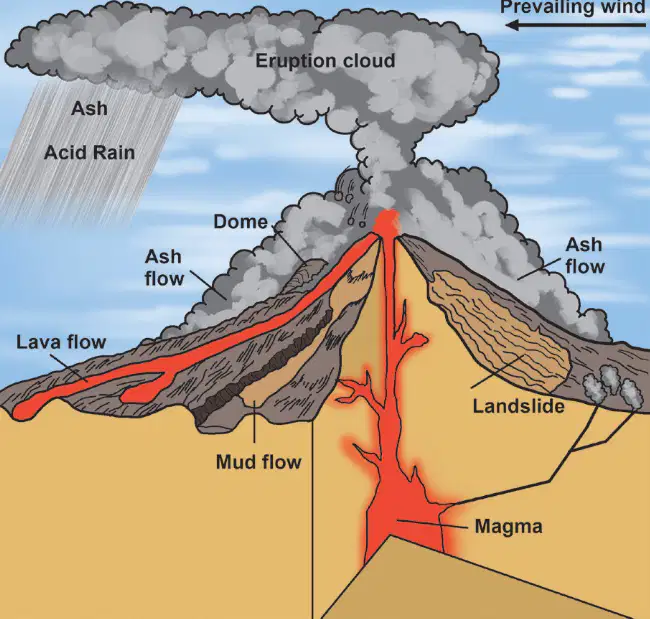
What is lava? Fill in the blank: Lava is molten rock that erupts from a volcano that _______ as it cools.
solidifies
evaporates
freezes
dissolves
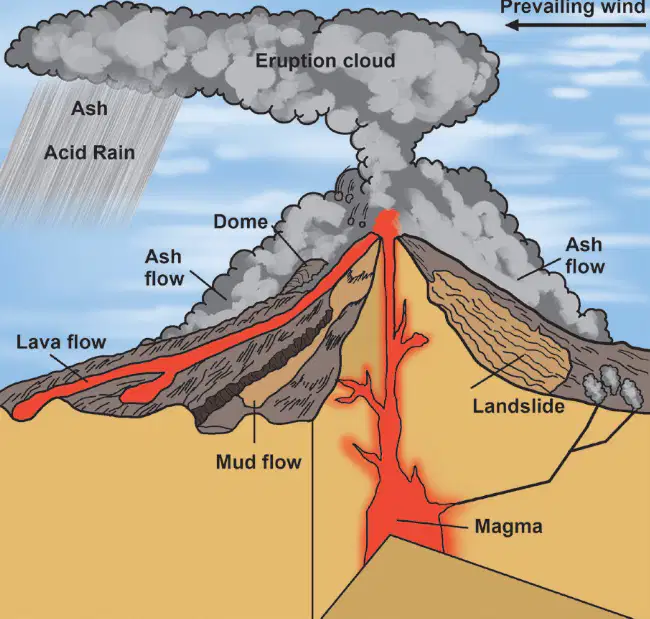
What are dikes in the context of volcanoes?
Tabular or sheet-like bodies of magma that cut through and across the layering of adjacent rocks
Clouds formed during volcanic eruptions
Streams of lava flowing down the volcano
Cracks formed by earthquakes
Fill in the blank: Dikes form when magma rises into an existing fracture or creates a new crack by forcing its way through existing rock, and then _________
solidifies
evaporates
dissolves
freezes
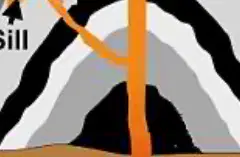
What is a sill in the context of volcano features? Fill in the blank: A sill is a ______ sheet intrusion that has intruded between older layers of sedimentary rock, beds of volcanic lava or tuff, or along the direction of foliation in metamorphic rock.
tabular
circular
vertical
irregular
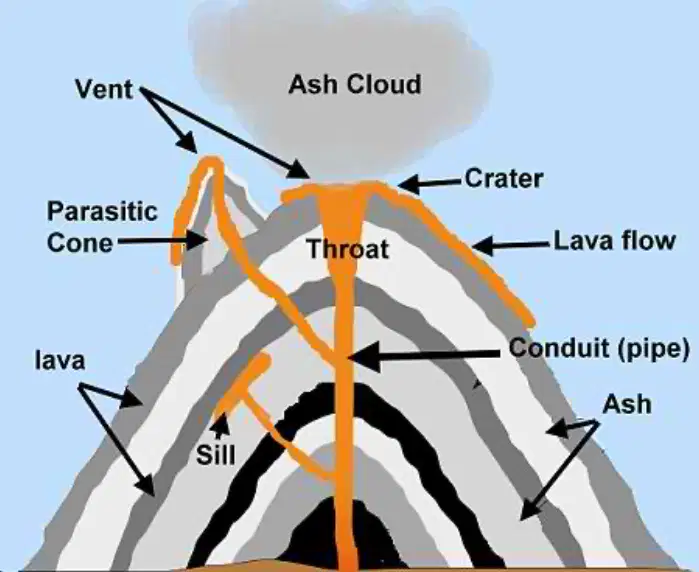
What is a conduit in the context of volcano features? Fill in the blank: A conduit is an underground ______ magma travels through.
passage
chamber
vent
crater
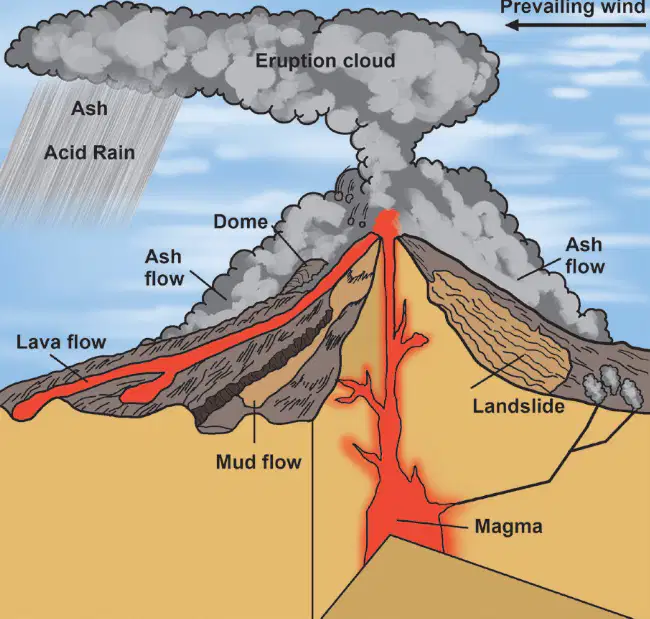
Fill in the blank: The ______ is the side of a volcano.
Flank
Crater
Vent
Magma chamber
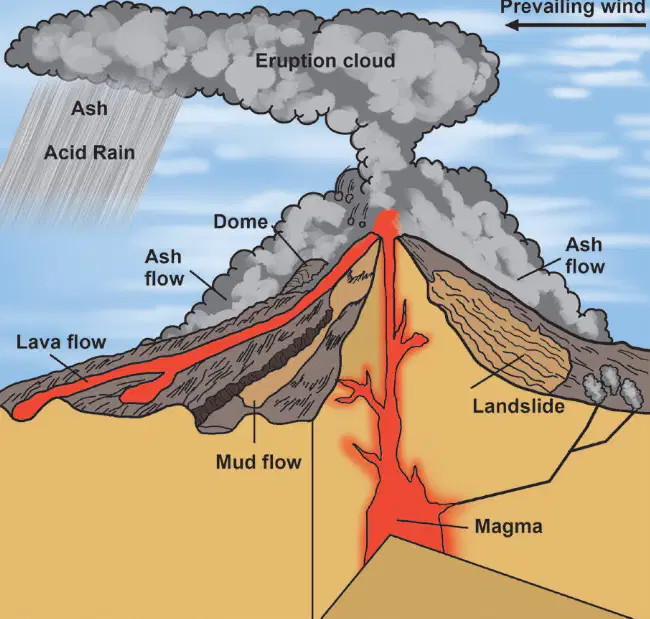
Fill in the blank: The ______ is the highest point or apex of a volcano.
Summit
Crater
Vent
Slope
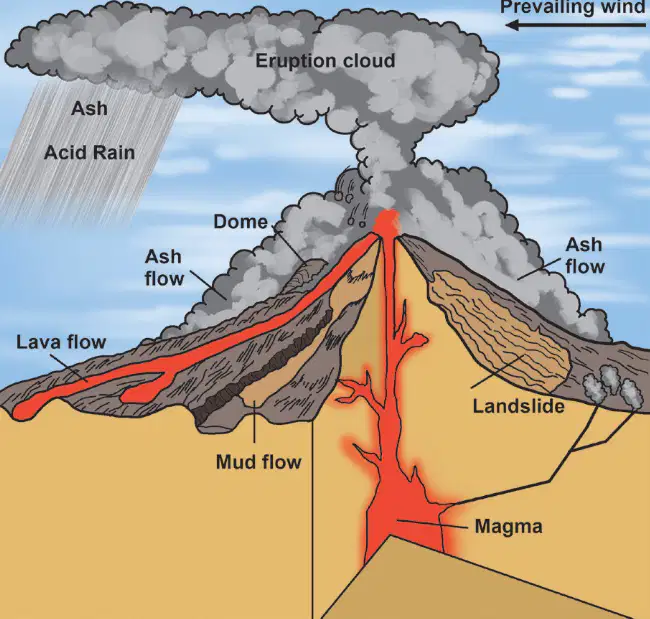
Fill in the blank: The ______ is the entrance of a volcano, the part of the conduit that ejects lava and volcanic ash.
Throat
Crater
Vent
Chamber

Fill in the blank: The ______ is a cloud of ash formed by volcanic explosions.
Ash Cloud
Lava Flow
Magma Chamber
Crater
What is the term for a pyroclastic rock that is a cooling of a mass of lava and flies thorough the air after eruption?
Volcanic Bombs
Lava Tubes
Ash Clouds
Pumice Stones
Tuff
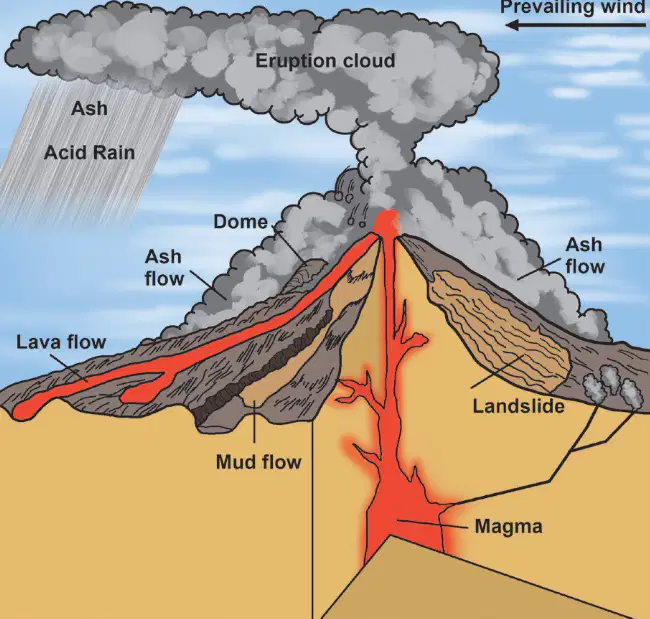
What is the term for a dense, fast-moving flow of solidified lava pieces, volcanic ash, and hot gases?
Pyroclastic Flow
Lahar
Lava Tube
Volcanic Bomb
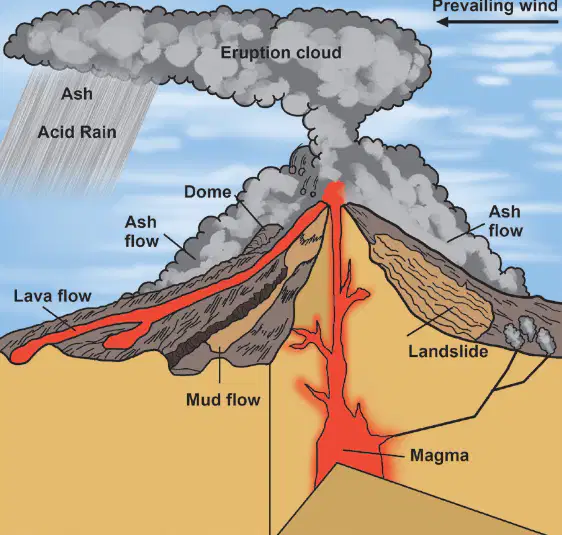
What does Tephra Fall refer to?
A hot or cold mixture of water and rock fragments
Fragmented material that consists of pumice, scoria, lithic materials, or a combination of the four
Lava flow
Ash flow
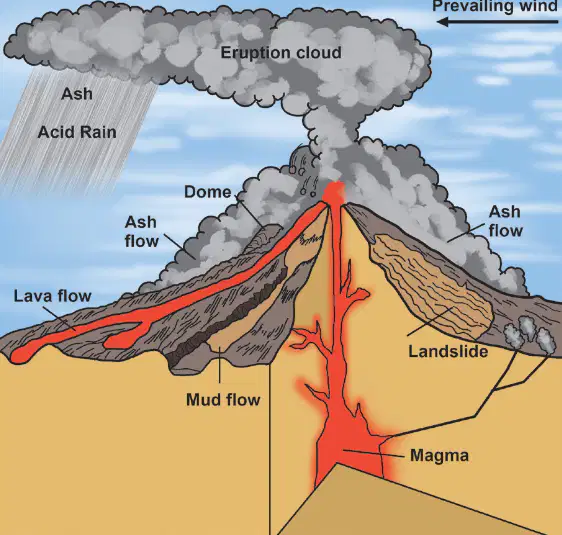
Fill in the blank: Lahar is an Indonesian term that describes a hot or cold mixture of ______ and rock fragments that flows down the slopes of a volcano and typically enters a river valley.
water
sand
oil
ash

What is the name of the part at the top of the volcano where volcanic material is expelled?
Vent
Crater
Magma Chamber
Lava Flow

What is the cloud formed by volcanic ash called?
Ash Cloud
Rain Cloud
Cumulus Cloud
Fog Cloud
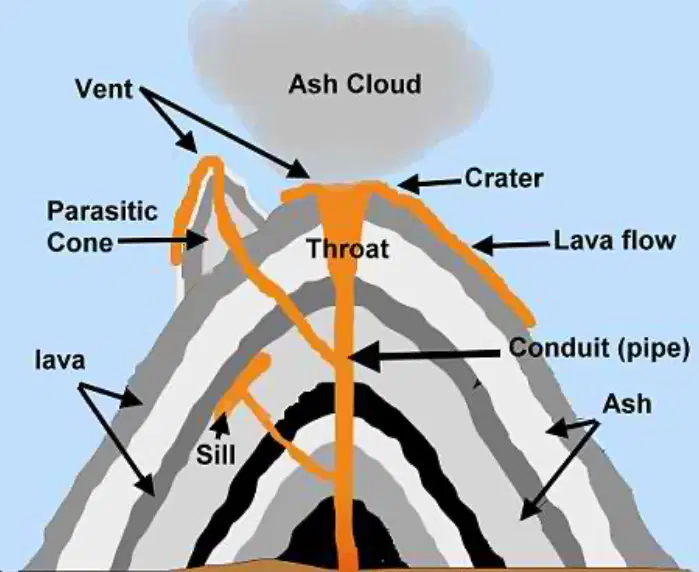
What is the bowl-shaped depression at the summit of the volcano called?
Crater
Vent
Lava Dome
Caldera
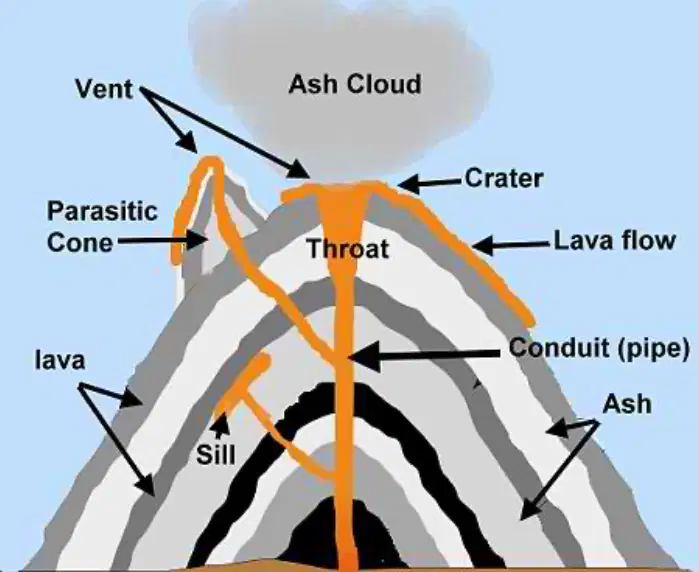
What is the smaller cone formed on the side of the volcano called?
Parasitic Cone
Crater
Caldera
Lava Dome
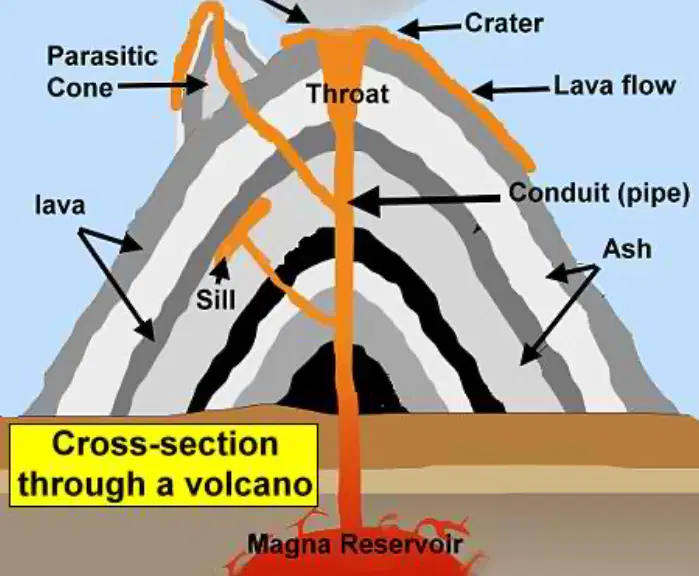
Refer to the diagram 'Cross-section through a volcano'. What is the main passage through which magma travels to the surface called?
Throat
Crater
Vent
Chamber
What is the term for the molten rock that flows out of the volcano?
Lava flow
Magma
Ash cloud
Crater

What is the pipe-like structure that carries magma from the reservoir to the surface called?
Conduit (pipe)
Vent
Crater
Lava dome

What is the term for the fragments of rock and mineral ejected during an eruption?
Ash
Lava
Magma
Crater
What is the horizontal sheet of magma that intrudes between layers of rock called?
Sill
Dyke
Batholith
Laccolith
What is the molten rock inside the volcano before it erupts called?
Lava
Ash
Magma
Sediment
Steam
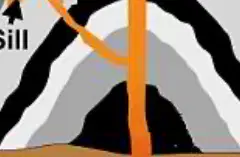
What is the underground pool of molten rock beneath the volcano called?
Magma Reservoir
Lava Chamber
Crustal Lake
Volcanic Basin
What process occurs when the plates drift atop a thick layer of molten pyrolytic rocks?
Subduction
Erosion
Condensation
Evaporation
Formation of a Volcano: As the plates drift, one edge of the plate slips beneath the edge of another. What does this create?
A hole through which materials from the earth’s crust slips.
A mountain range formed by erosion.
A deep ocean trench filled with water.
A valley formed by river action.
Formation by Distension is caused by a hotspot near which part of the earth?
The earth’s outer core
The earth’s crust
The earth’s mantle
The earth’s inner core
Formation of a Volcano: What is a hotspot?
A region of high volcanic activity not located at any plate boundary
A region where plates collide
A region with no volcanic activity
A region of low temperature
What is the process called when plates drift atop a thick layer of molten pyrolytic rocks, leading to the formation of a volcano?
Subduction
Distension
Erosion
Sedimentation
As the plates drift, one edge of the plate slips beneath the edge of another. What does this create?
A mountain
A hole through which materials from the earth’s crust slips
An earthquake
A river

Formation by Distension is caused by a hotspot near the earth’s _________?
outer core
mantle
crust
atmosphere

A hotspot is a region of high volcanic activity not located at any plate boundary.
True
False
What are active volcanoes?
Volcanoes that have erupted in the last 10,000 years
Volcanoes that show signs of unrest activities such as significant amount of gas emission or frequent seismic activities
Volcanoes with no traces of volcanic heat
Volcanoes that are not expected to erupt

Fill in the blank: Inactive or dormant volcanoes are volcanoes with no traces of _______ and have not erupted in 2,000 years.
volcanic heat
volcanic ash
volcanic rocks
volcanic gases

When volcanoes have exceeded a period of dormancy of at least 10,000 years and are not expected to erupt, they are classified as _______.
extinct volcanoes
active volcanoes
dormant volcanoes
shield volcanoes
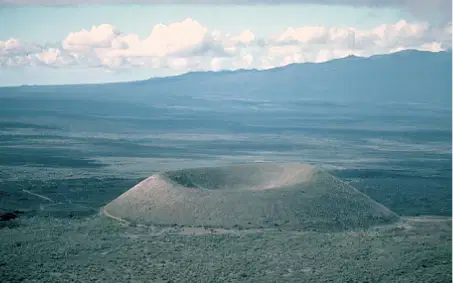
Look at the image of the volcano. What type of volcano is shown?
Shield Volcano
Cinder Cone Volcano
Composite Volcano
Caldera
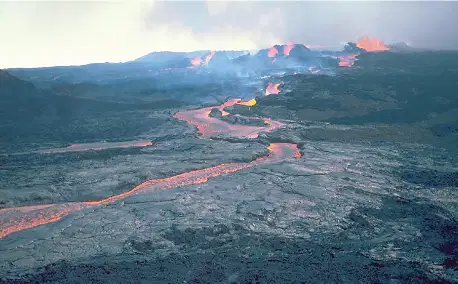
Look at the image of the volcano. What type of volcano is shown?
Shield Volcano
Cinder Cone Volcano
Composite Volcano
Caldera
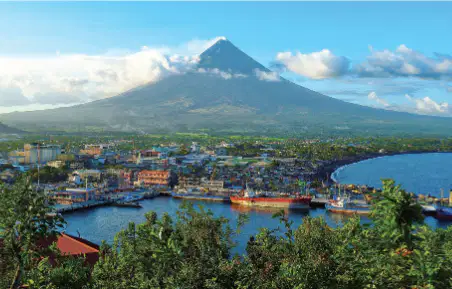
Look at the image of the volcano. What type of volcano is shown?
Shield Volcano
Cinder Cone Volcano
Composite Volcano
Caldera
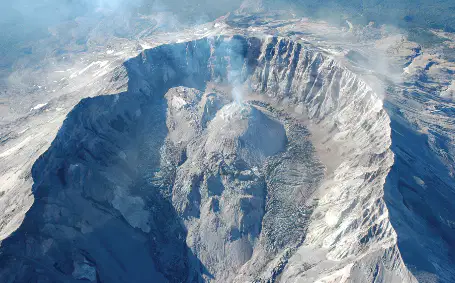
Look at the image of the volcano. What type of volcano is shown?
Shield Volcano
Cinder Cone Volcano
Composite Volcano
Caldera
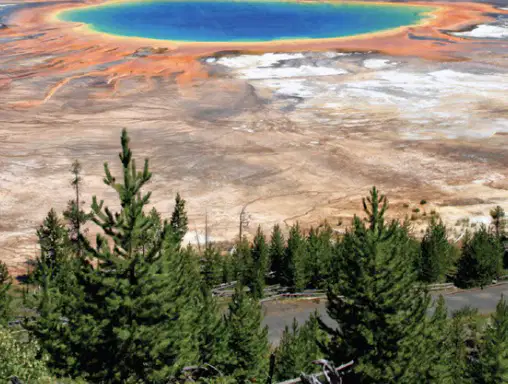
Look at the first image (colorful hot spring with steam rising). What type of volcano is shown in this image?
Shield Volcano
Caldera
Underwater Volcano
Stratovolcano
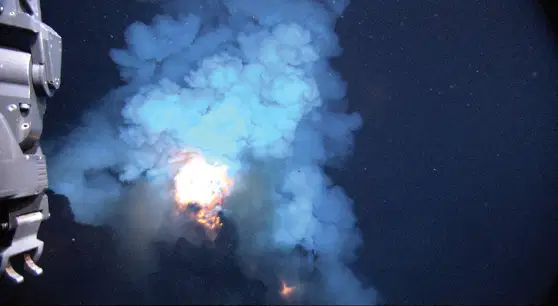
What type of volcano is shown in this image?
Shield Volcano
Caldera
Underwater Volcano
Stratovolcano
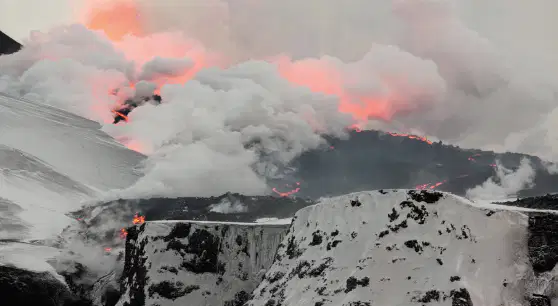
Look at the third image (volcano erupting with smoke and lava). What type of volcano is shown in this image?
Shield Volcano
Caldera
Underwater Volcano
Stratovolcano

