
 Worksheets
Study Guide & pg. 174
Total questions: 15
Worksheet time: 8mins

Scientists can classify plants into two major groups based on reproductive structures of the plants. What are these two groups called?
pg. 159-160
seedless and seed plants
hybrid and heirloom plants
water plants and land plants
flowering and nonflowering plants

Many plants can reproduce asexually. Which of these is an example of asexual reproduction in a plant?
pg. 162
pine cones forming on a tree
cross-pollination in a tomato
roots sprouting from a potato
night-blooming jasmine flowers

Where would you expect to see seedless plants, such as ferns and mosses? pg. 159
in a botanical museum, because they are all extinct
low and close to the ground in a moist environment
climbing high while circling the branches of another plant
deeply rooted in a forest with a trunk that reaches 20 meters or more

Henry designs an experiment to find out why plants without flowers tend to be wind-pollinated and not animal-pollinated. He takes samples from a variety of plants and studies them in the field. He finds that the evidence supports his hypothesis. Which of these was the hypothesis Henry was testing?
pg. 160, 163, 166
Nonflowering plants make less pollen than flowering plants.
Nonflowering plants lack the structures to attract animal pollinators.
Nonflowering plants grow close to the ground and capture fewer pollinators.
Nonflowering plants grow close to the ground because they have no pollen grains.
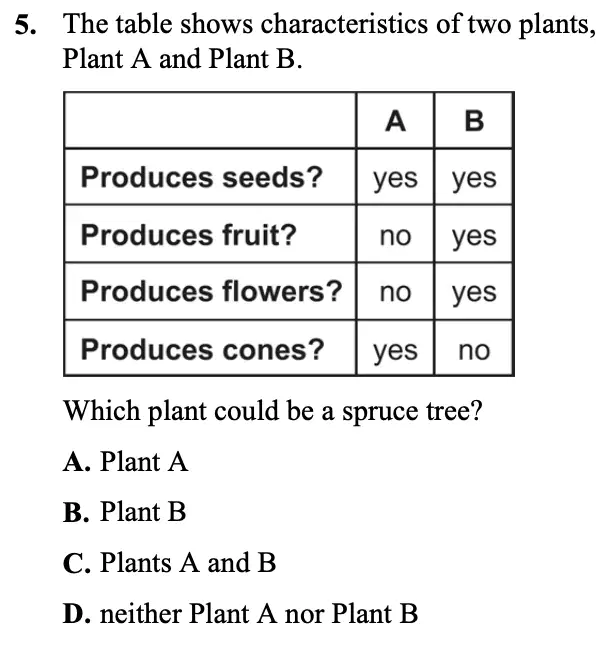
The table shows characteristics of two plants, Plant A and Plant B. Which plant could be a spruce tree? pg. 158, 160
Plant A
Plant B
Plants A and B
neither Plant A nor Plant B
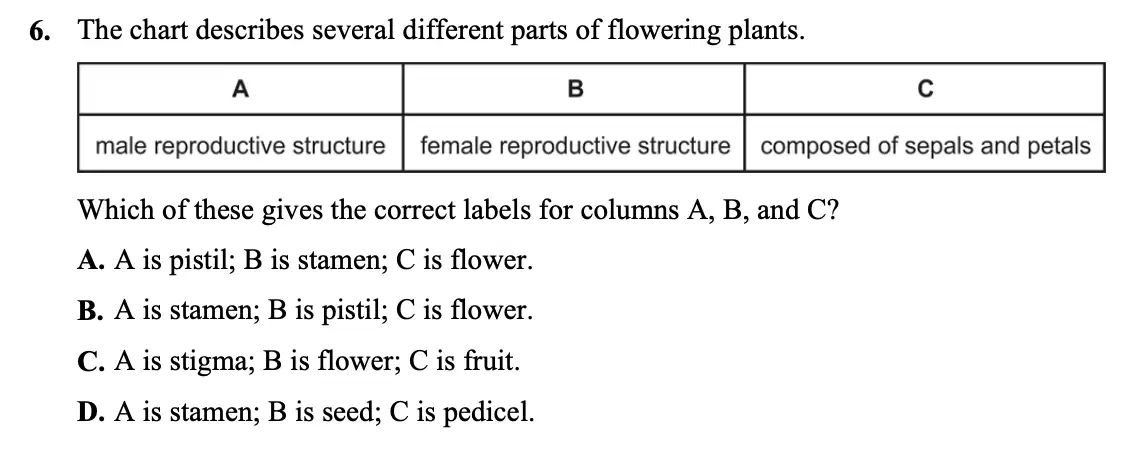
The chart describes several different flowering plants. Which of these is the correct label for columns A, B, and C?
pg. 164-165
A is pistil; B is stamen; C is flower
A is stamen; B is pistil; C is flower
A is stigma; B is flower; C is friut
A is stamen; B is seed; C is pedicel
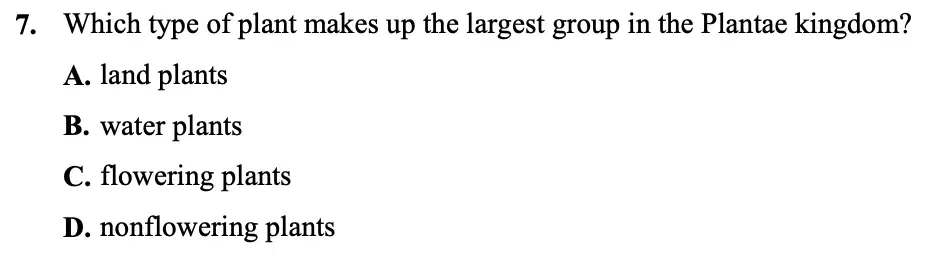
Which type of plant makes up the largest group in the the Plantae kingdom? pg. 160
land plants
water plants
flowering plants
nonflowering plants
Which is NOT a method of seed dispersal? pg. 161
Wind
Water
Animal
Soil
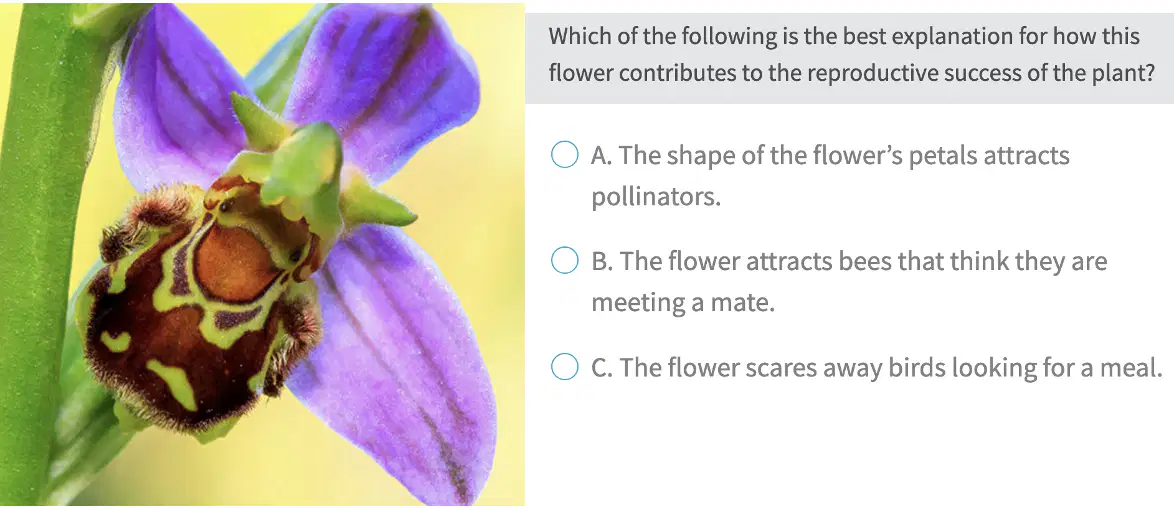
Which of the following is the best explanation for how this flower contributes to the reproductive success of the plant?
The shape of the flower's petals attracts pollinators.
The flower attracts bees that think they are meeting a mate.
The flower scares away birds looking for a meal.
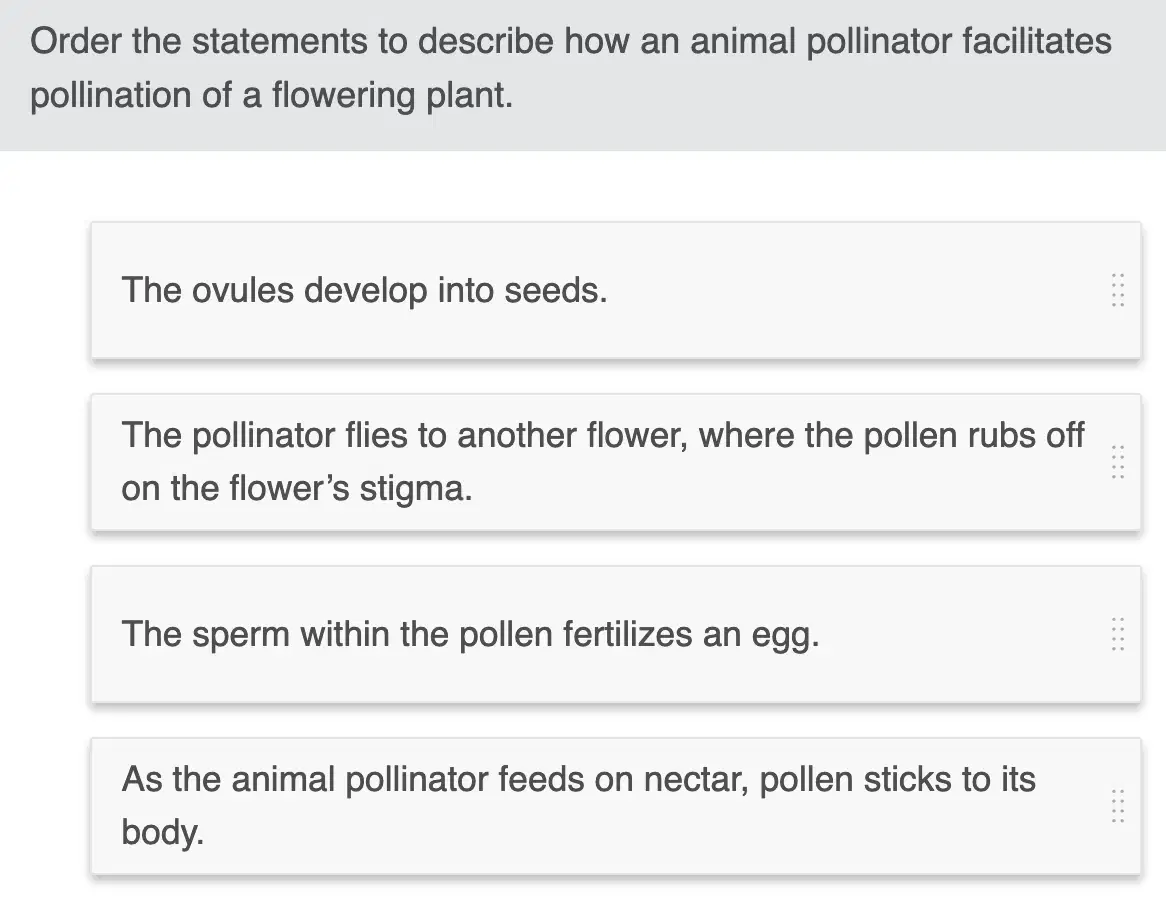
COMPLETE #4 ON PAGE 174 TO ANSERS THIS QUESTION!!!!!!! Order the statements to describe how an animal pollinator facilitates pollination of a flowering plant.
What number in the order is:
The ovules develop into seeds

COMPLETE #4 ON PAGE 174 TO ANSERS THIS QUESTION!!!!!!! Order the statements to describe how an animal pollinator facilitates pollination of a flowering plant.
What number in the order is:
The pollinator flies to another flower where the pollen rubs off on the flower's stigma.

COMPLETE #4 ON PAGE 174 TO ANSERS THIS QUESTION!!!!!!! Order the statements to describe how an animal pollinator facilitates pollination of a flowering plant.
What number in the order is:
The sperm within the pollen fertilizes the eggs.
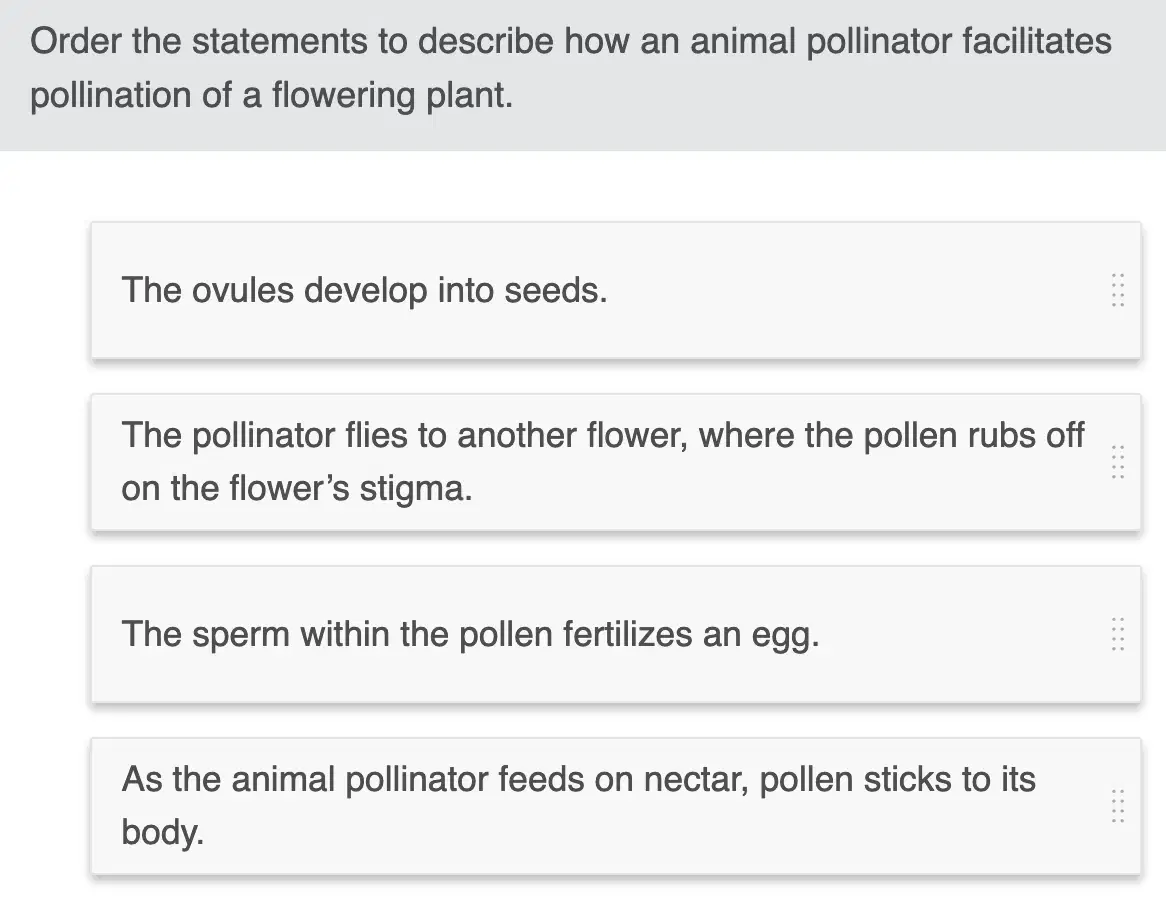
COMPLETE #4 ON PAGE 174 TO ANSERS THIS QUESTION!!!!!!! Order the statements to describe how an animal pollinator facilitates pollination of a flowering plant.
What number in the order is: The animal pollinator feeds on nectar, and the flower's pollen attaches to its body.

Bonsai tress are plants that have been "trained" using the art of trimming and shaping. They can be grown from seeds or cuttings. Which statements are true about bonsai trees? CHOOSE 2 ANSWERS!!!!
Bonsai trees do not need the same light, water, and nutrients required by the plant species.
Bonsai trees need the same light, water, and nutrients required by the plant species.
Bonsai trees can reproduce sexually and asexually.
Bonsai trees can reproduce sexually but not asexually.
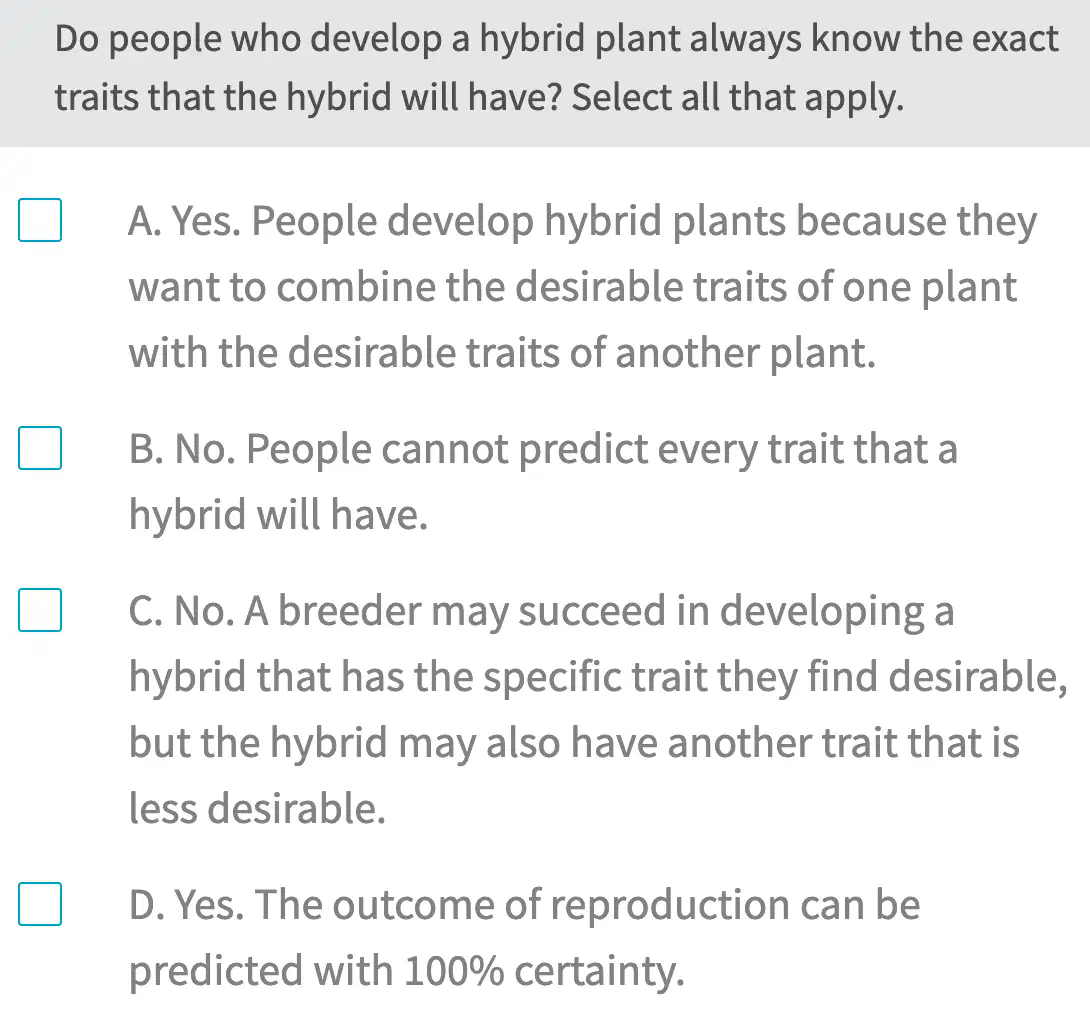
Do people who develop a hybrid plant always know the exact traits that the hybrid will have? CHOOSE 2 ANSWERS!!!!!
Yes. People develop hybrid plants because they want to combine the desirable traits of one plant with the desirable traits of another plant.
No. People cannot predict every trait that a hybrid will have.
No. A breeder may succeed in developing a hybrid that has the specific trait they find desirable, but the hybrid may also have another trait that is less desirable.
Yes. The outcome of reproduction can be predicted with 100% certainty.

