
NEW
Font size
 Worksheets
Chapter 13
Total questions: 20
Worksheet time: 10mins
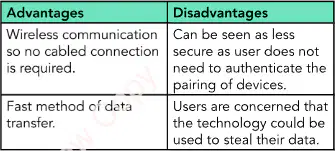
A hospital wants to implement NFC for patient check-in and medication administration without relying on internet connectivity. Which plan best addresses both speed and security concerns?
Adopt QR codes scanned over Wi‑Fi
Combine short-range taps with device encryption
Enable NFC pairing codes like Bluetooth
Use passive NFC tags with no authentication
A retailer is choosing display resolution for in‑store kiosks showing fine product details. Budget allows either HD, 4K, or 8K. Justify the most cost‑effective choice by comparing pixel counts and clarity required.
Choose 4K doubling HD pixels for sharp detail
Choose HD since 8K matches HD clarity
Choose HD because pixel density equals 4K
Choose 8K since it halves 4K pixel count
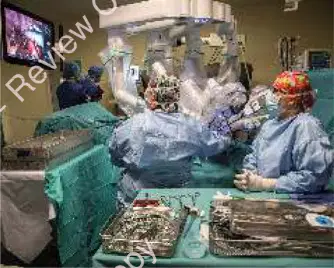
A hospital plans to stream live 4K surgery feeds to remote specialists with minimal latency. Given bandwidth constraints, which strategy best balances image clarity and transmission demands while maintaining 4K resolution?
Reduce frame rate to 15 fps without any compression
Transmit raw 4K data to avoid quality loss from compression
Increase pixel count beyond 8K to preserve fine detail
Use efficient video compression codecs with low-latency profiles
A medical facility is exploring options for performing remote surgeries utilizing ultra-high-definition video technology. Select the optimal strategy that maximizes surgical accuracy while minimizing system vulnerabilities.
Implement UHD with dual network connections and emergency local control
Utilize UHD over a single network with a high-compression video stream
Adopt UHD with complete reliance on cloud-based instrument management
Employ HD technology with manual control of surgical instruments

A cinema upgrades to 8K projection. Which change most strategically improves editing workflows for studios supplying films to this cinema?
Keep 4K editing, upscale after mastering
Shoot in 8K, edit in 4K proxies forever
Adopt 8K-native editing and storage pipelines
Rely on projector’s internal upscaling only
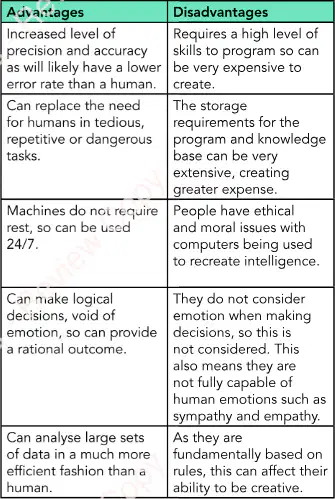
An AI triage tool is being considered for an emergency department. Which deployment approach best mitigates AI disadvantages while leveraging its strengths?
Fully autonomous decisions without oversight
24/7 use with no error monitoring at all
Human-in-the-loop with auditable knowledge base
Emotion-weighted outputs from rule-only AI
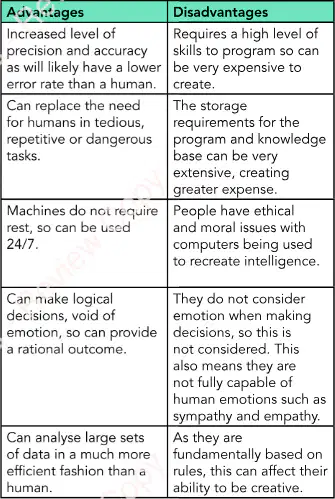
A retailer wants AI to analyze large datasets for demand forecasting but worries about ethics and empathy gaps. What is the most appropriate governance plan?
Prioritize speed over ethical checks
Ignore empathy since data is objective
Establish bias reviews and human override
Replace all human planners immediately
A city plans to reduce traffic accidents by deploying AI-driven self-driving taxis while also adopting AR navigation overlays in passengers’ smart glasses. Which plan best mitigates ethical and reliability risks while improving user experience?
Prioritize flashy AR graphics over sensor accuracy to enhance engagement
Use diverse neural network models with monitored decision logs and fail-safes
Rely on a single algorithm and disable human oversight to avoid delays
Allow speech recognition to replace all manual controls without backups

A hospital plans to integrate either AR or VR into operating theatres. The goal is to let surgeons see a patient’s scans overlaid on the body while continuing to view the real surgical field. Which technology and device pairing best meets this requirement, and why?
AR with handheld tablet, replaces the scene with simulation
VR with desktop display, renders a 3D virtual patient
AR with smart glasses, overlays data onto real field
VR with headset, fully immersive and blocks real view
A hospital plans to reduce trainee errors in emergency care by choosing between two technologies: A) 2D video tutorials of past surgeries, B) Virtual reality simulations that immerse trainees in critical scenarios with realistic feedback. Considering advantages and disadvantages of VR, which choice better supports their goal, and why?
VR simulations, because they provide immersive crisis practice
VR simulations, because they eliminate motion sickness risk
2D videos, because VR cannot create immersive scenarios
2D videos, because calibration is always easier to manage

A hospital plans to adopt robotic prosthetics that patients can control with their minds. Which implementation plan best balances benefits and risks while improving patient outcomes over one year?
Use only for cosmetic limbs with no movement features
Pilot with a small group, collect data, refine protocols
Replace all traditional prosthetics across departments
Deploy to all patients immediately with minimal training
Wait for perfect technology before any clinical trials

A hospital plans to use nano-robots that navigate blood vessels to deliver targeted chemotherapy. Which plan best minimizes harm while maximizing treatment effectiveness?
Allow robots to replace surgeons in all complex operations
Program robots to identify and attack only cancer cells
Deploy robots to broadly scan tissues for general issues
Release many robots to roam freely through all organs

An architect must choose between a traditional on-screen 3D model and a projected hologram for a client meeting. Which choice and rationale would most effectively help builders understand the final structure?
Select the screen model because it loads faster for everyone
Select the screen model because it prints clearer blueprints
Select the hologram because it needs no mirrors or lasers
Select the hologram because it provides true depth perception
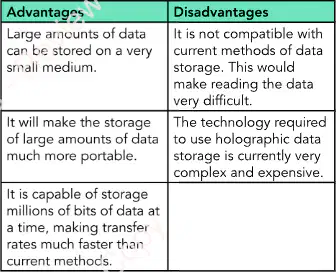
A space agency must transmit 20 terabytes per mission through a narrow rocket payload bay and limited communication windows. They can choose either upgrading traditional optical disks or adopting holographic storage crystals. Which justification best supports selecting holographic storage, considering constraints and mission throughput?
Traditional disks are cheaper and widely compatible
Reflective surfaces are easier to read in microgravity
Existing formats avoid complex and expensive technology
Smaller media units enable high bit transfer rates
A Mars mission limits cargo mass for resupply. During transit, a critical plastic valve cracks in the water recycler. Using only onboard resources, the crew must restore function quickly. Which strategy best addresses this constraint while minimizing wait time for Earth shipments?
3D print a replacement part using stored filament
Redesign the entire recycler using traditional machining
Schedule a replacement shipment on the next resupply window
Power down the recycler and ration water until landing
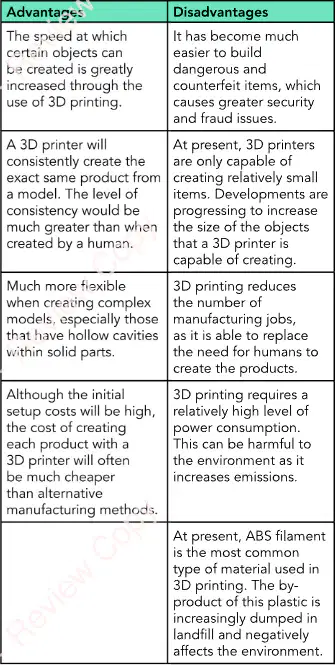
A clinic is choosing between mass-produced prosthetic sockets and customized ones created from CAD scans and additive manufacturing. They must maximize patient comfort and long-term fit while controlling initial setup costs. Which choice is most defensible and why?
Choose customized sockets because manual crafting is faster for clinics
Choose mass-produced sockets because they fit a wider range equally
Choose customized sockets because additive manufacturing improves consistency
Choose mass-produced sockets because setup is cheaper overall
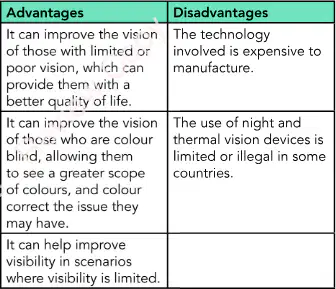
A city evaluates permits for civilian night-vision and thermal goggles. Officials must weigh public safety, user benefits, and regulatory limits. Which policy best balances advantages and disadvantages described for vision enhancement?
Allow licensed use for limited visibility work scenarios
Ban all devices because manufacturing costs are high
Permit unrestricted use because they improve quality of life
Approve only colour-correcting lenses, not night-vision goggles
A city plans to cut emissions from data centres without reducing digital services. Which strategy would be most effective and realistic for long-term environmental impact?
Limit citizens to one device each
Relocate servers to remote deserts
Switch to renewable-powered cooling
Ban night-time internet usage citywide
A school replaces old laptops, creating large volumes of e-waste. Design a responsible disposal plan that prioritizes environmental safety and community benefit. Which approach best meets both goals?
Incineration to recover energy
Certified recycling with data wiping
Export to developing nations unchecked
Landfill disposal with sealed bags
Angga, a farmer, uses AI technology to monitor soil moisture levels and predict rainfall patterns on his farm. Which planning decision would most strategically leverage this technology to reduce environmental harm?
Maximize irrigation every day
Schedule watering from AI forecasts
Ignore AI during drought alerts
Replace sensors with manual checks

