
 Worksheets
Pendahuluan: Covid-19 dan Analisis Data
Total questions: 82
Worksheet time: 41mins
What is Covid-19 mainly caused by?
A sound from loud music
A mineral found in rocks
A plant that grows on skin
A virus that makes people sick
Which symptom can mean you might be sick with Covid-19?
Cough and fever together
Sparkly eyes all day
Longer fingernails suddenly
Green hair overnight
Look at a simple bar graph of cases: if Monday has 2 bars and Tuesday has 4 bars, which day has more cases?
Neither day has any cases
Both days are the same
Monday has more cases
Tuesday has more cases
If a line on a graph goes up over time, what does that usually mean about the number of cases?
The number is sleeping
The number is turning blue
The number is hiding
The number is increasing
Which action can help keep you safe from Covid-19?
Standing very close to everyone
Touching your face a lot
Sharing one cup with friends
Washing your hands often
Who studied sick tobacco leaves and helped find viruses?
Albert Einstein
Charles Darwin
Adolf Mayer
Isaac Newton
Which scientist used filters and showed a tiny germ passed through?
Dmitri Ivanovsky
Robert Koch
Gregor Mendel
Louis Pasteur
Who said the tiny germ was not a normal bacteria and called it a virus?
Martinus Beijerinck
Florence Nightingale
Joseph Lister
Antonie van Leeuwenhoek
Which scientist made virus crystals from Tobacco Mosaic Virus (TMV)?
Rosalind Franklin
Marie Curie
Wendell Stanley
Niels Bohr
TMV stands for a virus that hurts which plant?
Tobacco plant
Banana tree
Pineapple bush
Apple tree
Look at a simple picture of virus shapes: rod, round, oval, and T-shape. Which shape is long like a stick?
Rod shape
Round shape
Oval shape
T-shape
Viruses are very tiny. If you plan how to keep plants safe, which idea uses careful steps?
Check leaves often
Never water plants
Paint leaves blue
Sing to plants daily
Which tool helps us see very tiny viruses?
Binoculars for birds
Electron microscope device
Hand lens with light
Kitchen magnifying glass
What word describes how big or small a virus is?
Taste of virus
Sound of virus
Size of virus
Color of virus
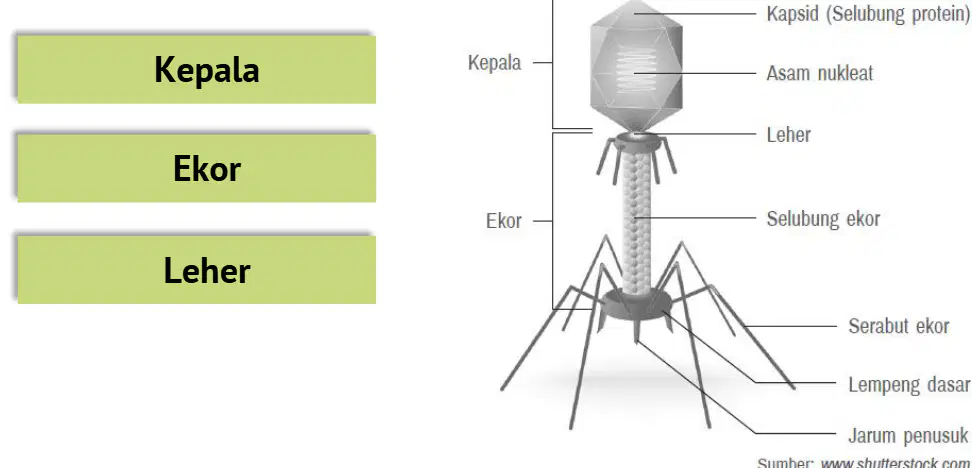
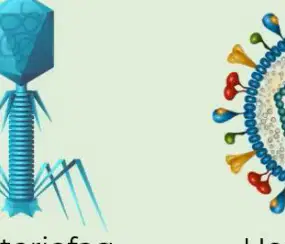
Viruses can have different shapes. Which shape belongs to a bacteriophage?
Ball with spikes
Octagon head with tail
Long flat ribbon
Square box with handle
What is the hard coat around many viruses called?
Flagella long hairs
Membrane bubble
Nucleus center part
Capsid outer shell
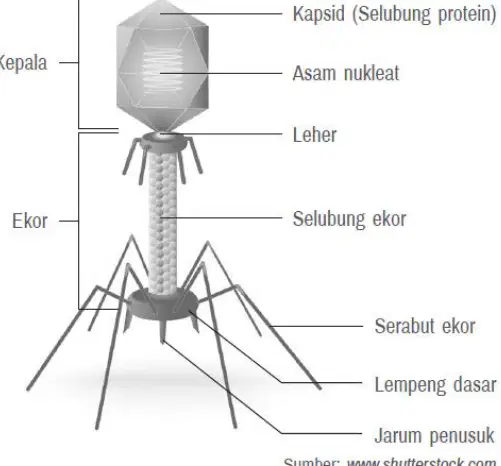
Where is the genetic material inside a virus kept?
In long leg fibers
On the outside skin
Inside the head
In the tail sheath
Some viruses have an extra envelope. What does this envelope help with?
Changing colors quickly
Helping plants grow
Protecting from harm
Making loud sounds
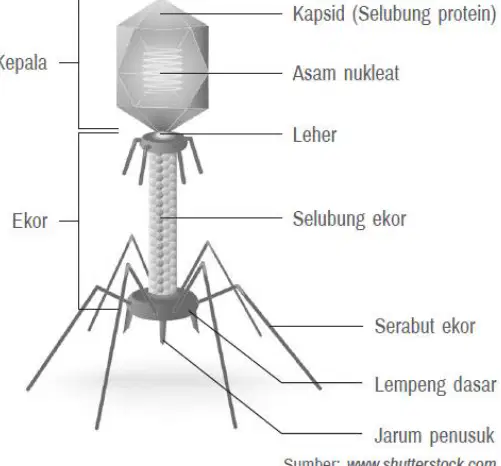
Which part helps a bacteriophage stand on a host?
Nucleic acid string
Base plate bottom disc
Head top cap
Capsomere tiny units
Why is classifying viruses hard?
They all look the same
They make loud noises
They are very small
They change and have many shapes
Which tiny thing can make us sick but is not a cell?
A plant cell
A human blood cell
A virus particle
A big bacteria
What do viruses have inside to carry genetic information?
DNA or RNA inside
Only water inside
Air and light inside
Sugar and salt inside
A bacteriophage has a head, a neck, and a tail. Which part holds the genetic material?
Thin neck tube
Long tail end
Tiny leg spikes
Round head part
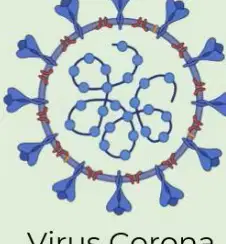
Which virus type uses RNA as its genetic material?
Bacteriophage group
Coronavirus group
Papovavirus group
Herpesvirus group
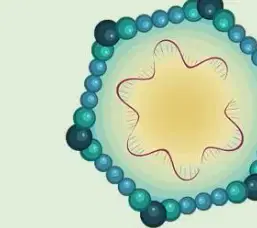
Which virus type uses DNA as its genetic material?
Orthomyxovirus group
TMV plant virus group
Picornavirus group
Herpesvirus group
Viruses can be made into crystals. What does this show about them?
They breathe like animals
They only grow in soil
They can act like non-living things
They are little living trees
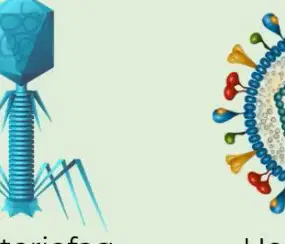
Imagine a bacteriophage landing on a bacteria cell. Which part helps it attach first?
Round head top
DNA strands inside
Tail fibers bottom
Neck middle piece
Viruses need a host cell to make more viruses. What happens if there is no host cell?
They turn into bacteria
They grow into tiny plants
They stop and cannot multiply
They reproduce by themselves
Which part of a virus protects its inside like a coat?
Tail sheath
Capsid shell
Cell wall
Leaf cover
What tiny pieces make up the capsid of a virus?
Kapsomers
Chromosomes
Ribosomes
Atoms
Some viruses have an outer envelope. What does an envelope do?
Gives color
Grows roots
Helps budding
Makes food
Viruses can carry genetic instructions. Which two kinds can they have?
Sugar or salt
DNA or RNA
Air or water
Light or sound
A virus without an envelope is called non-enveloped. Which is true for non-enveloped viruses?
No nucleic acid
Two envelopes
No outer envelope
Only tails
During budding, a virus gets its envelope from where?
Capsid pieces
Plant leaves
Host cell membrane
Rock surface
Which part holds the virus’s DNA or RNA safely inside?
Bone tissue
Capsid coat
Cell nucleus
Tail fibers
Look at the diagram showing two virus groups. Which group name goes with RNA viruses?
Ribovirus group name
Deoksiribovirus group name
Proteinvirus group name
Cellovirus group name
Which group name matches DNA viruses in the diagram?
Ribovirus group name
Deoksiribovirus group name
RNAvira group name
Nucleovirus group name
The diagram shows examples under RNA viruses. Which choice is an RNA virus example?
Example listed under fungi
Example listed under bacteria
Example listed under Deoksiribovirus
Example listed under Ribovirus
The picture compares shapes. Which description fits RNA virus morphology?
Shapes shown on RNA side
Shapes shown on DNA side
Shapes shown for plant roots
Shapes shown for cell nuclei
The diagram also shows DNA virus shapes. Which description fits DNA virus morphology?
Shapes shown for bacteria rods
Shapes shown on RNA side
Shapes shown for animal cells
Shapes shown on DNA side
If a virus is labeled Ribovirus, which nucleic acid does it have?
It has RNA inside
It has DNA inside
It has sugar inside
It has water inside
If a virus is labeled Deoksiribovirus, what does it contain?
Contains DNA inside
Contains RNA inside
Contains proteins only
Contains air bubbles
You see a new virus with a shape like the RNA side. Which group is it most likely in?
Deoksiribovirus group
Fungi group
Ribovirus group
Bacteria group
A virus example on the DNA branch belongs to which group?
Cellovirus group
Proteinvirus group
Ribovirus group
Deoksiribovirus group
Which group is the smallest in virus naming?
Species level name
Family level name
Order level name
Genus level name
Who makes the worldwide system to classify viruses?
WHO hospitals
ICTV organization
School science club
Planet space team
Which list shows virus ranks from big to small?
Family, species, order, genus
Species, genus, family, order
Order, family, genus, species
Genus, family, order, species
A virus name should match its group. What helps the name?
Picking random sounds
Copying animal names
Following naming rules
Using toy words
If two viruses share the same genus, what is also true?
They are in one family
They have no ranks
They are in one order only
They are in one species
Which choice is a good way to sort viruses?
By holiday dates
By favorite songs
By ICTV taxonomy
By color of cartoons
Why do scientists use taxonomic ranks for viruses?
To sell toys faster
To guess without facts
To organize and compare
To make stories fun
What does a virus need to live and grow?
A cup of clean water
A host cell inside
Only sunlight and air
Its own tiny house
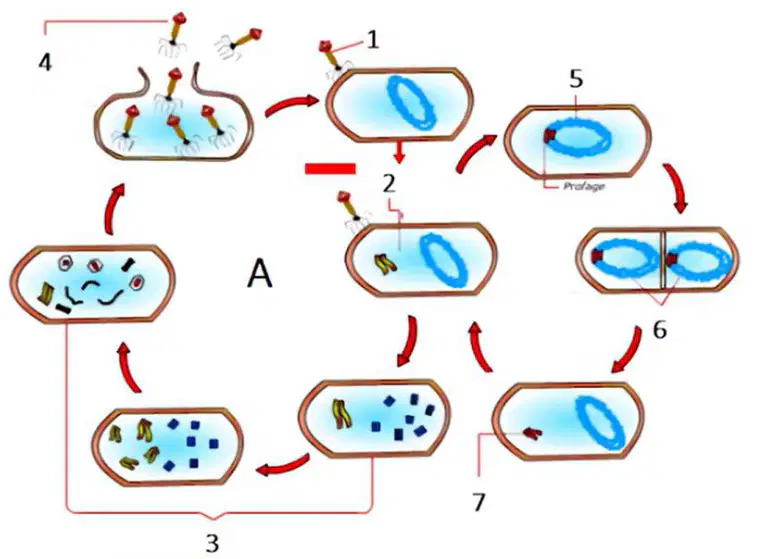
Which picture step shows a virus sticking to a cell (adsorption)?
Step three making parts
Step one near the cell
Step five breaking cell
Step seven floating away
A friend sneezes near you and you breathe in the droplets. How could a virus move to you?
Direct transmission
Vector transmission
Plant root growth
Sunlight transformation
A mosquito bites an animal and later bites you. How could a virus travel in this case?
Vector transmission
Direct transmission
Indirect transmission
Water-only travel
Which step happens first in the lytic cycle of a virus?
Synthesis of viral parts
Maturation of new virions
Lysis of the host cell
Adsorption to the host cell
What does adsorption mean in the lytic cycle?
Host grows larger
Virus sticks to the host
Virus leaves the host
Host makes antibodies
During penetration, what does the virus do?
Puts its genetic material in
Breaks into many pieces
Becomes a plant cell
Turns into bacteria
Which step comes after synthesis in the lytic cycle?
Lysis and cell bursting
Maturation of new viruses
Penetration into the cell
Adsorption to the cell
In maturation, what is being made?
Extra host cell walls
New animal tissues
Complete new viruses
More plant leaves
What happens during lysis at the end of the lytic cycle?
The host cell bursts open
The virus falls asleep
The host cell grows bigger
The virus changes into fungi
Which list shows the lytic cycle in order?
Penetration, Adsorption, Lysis, Synthesis, Maturation
Synthesis, Adsorption, Lysis, Maturation, Penetration
Lysis, Maturation, Synthesis, Penetration, Adsorption
Adsorption, Penetration, Synthesis, Maturation, Lysis
What is a virus?
A big animal that eats plants
A tiny germ that needs a host
A rock that sits in water
A leaf that grows on trees
In the lysogenic cycle, the virus DNA becomes a prophage. What does this mean?
It hides inside the host DNA
It floats outside the cell
It turns into tiny cell walls
It leaves the host right away
Which step comes first in the lysogenic cycle?
Host bursts and virus exits
Virus attaches to the host
Cell splits into two cells
Protein capsid is eaten
During lysogeny, what happens when the host cell divides?
The virus vanishes forever
Both new cells carry the prophage
The host stops dividing
Only the old cell keeps DNA
Which cycle quickly makes many new viruses and breaks the host cell?
The lytic cycle
The sleepy cycle
The plant cycle
The lysogenic cycle
Which cycle can stay quiet inside the host for a long time?
The speedy cycle
The outside cycle
The lytic cycle
The lysogenic cycle
A diagram shows two paths: lytic and lysogenic. What is one big difference?
Lytic makes plants grow taller
Lytic breaks the cell; lysogenic hides
Lysogenic breaks cells faster always
Both hide and never break cells
If a quiet prophage wakes up, what can happen next?
It makes the host a rock
It turns into a leaf
It switches to lytic cycle
It becomes tasty fruit
Which word names virus DNA inside host DNA?
Prophage
Capsid
Nucleus
Membrane
Why do scientists study virus cycles like lysogenic and lytic?
To help make vaccines
To grow taller trees
To paint better pictures
To build faster cars
Which job can a virus help with in science?
Making protein vaccines for health
Cooking tasty meals at home
Building roads for cars
Painting houses with colors
Which tool uses viruses to fight garden pests?
Bioinsecticides for plants
Soap water for leaves
Big fences for animals
Metal shovels for soil
Viruses can sometimes be used in genetic engineering. What is a simple reason why?
They grow into big trees
They glow bright in the dark
They taste sweet like sugar
They carry tiny bits of genes
Which place can viruses cause sickness?
In humans and animals
Only in rocks
Only in toys
Only in clouds
Which is a plant problem caused by viruses?
Loud music noises
Heavy rainstorms
Leaf spots on crops
Cold snow piles
A vaccine made with proteins can help protect people. What does it try to do?
Teach the body to fight germs
Make hair grow very fast
Turn water into ice
Paint the skin different colors
Biological treatment uses living helpers. Which helper can be used?
Special viruses to clean waste
Plastic bags for trash
Glass bottles for milk
Paper planes for play
Which sentence shows a good use of viruses on farms?
Invite cats to chase butterflies
Hide seeds under pillows
Sprinkle candy on plants daily
Use bioinsecticides to stop pests
Why should people be careful with viruses?
They can cause diseases
They make food taste bad
They break all pencils
They stop the sun shining
Which list shows both sides of viruses?
Help make vaccines and also cause sickness
Only keep animals warm in winter
Only make toys and draw pictures
Only help plants grow taller

