
 Worksheets
Unit 3 Review
Total questions: 30
Worksheet time: 17mins
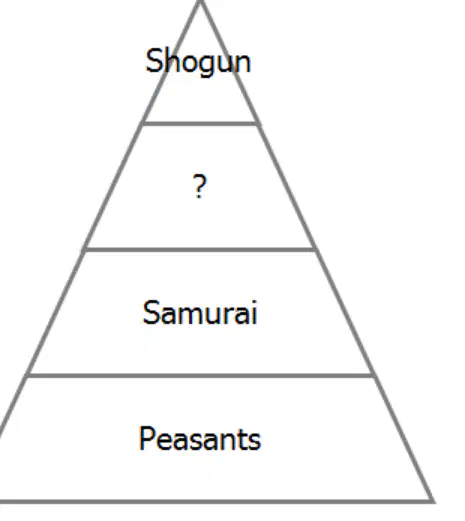
Which term completes this graphic?
A. Brahma
B. Daimyo
C. Slaves
D. Untouchables
What was one main reason European monarchs favored the feudal system?
It encouraged democratic governments.
It helped monarchs keep control over their lands and people.
It promoted equal rights for all citizens.
It reduced the influence of nobles.
How did Marco Polo's travels help inspire European exploration during the Age of Discovery?
He taught Europeans how to build faster ships for long voyages.
He mapped the Americas and encouraged Europeans to colonize them.
He wrote about the riches of China and Asia, encouraging Europeans to find new trade routes there.
He introduced new religious beliefs that led Europeans to explore new lands.
The kingdoms of West Africa all thrived on the trade of what two goods?
salt and gold
silk and gold
diamonds and silk
salt and iron
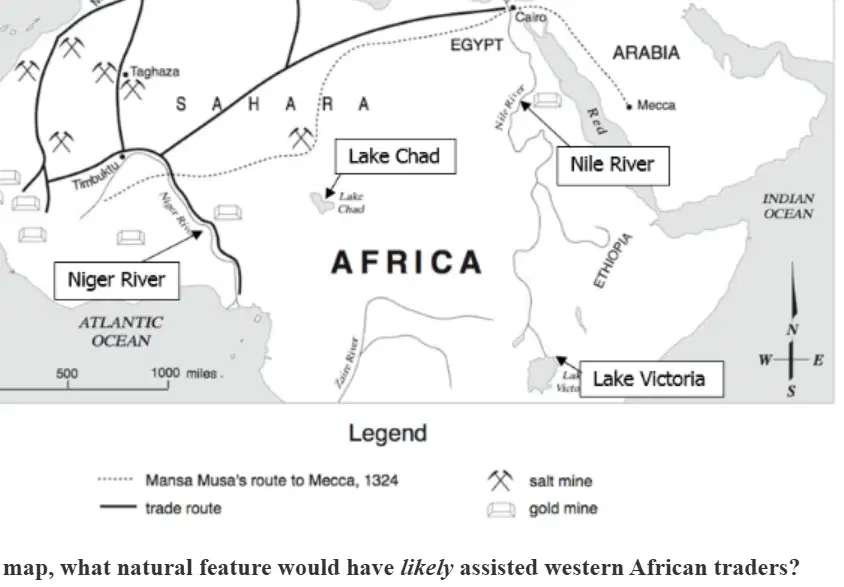
Based on the map, what natural feature would have likely assisted western African traders?
Lake Chad
Lake Victoria
Niger River
Nile River
Why did international trade lead to the spread of the Bubonic Plague?
Trade weakened the economy and prevented research to cure the plague.
Trade isolated communities and allowed the plague to become stronger.
The plague infected many people who used trade routes.
The plague forced people to trade for resources.
Why did the Catholic Church start the Crusades?
to increase trade
to decrease taxes
to regain control of the Holy Lands
to adopt Muslim beliefs
Prior to the arrival of Christianity and Islam, who were the religious leaders in West Africa?
A) Arab traders
B) businessmen
C) European philosophers
D) tribal leaders
Which action taken by Mansa Musa demonstrated his commitment to the teachings of Islam?
He built a new capital city in Mali.
He went on a pilgrimage to Mecca.
He banned trade with non-Muslim countries.
He required all citizens to memorize the Quran.
In the Middle Ages, cities such as Damascus, Baghdad, and Cordoba became renowned across the Muslim world. What was the main factor that led to their prominence?
mild climate
fertile farmland
discovery of gold
international trade
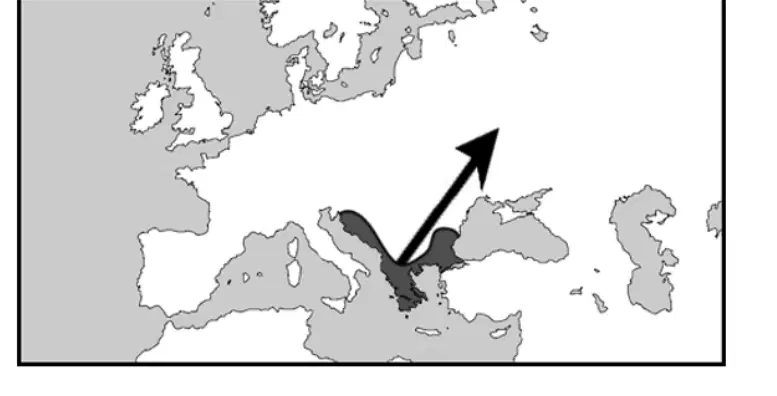
This map shows the spread of a major religion in the early 1000s. The spread of which religion is shown on this map?
Buddhism
Christianity
Hinduism
Shintoism
Which historical figure promoted land ownership that led to feudalism, established Christianity as major religion, and created the Holy Roman Empire this chart?
Charlemagne
Henry V
Joan of Arc
William the Conqueror
What was a consequence for Jewish communities in Europe during the time of the Crusades?
They were welcomed by Crusaders and given new lands.
They were able to freely practice their religion without interference.
They were often targeted, suffered violence, and killed from Crusaders.
They formed alliances with Muslim rulers to fight against Christians.
During the Crusades, which two groups were primarily in conflict over control of Jerusalem?
A. Christians and Muslims
B. Hindus and Jews
C. Christians and Hindus
D. Muslims and Buddhists
How did the Mongol rule of the Yuan Dynasty have a positive impact on China?
It ended trade along the Silk Road.
It created an economic depression.
It led to the creation of large public works projects.
It led to the adoption of Christianity as the official religion.
What was one significant effect of Mongol rule on trade across Asia?
It led to the decline of maritime trade routes.
It disrupted all overland trade between Europe and Asia.
It promoted safety and protection along the Silk Road.
It isolated China from the rest of Asia.
According to historian E. W. Bovill, Mansa Musa traveled with a large entourage and vast amounts of gold on his journey to Mecca. What does this suggest about the purpose of his pilgrimage?
to demonstrate Mali's wealth
to stop gold mining in Mali
to defend Mali from invaders
to promote local customs
Which agricultural method did the Mayans use to adapt to the challenges of their environment?
They practiced slash and burn agriculture to clear forests for planting crops.
They built aqueducts to bring water to desert regions.
They constructed paved roads to connect distant cities.
They used crop rotation to prevent soil erosion in coastal areas.

The image shows the Aztec calendar stone. What does this artifact reveal about the achievements of the Aztec people?
The Aztecs were known for their advanced knowledge of astronomy and timekeeping.
The Aztecs did not create any significant works of art or science.
The Aztecs only used oral traditions to record their history.
The Aztecs rejected the use of calendars in their society.
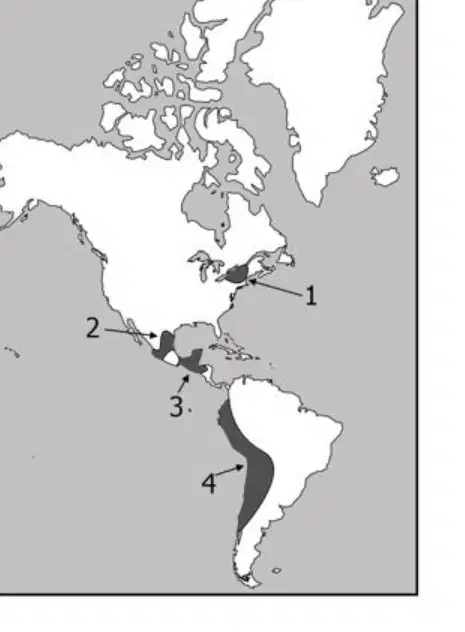
Which number correctly identifies the location of the Inca Empire?
A. 1
B. 2
C. 3
D. 4


Why, geographically, was Constantinople a good location for trade?
Constantinople was not a good location for trade
It was located at the intersection of different trade routes
It's located on the river Nile, allowing for easy transportation
It's location on the island of Britain made it better protected from the French

The ______ empire arose during AD 1100 to 1400.
Inca Empire
(Purple)
Maya Empire (pink)
Aztec Empire
(red)
Olmec Empire
(not shown)


What were the Crusades?
A tournament in Europe fought be the best knights.
A series of wars between the Christians and the Muslims.
The Muslim attempt to take over all of Europe.
The name of the battle between William, Duke of Normandy and Harold, King of England.
What was a primary duty of vassals under the feudal system?
To trade goods with other kingdoms
To rule over the church
To provide military service to their lord
To collect taxes from the king
Which of the following best describes the relationship between lords and serfs in feudal Europe?
Serfs ruled over the lords and collected taxes.
Lords and serfs were equal partners in government.
Lords and serfs competed for control of the land.
Lords provided land and protection in exchange for labor and services from serfs.


The lines on the map below illustrate which of the following?
Spread of Hinduism
Spread of Christianity
Extent of trade routes
Seasonal migrations of nomads

