
NEW
Font size
 Worksheets
Review 4
Total questions: 28
Worksheet time: 14mins
Identify the choice that best completes the statement or answers the question. The emission of electrons from metals that have absorbed photons is called the
interference effect.
photoelectric effect.
quantum effect.
dual effect.
The Bohr model of the atom was an attempt to explain hydrogen's
density.
flammability.
mass.
line-emission spectrum.
For an electron in an atom to change from the ground state to an excited state,
energy must be released.
energy must be absorbed.
radiation must be emitted.
the electron must make a transition from a higher to a lower energy level.
If electrons in an atom have the lowest possible energies, the atom is in the
ground state.
inert state.
excited state.
radiation-emitting state.
According to the Bohr model of the atom, the single electron of a hydrogen atom circles the nucleus
in specific, allowed orbits.
in one fixed orbit at all times.
at any of an infinite number of distances, depending on its energy.
counterclockwise.

According to Bohr, electrons cannot reside at ____ in the figure below.
point A
point B
point C
point D.
Louis de Broglie's research suggested that
frequencies of electron waves do not correspond to specific energies.
electrons usually behave like particles and rarely like waves.
electrons should be considered as waves confined to the space around an atomic nucleus.
electron waves exist at random frequencies.
Which model of the atom explains the orbitals of electrons as waves?
the Bohr model
the quantum model
Rutherford's model
Planck's theory
All of the following describe the Heisenberg uncertainty principle except
it helps to locate an electron in an atom.
it states that electrons cannot be precisely located.
it is fundamental to quantum mechanics.
it is illustrated by the impossibility of knowing both the position and momentum of an electron at the same time.
All of the following describe the Schrödinger wave equation except
it is an equation that treats electrons in atoms as waves.
only waves of specific energies and frequencies provide solutions to the equation.
it helped lay the foundation for the modern quantum theory.
it is similar to Bohr's theory.
A three-dimensional region around a nucleus where an electron may be found is called a(n)
spectral line.
electron path.
orbital.
orbit.
The quantum number that indicates the position of an orbital about the three axes in space is the
principal quantum number.
angular momentum quantum number.
magnetic quantum number.
spin quantum number.
How many quantum numbers are needed to describe the energy state of an electron in an atom?
1
2
3
4
The main energy levels of an atom are indicated by the
orbital quantum numbers.
magnetic quantum numbers.
spin quantum numbers.
principal quantum numbers.
The angular momentum quantum number indicates the
orientation of an orbital around the nucleus.
shape of an orbital.
direction of the spin of the electron in its orbital.
main energy level of an orbital.
What values can the angular momentum quantum number have when n = 2?
+1/2, -1/2
-1/2, 1, -2
0, 1, 2
0, 1
An electron for which n = 4 has more ____ than an electron for which n = 2.
spin
particle nature
energy
wave nature
An orbital that can never exist according to the quantum description of the atom is
3d.
8s.
6d.
3f.
How many orbitals can exist at the third main energy level?
3
6
9
18
The statement that an electron occupies the lowest available energy orbital is
Hund's rule.
the Aufbau principle.
Bohr's law.
the Pauli exclusion principle.
"Orbitals of equal energy are each occupied by one electron before any is occupied by a second electron, and all electrons in singly occupied orbitals must have the same spin" is a statement of
the Pauli exclusion principle.
the Aufbau principle.
the quantum effect.
Hund's rule.
The statement that no two electrons in the same atom can have the same four quantum numbers is
the Pauli exclusion principle.
Hund's rule.
Bohr's law.
the Aufbau principle.
What is the electron configuration for nitrogen, atomic number 7?
1s² 2s² 2p³
1s² 2s² 2p²
1s² 2s² 2p¹
1s² 2s² 2p² 3s¹
The electron notation for aluminum (atomic number 13) is
1s² 2s² 2p⁶ 3s² 3p¹ 3d¹
1s² 2s² 2p⁶ 3s² 2d¹
1s² 2s² 2p⁶ 3s² 3p¹
1s² 2s² 2p⁶

25. The figure below illustrates Hund's rule by showing that electrons occupy degenerate orbitals singly before pairing up. Which of the following best explains this illustration?
Electrons fill each orbital singly before any orbital gets a second electron.
Electrons pair up in one orbital before occupying others.
Electrons fill the lowest energy orbital first.
Electrons are removed from the highest energy orbital first.
According to Hund's rule, the arrangement of electrons with the maximum number of unpaired electrons is:
Electrons occupy separate orbitals in the same subshell before pairing up.
Electrons pair up in orbitals as soon as possible.
Electrons fill the lowest energy orbitals first, regardless of pairing.
Electrons are paired in all orbitals before occupying new ones.

Identify the element represented by this electron configuration: 1s² 2s² 2p⁶ 3s² 3p³
Phosphorus (P)
Sulfur (S)
Nitrogen (N)
Potassium (K)
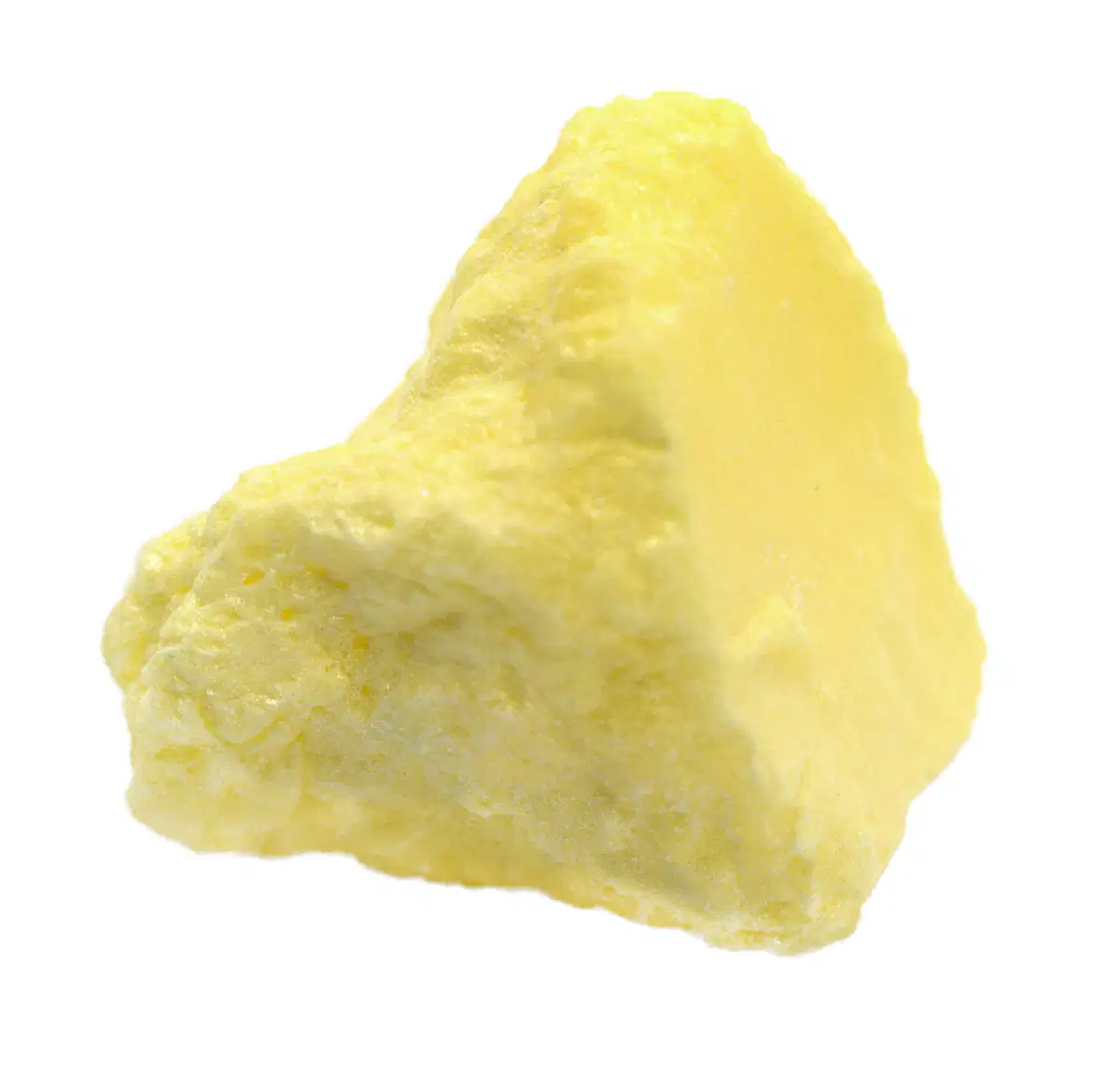
Identify the element represented by this electron configuration:
1s2 2s2 2p6 3s2 3p4
Sulfur (S)
Oxygen (O)
Phosphorus (P)
Chlorine (Cl)

