
 Worksheets
Haem oncology
Total questions: 15
Worksheet time: 8mins
A 9-year-old Caucasian boy presents with increasing tiredness and intermittent episodes of jaundice. He has had mild fever and cough for a few days, but these are improving. On examination, he is pale and jaundiced with moderate splenomegaly. Blood tests show haemolysis with elevated reticulocytes and mild thrombocytopenia. His father had a splenectomy in his twenties. What is the most likely diagnosis?
Autoimmune haemolytic anaemia
Hereditary spherocytosis
Viral-induced bone marrow suppression
Haemophagocytic lymphohistiocytosis
G6PD deficiency
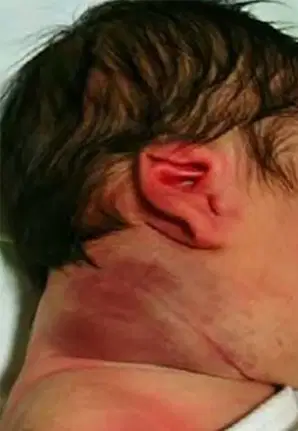
A 6-month-old infant is brought to the clinic with a rapidly enlarging mass involving the right side of the face and neck. The lesion has become firmer and darker over the past few weeks. The parents report increased bruising and small petechiae on the child's legs.
On examination, the infant is pale. Blood tests show thrombocytopenia. What is the most likely diagnosis?
Hemophilia A
Infantile haemangioma with ulceration
Kasabach–Merritt phenomenon
Immune thrombocytopenic purpura
Congenital haemangioma
A 7-month-old infant is brought to the paediatric unit with poor feeding, increasing lethargy, and recurrent respiratory infections. Parents report the baby bruises easily and has had several nosebleeds in the last month.
On examination, the infant is pale with scattered petechiae and bruises. Growth assessment shows failure to thrive.
Blood tests show pancytopenia. A haemoglobin electrophoresis reveals elevated HbF.
Fanconi anaemia
Diamond–Blackfan anaemia
Hypersplenism
Viral bone marrow suppression
Severe combined immunodeficiency
A 5-year-old child is brought to the clinic for a routine check-up. During the visit, a blood pressure cuff was applied, and shortly afterward, the child developed petechiae on both arms. The child is otherwise well, with no fever, bruising elsewhere, or history of bleeding. What will you do next?
Bone marrow aspirate
Coagulation factor assays
Platelet function tests
Repeat full blood count in 1 week
No further investigations needed
A 15-year-old girl presents with menorrhagia and frequent nosebleeds since childhood. She also reports prolonged bleeding after dental extractions. Laboratory results show: PT/INR: Normal, aPTT: mildly prolonged, Normal platelet count. Her father has a known bleeding disorder.
What is the first line of treatment?
Platelet transfusion
Factor VIII
Cryoprecipitate
Tranexamic acid
Desmopressin (DDAVP)
A 15-year-old adolescent presents with pallor but no history of bleeding or recent infection. On examination, the spleen is palpable 3 cm below the costal margin. Laboratory results: Hb: 95 g/L, MCV 95 fL, MCH: 29 pg, Platelets: 175 ×10⁹/L. Blood film: Shows spherocytes and polychromasia
Which investigation is most appropriate to confirm the diagnosis?
Direct Coombs test (DCT)
Bilirubin
EMA (eosin-5-maleimide) binding test
Hemoglobin electrophoresis
Haptoglobin
A 5-year-old Asian child, born in the UK, presents with yellowish colour of the eyes. The parents report that the child recently visited India and developed fever and fatigue, for which antibiotics were given.
Past history: Neonatal jaundice requiring NICU admission. Laboratory results: Hemoglobin: 106 g LFT: Normal. What is the most likely diagnosis?
Hepatitis A
Typhoid
Malaria
G6PD deficiency
Gilbert syndrome
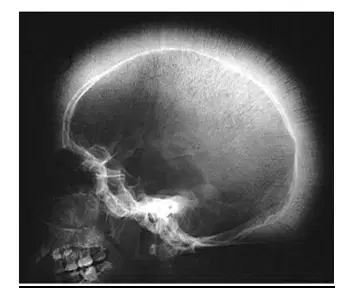
A 7-year-old child of Mediterranean descent presents with pallor, fatigue, and abdominal swelling. The parents report poor growth and frequent bone pain. On examination, the child is pale with noticeable large spleen. What is the most likely diagnosis?
Sickle cell disease
Beta-thalassemia major
Iron deficiency anemia
Aplastic anemia
Leukemia
A 6-year-old child presents with short stature and thumb malformation. Blood tests showe pancytopenia, no blast cells and high HbF., what is the gold standard test?
Chromosomal breakage test
Genetic testing
Complete blood count
Bone Marrow Biopsy
Sxeletal survey
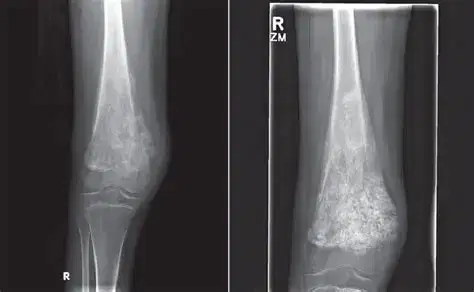
A 2-year-old child presents with a swollen, tender right arm. The overlying skin appears normal without redness or warmth. The child is stable with no fever or systemic symptoms.
An X-ray of the arm as illustrated, What is the next best step in management?
CT scan
Start empirical antibiotics for osteomyelitis
Refer urgently to oncology for further evaluation
Perform aspiration biopsy
Vitamin D level
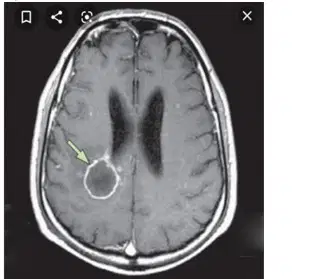
A 6-year-old child with acute lymphoblastic leukemia (ALL) is admitted with febrile neutropenia and has been on broad spectrum antibiotics for 48 hours. Despite treatment, the child develops new neurological symptoms, including headache, confusion, and subtle focal weakness.
An MRI brain scan as illustrated, What is the most likely cause of these brain changes?
Leukemic CNS infiltration
Fungal infection
Bacterial meningitis
Drug-induced neurotoxicity
Cerebral venous sinus thrombosis
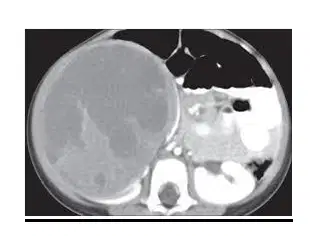
A 3-year-old child is brought to the clinic with a painless abdominal swelling noticed by the parents over the past few weeks. There is a history of fever and weight loss. On examination, a firm, non-tender abdominal mass is palpable on the left side. Blood results showed High ferritin, high LDH, CBC picture low platelet low HB, what is the next investigation?
urinary catecholamine
Bone marrow aspiration
abdomen US
DMSA scan
Alfa fetoprotein
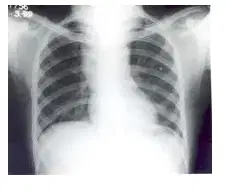
A 10-year-old child presents with multiple enlarged lymph nodes in the neck and inguinal regions. The lymph nodes are progressively enlarging over several weeks. The child also reports occasional low-grade fever, night sweats, and weight loss. Diagnostic test?
Tuberculin skin test (Mantoux)
Fine needle aspiration cytology (FNAC)
Viral serology for EBV
Lymph node biopsy (excisional)
Bone marrow biopsy
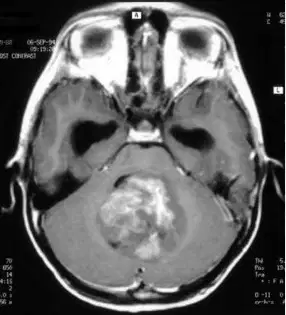
A 7-year-old child presents with a 3-week history of unsteady gait, frequent falls, morning vomiting, and headaches. The parents report that the child had varicella infection about one month ago, which resolved without complications. Diagnosis?
Post varicella syndrome
Cerebellar atrophy
Dandy walker
Medulloblastoma
Brainstem glioma
A 9-year-old child with a bulky abdominal lymphoma is started on intensive induction chemotherapy. Within 24 hours, the child develops vomiting, irritability, and reduced urine output.
Hyperkalemia
Hypophosphatemia
Hyperuricemia
Hypercalcemia
Hyponatremia

