wayground logo

Free Printable Worksheets

Font size

S
M
L
XL
Worksheets

Science Success NWEA Review Day

Total questions: 25

Worksheet time: 32mins
Name
Class
Date
1.
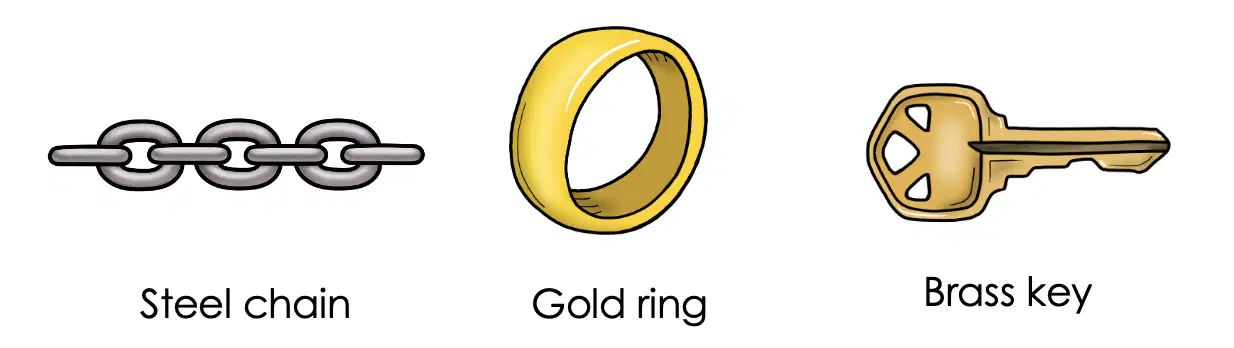
1. Which physical properties do these items have in common?
a)
They are all less dense than water and magnetic.
b)
They are all electrical conductors and more dense than water.
c)
They are all soluble and nonmagnetic.
d)
They are all more dense than water and electrical insulators.
2.
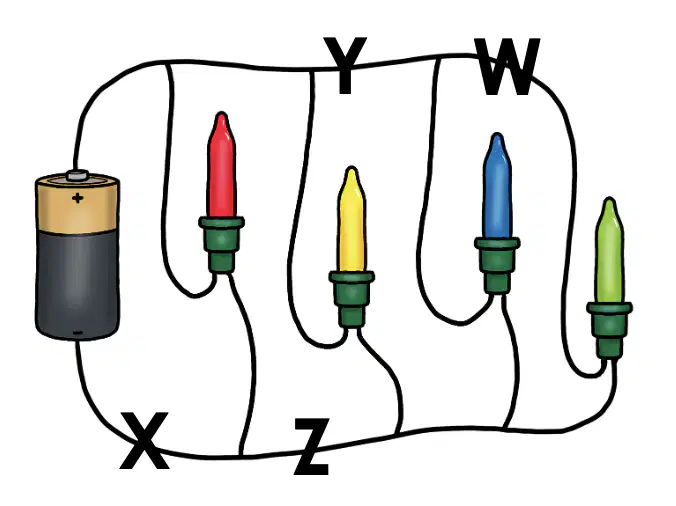
2. At which location could you cut the wire and have exactly 3 lit bulbs?
a)
Location W
b)
Location X
c)
Location Y
d)
Location Z
3.
3. Which of the following planets are farther from the Sun than Earth?
a)
Venus and Jupiter
b)
Uranus and Mercury
c)
Saturn and Neptune
d)
Mercury and Mars
4.
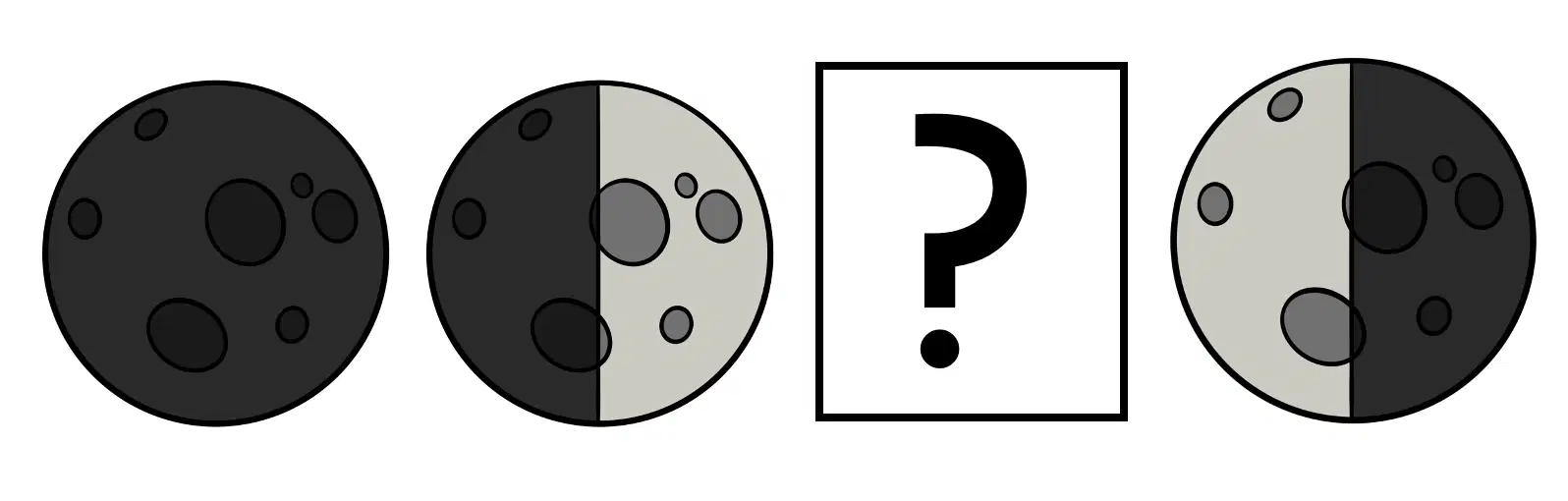
4. Which major moon phase is missing from the pattern shown below?
a)
First quarter
b)
Last quarter
c)
New moon
d)
Full moon
5.
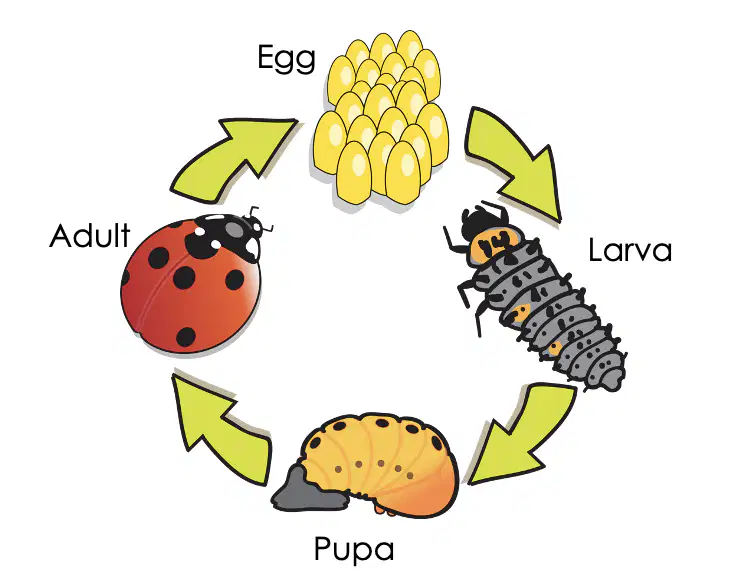
5. A lady beetle's life cycle is shown below. Which statement correctly describes a part of its life cycle?
a)
During the egg stage, the insect moves more than any other stage.
b)
During the larva stage, the insect eats to store energy.
c)
During the pupa stage, the insect can reproduce.
d)
During the adult stage, the insect can only crawl.
6.
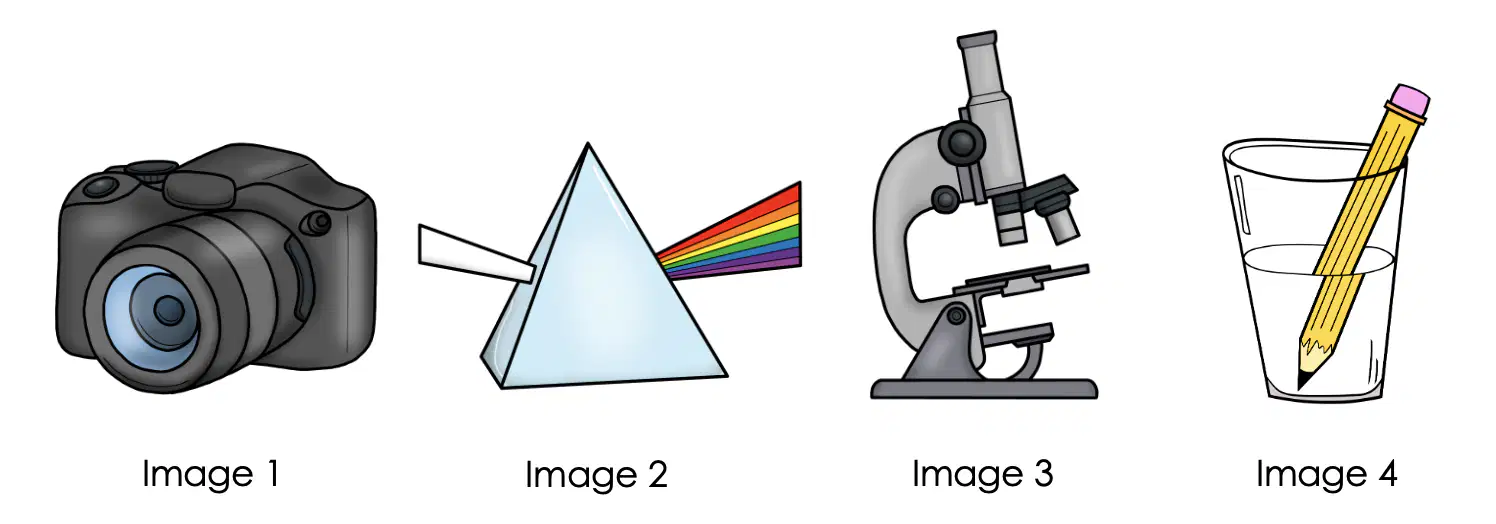
6. Choose TWO sentences that correctly describe how light behaves in the images shown below.
a)
The images all relate to light reflecting off of objects.
b)
The images all relate to light refracting through a different medium.
c)
Images 1 and 3 involve the light passing through lenses.
d)
Images 2 and 4 involve light passing through water.
e)
Images 1 and 2 use light to magnify, while 3 and 4 do not.
7.
7. Select TWO landforms below that were formed by wind.
a)
Rock arch
b)
Canyon
c)
Sand dune
d)
U-Shaped valley
e)
Mountain
8.
Part A Which statement about the fossil layers can be best proven by the fossils shown?
a)
Layer A was formed when the land was covered by ice.
b)
Layer B was formed when dinosaurs lived on the Earth.
c)
Layer C was formed when the land was covered by water.
d)
Layer D is the youngest layer.
9.
Part B What evidence supports the answer to Part A?
a)
The organisms in that layer are still alive today.
b)
That layer is below all of the other layers.
c)
There are fossils of plants in that layer.
d)
There are fossils of aquatic animals in that layer.
10.
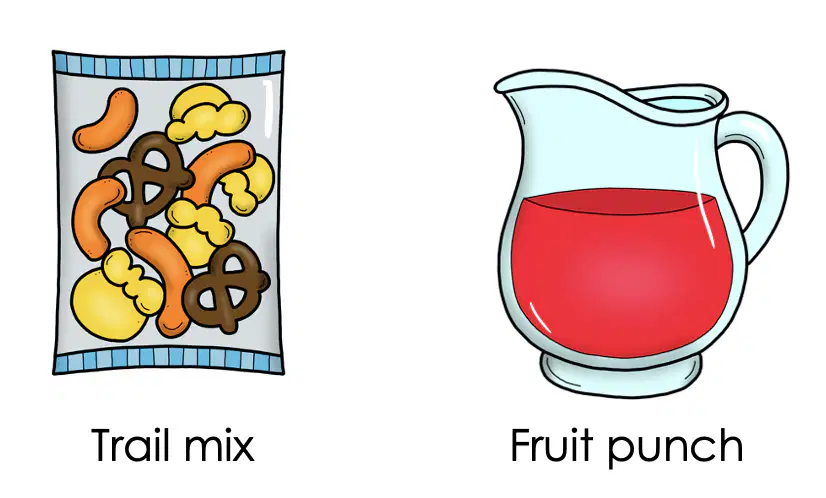
9. A student prepared trail mix and fruit punch as an after-school snack. The trail mix was made by combining pretzels, cheese puffs, and popcorn. The fruit punch was made with sugar, water, and drink powder. Explain which part of the student's snack is a solution AND give evidence to support your answer.
4 lines
11.

Before mixing sugar into hot tea, a student recorded the observations

shown in the table. Which physical property of the sugar will stay the same after the

sugar is mixed with the hot tea?

a)

Color

b)

Texture

c)

Mass

d)

Shape

12.
Put the liquids in order from most dense to least dense?
a)
4, 3, 2, 1
b)
1, 2, 3, 4
c)
3, 4, 2, 1, 
d)
4, 3, 1, 2
13.

The diagram represents four liquids that each has a different density. Which statement best describes the density of Layer C?

a)

Layer C is more dense than Layer A and Less dense than Layer B.

b)

Layer C is more dense than Layer B and less dense than Layer D.

c)

Layer C is more dense than Layer B and less dense than Layer A.

d)

Layer C is more dense than Layer D and less dense than Layer B.

14.
a)

A Stir the liquids, let them settle, and then identify the bottom layer as water

b)

B Drop a piece of ice into the graduated cylinder, let the ice settle, and then identify the layer just above the ice as water

c)

C Add water to the graduated cylinder, let the mixture settle, and then identify the layer that increases in volume as water

d)

D Carefully pour each layer into separate plastic containers, place the containers in a freezer, and then identify the liquid that takes the longest to freeze as water

15.

The picture below shows a spoon in a glass of water. Why does the spoon appear bent?

a)

the light waves are refracted as they change speed when they pass from the water to the air

b)

the light waves are reflected as they change speed when they pass from the water to the air

c)

the light waves are absorbed when they pass from the water to the air

d)

the light waves bounce off of the water

16.

Why does the lower part of the child appear so much different in size from the upper

part?

a)

The light rays that travel through water and then into air are refracted.

b)

The light rays that travel through water and then into air are enlarged.

c)

The light rays that travel through air and then into water are reflected.

d)

The light rays that travel through air and then into water are reduced.

17.
The term for any wave that hits a surface and bounces off
a)
Transparent
b)
Translucent
c)
Refraction
d)
Reflection
18.
3.  What do all the objects below have in common?
a)
A.  They all refract light.
b)
B.  They all reflect light.
c)
C.  They are all conductors.
d)
D.  They all make objects appear smaller/
19.

The two satellite images show the changes over time to an area where a river flows into a body of water. The location of a specific change is marked by an arrow.

Select the two constructive geologic processes that caused the change marked by the arrow.

a)

sedimentation

b)

delta formation

c)

tectonic activity

d)

seafloor spreading

20.

Landslide-What process?

a)

Fast Earth Change

b)

Slow Earth Change

21.

What is the largest planet in

our solar system?

a)

Neptune

b)

Jupiter

c)

Uranus

d)

Mars

22.

What planets are these?

a)

Inner(Rocky) Planets

b)

Outer(Gas Giants) Planets

23.

Which is true about Mercury, Venus, Earth, and Mars

a)

they all have an atmosphere

b)

they all have many moons

c)

they all have rings made of rocks and ice

d)

they all have a rocky surface

24.
Which planet has a thick atmosphere and is the hottest planet?
a)
Mercury
b)
Venus
c)
Earth
d)
Mars
25.
Whats the 5th planet?? 
a)
jupiter 
b)
mars
c)
earth
d)
THE SUN?