
 Worksheets
Introduction to Marketing Plans
Total questions: 30
Worksheet time: 15mins
Which statement best captures why a business plan is essential for a new performing arts venture?
It guarantees ticket sales without research or marketing
It acts as a roadmap guiding stages and convincing stakeholders
It replaces artistic direction and creative rehearsal processes
It removes the need for budgets and performance timelines
What is a marketing plan in the context of a company launching a show?
A script that details dialogue and stage directions
A year-by-year profit distribution agreement
A legal contract for performers and venue partners
A comprehensive blueprint for implementing marketing strategy
Which item is most appropriately included in the usual components of a marketing plan?
SWOT analysis and specific objectives
Union wage scales for musicians
Set construction measurements
Casting choices and rehearsal blocking
A producer wants to secure investment for a touring production. Which action aligns with best practice?
Skip monitoring performance against goals
Promise returns without defined objectives
Rely on word-of-mouth without documentation
Present a researched business plan demonstrating feasibility
Which pair correctly matches planning focus with purpose when promoting a new festival?
Brand strategy: define identity and positioning
Market landscape: archive past costume designs
Executive summary: list all cast biographies
Promotional strategy: detail stage lighting plots
What is the primary purpose of an executive summary in a marketing plan?
Serve as a legal contract with investors
Provide a high-level overview that convinces busy readers
Replace the need for a full plan entirely
List every operational detail for internal staff only
Which item belongs in a business description when defining a new performing arts company?
Weekly rehearsal schedules for cast members
Target customers and business location details
Color palette for the lobby décor
Ticket pricing for a single premiere night
A theatre startup wants investors to grasp its plan quickly. Which approach best aligns with guidance on the executive summary?
Write it last to present clear, concise highlights
Open with cast bios and training certificates
Describe every supplier contract in detail
Include a full budget ledger appendix
When drafting the business description for a dance studio, which combination most directly communicates positioning and operations?
Mission statement, owners’ roles, trading location
Lighting plot, costume sketches, prop list
Holiday party themes, snack brands, staff birthdays
Daily class playlist, mirror dimensions, paint finish

Which statement best captures Blackstrad’s core brand identity?
Luxury couture label specializing in runway experimentation
General apparel retailer focused on mass-market basics
Concert attire brand crafted by a musician for musicians
Fashion house for mainstream evening wear trends

A string quartet needs stage outfits that meet standard concert black dress codes and allow movement under lights. Which Blackstrad feature most directly fits this need?
Seasonal color palettes for vibrant stage presence
Capsule wardrobe of separates for versatility and value
Formalwear designed for corporate office environments
Embroidery-heavy designs emphasizing ornate detailing
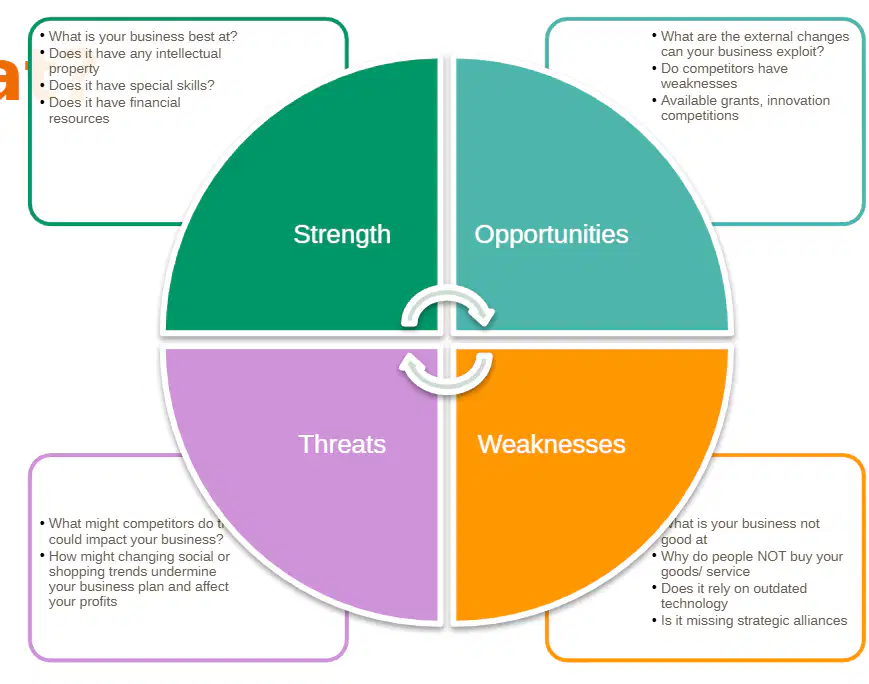
In the SWOT diagram, which quadrant focuses on internal advantages that a performing arts company already possesses?
Strengths within current capabilities
Opportunities from external changes
Weaknesses in outdated processes
Threats from competitor actions
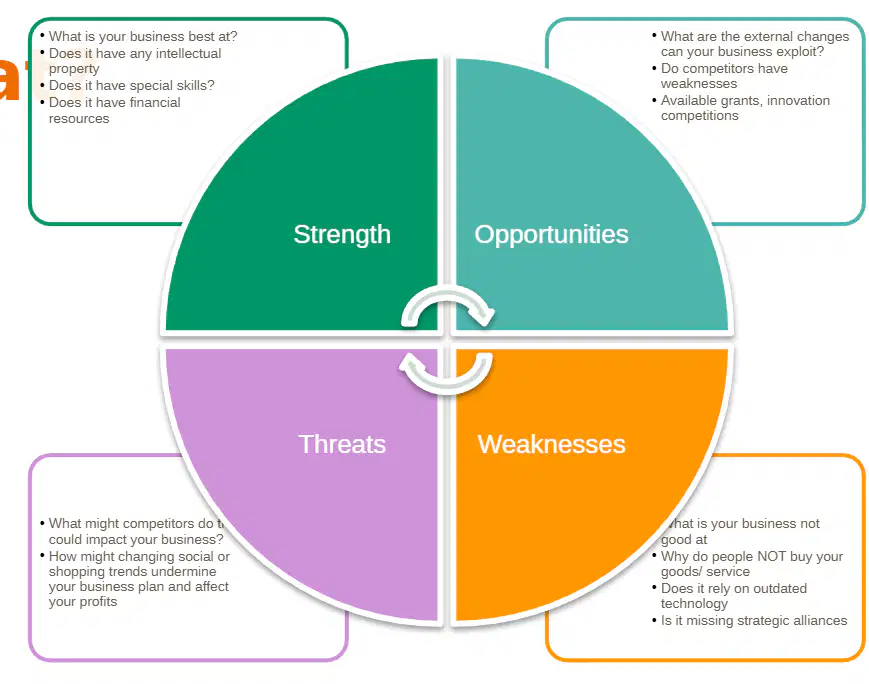
A theatre troupe notices new city grants for cultural innovation and a rival company closing a venue. Using the diagram’s guidance, how should these be classified?
Grants are a strength; closure is a threat
Both are internal weaknesses to fix
Both are external opportunities to exploit
Grants are a threat; closure is a weakness
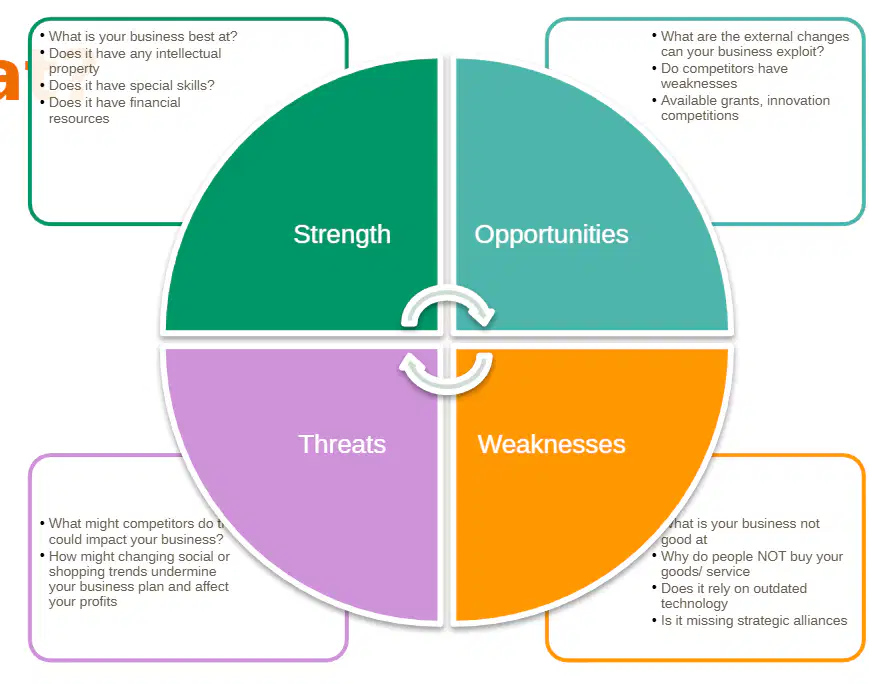
You are advising a touring dance company. Ticket sales lag because marketing uses outdated tools, and competitors plan aggressive discounts. According to the SWOT framework shown, what is the most strategic pairing to prioritize in planning?
Leverage internal strength and ignore market signals
Treat internal weakness as an external opportunity
Convert external threat into internal asset immediately
Address internal weakness and monitor external threat
A touring theatre company chooses retail, wholesale, direct-to-venues, or online ticketing. What element are they determining?
Distribution and delivery plan
Marketing research method
Unique selling proposition
Target market profile
A dance studio wants to increase repeat enrollment by 10% next year. Which aligned marketing goal fits this aim?
Gain 200 loyalty sign-ups each month
Open three new physical locations
Redesign the studio’s brand logo
Switch to higher-cost costumes
For a new avant‑garde performance, which description most clearly identifies a target market?
All people who like entertainment
Urban adults 25–40 who attend indie arts
Residents living within 200 miles
Anyone with social media accounts
Which step is essential when comparing your performing arts school to competitors?
Listing products, services, prices, and gaps
Writing a mission statement for your brand
Surveying only current students for feedback
Setting tuition by copying average local rates

You identify a rival academy offering advanced piano courses at premium prices but lacking entry-level classes. How should you apply your USP to gain advantage?
Position beginner-friendly programs to fill the gap
Match their premium pricing to signal quality
Avoid beginners to protect brand prestige
Replicate their advanced curriculum exactly
A performing arts venue plans to increase monthly sign-ups to its customer rewards program. Which tactic aligns with a strategy of using personalized invites to introduce new customers?
Setting a yearly goal to grow membership by ten percent
Designing a mission statement about audience loyalty
Sending emails that address each new customer by name
Selecting a social media channel for general announcements
Which element focuses on defining how you will promote a product, such as through press, publicity, advertising, or online marketing?
Promotion methods for outreach channels
Social media channels and posting plan
Sales pipeline and retention steps
Pricing structure and profit margins
A theatre company wants to grow its audience among teens. Which plan best applies a social media strategy?
Choose channels teens use and plan post types
Lower ticket prices below all competitors
Rely only on word-of-mouth referrals
Buy print ads in national newspapers
You are setting ticket prices for a touring show. Which option shows strategic thinking by balancing cost, market, and margin?
Set price equal to average competitor rate
Price at cost to guarantee full houses
Calculate unit costs, compare market, set margin
Double prices to signal premium exclusivity
Which element best describes day-to-day running in a small performing arts company?
What equipment is owned and where it is stored
Why the studio location suits the target market
How tickets are paid for and staff are paid
Which roles exist in the legal ownership structure
A theatre startup projects £200,000 sales and £80,000 cost of sales, with £90,000 operating expenses. What is the net profit forecast?
£30,000 after deducting all expenses
£110,000 after only cost of sales
£90,000 before operating expenses
£120,000 before deducting any expenses
A small theatre has $12,000 for a season launch. Which allocation shows sound planning that also supports evaluation?
Split evenly between radio, print, and talent fees
Allocate by audience segments and reserve budget for tracking
Spend all funds on print posters across downtown
Hire a PR firm and remove all paid placements
Which statement best explains why market research must come before developing a marketing plan for a performing arts event?
It ensures competitors will not enter the market
It replaces budgeting and scheduling entirely
It guarantees viral word-of-mouth without promotion
It provides vital insights on customers and feasibility
A small theatre company wants a competitive advantage for its new season. Which action fits market research rather than execution?
Launch discounted tickets across all channels now
Analyze industry trends and competitor pricing patterns
Print additional programs for opening night crowds
Hire more ushers for improved lobby service
Which set best represents core demographics for a buyer persona in performing arts marketing?
Stage width, fly system, seating
Income, age, gender, location
Lighting plot, sound cues, props
Cast size, rehearsal schedule, script
You are promoting a contemporary dance showcase. Using buyer personas, which plan most effectively narrows targeting while remaining evidence-based?
Target adults 22–35 in-city with fitness and arts interests
Target everyone within 200 miles regardless of interests
Target only tourists because venues are downtown
Target all students because discounts might attract them

