
 Worksheets
AP Gov 1st, 2nd, 4th, 8th Amendment Review
Total questions: 20
Worksheet time: 10mins
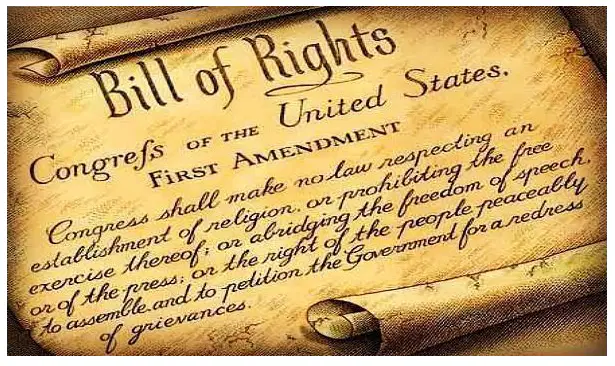
In Engel v. Vitale, SCOTUS considered whether or not the _________ had been violated.
due process clause
establishment clause
equal protection clause
free exercise clause
Which of the following best explains the Supreme Court’s reasoning in Wisconsin v. Yoder?
The state’s interest in universal education always outweighs individual religious objections.
Public education is a fundamental right, so the Amish could opt for state-funded homeschooling.
The Amish demonstrated that compulsory attendance beyond 8th grade substantially burdened their sincere religious practices.
The First Amendment protects only beliefs, not actions, so Wisconsin’s law was constitutional.
Which of the following statements best explains a difference between the Court’s reasoning in Tinker v. Des Moines and Schenck v. United States?
Both decisions protected political speech because it is the most valuable type of expression.
Tinker emphasized student safety while Schenck focused solely on symbolic speech.
Tinker limited First Amendment protections, while Schenck expanded them.
Tinker protected peaceful political expression, while Schenck restricted speech that threatened national security.
Which of the following is most applicable to the Court's decision in New York Times, Co. v. United States?
prior restraint
selective incorporation
privileges and immunities
freedom of petition
In its ruling in D.C. v. Heller, SCOTUS decided that the right to keep and bear arms:
was primarily a collective right
was primarily an individual right
should be strictly regulated by the federal government
should be incorporated into the states
Which fact was most important to the Court’s reasoning in McDonald v. Chicago?
Chicago’s ban on handguns prevented all forms of firearm ownership.
Chicago imposed the same gun regulations as the federal government.
Historical evidence showed the right to bear arms was fundamental to American liberty.
Most states at the time had no gun regulations at all.
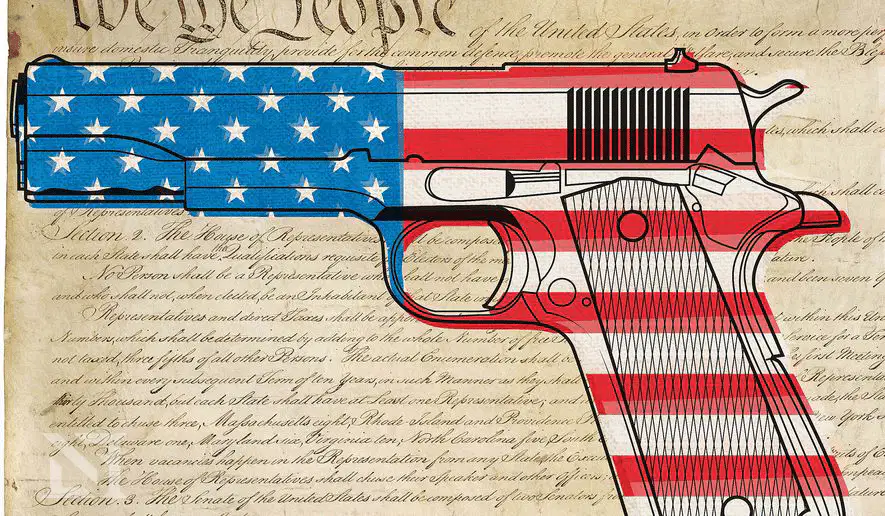
Which of the following best describes your opinion on government regulation of our right to keep and bear arms?
I think our right to keep and bear arms should be free from most all forms of government regulation in order to maintain freedom and liberty
I think there should be sensible gun control measures that don't necessarily infringe upon our basic 2nd Amendment right to keep and bear arms
I think our right to keep and bear arms should be strictly regulated by the government in order to maintain safety and security
According to the 4th Amendment, what is needed by the government in order to legally search someone or seize their property?
due process
probable cause
evidence beyond a reasonable doubt
strict scrutiny
Which of the following prevents the government from using evidence against an accused person that was gathered without probable cause or a valid warrant?
implied consent rule
exclusionary rule
substantial disruption rule
imminent lawless danger rule
The police see a suspicious looking man standing at a bus stop on a downtown street, in an area where there is extensive drug dealing. The officers ask him if they can look in his bag but he refuses. They open the bag anyway and find drugs. Is this a legal search?
Yes
No
A man is stopped for going 60 mph in a 45 mph zone. The police decide to conduct a search of the trunk and find a gun and arrest the man for the illegal possession of a firearm. Is this a legal search?
Yes
No
A woman is seen shoplifting at the mall. Police arrest her outside the mall. Then, without obtaining a warrant, they search her house and find a room full of stolen car stereos. Is this a legal search?
Yes
No
After a man checks out of a hotel, the police ask the manager to turn over the contents of the trash can, where they find notes planning a murder. Is this a legal search?
Yes
No
A wildlife officer is in a boat, patrolling a lake when he notices several people fishing from a remote beach. He sees one of the people place an object under a rock about 75 feet from the rest of the group. The officer stops to check whether the people have fishing licenses, and finds that they do. He then proceeds to the rock, finds a margarine tub underneath it, and opens the tub, finding drugs. Is this a legal search?
Yes
No
The police suspect a local woman is a drug dealer. After months of investigating, the detective in the case ask the trash collector in her neighborhood to set aside a bag of trash that she had set out on the curb and allow him to look through it. The trash collector complied and the detective finds evidence of drug possession in the trash which he used to obtain a warrant to search the suspect's home where he finds large amounts of cocaine and marijuana. Is this a legal search?
Yes
No
After receiving an anonymous tip that a man was growing marijuana on his property, an officer examined the property from the street and saw a greenhouse in the back yard with a sign that read “DO NOT ENTER.” The officer used a police helicopter to fly over Michael’s property and testified that she could see marijuana plants in the greenhouse through a hole in the roof. She also took several photos that were submitted as evidence. A judge issued a warrant and when the man's property was searched, marijuana plants were found in the green house. Is this a legal search?
Yes
No
What did the Supreme Court rule in Gregg v. Georgia (1976)?
The death penalty is always unconstitutional.
The death penalty is constitutional if applied fairly and with procedural safeguards.
The death penalty violates the Equal Protection Clause.
The death penalty is unconstitutional when used for non-homicide offenses.

Do you believe that the administration of the death penalty in 1st degree murder convictions is a violation of the 8th Amendment?
Yes
No
Do you believe that the death penalty as a deterrent outweighs the risk of innocent people being put to death?
Yes
No
Which of the following have the courts consistently used when applying selective incorporation?
the privileges and immunities clause of the 14th Amendment
the equal protection clause of the 14th Amendment
the privacy clause of the 14th Amendment
the due process clause of the 14th Amendment

