
 Worksheets
Business Laws
Total questions: 23
Worksheet time: 12mins
What are business laws? Fill in the blank: Business laws are rules and regulations that govern ________ activities.
business
sports
medical
educational
Business law is also known as: Choose all that apply.
Criminal law
Commercial law
Civil law
Corporate law
The purpose of making a business law is:
to regulate business activities and ensure fair practices
to promote illegal business operations
to discourage entrepreneurship
to eliminate all forms of competition
Fill in the blank: One of the branches of business law is the _________.
Law of contract
Law of gravity
Law of thermodynamics
Law of motion
Fill in the blank: The _________ is a branch of business law that deals with the sale and purchase of goods.
Sale of goods Act
Contract Act
Companies Act
Partnership Act
Fill in the blank: The branch of business law that governs the relationship between principal and agent is called the _________.
Law of agency
Law of contracts
Law of torts
Law of partnership
Fill in the blank: The important thing which turns an agreement into a contract is when the parties intend to be ________ bound to carry out their agreements.
legally
morally
socially
emotionally
Who is the counterpart to Landlord in a contract?
Tenant
Agent
Broker
Owner
Who is the counterpart to Insurer in a contract?
Insured
Broker
Agent
Underwriter
Who is the counterpart to Bank in a contract?
Customer
Manager
Shareholder
Auditor
Who is the counterpart to Vendor in a contract?
Vendee
Agent
Tenant
Broker
Fill in the blank: A __________ contract is a constructional agreement that is written in black and white. It spells out the obligation to the parties in a contract. Some contracts that require special formalities must be in written form to avoid complications.
written
verbal
implied
oral
Which type of contract is done verbally and not in written form?
Written Contract
Oral Contract
Formal Contract
Implied Contract
Fill in the blank: When a seal is affixed to a document or written agreement, it is known as _________.
formal contract or contract of deed
simple contract
void contract
executed contract
Which type of contract is described as obligations imposed by the court, not true contracts but contracts acknowledged before a law court?
Contract of Deed
Contract of Records
Contract of Sale
Contract of Service
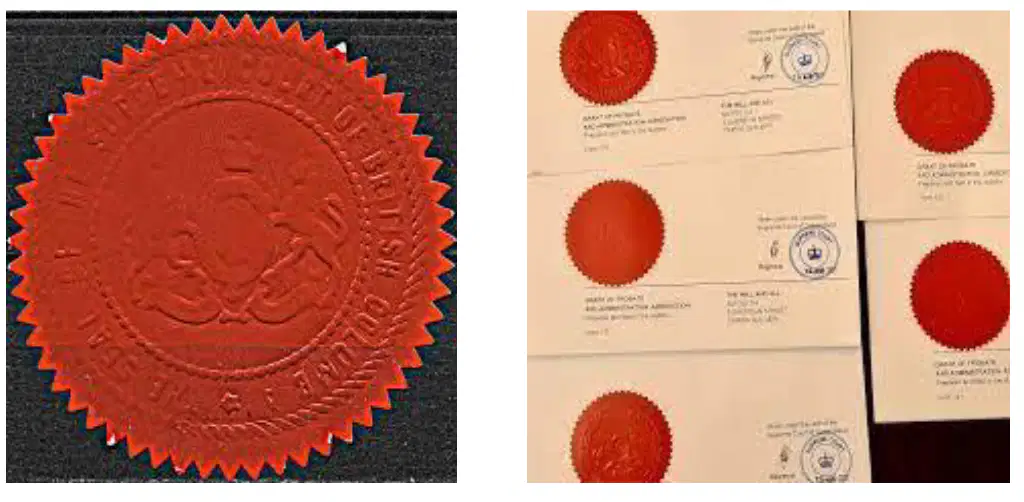
Look at the images provided. What is being shown in these images?
Example of a court seal
Example of a postage stamp
Example of a coin
Example of a passport stamp
Mention three parties to a contract.
Offeror, Offeree, and Consideration (or alternatively: Promisor, Promisee, and Third Party).
Buyer, Seller, and Agent.
Plaintiff, Defendant, and Witness.
Landlord, Tenant, and Broker.
What are informal contracts? Fill in the blank: Informal contracts are ______ contracts which must possess all the essential characteristics of a valid contract.
simple
formal
void
illegal
Which of the following is true about informal contracts?
They do not require any characteristics of a valid contract.
They are simple contracts that must possess all the essential characteristics of a valid contract.
They are always easy to execute.
They belong to the formal contract category.
To be valid, a contract must possess the following essential characteristics or ingredients: 1. OFFER AND UNQUALIFIED ACCEPTANCE: In a valid contract, a definite offer must be made by one party to the other and the offer must be _________.
unconditionally accepted
conditionally accepted
ignored
revoked
Fill in the blank: The terms of agreement must state clearly the parties intended to create ________ contracts.
legally binding
temporary
verbal
informal
Fill in the blank: All simple contract must be supported by ________, that is some elements of exchange which is measurable in money or money’s worth.
valuable consideration
legal obligation
written agreement
mutual consent
Fill in the blank: The consent of the parties involved in a contractual agreement must be ________, agreement of the parties to a contract must not be obtained under duress, undue influence, misrepresentation or mistake.
genuine
forced
ambiguous
conditional

