wayground logo

Free Printable Worksheets

Font size

S
M
L
XL
Worksheets

TRYOUT ASAS GANJIL

Total questions: 56

Worksheet time: 28mins
Name
Class
Date
1.
When planning a trip, what should you do first to make sure you don’t overspend?
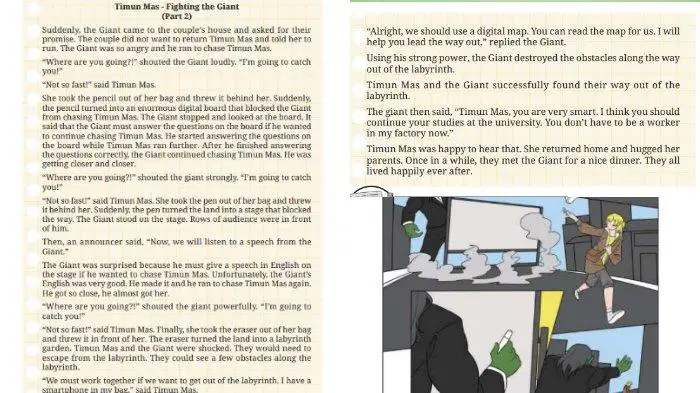
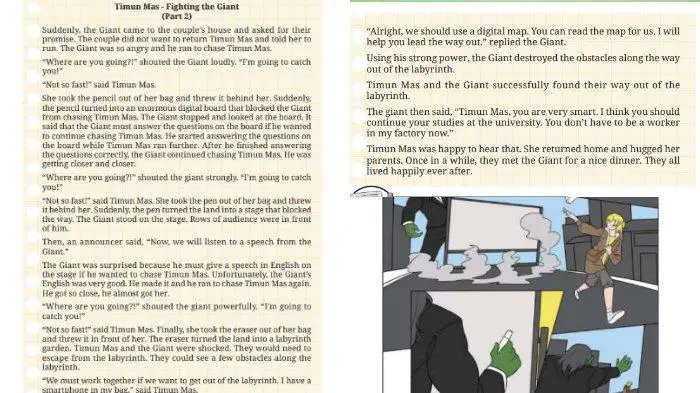
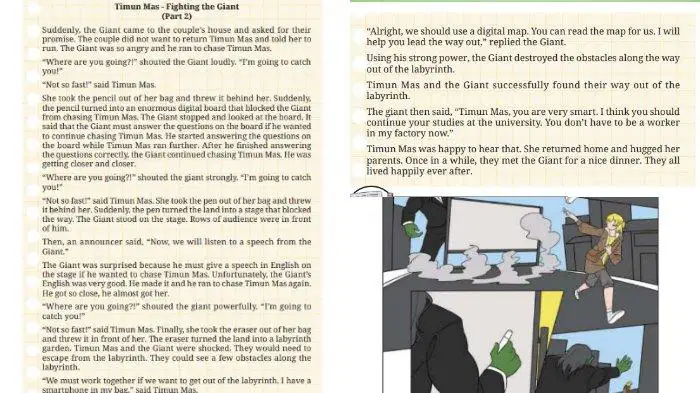
a)
Start packing your bags
b)
Create a budget for travel, food, and accommodation
c)
Look for souvenirs to buy
d)
Book the most expensive flight
2.
If you find a hotel room that costs $80 per night and you plan to stay for 3 nights, how much should you budget for accommodation?
a)
$160
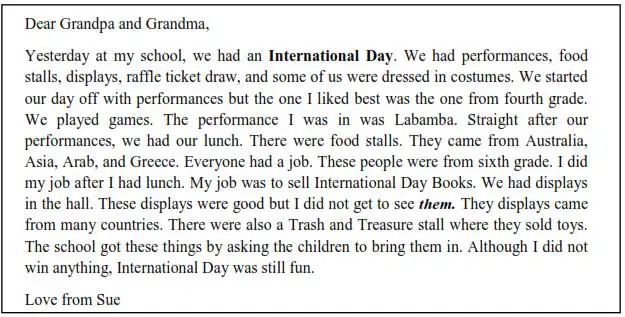
b)
$240
c)
$320
d)
$80
3.
If your flight is at 10:00 a.m. and you need to arrive at the airport 2 hours before departure, what time should you arrive at the airport?
a)
8:00 a.m.
b)
9:00 a.m.
c)
7:00 a.m.
d)
10:00 a.m.
4.
If you plan to visit two attractions, spending 1 hour at each with a 45-minute break in between, and you start at 10:00 a.m., what time will you finish?
a)
11:30 a.m.
b)
12:00 p.m.
c)
12:45 p.m.
d)
1:00 p.m.
5.
You have a dinner reservation at 7:30 p.m., but the restaurant is a 17-minute walk from your hotel. What is the latest time you should leave your hotel to arrive on time?
a)
7:23 p.m.
b)
6:40 p.m.
c)
6:45 p.m.
d)
7:13 p.m.
6.
Your train is scheduled to leave at 6:30 p.m., and the journey to the train station takes 45 minutes. What is the latest time you should leave to reach the station on time?
a)
5:30 p.m.
b)
5:45 p.m.
c)
6:00 p.m.
d)
6:15 p.m.
7.
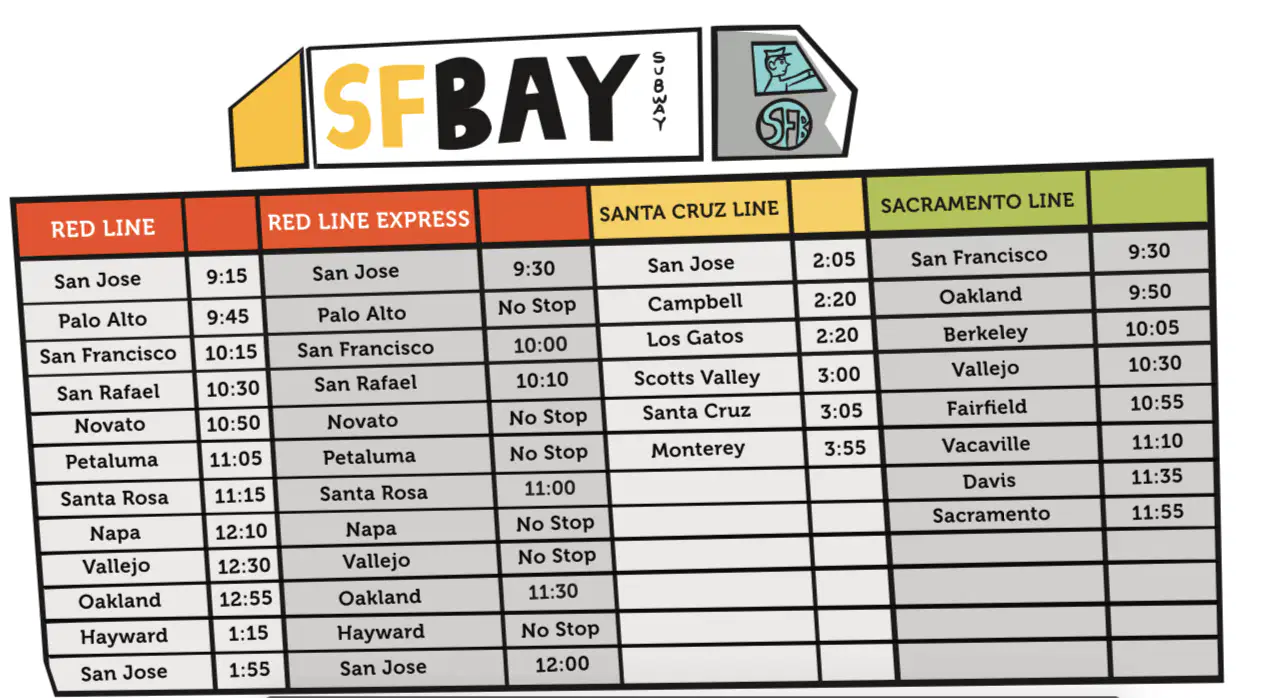
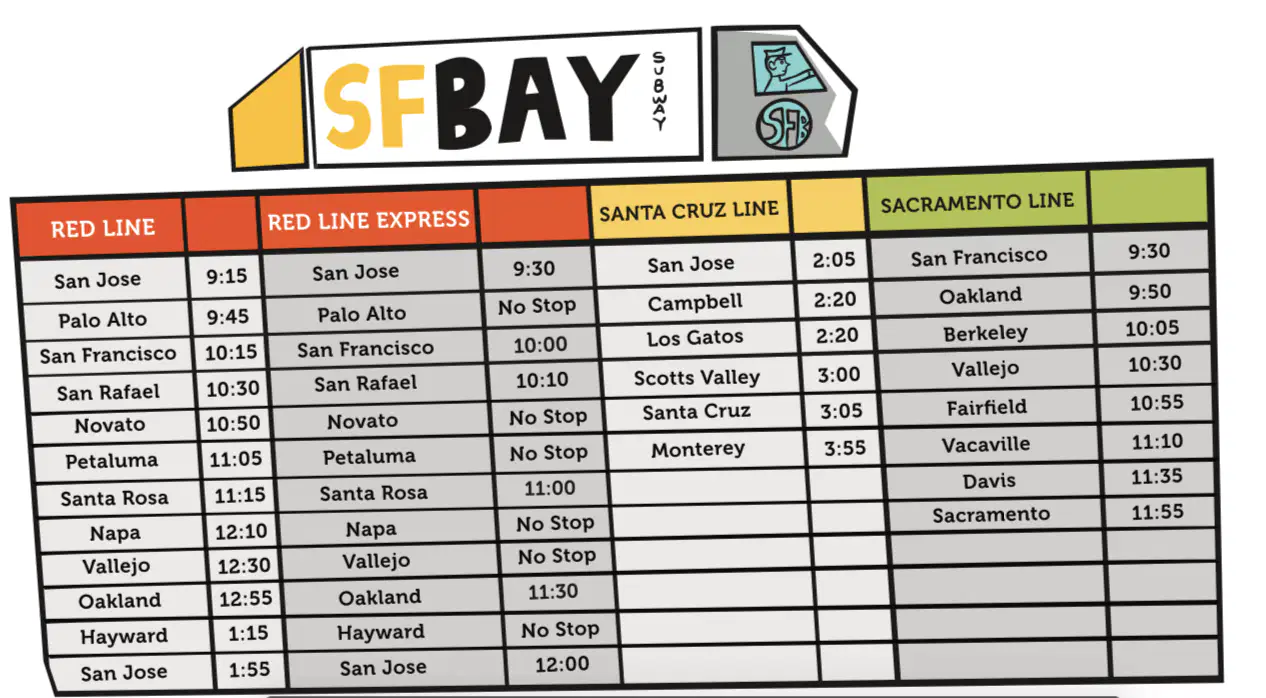
If you rode the Red Line from start to finish how long would you be on the train?
a)
4 hours and 40 minutes
b)
3 hours and 40 minutes
c)
4 hours and 35 minutes
d)
3 hours and 35 minutes
8.
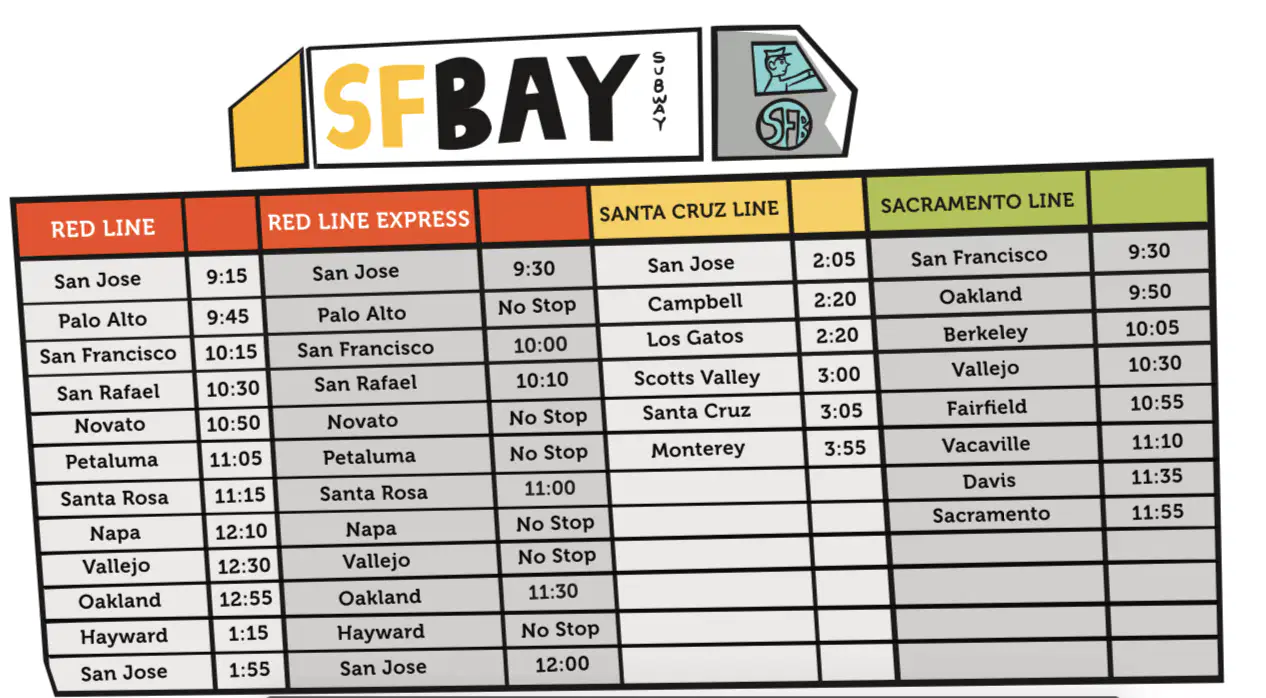
If you rode the Red Line from start to finish how long would you be on the train?
a)
4 hours and 40 minutes
b)
3 hours and 40 minutes
c)
4 hours and 35 minutes
d)
3 hours and 35 minutes
9.
If you rode the Red Line Express from start to finish how long would you be on the train?
a)
2 hours and 30 minutes
b)
2 hours and 40 minutes
c)
2 hours and 35 minutes
d)
3 hours and 30 minutes
10.
If you rode the Santa Cruz Line from San Jose to Monterey how long would you be on the train?
a)
1 hour and 50 minutes
b)
2 hours and 50 minutes
c)
1 hour and 55 minutes
d)
1 hour and 45 minutes
11.
Ryan, my roommate, and I had a great weekend. Last Saturday we got up early and had a big breakfast. Then we took the bus to go downtown and went to an art museum. The museum opened at nine o’clock and we stayed there all morning. We saw some beautiful paintings. We had a guide who explained everything to us. I liked all the art, but Ryan didn’t like the modern art very much. I bought copies of two paintings. I’m going to put them on the wall of my bedroom. At one o’clock, we were hungry so we had lunch at the museum cafeteria. After lunch, we took a walk in the park near the museum. We went home at five o’clock. We were very tired, but we had a good time. On Sunday we stayed home and studied. The main idea of the second paragraph is ...
a)
A guide accompanied the visitors
b)
The writer liked all the art displayed at the museum
c)
Ryan and his roommate liked all the beautiful paintings at the museum
d)
The museum only displayed modern art
12.
Ryan, my roommate, and I had a great weekend. Last Saturday we got up early and had a big breakfast. Then we took the bus to go downtown and went to an art museum. The museum opened at nine o’clock and we stayed there all morning. We saw some beautiful paintings. We had a guide who explained everything to us. I liked all the art, but Ryan didn’t like the modern art very much. I bought copies of two paintings. I’m going to put them on the wall of my bedroom. At one o’clock, we were hungry so we had lunch at the museum cafeteria. After lunch, we took a walk in the park near the museum. We went home at five o’clock. We were very tired, but we had a good time. On Sunday we stayed home and studied. What did the writer and his roommate do last weekend?
a)
They went to the cafe
b)
They went to the artist workshop
c)
They went to the art museum
d)
They stayed in their house
13.
Ryan, my roommate, and I had a great weekend. Last Saturday we got up early and had a big breakfast. Then we took the bus to go downtown and went to an art museum. The museum opened at nine o’clock and we stayed there all morning. We saw some beautiful paintings. We had a guide who explained everything to us. I liked all the art, but Ryan didn’t like the modern art very much. I bought copies of two paintings. I’m going to put them on the wall of my bedroom. At one o’clock, we were hungry so we had lunch at the museum cafeteria. After lunch, we took a walk in the park near the museum. We went home at five o’clock. We were very tired, but we had a good time. On Sunday we stayed home and studied. How did they go to the museum?
a)
By bicycle
b)
On foot
c)
By bus
d)
By train
14.
Ryan, my roommate, and I had a great weekend. Last Saturday we got up early and had a big breakfast. Then we took the bus to go downtown and went to an art museum. The museum opened at nine o’clock and we stayed there all morning. We saw some beautiful paintings. We had a guide who explained everything to us. I liked all the art, but Ryan didn’t like the modern art very much. I bought copies of two paintings. I’m going to put them on the wall of my bedroom. At one o’clock, we were hungry so we had lunch at the museum cafeteria. After lunch, we took a walk in the park near the museum. We went home at five o’clock. We were very tired, but we had a good time. On Sunday we stayed home and studied. Where did they go after lunch?
a)
They went to the cafeteria
b)
They went home
c)
They went to the art gallery
d)
They went to the park
15.
Bandung as Sea of Fire was a fire that occurred in the city of Bandung on March 24, 1946. Within seven hours, about 200,000 residents of Bandung burned their homes. British troops as part of the Brigade MacDonald arrived in Bandung on October 12, 1945. Bandung was deliberately burned by TRI and local people. There were black smoke billowing high into the air everywhere. The British Army began to attack so fiercely. The greatest battle happened in the village named Dayeuh Kolot, in South Bandung, where there was a large ammunition depot belonging to the British. In this battle, Barisan Rakyat Indonesia destroyed the ammunition depot. The strategy to fire Bandung was considered because the power of TRI and the people’s militia was not comparable to the British forces and NICA. This incident inspired the creation of the famous song “Halo, Halo Bandung”. What happened in Bandung inspired the creation of ...
a)
The popular song, "Halo, Halo Bandung"
b)
The famous village, Dayeuh Kolot
c)
The celebration of Hero Day
d)
The movie entitled Bandung, Sea of Fire
16.
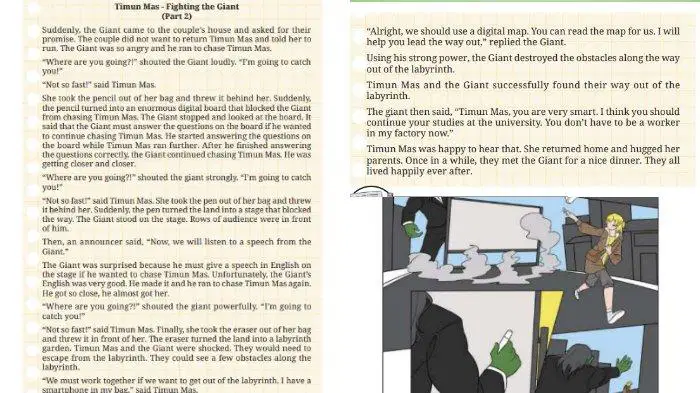
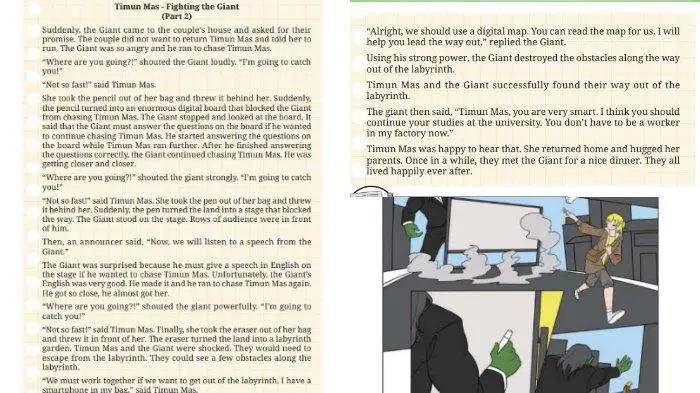
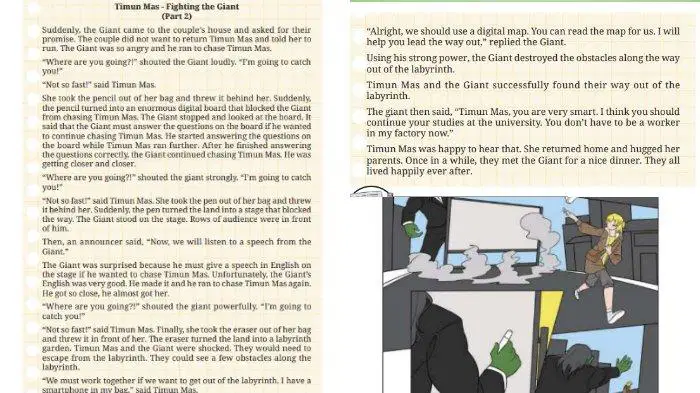
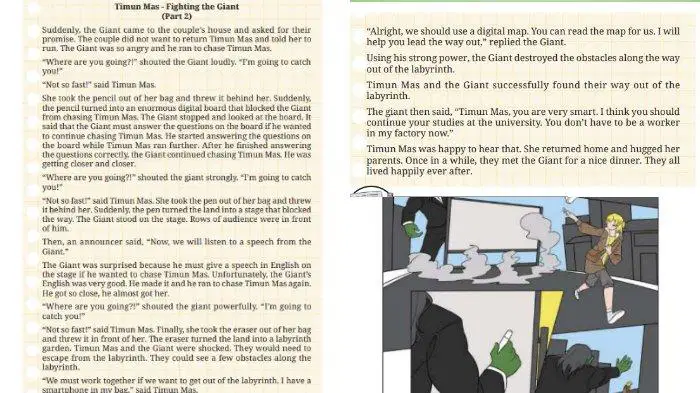
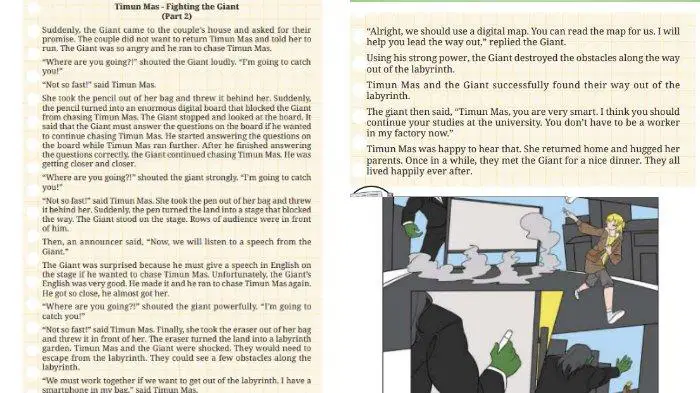
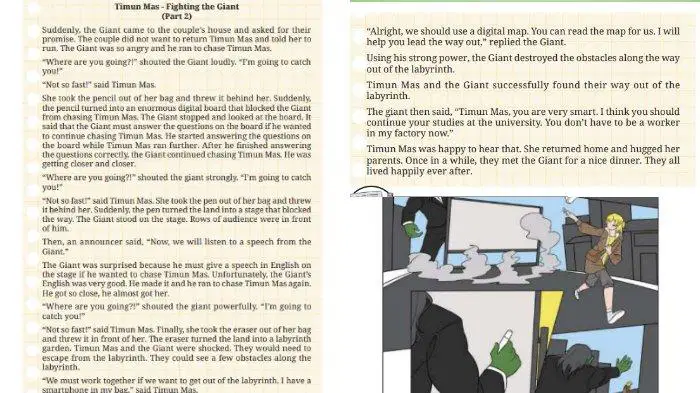
Why did Timun Mas throw the objects (pencil, pen, eraser) behind her while running from the Giant?
a)
Because she wanted to confuse the Giant for fun.
b)
Because each object magically turned into obstacles that slowed the Giant down.
c)
Because she wanted to show the Giant that she had many school supplies.
d)
Because she hoped the Giant would stop chasing her if she dropped her things.
17.
Bandung as Sea of Fire was a fire that occurred in the city of Bandung on March 24, 1946. Within seven hours, about 200,000 residents of Bandung burned their homes. British troops as part of the Brigade MacDonald arrived in Bandung on October 12, 1945. Bandung was deliberately burned by TRI and local people. There was black smoke billowing high into the air everywhere. The British Army began to attack fiercely. The greatest battle happened in the village named Dayeuh Kolot, in South Bandung, where there was a large ammunition depot belonging to the British. In this battle, Barisan Rakyat Indonesia destroyed the ammunition depot. The strategy to fire Bandung was considered because the power of TRI and the people’s militia was not comparable to the British forces and NICA. This incident inspired the creation of the famous song “Halo, Halo Bandung”. Why was Bandung finally fired?
a)
Because there was a large ammunition depot belonging to the British
b)
Because the British troops had killed people in Bandung
c)
Because the power of TRI and people's militia was not comparable to the number of British troops
d)
Because there was a celebration in Bandung
18.
The Proclamation of Indonesian Independence was a pivotal moment that not only declared independence but also inspired future generations to fight for their rights and freedoms. How did the Proclamation of Indonesian Independence influence future generations?
a)
It discouraged people from fighting for their rights
b)
It inspired future generations to fight for their rights and freedoms
c)
It had no influence on future generations
d)
It led to more conflicts with neighboring countries
19.
The Bandung Sea of Fire was a significant event that showcased the resilience of the Indonesian people during their struggle for independence. What does the Bandung Sea of Fire symbolize in Indonesian history
a)
A symbol of defeat
b)
A symbol of resilience and unity
c)
A symbol of colonial power
d)
A symbol of economic prosperity
20.
Last holiday I went to Paris. I visited museums and sat in public gardens. A friendly waiter taught me a few words of French. Then he lent me a book. I read a few lines, but I did not understand a word. Every day, I thought about postcards. My holidays passed quickly, but I did not send any cards to my friends. On the last day, I made a big decision; I got up early and bought thirty-seven cards. I spent the whole day in my room, but I did not write a single card! The text is telling about?
a)
My holiday
b)
Holiday in Paris
c)
Last holiday
d)
Happy Holiday
21.
Last holiday I went to Paris. I visited museums and sat in public gardens. A friendly waiter taught me a few words of French. Then he lent me a book. I read a few lines, but I did not understand a word. Every day, I thought about postcards. My holidays passed quickly, but I did not send any cards to my friends. On the last day, I made a big decision; I got up early and bought thirty-seven cards. I spent the whole day in my room, but I did not write a single card! Whom did the writer meet in Paris? A man that taught him French A man that gave him thirty-seven cards A man that lent him a book
a)
A man that taught him French
b)
A man that gave him thirty-seven cards
c)
A man that lent him a book
d)
A man that loves books
22.
On Saturday night, we went to the Town Hall. It was the last day of the year and a large crowd of people had gathered under the Town Hall clock. It would strike twelve in twenty minutes’ time. Fifteen minutes passed and then, at five to twelve, the clock stopped. The big minute hand did not move. We waited and waited, but nothing happened. Suddenly someone shouted, “It’s two minutes past twelve! The clock has stopped!” I looked at my watch. It was true. The big clock refused to welcome the New Year. At that moment, everybody began to laugh and sing. Based on the text, where was the writer?
a)
At the center of the town
b)
At home
c)
At the market
d)
at the cinema
23.
Which event shows the first clear change in the Giant’s attitude toward Timun Mas?
a)
When he shouted angrily and chased her.
b)
When he stood on the stage and gave a speech.
c)
When he agreed to work together to escape the labyrinth.
d)
When he blocked the road and threatened her.
24.
What does the story suggest about Timun Mas’s character based on her actions during the chase?
a)
She is easily scared and confused.
b)
She depends only on luck to survive.
c)
She thinks creatively and uses resources wisely.
d)
She prefers to follow what others tell her to do.
25.
What is the main moral value that can be inferred from the ending of the story?
a)
Intelligence and cooperation can turn enemies into friends.
b)
You should never trust someone who was once angry.
c)
Hard work is unnecessary when magic is involved.
d)
People will always change if given a difficult task.
26.
If the Giant had refused to use the digital map with Timun Mas, what might have happened?
a)
They would have escaped the labyrinth much faster.
b)
They would have stayed lost or struggled longer inside the labyrinth.
c)
The map would have disappeared automatically.
d)
Timun Mas would have easily found the exit alone.
27.
Why did Timun Mas throw the pencil behind her?
a)
To distract the Giant with noise
b)
To turn it into an obstacle to slow the Giant down
c)
To make the Giant return it to her
d)
To test the Giant’s intelligence
28.
What is the main idea of the paragraph?
a)
Invitation of writer’s International Day
b)
Celebration of Sue’s International Day
c)
Invitation of Grandparents’ International Day
d)
Celebration of Grandparents’ International Day
29.
On Wednesday, my students and I went to Yogyakarta. We stayed at Dirgahayu Hotel which is not far from Malioboro. On Thursday, we visited the temples in Prambanan. There are three big temples, the Brahmana, Syiwa and Wisnu temples. They are really amazing. We visited only Brahmana and Syiwa temples, because Wisnu temple is being renovated. On Friday morning we went to Yogya Kraton. We spent about two hours there. We were lucky because we were led by a smart and friendly guide. Then we continued our journey to Borobudur. We arrived there at four p.m. At 5 p.m. we heard the announcement that Borobudur gate would be closed. In the evening we left for Jakarta by bus. The text above mainly discusses about……..
a)
the writer’s trip to Yogyakarta
b)
the writer’s first visit to Prambanan
c)
the writer’s experience at Yogya Kraton
d)
the writer’s impression about Borobudur
30.
What can be inferred about the Giant when he tries to answer the questions on the digital board?
a)
He is easily bored
b)
He is willing to follow rules to reach his goal
c)
He is smarter than Timun Mas
d)
He wants to help Timun Mas escape
31.
A Trip to the Zoo Yesterday my family and I went to the zoo to see the elephant. When we got to the zoo, we went to the shop to buy some food to give to the animals. After getting the food, we went to the nocturnal house where we saw birds and reptiles which only come out at night. Before having lunch, we went for a ride on the elephant. It was a thrill to ride it. Dad fell off when he let go off the rope, but he was ok. During the lunch we fed some birds in the park. In the afternoon we saw the animals being fed. When we returned home we were very tired but happy. It was because we had so much fun activities at many places at the zoo. What happened to the writer’s dad when he rode an elephant?
a)
He fell off
b)
He felt a thrill
c)
He felt fun
d)
He runaway
32.
Last week, Mr Tatang’s wife had an accident. Her youngest child, Putra, was at home when it happened. He was playing with his new toy car. Suddenly Putra heard his mother calling, “Help! Help!” he ran to the kitchen. His mother had burnt herself with some hot cooking oil. She was crying with pain and the pan was on fire. Mr. Tatang had gone to the office. The other children had gone to school. Putra was too small to help his mother, and she was too frightened to speak sensibly to him. But he ran to the neighbour’s house and asked his neighbor to come and help his mother. The neighbor soon put out the fire and took Putra’s mother to the clinic. When Mr. Tatang came home, his wife told him what had happened. He was very proud of his son, “When you are a man, you will be just like your father,”she said. Who took Mrs. Tatang to the clinic?
a)
Her husband
b)
Her son
c)
Her neighbour
d)
Her daughter
33.
Last week, l went to the lake for fishing. It was the suitable time for fishing because I had nothing to do. I went there with my friends. Arriving at the lake, I directly went to the best spot to get a giant fish. It was under the big tree at the bank of the lake. I threw my hook as far as I could then I waited for the fish eating my bait. It had been 15 minutes and I finally saw the sign that there was a fish eating my bait. I tried to pull it up and I succeeded. I got a three kilogram fish. I got so many fish that day even though I was so tired. I was so excited. I think I will visit the spot again in the next holiday. What is the purpose of the text?
a)
to describe the writer's activity in the weekend
b)
to explain about the writer's activity in the weekend
c)
to informing or to amuse the readers about the writer's activity in the weekend
d)
to announce about the fishing event
34.
Why was the Giant surprised when he stood on the stage?
a)
He had to sing a song
b)
He had to give a speech in English
c)
He had to run a race
d)
He had to perform magic
35.
Last week, l went to the lake for fishing. It was the suitable time for fishing because I had nothing to do. I went there with my friends. Arriving at the lake, I directly went to the best spot to get a giant fish. It was under the big tree at the bank of the lake. I threw my hook as far as I could then I waited for the fish eating my bait. It had been 15 minutes and I finally saw the sign that there was a fish eating my bait. I tried to pull it up and I succeeded. I got a three kilogram fish. I got so many fish that day even though I was so tired. I was so excited. I think I will visit the spot again in the next holiday. If the writer started fishing at 10.15, when did he get a three kilogram fish?
a)
a quarter past ten
b)
a quarter to eleven
c)
a half past ten
d)
nine to ten
36.
What does the story suggest about Timun Mas’s character based on her actions during the chase?
a)
She is easily scared and confused.
b)
She depends only on luck to survive.
c)
She thinks creatively and uses resources wisely.
d)
She prefers to follow what others tell her to do.
37.
If the magical obstacles had never appeared, how would the story most likely change?
a)
A. The Giant would catch Timun Mas immediately
b)
B. The Giant would stop chasing her on his own
c)
C. Timun Mas would still escape through luck
d)
D. The Giant would become confused and go home
38.
What broader message can be learned from Timun Mas and the Giant finally having dinner together?
a)
Enemies can become friends through understanding and cooperation
b)
Conflicts always end without effort
c)
Magic is the only solution to problems
d)
People never change their attitudes
39.
Change the sentence into passive voice! "Camilla watered the cactus last week."
a)
The cactus was watered by Camilla last week
b)
The cactus were watered by Camilla last week
c)
The cactus is watered by Camilla last week
d)
The cactus are watered by Camilla last week
40.
Change the sentence into passive voice! "The students discuss the homework in the class."
a)
The homework is discussed by the students in the class
b)
The homework was discussed by the students in the class
c)
The homework were discussed by the students in the class
d)
The homework are discussed by the students in the class
41.
Change the sentence into passive voice! "The thief broke the windows yesterday."
a)
The windows were broken by the thief yesterday
b)
The windows was broken by the thief yesterday
c)
The windows are broken by the thief yesterday
d)
The windows is broken by the thief yesterday
42.
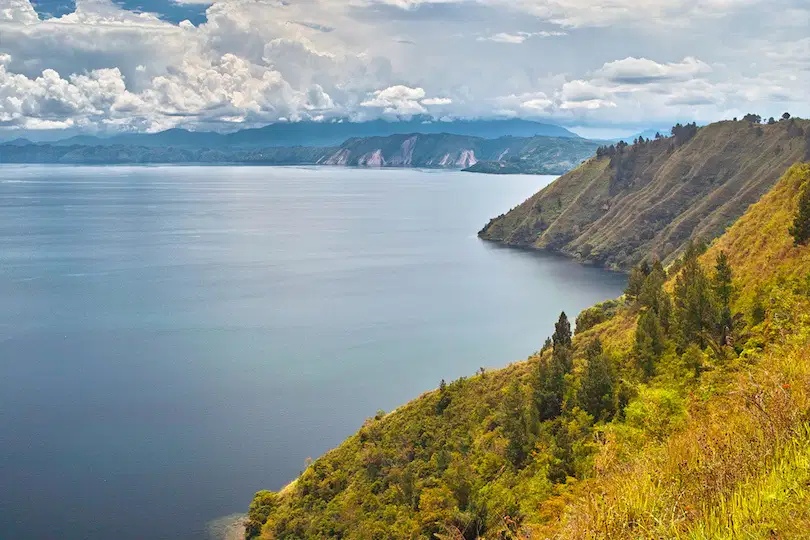
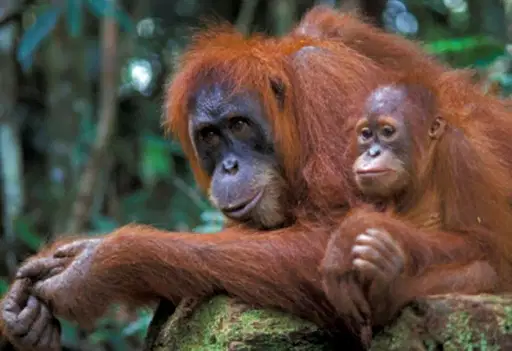
Look at the picture then choose the best description about the picture.
a)
The Tanjung Puting National Park is located on the island of Borneo in the Indonesian province of Central Kalimantan. Wildlife include gibbons, macaques, clouded leopards, sun bears, pythons, crocodiles and – most famously – orangutans.
b)
The Baliem Valley in the highlands of Western New Guinea offers a glimpse into what was recently a stone-age world. Wamena is the starting point for most visitors who come nowadays to marvel at the mountain views, roaring rivers, tribal villages and at the tough but sweet spirit of the warm Dani people.
c)
Lake Toba on the island of Sumatra is an immense volcanic lake about 100 kilometers long and 30 kilometers wide. Formed by a gigantic volcanic eruption some 70,000 years ago, it is the largest resurgent caldera on Earth. The island in the middle – Pulau Samosir – is the largest island within an island and contains two lakes. Besides visiting “a lake on an island within a lake on an island” tourist also come here to kick back and relax and swim in the volcanically warmed waters.
d)
Lake Toba on the island of Borneo is an immense volcanic lake about 10 kilometers long and 30 kilometers wide. Formed by a gigantic volcanic eruption some 70,000 years ago, it is the largest resurgent caldera on Earth. The island in the middle – Pulau Samosir – is the largest island within an island and contains two lakes. Besides visiting “a lake on an island within a lake on an island” tourist also come here to kick back and relax and swim in the volcanically warmed waters.
43.
a)
The Tanjung Puting National Park is located on the island of Borneo in the Indonesian province of Central Kalimantan. Wildlife include gibbons, macaques, clouded leopards, sun bears, pythons, crocodiles and – most famously – orangutans.
b)
The Baliem Valley in the highlands of Western New Guinea offers a glimpse into what was recently a stone-age world. Wamena is the starting point for most visitors who come nowadays to marvel at the mountain views, roaring rivers, tribal villages and at the tough but sweet spirit of the warm Dani people.
c)
Lake Toba on the island of Sumatra is an immense volcanic lake about 100 kilometers long and 30 kilometers wide. Formed by a gigantic volcanic eruption some 70,000 years ago, it is the largest resurgent caldera on Earth. The island in the middle – Pulau Samosir – is the largest island within an island and contains two lakes. Besides visiting “a lake on an island within a lake on an island” tourist also come here to kick back and relax and swim in the volcanically warmed waters.
d)
The Tanjung Puting National Park is located on the island of Java in the Indonesian province of Central Kalimantan. Wildlife include gibbons, macaques, clouded leopards, sun bears, pythons, crocodiles and – most famously – orangutans.
44.
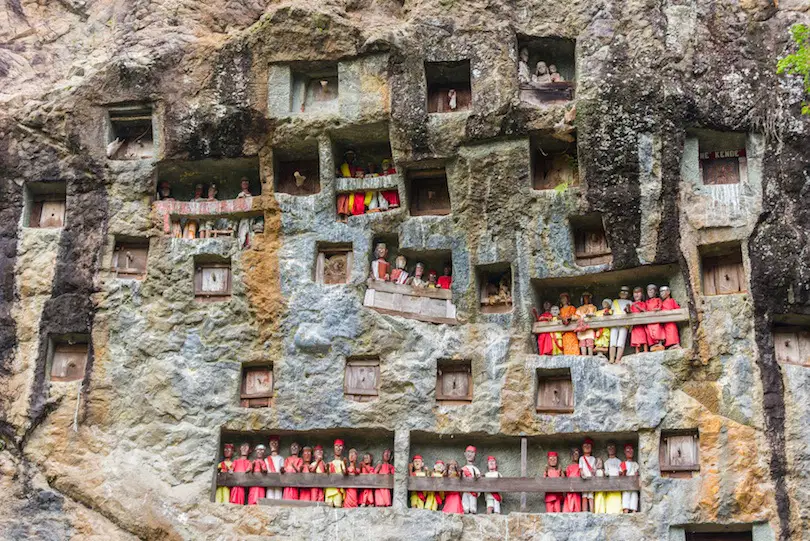
Look at the picture below and then choose the best description about the picture.
a)
Located at the north of the island of Sulawesi, Bunaken is one of Indonesia’s most famous dive and snorkeling areas. The island is part of the Bunaken Marine Park where you can see more than 70% of all fish species that live in the western Pacific ocean. The best time for diving in Bunaken is between the months of April and November.
b)
Gunung Bromo is an active volcano and part of the Tengger massif, in East Java. At 2,329 meters (7,641 feet) it is not the highest peak of the massif, but it is the most well known. The area is one of the most visited tourist attractions in Indonesia and Java. The top of the volcano has been blown off and the crater inside constantly belches white smoke. It is surrounded by the Sea of Sand of fine volcanic sand. The overall effect is unsettlingly unearthly.
c)
Torajaland (Tana Toraja) is a highland region of South Sulawesi, home of the Toraja people. Torajans are famous for their massive peaked-roof houses known as tongkonan and spectacular but gruesome funeral rites. After a person’s death, the body is kept – often for several years – until the actual funeral ceremony which can last for several days. The deceased is then finally buried in a small cave or in a hollow tree.
d)
Torajaland (Tana Toraja) is a highland region of North Sumatera, home of the Toraja people. Torajans are famous for their massive peaked-roof houses known as tongkonan and spectacular but gruesome funeral rites. After a person’s death, the body is kept – often for several years – until the actual funeral ceremony which can last for several days. The deceased is then finally buried in a small cave or in a hollow tree.
45.
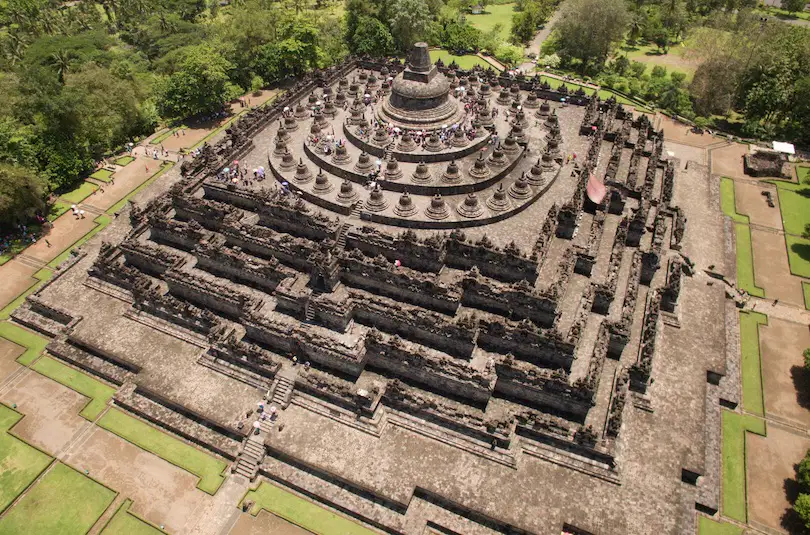
Look at the picture about the temple and then choose the best description about the picture.
a)
Gunung Bromo is an active volcano and part of the Tengger massif, in East Java. At 2,329 meters (7,641 feet) it is not the highest peak of the massif, but it is the most well known. The area is one of the most visited tourist attractions in Indonesia and Java. The top of the volcano has been blown off and the crater inside constantly belches white smoke. It is surrounded by the Sea of Sand of fine volcanic sand. The overall effect is unsettlingly unearthly.
b)
Torajaland (Tana Toraja) is a highland region of South Sulawesi, home of the Toraja people. Torajans are famous for their massive peaked-roof houses known as tongkonan and spectacular but gruesome funeral rites. After a person’s death, the body is kept – often for several years – until the actual funeral ceremony which can last for several days. The deceased is then finally buried in a small cave or in a hollow tree.
c)
Located 40 km (25 miles) northwest of Yogyakarta on Java, the Borobudur is the one of the most famous Buddhist temple in the world. The Borobudur was built over a period of some 75 years in the 8th and 9th centuries by the kingdom of Sailendra, out of an estimated 2 million blocks of stone. It was abandoned in the 14th century for reasons that still remain a mystery and for centuries lay hidden in the jungle under layers of volcanic ash. Today it is one of the most popular tourist attractions in Indonesia.
d)
Located 40 km (25 miles) southwest of Magelang on Java, the Borobudur is the one of the most famous Hinduism temple in the world. The Borobudur was built over a period of some 75 years in the 8th and 9th centuries by the kingdom of Sailendra, out of an estimated 2 million blocks of stone. It was abandoned in the 14th century for reasons that still remain a mystery and for centuries lay hidden in the jungle under layers of volcanic ash. Today it is one of the most popular tourist attractions in Indonesia.
46.
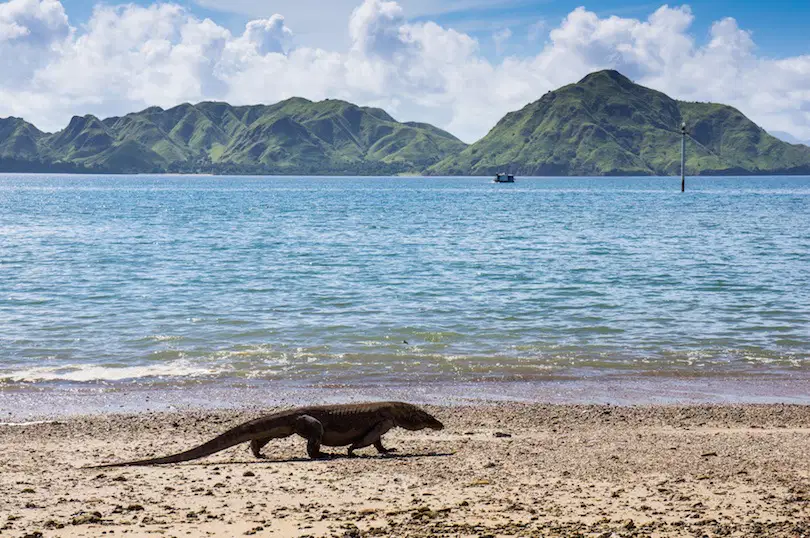
Look at the picture! then choose the best description about the picture.
a)
The Komodo National Park is a national park located within the Lesser Sunda Islands that includes the three larger islands Komodo, Padar and Rincah, and 26 smaller ones. The park is named after the Komodo Dragon, the world’s largest living reptile that can reach 3 meters or more in length and weigh over 70kg. Although Komodo dragons eat mostly carcass of dead animals, they are formidable predators and will also hunt prey including birds, and mammals. Attacks against humans are very rare.
b)
Perched among stunning terraced rice fields, Ubud is considered the cultural heart of Bali and one of the top tourist attractions in Indonesia. There are dance and music performances every day throughout the city as well as numerous art galleries and craft shops to explore. Although Ubud has long been valued as a great place to learn about Balinese culture, tourism in Ubud boomed exponentially in the last decades. Fortunately, it only takes a short walk or bicycle ride to escape from the crowds and commercialism.
c)
Lombok’s most popular tourist destination, the Gili Islands are an archipelago of three small islands: Gili Trawangan, Gili Meno and Gili Air. The islands are very relaxed and laid-back, with countless little beachside cafes still playing reggae and no cars or motorbikes to disturb the peace. Note that the name “Gili Islands” is rather redundant as gili simply means “small island” in Sasak and there are many other islands around the coast of Lombok with Gili in their names.
d)
The Komodo National Park is a national park located within the Lesser Sunda Islands that includes the three larger islands Komodo, Padar and Rincah, and 26 smaller ones. The park is named after the Komodo Dragon, the world’s largest living mammals that can reach 30 meters or more in length and weigh over 700 kg. Although Komodo dragons eat mostly carcass of dead animals, they are formidable predators and will also hunt prey including birds, and mammals. Attacks against humans are always happen.
47.
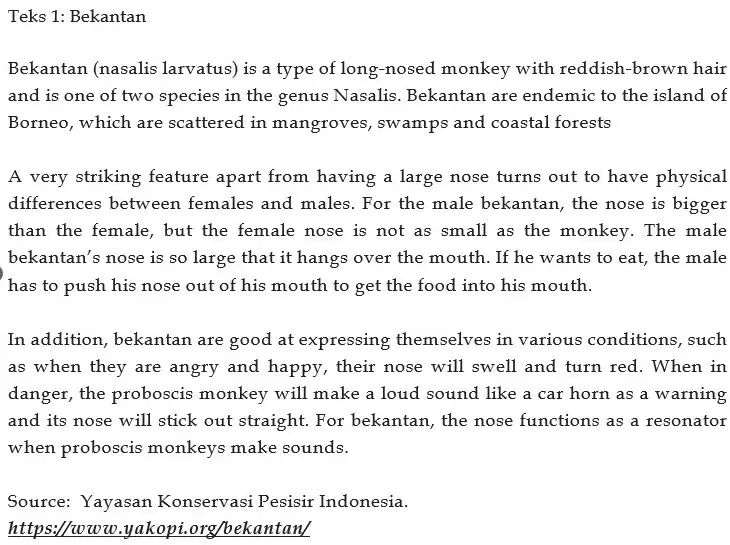
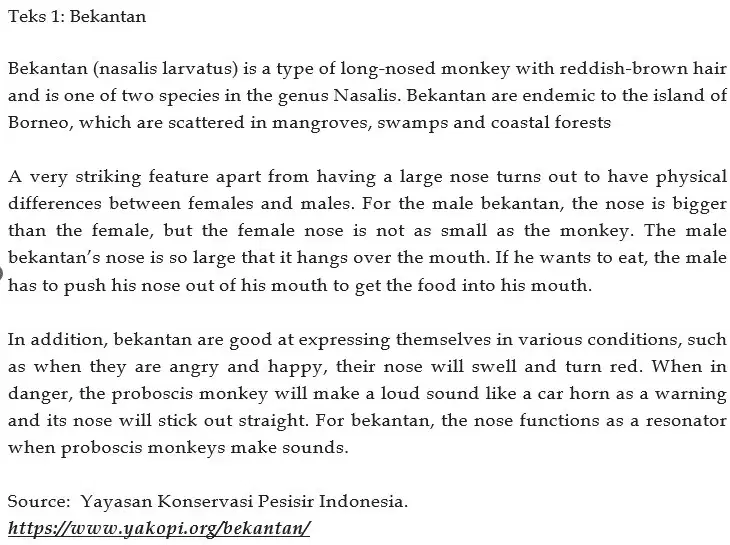
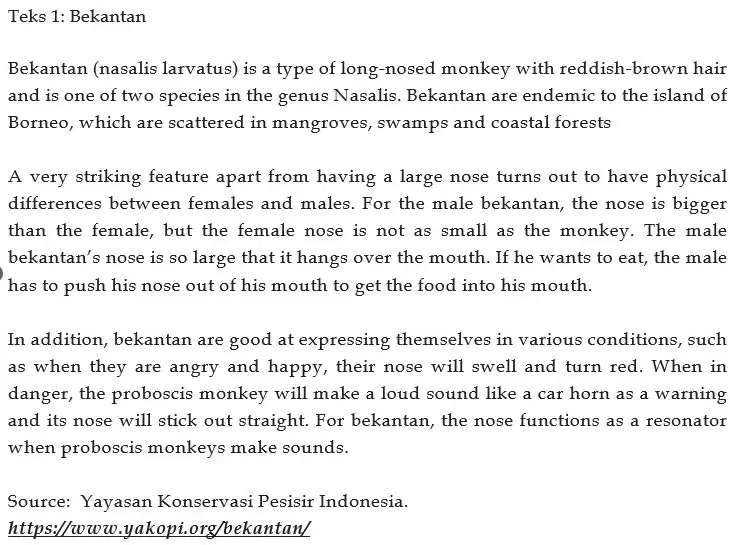
Bekantan (nasalis larvatus) is a type of long-nosed monkey with reddish-brown hair and is one of two species in the genus Nasalis. Bekantan are endemic to the island of Borneo, which are scattered in mangroves, swamps and coastal forests. Give tick for all correct answer.
a)
we only can find Bekantan in Indonesia is in the Borneo siland
b)
Bekantan is a genius animal
c)
The only monkey who has long nose is Bekantan
d)
Bekantan live in Mangroves, swamps, and coastal forest
48.
Read this text to answer the question. Sumatran Orang Utan Physically, the Sumatran orangutan has thick fur, tends to be long, with dominant colors of brown and orange. The body length is 1.25 meters to 1.5 meters. Males have a long chin and droopy cheek pouches. Adult females weigh around 30-50 kilograms, and males around 50-90 kilograms. Sumatran orangutans have a range of about 2-10 kilometers and depend on fruits in the forest. In general, males are solitary while adult females live with their young. At the age of 3.5 years, the young will gradually become independent. Reproduction begins at the age of 10-11 years, with an average reproductive age of 15 years. The diet of orangutans is 60% fruits, such as durian, mango, lychee, jackfruit, and fig. Orangutans also like young leaf shoots, insects, soil, tree bark, and sometimes eggs, or small vertebrae. Sumatran orangutans use tree branches when picking fruit, which indicates a high level of intelligence.
a)
they live on the tree.
b)
they are omnivore
c)
they are herbivore
d)
they have high intelligence.
49.
Read this text to answer the question. Interesting facts about orangutans It is estimated that one-third of the orangutan population does not have toenails on their big toes. Orangutans have a very wide arm span, with a length of up to 2 meters. While their height is between 1.25 meters to 1.5 meters. The word orangutan comes from the Malay word “forest man”. Orangutan literally means man of the forest. Orangutans share about 97% of their DNA with humans, making them the closest living relatives of humans other than apes. Orangutans can eat up to five times a day. They generally eat fruit and young leaf shoots, but they also enjoy hunting insects or termites as a snack. Orangutans use twigs to push the insects out of holes in the tree. Every day, the orangutan population is reduced by 25 individuals. Economic activities such as the opening of oil palm plantations are cited as one of the main causes of habitat loss for this species.
a)
It is estimated that one-third of the orangutan population does not have toenails on their big toes.
b)
Orangutans share about 79% of their DNA with humans, making them the closest living relatives of humans other than apes.
c)
Every day, the orangutan population is increased by 25 individuals.
d)
Orangutan literally means man of the forest.
e)
The population of Sumatera Orang Utan is bigger than Borneo Orang Utan.
50.
There are interesting fact about the physical appearance of bekantan.
a)
true
b)
False
51.
Choose true or false. The nose of Female bekantan is smaller than the male.
a)
True
b)
False
52.
When there are something wrong with the situation around them, Bekantan always make big sounds and make their nose as a resonator when they make sounds.
a)
true
b)
false
53.
Read this info below to answer the question. Interesting facts about orangutans It is estimated that one-third of the orangutan population does not have toenails on their big toes. Orangutans have a very wide arm span, with a length of up to 2 meters. While their height is between 1.25 meters to 1.5 meters. The word orangutan comes from the Malay word “forest man”. Orangutan literally means man of the forest. Orangutans share about 97% of their DNA with humans, making them the closest living relatives of humans other than apes. Orangutans can eat up to five times a day. They generally eat fruit and young leaf shoots, but they also enjoy hunting insects or termites as a snack. Orangutans use twigs to push the insects out of holes in the tree. Every day, the orangutan population is reduced by 25 individuals. Economic activities such as the opening of oil palm plantations are cited as one of the main causes of habitat loss for this species.
a)
true
b)
false
54.

Read this text to answer the question. Bornean Orang Utan The Bornean orangutan is the largest arboreal animal in the world. This species has long, matted fur and a dark red-brown color with facial colors ranging from pink, red, to black. Adult male orangutans can weigh up to 50-90 kilograms with a height of 1.25 meters-1.5 meters. While adult females can grow to weigh 30-50 kilograms with a height of 1 meter. A distinctive feature of the Bornean orangutan is its Adam's apple, which can be inflated to create loud sounds, usually to call out or announce their presence. Bornean orangutans are found in lowland areas. The species' range is centered on forests and peatlands due to the abundance of large fruiting plants. This species also prefers seeds, leaf shoots, tree bark, and insects. Unlike the Sumatran orangutan, which spends a lot of time on high branches, the Bornean orangutan likes to stay on low branches and often descends to the ground.

(a)  

55.

Look at the picture. Complete the sentence with the correct answer. (type with the small letter, please/ tulis dengan huruf kecil semua) Bekantan or . . . is a type of long-nosed monkey with reddish-brown hair and is one of two species in the genus Nasalis.

(a)  
56.

If the male Bekantan wants to eat, he has to . . . his nose out of his mouth to get the food into his mouth.

(a)