
NEW
Font size
 Worksheets
READING COMPREHENSION
Total questions: 52
Worksheet time: 26mins
According to the Oxford dictionary, what does 'comprehension' consist of?
A list of vocabulary words
A passage with questions to test students' understanding and inference skills
A set of grammar exercises
A collection of poems
Fill in the blank: According to the Oxford dictionary, comprehension consists of a passage upon which questions are set to test the students’ ability to understand the content of the given text and to ______ information and meanings from it.
infer
copy
ignore
translate
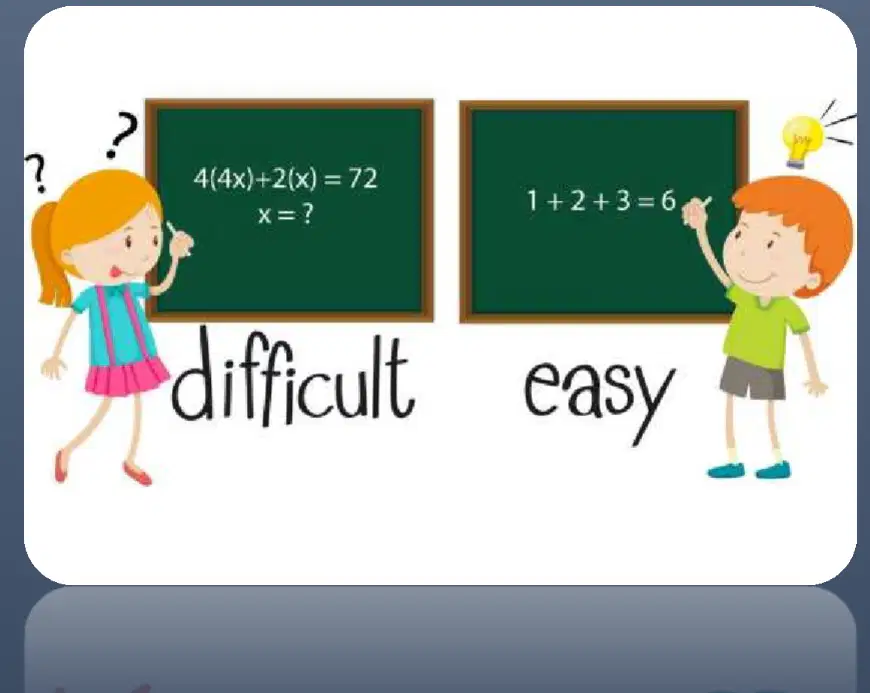
Solve the following: 4(4x) + 2(x) = 72. x = ____
2
4
6
8
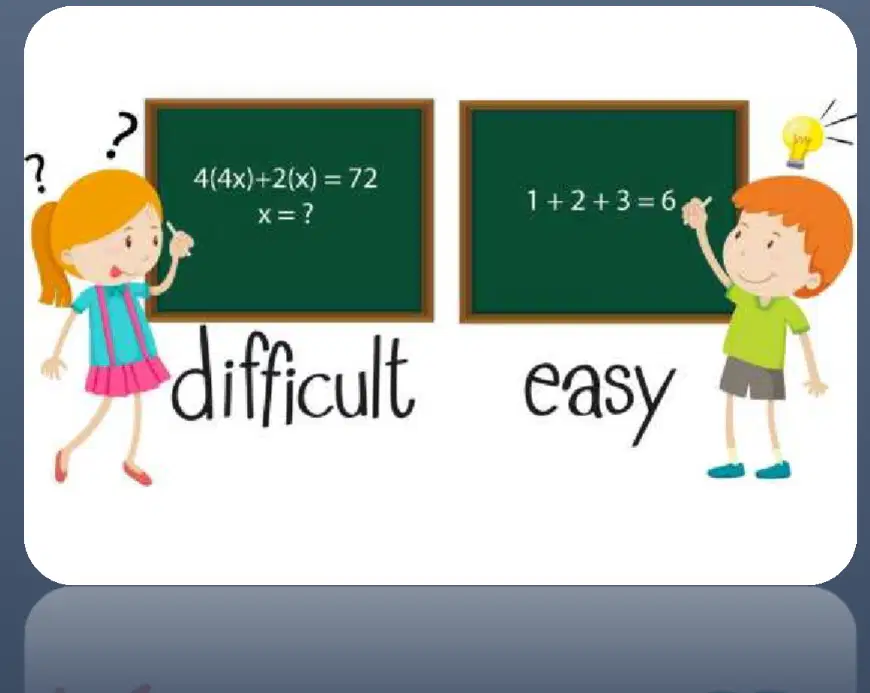
This part on one side is a yummy jelly for some students but at the same time it becomes a nightmare for others. So lets friends discuss the science of Comprehension, which surely help all of us in our academics; Solve the following: 1 + 2 + 3 = ____
6
5
7
8

What is the meaning of the Latin word 'Comprehensio' from which the word 'Comprehension' is derived? Fill in the blank: The Latin word 'Comprehensio' means ________.
seizing or capturing
understanding or learning
writing or recording
speaking or communicating
Which level of comprehension involves 'Facts and details'?
Literal
Interpretive
Applied
Which level of comprehension is associated with 'Rote Learning and Memorization'?
Literal
Interpretive
Applied
Which level of comprehension is described as 'Surface understanding'?
Literal
Interpretive
Applied
Which level of comprehension involves 'Drawing inferences'?
Literal
Interpretive
Applied
Which level of comprehension includes 'Tapping into knowledge/experience'?
Literal
Interpretive
Applied
Which level of comprehension is about 'Reading between lines'?
Literal
Interpretive
Applied
Which level of comprehension involves 'Making logic leaps and educated guesses'?
Literal
Interpretive
Applied
Which level of comprehension is associated with 'Analyzing'?
Literal
Interpretive
Applied
Which level of comprehension involves 'Synthesizing'?
Literal
Interpretive
Applied
Which level of comprehension is about 'Applying'?
Literal
Interpretive
Applied
Why is comprehension important?
It increases the effectiveness of reading and helps not only academically but professionally also.
It only helps in reading faster.
It is not important for professional growth.
It is only useful for language subjects.
Comprehension helps to construct meaning from the text.
True
False
Students cannot master complex scientific concepts without comprehension.
True
False
Skilled readers don’t just read the text, they interact with the text.
True
False
Comprehension increases ________ speed.
Reading
Writing
Speaking
Listening
Comprehension helps students to Ace the ________ state test.
standardized
final
practice
preliminary
This ability helps to accurately interpret and analyze ________ information.
written
verbal
numerical
visual
Comprehension makes us extract main idea and draw ________ from text.
conclusion
pictures
numbers
maps
What is an alphabet?
A single letter
A standard set of letters that represent the phonemes of a language
A word
A sentence
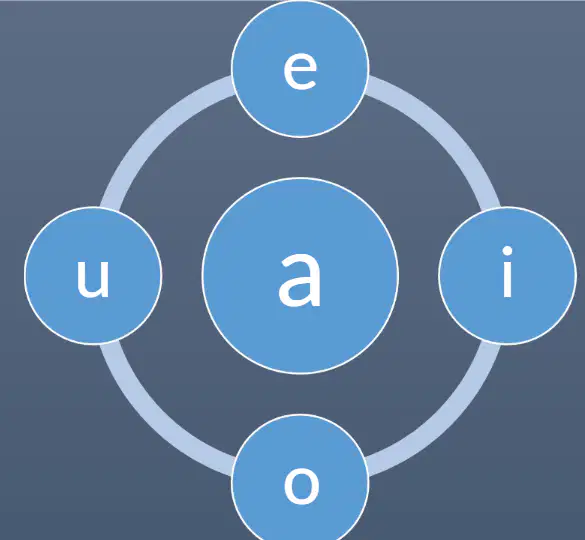
Which of the following are vowels in the English alphabet?
a, e, i, o, u
b, c, d, f, g
x, y, z, w, v
l, m, n, p, q
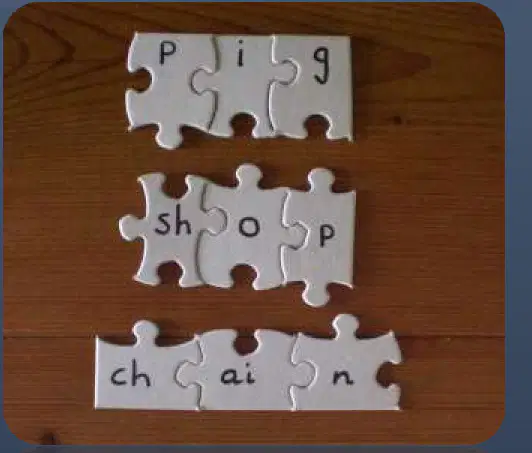
Alphabets join in a specific way to form meaningful words. Fill in the blank: The word formed by joining the letters 'p', 'i', 'g' is _______.
pig
gap
pin
gig
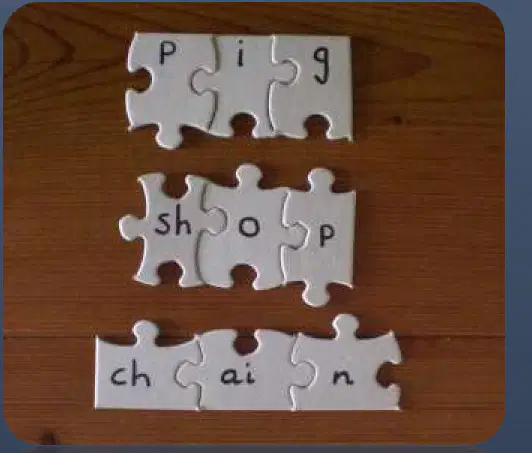
Alphabets join in a specific way to form meaningful words. Choose the correct word formed by joining the letters 'c', 'h', 'a', 'i', 'n'.
chain
chair
chant
chin
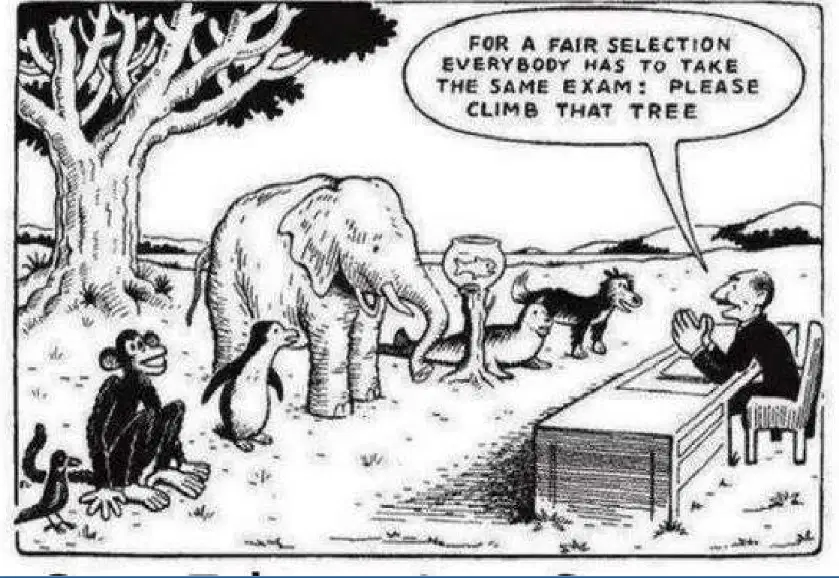
What does the word 'fair' mean in this sentence?
Honest and just
Light in color
Beautiful
Expensive
The ‘word’ may have a meaning in one context, and another meaning in other context. Read the sentence: "Her ___ is very fair." What does the word 'fair' mean in this sentence?
Honest and just
Light in color
Beautiful
Expensive
What do words join to form?
Paragraphs
Sentences
Letters
Books
A sentence contains which of the following?
Verb and Object
Subject and Predicate
Noun and Adjective
Phrase and Clause
A sentence conveys a _______ , command, or question.
statement
emotion
object
location
A sentence contains a subject and a predicate.
True
False
What is the most organized form of writing that contains topic sentences?
Paragraph
Sentence
Phrase
Word
What does the word 'Para' mean in the context of the word 'Paragraph'?
Write
Beside
Topic
Sentence
What does the word 'Graphein' mean in the context of the word 'Paragraph'?
Write
Beside
Topic
Sentence
A paragraph is a group of sentences that join to form the most organized form of writing.
True
False
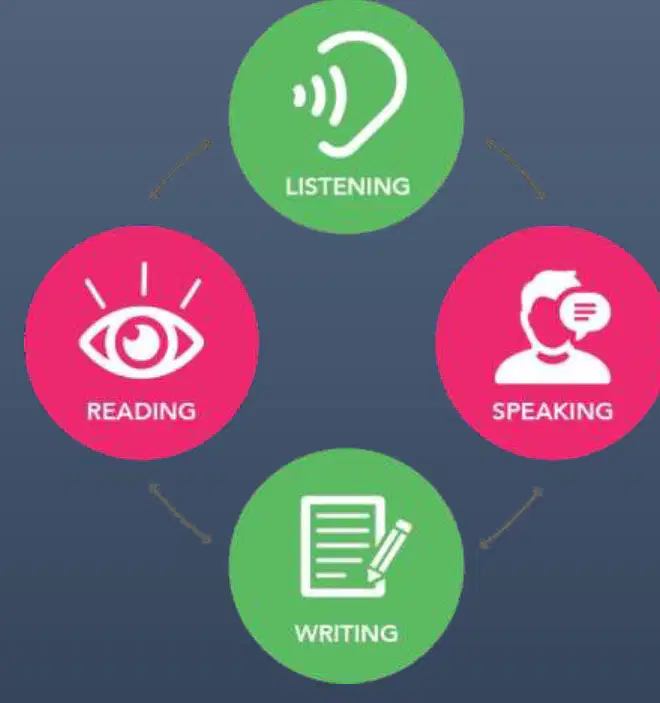
Reading Skill is a multipurpose skill that deals with other skills like _________.
Listening
Drawing
Cooking
Dancing
Reading Skill is a multipurpose skill that deals with other skills like _________.
Speaking
Drawing
Cooking
Dancing
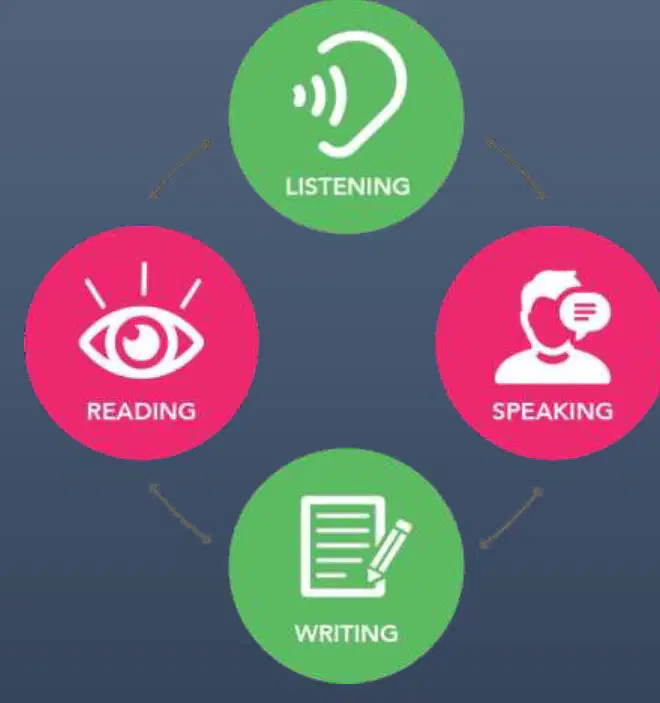
Reading Skill is a multipurpose skill that deals with other skills like _________.
Writing
Dancing
Singing
Painting
Reading Skill is a multipurpose skill that deals with other skills like _________.
Thinking
Sleeping
Eating
Running
Reading Skill is a multipurpose skill that deals with other skills like _________.
Communicating
Sleeping
Eating
Drawing
Which of the following describes 'Reading'?
It is ability to understand written text.
It is multifaceted process involving word, recognition, comprehension, fluency and motivation.
Context is understood within short time.
It takes less time.
Fill in the blank: 'Reading' ________.
takes long time
is a sport
is always boring
is only for children
In 'Reading Skill', context is understood within short time.
True
False

What does a passage with questions test in students?
Their writing skills
Their abilities
Their drawing skills
Their speaking skills
Fill in the blank: The purpose of asking questions on a passage is to check how much students ______ the text.
understand
write
ignore
memorize

What is scanning? ________
It is rapid reading assisted by key words to locate specific pieces of information.
It is reading every word carefully to understand the entire text.
It is memorizing the text for future reference.
It is writing a summary of the text after reading.

What is skimming in reading?
Skimming is rapid reading focusing on titles, subtitles, and heading.
Skimming is reading every word slowly and carefully.
Skimming is reading aloud to improve pronunciation.
Skimming is memorizing the entire text.

What is the aim of exploratory reading? Fill in the blank: Exploratory reading aims to get a fairly accurate picture of _________.
the whole presentation of ideas
the author's writing style
the length of the text
the number of chapters
What is the main goal of close reading?
To read as quickly as possible
To get maximum understanding of main ideas and their relationship
To memorize every word
To summarize the text without understanding
According to the image, what are the main activities involved in critical reading?
Memorize the text
Question, Analyze, and Evaluate the text
Ignore the text
Copy the text

