
 Worksheets
Page 1
Total questions: 30
Worksheet time: 15mins

Identify the primary structural system of the bridge shown, characterized by towers and cables supporting the deck.
Cantilever beam system with anchor arms
Suspension bridge system with main cables
Cable-stayed system with multiple pylons
Truss arch system with steel ribs

Which component carries the majority of tensile forces in the depicted bridge?
Suspender ropes connecting to deck
Tower shafts with portal bracing
Concrete deck slabs with asphalt layer
Main cables spanning between anchorages

If one main cable loses tension due to anchorage failure, which immediate structural response is most expected?
Uniform uplift across the deck
Negligible change in deck profile
Immediate tower shortening by buckling
Asymmetric sag and deck torsion
For corrosion-resistant design of steel cables in marine environments, choose the best practice.
Galvanization and sealed dehumidified ducts
Painting cables annually without sealing
Bare steel for ease of inspection
Aluminum cables to avoid rusting

Which geometric parameter most strongly governs the bridge’s main span sag profile?
Number of lighting fixtures installed
Tower color and architectural style
Deck thickness and lane width
Cable stiffness and anchor distance
In the diagram, which component carries traffic loads across the span?
Deck supporting vehicles and pedestrians
Cable forming the main catenary curve
Approaches outside the main span
Foundation beneath the towers
For a suspension bridge, where are the foundations located in relation to the towers?
Directly beneath each tower
At midspan below the deck
At the approaches near the anchors
Distributed uniformly along the deck
Which misconception about cables in the illustrated bridge is most accurate to challenge?
Cables primarily carry tension along the span
Cables primarily carry compression within towers
Cables primarily carry shear in the deck
Cables primarily carry bending at approaches
What materials most likely formed the earliest simple bridge structures described in the image?
Cast iron beams with riveted plates
Reinforced concrete and prestressed tendons
fired brick, lime mortar, and steel
Timber logs, stone, and packed earth
Which statement aligns with the evolution implied by the image’s historical background?
Bridges originated as very simple structures
Bridges began as complex engineered systems
Bridges started as decorative monuments
Bridges initially required metal fasteners
Which environmental context best explains the emergence of early bridges in Mesopotamia?
Arid plateau with minimal waterways
Tropical rainforest with dense canopy
Mountainous terrain with icy passes
Desert region with fertile river valleys
Who is credited with constructing the first arch bridge around 100 B.C.?
Romans in Europe
Egyptians along Nile
Chinese in Han era
Persians in Mesopotamia
What milestone is associated with the year 1920 in bridge engineering?
First suspension bridge built
First arch dam completed
First movable bascule used
First timber trestle standardized
If a historian claims the first suspension bridge was built in 1890, which timeline evidence challenges that claim?
It begins with logs and stones
It mentions 700 A.D. China
It lists 1900 for truss
It states 1920 for first suspension
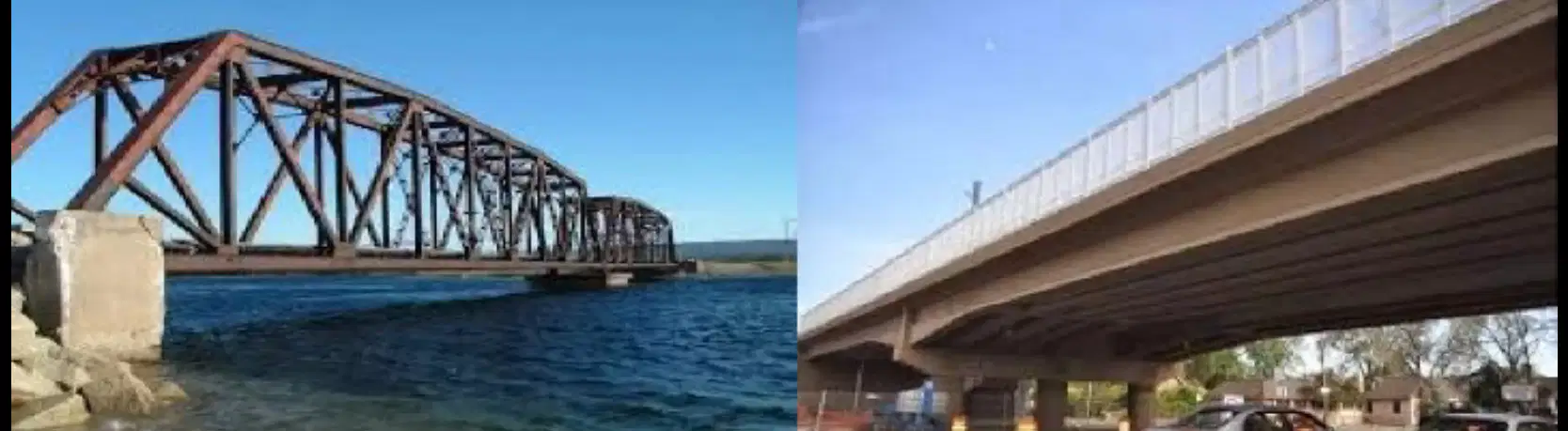
Identify the dominant member type providing stiffness in the bottom-left bridge.
Segmental masonry voussoirs
Reinforced concrete T-beams
Solid timber stringers and rails
Tubular lattice bracing members
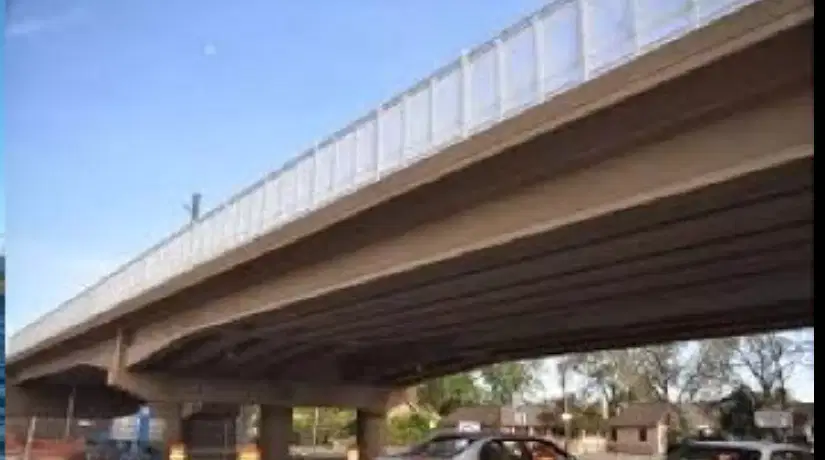
Which material is most likely used for the primary load-carrying elements in the bottom-right bridge?
Laminated softwood beams
Unreinforced brick masonry
Cast iron with riveted joints
Reinforced or prestressed concrete
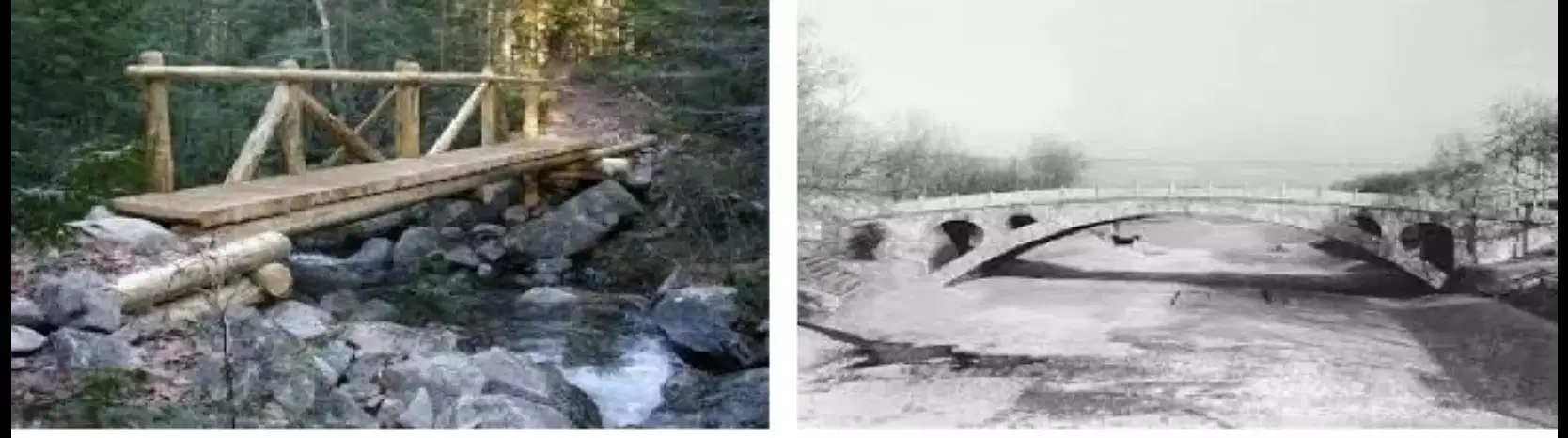
For the timber footbridge, which detail would most improve durability in a wet environment?
Omitting guardrails for airflow
Using untreated sapwood posts
Adding water-shedding deck camber
Increasing beam depth without treatment
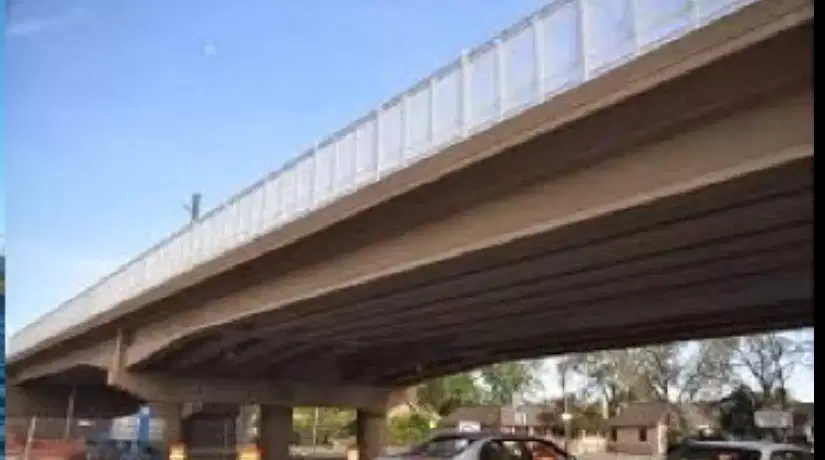
A designer wants minimal vertical deflection for a medium span highway bridge. Which choice aligns with this goal?
Light lattice truss with pinned joints
Unreinforced stone arch without spandrels
Segmental concrete girders with prestressing
Shallow timber beams with simple supports
A team completes site location and design information gathering. What is the next surveying-supported step?
Assign maintenance crews
Install expansion joints
Plan the construction properly
Open the bridge to traffic
Which building component forms the lowest supporting layer beneath a structure?
Foundation supporting layer
External cladding system
Superstructure slab layer
Roof truss assembly
Which option best matches foundation placement relative to the building?
Outside facade on cladding
Inside walls at mid-height
Above roof over trusses
Below grade beneath structure
Which statement best defines a shallow foundation?
A foundation resisting only horizontal wind loads
A foundation designed solely for waterproofing
A foundation transferring loads near the surface
A foundation transferring loads to deep bedrock
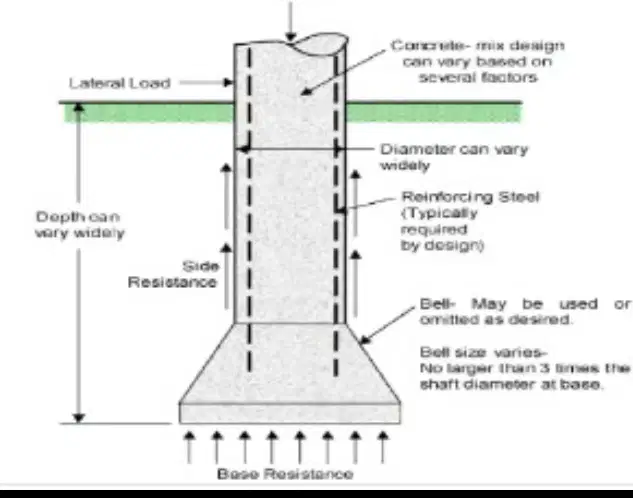
Which design variable in the pile schematic can vary widely depending on design and soil?
Pile diameter specified by design
Reinforcing steel omitted by default
Concrete mix specified by code
Bell size fixed at three diameters
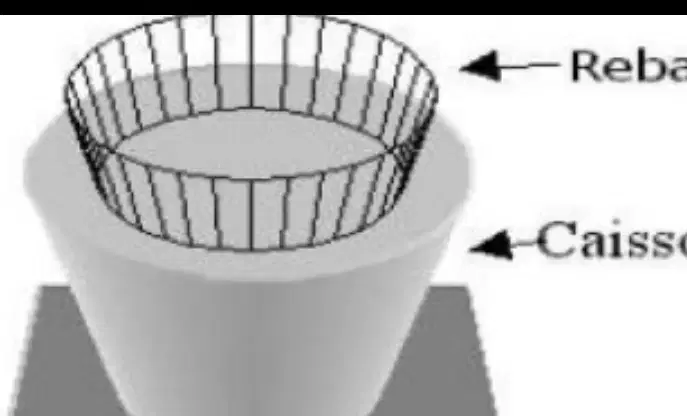
Which situation most commonly requires a caisson (well) foundation over a shallow spread footing?
Dense gravel with excellent bearing
Rock at shallow depth with minimal settlement
Soft riverbed with high scour risk
Firm dry soil with low water table
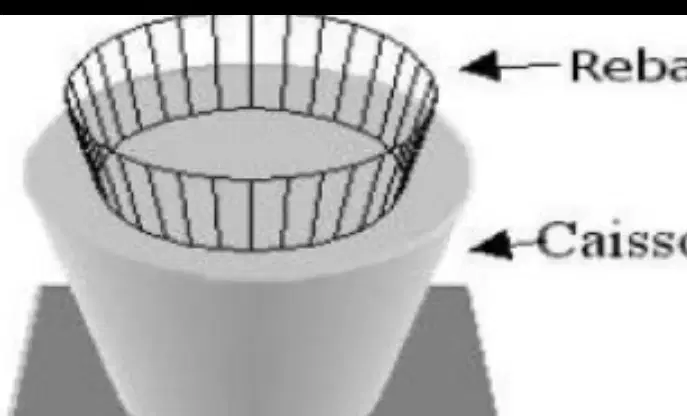
When choosing between a caisson and a pile group for a river crossing, which criterion most strongly favors a caisson?
Desire to avoid underwater construction
Preference for minimal reinforcement usage
Requirement for large, monolithic load cell
Need for rapid installation speed
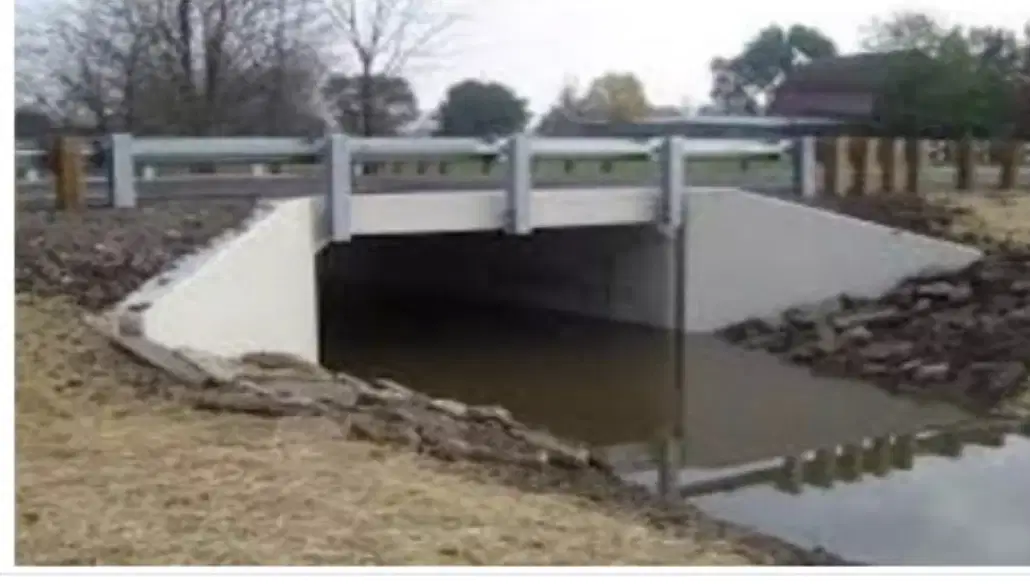
Which mistake would misclassify the bridge in the image?
Calling it a culvert bridge type
Classifying it by span below six meters
Labeling it a cable-stayed system
Identifying it as a short-span crossing
What span length range defines a minor bridge in roadway infrastructure?
30 to 120 meters
20 to 60 meters
8 to 30 meters
2 to 10 meters
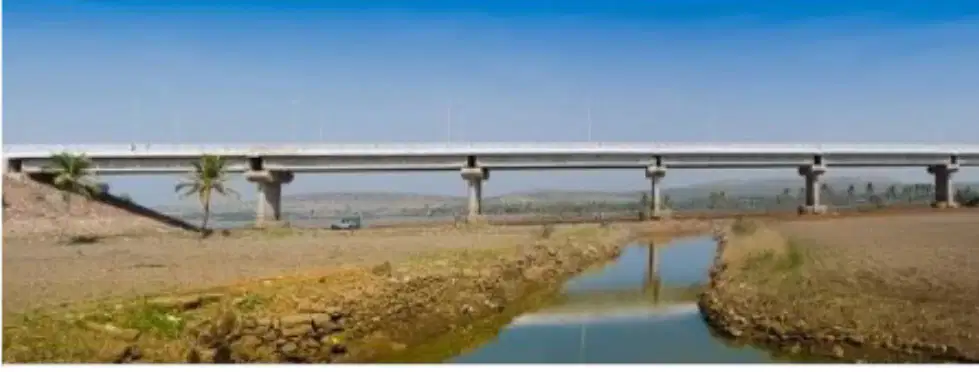
Select the best rationale for classifying the lower image bridge as major.
It carries pedestrians only
Its piers are widely spaced
It uses stone masonry
It is located in a rural setting

For a 130-meter span, which deck form best suits cable-stayed configuration?
Solid masonry deck slab
Two-hinged arch deck
Unbraced timber planks
Steel box girder deck
Which statement best distinguishes a beam bridge from a suspension bridge?
Supported by piers at ends
Formed of triangulated web
Held by main cables
Carried by arch thrust

