
 Worksheets
Module 29110 – Joint Fit-Up and Alignment
Total questions: 67
Worksheet time: 34mins
Summarize fit-up and alignment tools. Identify and describe welding positioning equipment.
Fit-up and alignment tools ensure proper joint preparation, while welding positioning equipment holds and moves workpieces for accurate welding.
Fit-up and alignment tools are used only for cutting metals, and welding positioning equipment is used for painting surfaces.
Fit-up and alignment tools are used for measuring temperature, and welding positioning equipment is used for cooling welds.
Fit-up and alignment tools are used for cleaning surfaces, and welding positioning equipment is used for storing tools.
Summarize fit-up and alignment tools. Identify and describe plate alignment tools.
Fit-up and alignment tools are used to position and hold materials for welding; plate alignment tools include clamps, wedges, and dogs.
Fit-up and alignment tools are only used for cutting plates; plate alignment tools include saws and grinders.
Fit-up and alignment tools are used for painting surfaces; plate alignment tools include brushes and rollers.
Fit-up and alignment tools are used for measuring thickness; plate alignment tools include calipers and micrometers.
Summarize fit-up and alignment tools. Identify and describe pipe and flange alignment tools.
Fit-up and alignment tools include levels, squares, and clamps; pipe and flange alignment tools include flange spreaders and pipe alignment clamps.
Fit-up and alignment tools are only used for electrical work; pipe and flange alignment tools are not necessary in piping.
Fit-up and alignment tools are used for painting; pipe and flange alignment tools are used for cleaning.
Fit-up and alignment tools are used for measuring temperature; pipe and flange alignment tools are used for heating pipes.
Summarize fit-up and alignment tools. Identify and describe fit-up gauges and measuring devices.
Fit-up and alignment tools are used to position and secure materials before welding; fit-up gauges and measuring devices include tools like spirit levels, squares, and tape measures.
Fit-up and alignment tools are only used for painting; fit-up gauges are brushes and rollers.
Fit-up and alignment tools are used for electrical wiring; fit-up gauges are voltmeters and ammeters.
Fit-up and alignment tools are used for cleaning surfaces; fit-up gauges are mops and sponges.
Under supervision, you should be able to do the following: ________ to fit up plate and pipe joints.
Use specialized tools
Read blueprints
Paint surfaces
Perform electrical wiring
Under supervision, you should be able to do the following: ________ to check joints for proper fit-up and alignment.
Use gauges and other measuring tools
Estimate by eye without any tools
Rely solely on verbal instructions
Ignore alignment and proceed
Fill in the blank: A __________ is a horizontal line parallel to the earth’s surface. Also, a tool that checks whether a surface is level or plumb.
Level
Square
Compass
Protractor
Fill in the blank: A __________ is a vertical line perpendicular to the earth’s surface.
Plumb
Beam
Girder
Column
Fill in the blank: __________ is the alignment discrepancy in pipe sections or plates. Also called high-low.
Joint mismatch
Root gap
Bevel angle
Weld reinforcement
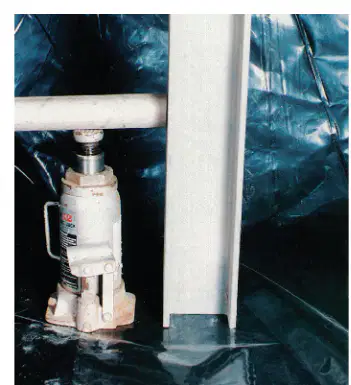
Hydraulic jacks support heavy components and are easily adjustable.
True
False
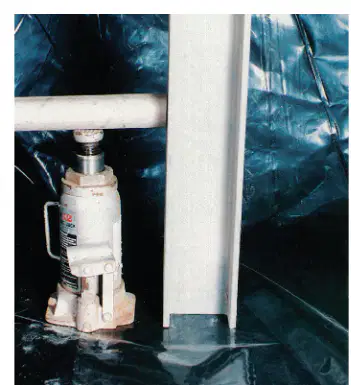
Check jacks for leaking ________ fluid.
hydraulic
coolant
brake
transmission
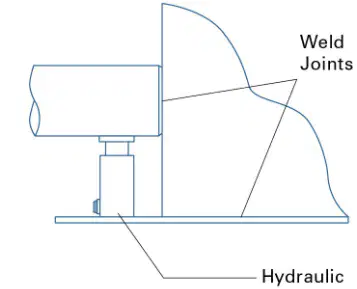
Why should you clean up leaks before welding?
Hydraulic fluid is flammable and can contaminate welds
Hydraulic fluid is non-flammable
Welding does not affect hydraulic fluid
Leaks are not important
Which tools give welders a mechanical advantage for lifting or moving heavy parts?
Chain hoists
Chain falls
Come-alongs
All of the above
A chain hoist or chain fall lifts a load _________.
vertically
horizontally
diagonally
sideways
How does a chain hoist or chain fall produce mechanical advantage?
By using pulleys and a looped chain
By using a ratcheted lever
By using a motor
By using a cable
Come-alongs move the load _________?
horizontally
vertically
diagonally
upwards
What does the operator use to move the load with a come-along?
Pulls the chain
Works a ratcheted lever
Pushes the load
Uses a motor
Never lift a vertical load with a come-along since the load can fall accidentally. Is this statement True or False?
True
False
Why is proper training important when setting up rigging and hoisting?
Proper training is important because mistakes can cause damage, injury, or even a fatality.
Proper training is important because it makes the equipment look new.
Proper training is important because it reduces paperwork.
Proper training is important because it increases the speed of setup only.
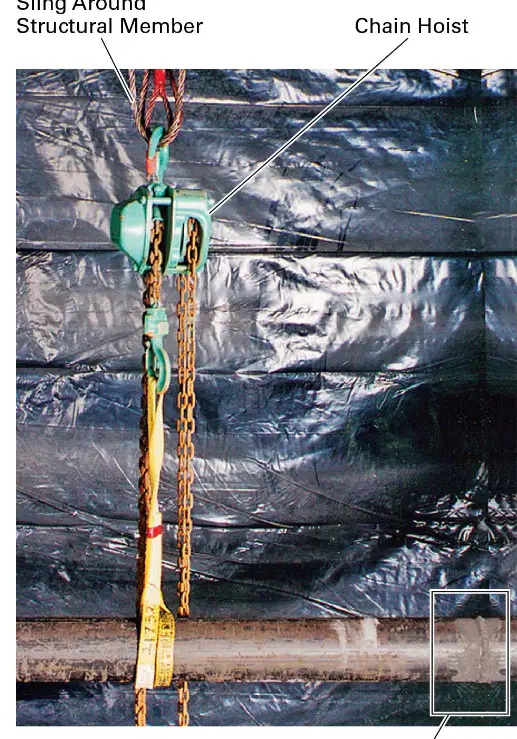
What is the part labeled as 'Chain Hoist' used for?
Lifting and lowering heavy loads
Welding joints
Providing structural support
Measuring load weight
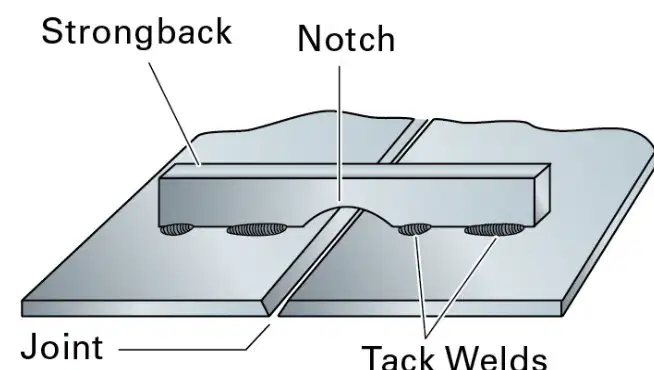
What are strongbacks custom fabricated from?
Heavy bar stock
Light gauge wire
Plastic tubing
Aluminum foil
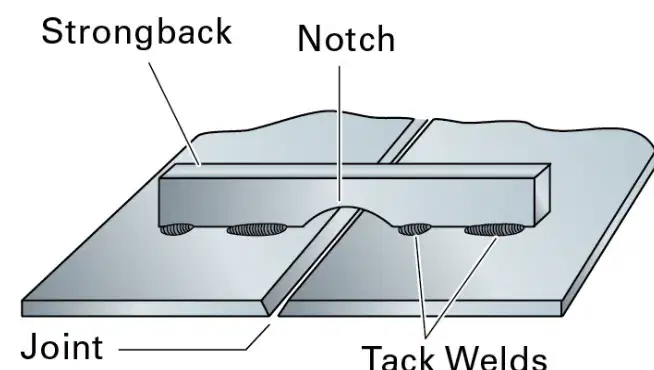
Strongbacks attach to the plates on which sides?
Either the root or face side
Only the root side
Only the face side
Neither side
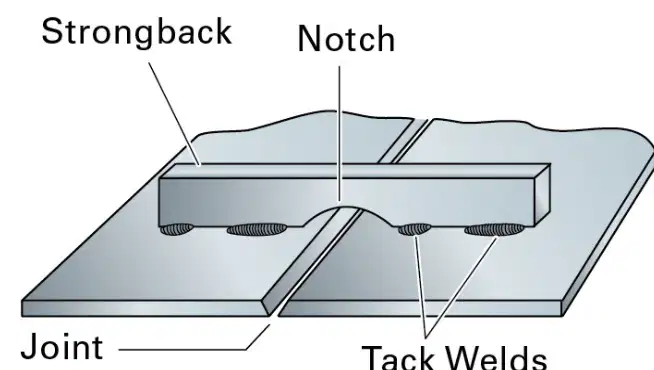
What do notches in the strongback provide access to?
The weld joint
The cooling system
The electrical wiring
The hydraulic lines
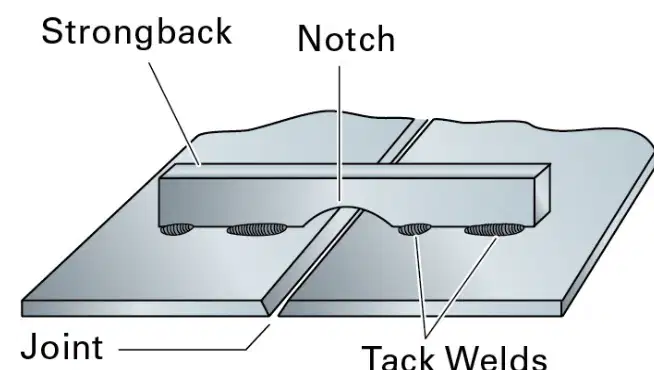
What holds the strongback in place?
Tack welds or clamps
Bolts and nuts
Glue or adhesive
Rivets
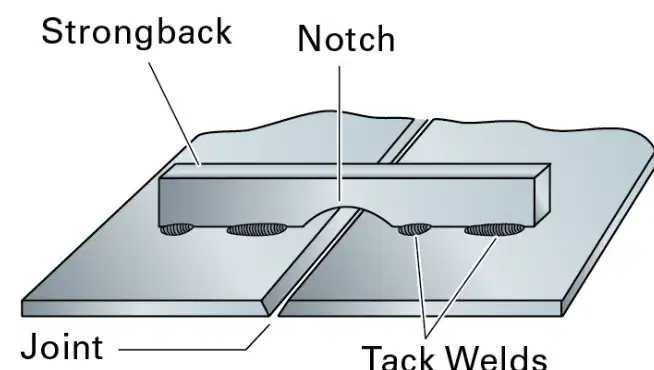
Which of the following is NOT a function of the notches in the strongback?
Provide access to the weld joint
Hold the strongback in place
Attach to the plates
None of the above
What do clips, yokes, and wedges offer in field fabricated clamping tools?
A method for cutting metal
Another holding method
A way to paint surfaces
A method for measuring angles
Who fabricates clips, yokes, and wedges for specific jobs?
Engineers
Craftworkers
Painters
Electricians
Fill in the blank: Welders tack weld clips to one plate’s edge. They place a ______ on the other plate and drive it under the clip.
wedge
bolt
pin
nut
A yoke works in field fabricated clamping tools by:
providing the necessary force to hold materials together
cutting materials to size
measuring the thickness of materials
heating materials for bending
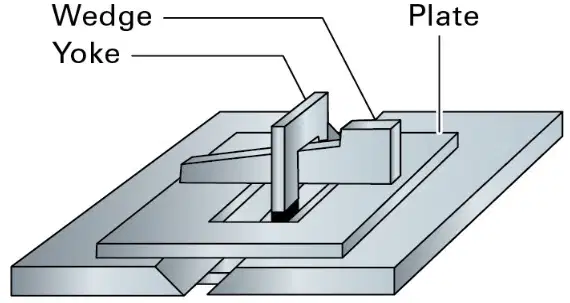
Refer to the diagram. Which part is labeled as the wedge?
The vertical bar
The slotted plate
The angled piece driven under the plate
The base plate
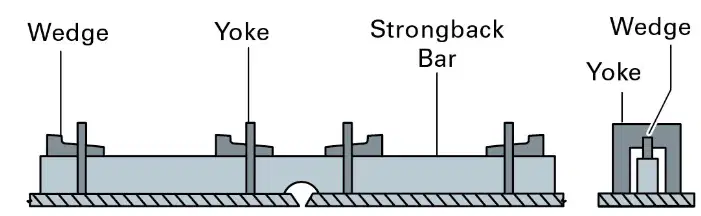
Dogs are ______ and yokes combined with a strongback.
wedges
levers
pins
bolts
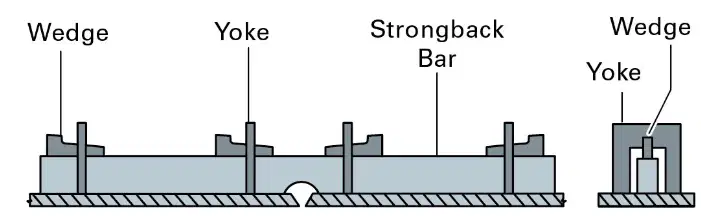
The strongback straddles the joint. Yokes welded to the plates straddle the ______.
strongback
beam
column
flange
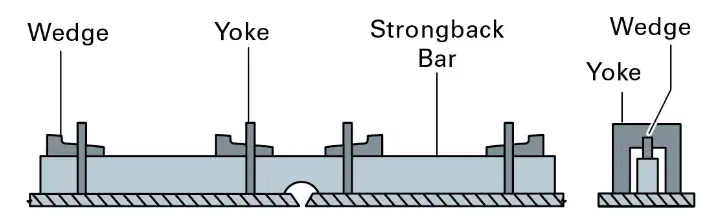
Wedges driven between the yokes and strongback force everything ______.
together
apart
loose
down
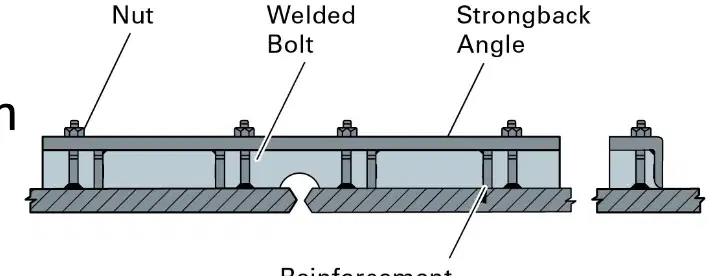
Match the following components to their correct labels as shown in the diagram:
Nut
Nut
Welded Bolt
Welded Bolt
Strongback Angle
Strongback Angle
Reinforcement
Reinforcement
Sometimes, commercial clamping tools are best for holding plates in the correct alignment.
True
False
Welders can choose from many styles of commercial clamping tools.
True
False
Confirm that commercial clamping tools are compatible with the base metals and won’t contaminate them.
True
False
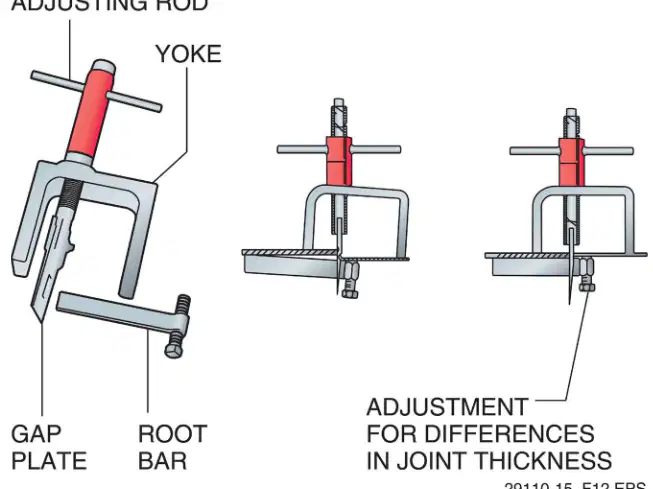
Refer to the diagram of the commercial clamping tool. What is the part labeled as 'YOKE'? Fill in the blank: The part labeled as 'YOKE' is the ________.
YOKE
Handle
Jaw
Pin
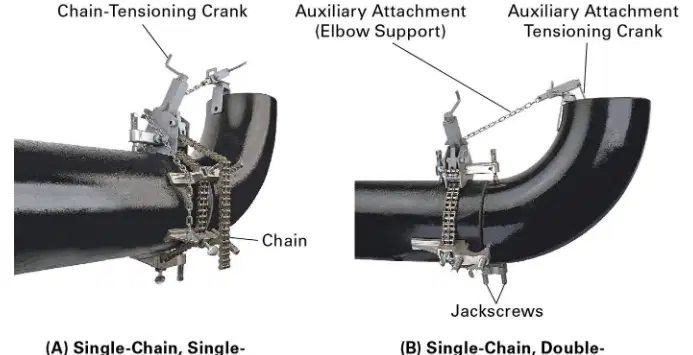
What pulls the chain tightly around the pipe in a chain clamp?
A lever
A jackscrew
A bolt
A spring
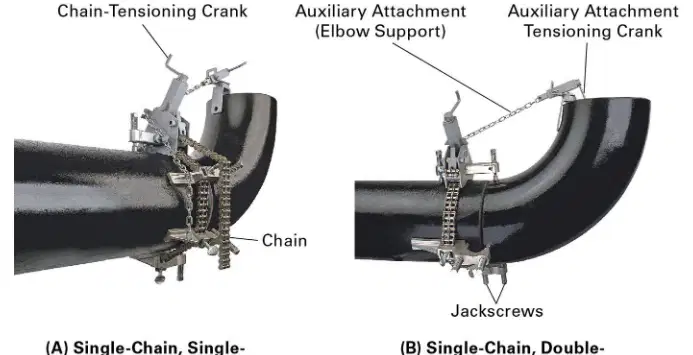
Some clamps use one jackscrew, while others use ________.
two
springs
wheels
pins
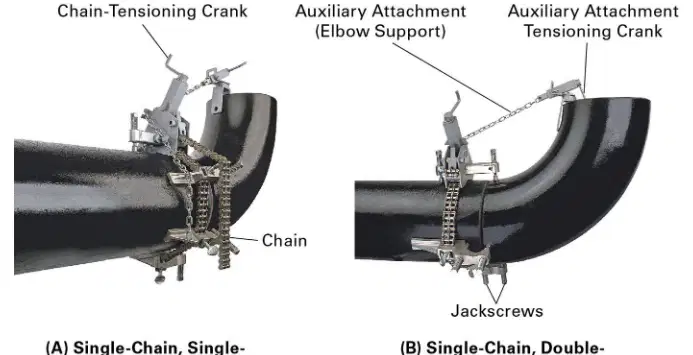
Match the following diagram labels to their correct descriptions:
Provides support for elbow joints
Used to tighten the chain
Used to tighten the chain
Provides support for elbow joints
Used to tighten auxiliary attachments
Used to tighten auxiliary attachments
The part that wraps around the pipe
The part that wraps around the pipe
Used to pull the chain tightly around the pipe
Used to pull the chain tightly around the pipe
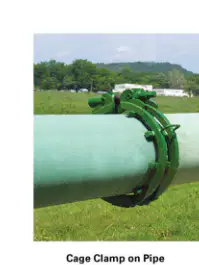
What is the primary function of cage clamps when used on a pipe?
To paint the pipe
To wrap around the pipe and grip it tightly when the craftworker operates the locking mechanism
To cut the pipe
To measure the pipe
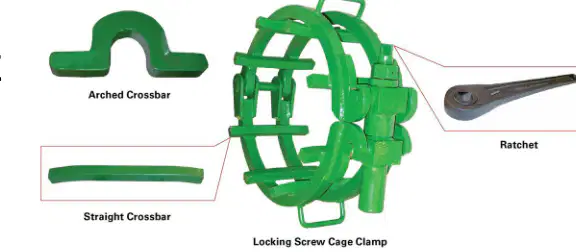
Which part of the cage clamp is usually replaceable?
The pipe
The crossbars
The locking mechanism
The handle
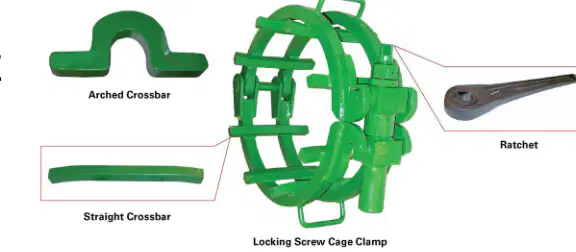
Fill in the blank: The straight crossbars flare out at the ends to make ______ the pipe into place easier.
sliding
cutting
painting
bending
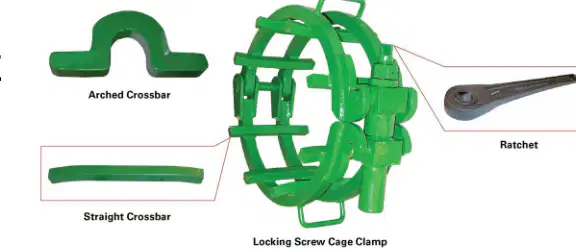
The arched crossbars provide better access to the weld joint.
True
False
Which of the following statements is true about rim clamps?
Rim clamps are used to hold only curved sections of pipes.
Rim clamps will hold a straight section and a flange.
Rim clamps are used only for decoration.
Rim clamps cannot be used in welding.
Fill in the blank: Welders use rim clamps for jobs in which the clamp must stay in place for the entire _______ and welding process.
preparation
cooling
inspection
painting
What does the clamp fit around and what does it hold in the proper position?
The clamp fits around the pipe’s rim and holds the flange in the proper position.
The clamp fits around the pipe’s center and holds the rim in the proper position.
The clamp fits around the flange and holds the rim in the proper position.
The clamp fits around the pipe’s rim and holds the rim in the proper position.
Rim clamps can also re-form thick pipes.
True
False
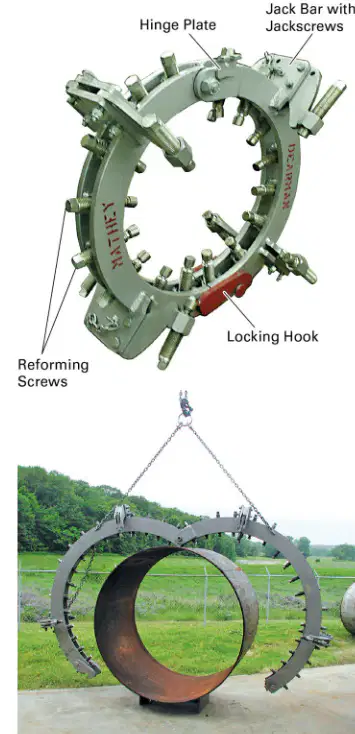
Refer to the diagram of the rim clamp. Which part is used to secure the clamp in place?
Hinge Plate
Locking Hook
Reforming Screws
Jack Bar with Jackscrews
Standard chain clamps can be too bulky for ______ pipes.
smaller
larger
metal
plastic
Which type of clamp offers better accuracy and easier adjustability for small-diameter pipes?
Standard chain clamp
Commercial clamp
Pipe wrench
Welding clamp
Commercial clamps have three-point jaws that clamp and align the pipe when the pipefitter turns the ______.
clamping screws
valve handle
pipe wrench
adjustment knob
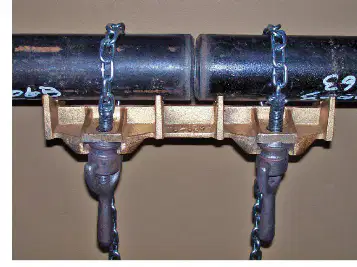
Identify the clamp shown in image (A).
Adjustable Pipe Clamp
ULTRA™ Clamp
Chain Clamp
Welding Clamp
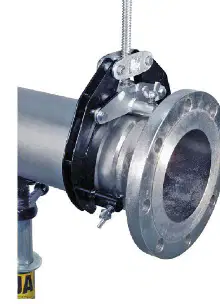
Identify the clamp shown in image (B).
Adjustable Pipe Clamp
ULTRA™ Clamp
Chain Clamp
Welding Clamp
What is the primary function of pipe pullers?
To cut pipes
To pull sections of large-diameter pipe together for welding
To paint pipes
To measure pipe diameter
Pipe pullers are common in which type of facilities?
Food processing plants
Petrochemical facilities
Hospitals
Schools
Fill in the blank: Sometimes, consumable inserts fit between the pipe joint faces. These establish the correct ________ opening. During welding, they fuse into the joint.
root
gap
edge
seam
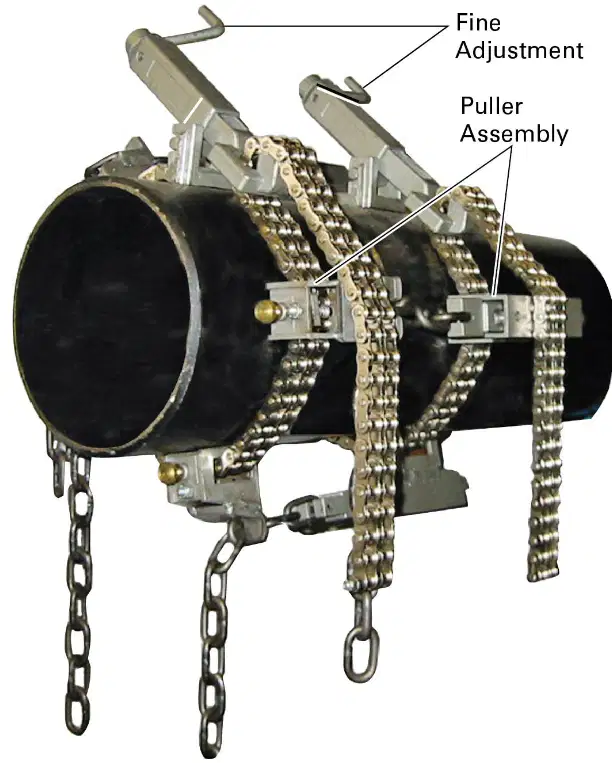
In the diagram, which part of the pipe puller assembly is used for making precise adjustments?
Puller Assembly
Fine Adjustment
Chain
Pipe Joint
What can happen if a flange is not properly aligned?
It can leak
It can put stress on nearby equipment
Both A and B
None of the above
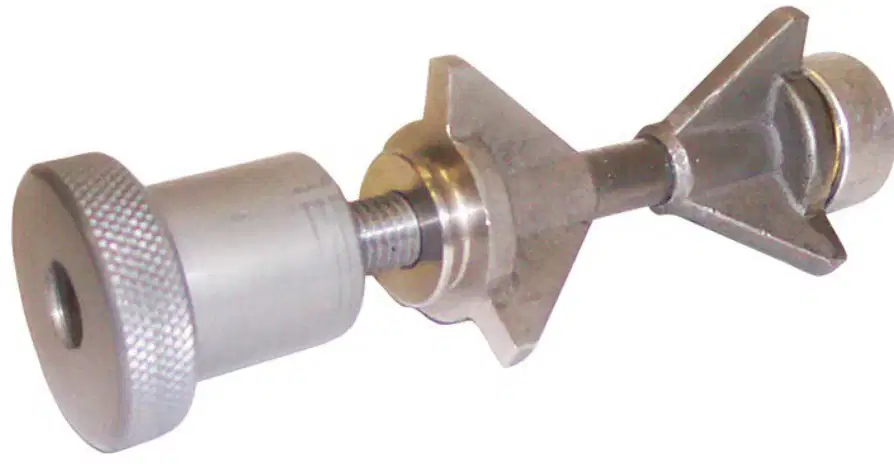
To check a flange’s alignment before tack welding it into place, insert ______ into the bolt holes.
pins
screws
washers
nuts
Measuring instruments use ______ as reference points. Alignment fixtures and jigs also use the bolt holes as reference points.
flange pins
screws
washers
gaskets
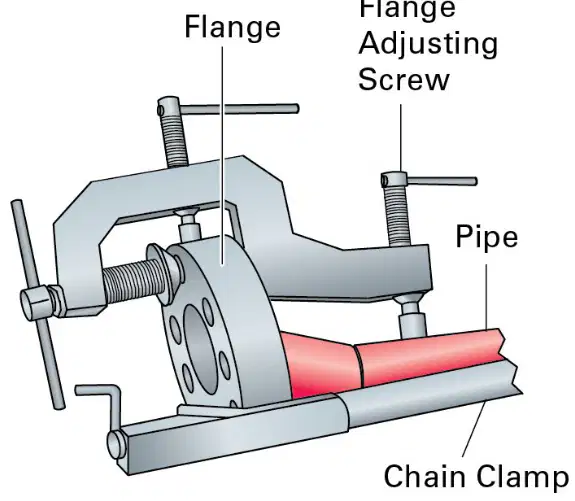
Which part in the diagram is used to adjust the alignment of the flange?
Pipe
Chain Clamp
Flange Adjusting Screw
Flange
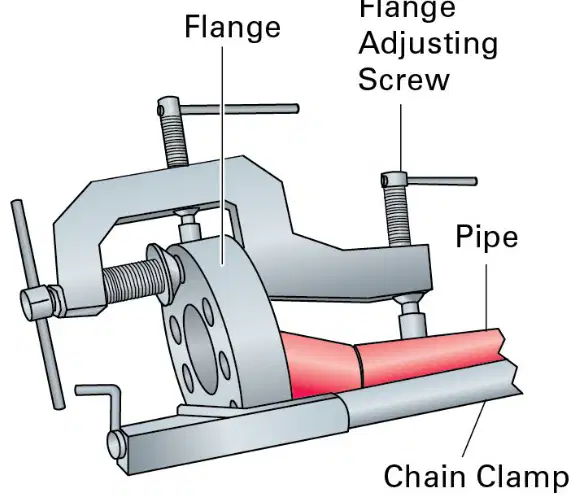
Match the following parts of the flange alignment tool with their correct labels:
Used to secure the pipe
Used to secure the pipe
Main circular part
Main circular part
Used to adjust alignment
Used to adjust alignment
The pipe being aligned
The pipe being aligned
When using measuring tools, you should be careful not to _______ the weldment.
contaminate
overheat
paint
bend
Don’t use carbon steel tools on stainless steel. True or False: It is acceptable to use carbon steel tools on stainless steel.
True
False
Using stainless steel tools with carbon steel parts usually isn’t a problem.
True
False