
 Worksheets
Empires of the World in 1500
Total questions: 98
Worksheet time: 54mins

Which empire in Africa gained wealth from the Gold-Salt Trade?
Songhai
Ottoman
Mughal
Aztec

Which two European countries were described as both modern and wealthy in 1500?
A) England and France
B) Russia and France
C) England and Russia
D) France and Ottoman

Fill in the blank: The capital of the Ottoman Empire was renamed _______.
Istanbul
Ankara
Baghdad
Damascus

Which empire was isolated from outside influence and controlled by a shogun (military leader)?
China
Japan
Mughal
Songhai

Match the following empires to their notable features:
Taj Mahal, Islamic influence, trade silk, spices, gems, & textiles
1-A
Expands, capital renamed Istanbul, united by Islam, coffee, ceramics, numeral system
2-B
Emperor controls trade with enclaves, goods: paper, silk, compass
3-C

Which goods were traded along the Silk Road from China?
A) Paper, silk, compass
B) Coffee, ceramics, spices
C) Gold, salt, gems
D) Textiles, gems, spices

Fill in the blank: The Trans-Sahara Trade route was important for trading ______ and salt.
gold
spices
copper
timber

Which civilizations were present in the Americas in 1500?
Aztecs, Inca, Mayan
Romans, Greeks, Egyptians
Vikings, Mongols, Persians
Chinese, Japanese, Koreans
Babylonians, Sumerians, Assyrians
What is the Renaissance?
The rebirth of classical knowledge
The fall of Rome
The start of the Middle Ages
The invention of the printing press
Where did the Renaissance begin?
France
Italian city-states
England
Spain
The Renaissance spread to which region after beginning in Italian city-states?
Southern Europe
Northern Europe
Asia
Africa
Fill in the blank: The Renaissance was a ______ of classical knowledge.
rebirth
decline
disregard
loss
confusion
What is Humanism?
Focus on religious values
Focus on human values and accomplishments, learning
Focus on military power
Focus on economic growth

Match the following Renaissance figures/artworks with their descriptions:
By Leonardo da Vinci
Mona Lisa
By Michelangelo – realist painter & sculptor
Sistine Chapel
English playwright, poet of Northern Renaissance
Shakespeare
The Prince
Machiavelli
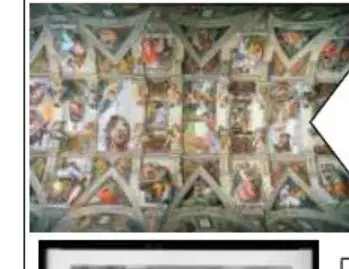
Who painted the Sistine Chapel?
Leonardo da Vinci
Michelangelo
Raphael
Shakespeare
Who wrote 'The Prince'?
Shakespeare
Machiavelli
Michelangelo
Leonardo da Vinci
What is one of the problems in the church during the Reformation?
Italians dominate
Salvation by faith alone
Begins Protestant movement
All humans equal before God
What was a corrupt practice in the church mentioned during the Reformation?
Posting 95 Theses
Sale of indulgences
Salvation by faith alone
Huge wealth & influence of merchants
Fill in the blank: One of the problems in the church was ________ wealth & influence of merchants.
huge
limited
declining
hidden
Who was the key figure who began the Protestant movement during the Reformation?
Martin Luther
Romeo
Italian merchants
The Pope
What was Martin Luther's view about salvation?
Salvation by faith alone
Salvation by wealth
Salvation by indulgences
Salvation by church authority
Fill in the blank: Martin Luther believed all humans are ______ before God.
equal
judged
separated
punished
What action did Martin Luther take to protest problems in the church?
Posted 95 Theses on church door
Sold indulgences
Became a merchant
Dominated Italians
Henry VIII of England: Dismisses the authority of ________.
Pope in Rome
King of France
Archbishop of Canterbury
Holy Roman Emperor
Henry VIII of England: Nationalizes the ________.
English church
French monarchy
Spanish Armada
Roman Senate
Henry VIII of England: Takes Catholic Church’s ________ as his.
property
land
wealth
power
John Calvin: Preaches about ________.
Predestination
Salvation by works
Indulgences
Transubstantiation
John Calvin: God already knows ________.
What will happen to you
How much money you have
What your favorite color is
What you ate for breakfast
John Calvin: Expands the ________.
Protestant movement
Catholic Church
Renaissance art
Feudal system
Elizabeth I: Creates the ________.
Anglican Church
Catholic Church
Presbyterian Church
Lutheran Church
Elizabeth I: Tolerates ________.
Dissenters
Catholics
Puritans
Monarchs
Elizabeth I: Defeats the ________.
Spanish Armada
French Navy
Ottoman Fleet
Dutch Armada
Elizabeth I: Expands England’s ________.
Colonies
Trade Routes
Armies
Religions
The Reformation in Germany: ________ convert to Protestant faith.
Princes
Farmers
Merchants
Nobles
The Reformation in Germany: The Holy Roman Empire _________
remains Catholic
becomes Protestant
is dissolved
joins the Orthodox Church
The Reformation in Germany: ________ fought between Protestants & Catholics.
30 Years War
Hundred Years War
War of Roses
Napoleonic Wars
The Reformation in France: ________ grants religious freedom to Huguenots.
Edict of Nantes
Treaty of Westphalia
Peace of Augsburg
Edict of Worms
The Reformation in France: Huguenots = _________?
Calvinists in France
Protestants in England
Catholics in Spain
Lutherans in Germany
The Reformation in France: Cardinal Richelieu _________.
Makes 30 Years War political
Supported the Huguenots against the monarchy
Led the Catholic Church's opposition to the Reformation
Was exiled for his religious beliefs
The Catholic Counter Reformation: ________ and ________ inspire reformers.
John Wycliffe, Jan Huss
Martin Luther, John Calvin
Ignatius Loyola, Teresa of Avila
Henry VIII, Elizabeth I
The Catholic Counter Reformation: Church Doctrine is reaffirmed by the _________
Council of Trent
Diet of Worms
Peace of Augsburg
Edict of Nantes
The Catholic Counter Reformation: The ________ spread Church.
Society of Jesus (Jesuits)
Council of Trent
Spanish Inquisition
Augustinian Order
The Catholic Counter Reformation: The Spanish ________ enforces law.
Inquisition
Monarchy
Parliament
Council
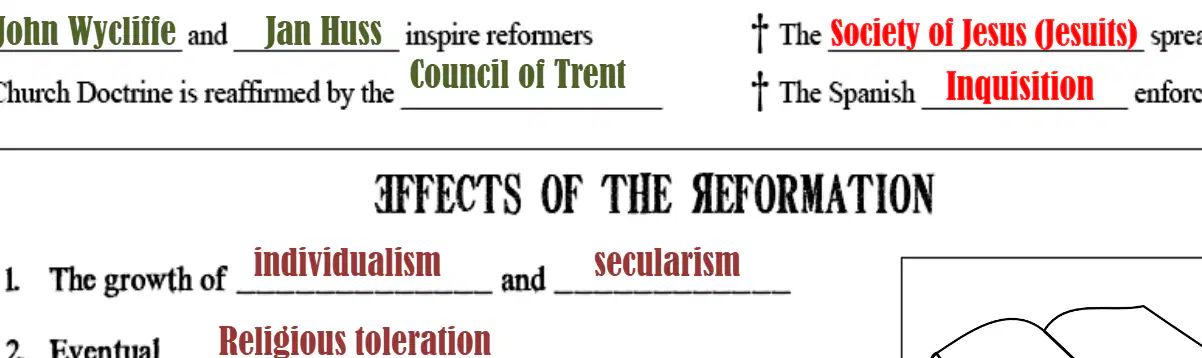
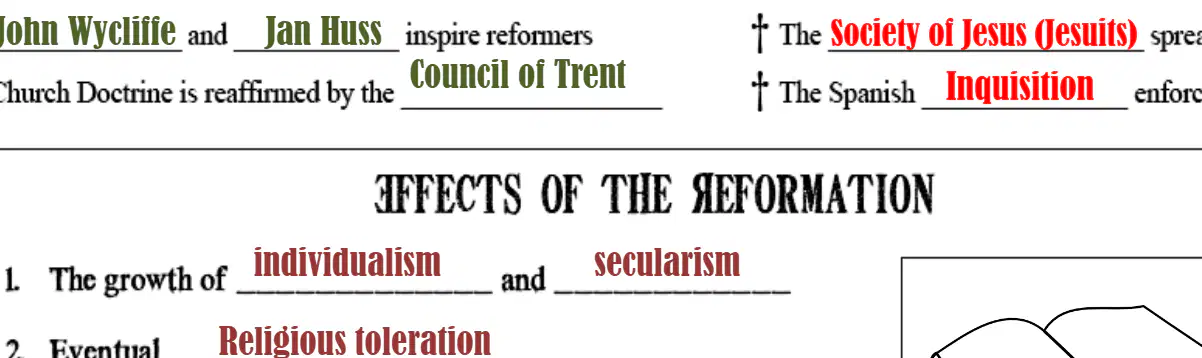
Effects of the Reformation: The growth of ________ and ________.
individualism, secularism
monarchies, feudalism
collectivism, theocracy
absolutism, serfdom
Effects of the Reformation: Eventual ________.
Religious toleration
Absolute monarchy
Economic collapse
Universal suffrage
Effects of the Reformation: ________ invented by Gutenberg in 1440.
Printing press
Steam engine
Telephone
Microscope
Effects of the Reformation: Leads to ________.
Higher literacy, spreads new ideas
Decline in trade and commerce
Loss of scientific knowledge
Decrease in religious diversity
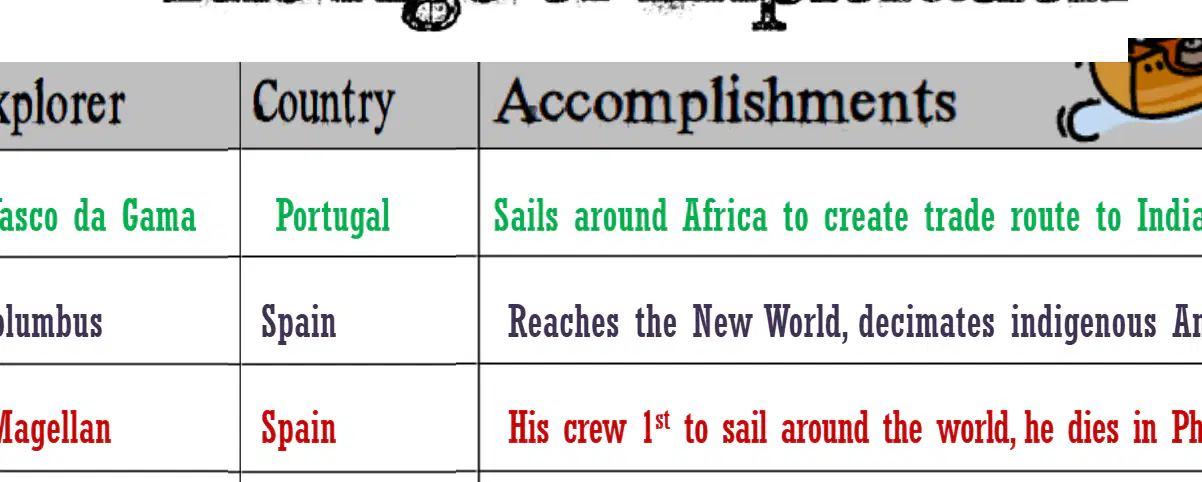
Match the explorer to their accomplishment:
Sails around Africa to create trade route to India
Vasco da Gama
Reaches the New World, decimates indigenous Americans
Columbus
His crew 1st to sail around the world, he dies in Philippines
Magellan
Conquistador, conquered the Aztecs in Central Mexico
Hernan Cortes
Conquistador, conquered the Inca in Peru
Francisco Pizarro
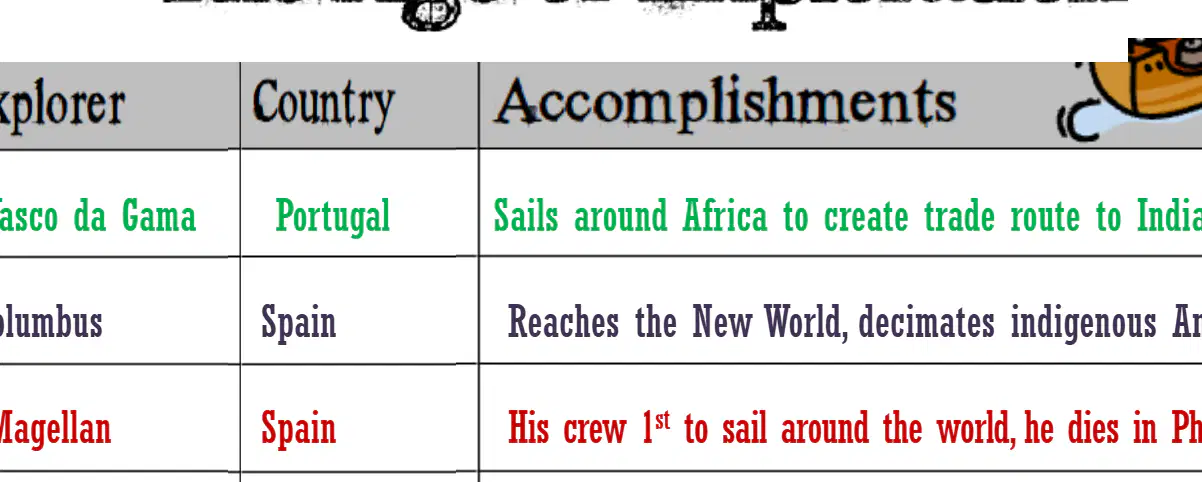
Fill in the blank: Vasco da Gama was an explorer from ______ who sailed around Africa to create a trade route to India.
Portugal
Spain
Italy
France
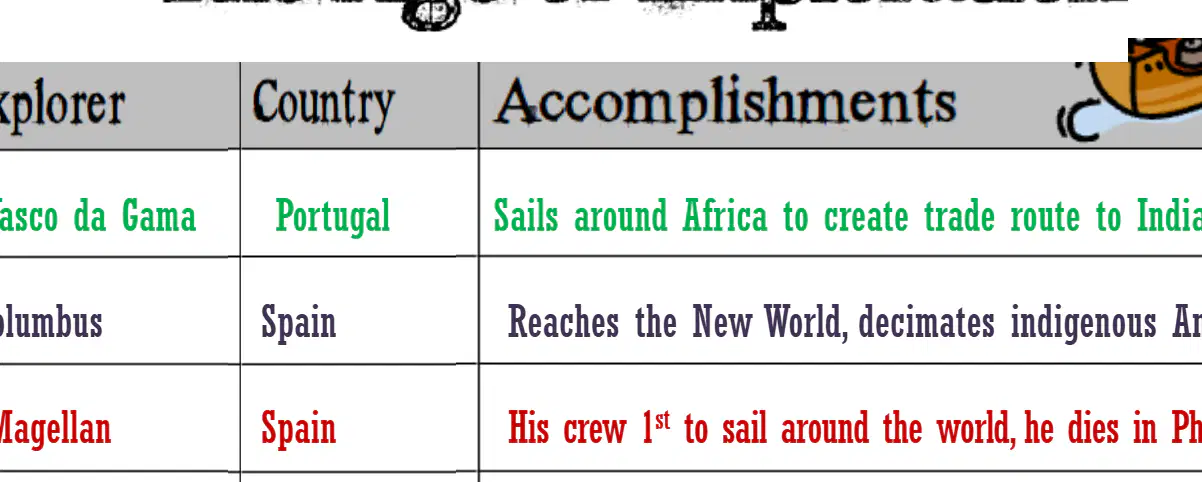
Fill in the blank: ______ reached the New World and decimated indigenous Americans.
Columbus
Magellan
Vasco da Gama
Cook
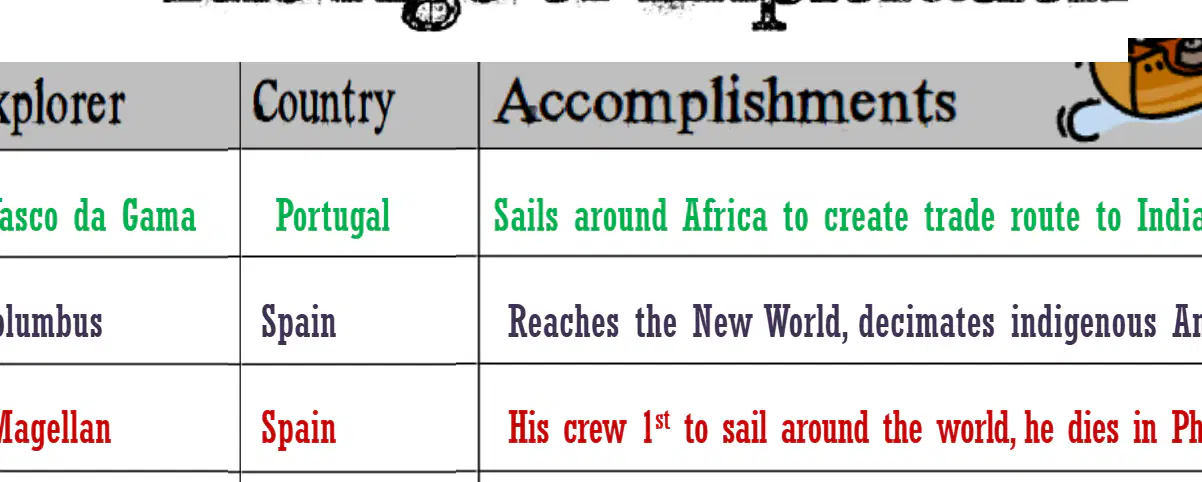
Fill in the blank: Magellan's crew was the first to sail around the world, but he died in ______.
Philippines
Indonesia
Brazil
India
Fill in the blank: Hernan Cortes was a conquistador who conquered the ______ in Central Mexico.
Aztecs
Incas
Mayans
Olmecs
Fill in the blank: Francisco Pizarro conquered the ______ in Peru.
Inca
Aztec
Maya
Olmec
Fill in the blank: Francis Drake was a privateer from England who sailed around the world and defeated the ______ Armada.
Spanish
French
Ottoman
Dutch
Fill in the blank: Jacques Cartier reached ______ and claimed it for France.
Canada
Brazil
India
Australia
Which of the following was brought from the Old World to the New World during the Columbian Exchange?
Corn
Potatoes
Horses
Tobacco
Which group was most affected by diseases brought by Europeans during the Columbian Exchange?
Africans
Native Americans
Europeans
Asians
Fill in the blank: The labor shortage in the New World during the Columbian Exchange led to _______.
slavery
democracy
industrialization
universal suffrage
Which crops were introduced to the Old World from the New World during the Columbian Exchange?
Sugar, rum
Corn, potatoes, tobacco
Horses, cattle
Manufactured goods
Match the following regions with their roles in the Triangle of Trade:
Manufactured goods
Europe
Slaves
Africa
Sugar & rum
America
Plantation systems were brought to the New World as part of the Columbian Exchange.
True
False
What economic practice ensured that colonies benefited the mother country during the age of exploration?
Mercantilism
Capitalism
Socialism
Feudalism
Fill in the blank: The commercial revolution led to the development of the _______ system and money for markets.
banking
feudal
barter
agricultural
Which explorer pioneered exploration for Europe during the Triangle of Trade?
Christopher Columbus
Prince Henry of Portugal
Vasco da Gama
Ferdinand Magellan
What is one characteristic of absolute monarchs?
Share power with the people
Centralize power – take all of it for themselves
Rule by democracy
Allow free elections
Absolute monarchs rule by Divine Right, which means:
The king is elected by the people
God's will gives the king the right to rule
The king shares power with parliament
The king is chosen by nobles
Match the ruler to their country:
France
France
Russia
Russia
England
England
Who built the Palace of Versailles?
Peter the Great
Louis XIV
Charles I
Oliver Cromwell
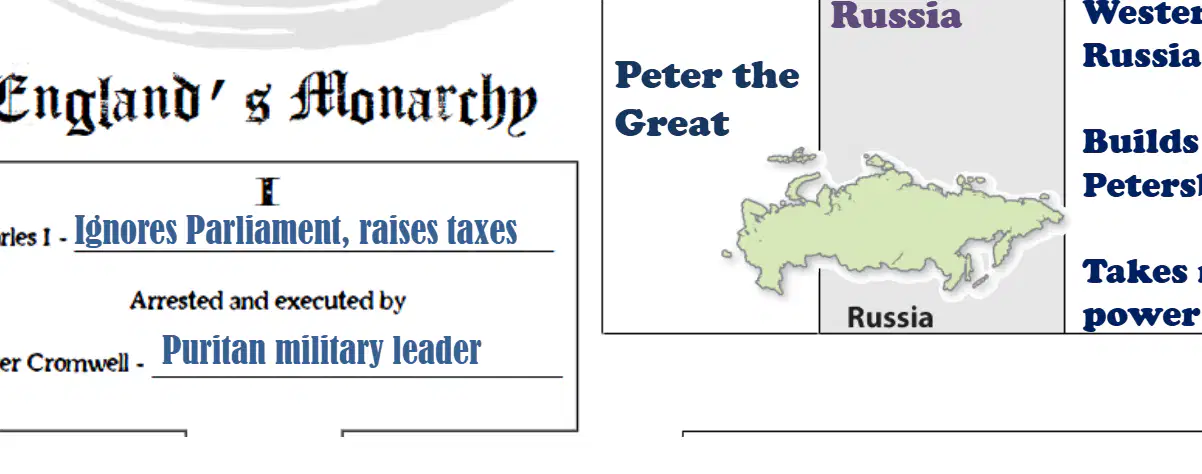
Who westernized Russia and built St. Petersburg?
Louis XIV
Charles I
Peter the Great
Oliver Cromwell
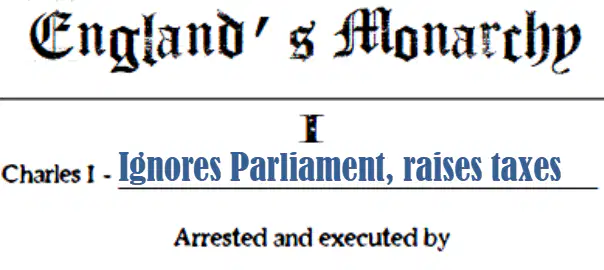
Fill in the blank: Charles I ______ Parliament and raises taxes.
ignores
consults
supports
dissolves
Who was arrested and executed by Oliver Cromwell, the Puritan military leader?
Peter the Great
Louis XIV
Charles I
None of the above
What did Charles I do regarding Parliament and taxes?
Ignores Parliament, raises taxes
Consults Parliament, lowers taxes
Disbands Parliament, abolishes taxes
Strengthens Parliament, increases taxes
Who arrested and executed Charles I? (Fill in the blank) Oliver Cromwell - ________
Puritan military leader
Royalist general
Catholic bishop
French ambassador
What happened during the Restoration?
Cromwell dies and Charles II restores the monarchy to England
The Magna Carta is signed by King John
The English Civil War begins
Queen Elizabeth I ascends to the throne
Charles II ________ (Fill in the blank: What did Charles II do with Parliament?)
Fights with Parliament
Ignores Parliament
Supports Parliament
Dissolves Parliament
Factions ________ develop, leading to ________ (Fill in the blanks: What did factions develop into?)
modern political parties
economic unions
military alliances
social movements
The Glorious Revolution - ________ (Fill in the blank: What kind of revolution was it?)
Peaceful, bloodless revolution
Violent, armed revolution
Economic revolution
Industrial revolution
________ and ________ take the throne during the Glorious Revolution. (Fill in the blanks)
William and Mary
Charles and Anne
James and Elizabeth
George and Catherine
Monarchs must now ________ (Fill in the blank: What must monarchs do after the Glorious Revolution?)
share power equally with Parliament
rule without Parliament's consent
abolish Parliament
become absolute rulers
The English Bill of Rights (1689) - ________ (Fill in the blank: What did the Bill of Rights grant?)
Grants rights and freedoms to Englishmen
Established the monarchy as absolute
Granted voting rights to all citizens
Created the Magna Carta
The English Bill of Rights (1689) - Limits ________ (Fill in the blank: What does the Bill of Rights limit?)
Royal power
Parliamentary debates
Trade regulations
Colonial expansion
The English Bill of Rights (1689) - Leads to ________ (Fill in the blank: What did the Bill of Rights lead to?)
Eventual democracy & America's government
Absolute monarchy in England
The rise of feudalism
The end of parliamentary government
Match the Enlightenment philosopher to their notable work:
Thomas Hobbes
Leviathan
John Locke
Two Treatises on Government
Montesquieu
The Spirit of Laws
Rousseau
Social Contract
Which Enlightenment philosopher wrote 'Leviathan'?
Thomas Hobbes
John Locke
Montesquieu
Rousseau
Fill in the blank: The Enlightenment philosopher who believed 'Government must protect our life, liberty, & property, Social Contract' is _______.
John Locke
Thomas Hobbes
Jean-Jacques Rousseau
Baron de Montesquieu
Which philosopher is associated with the idea 'The Separation of Powers'?
Thomas Hobbes
John Locke
Montesquieu
Rousseau
Fill in the blank: According to Rousseau, _______ is a contract between people and ruler.
Government
Religion
Economy
Education
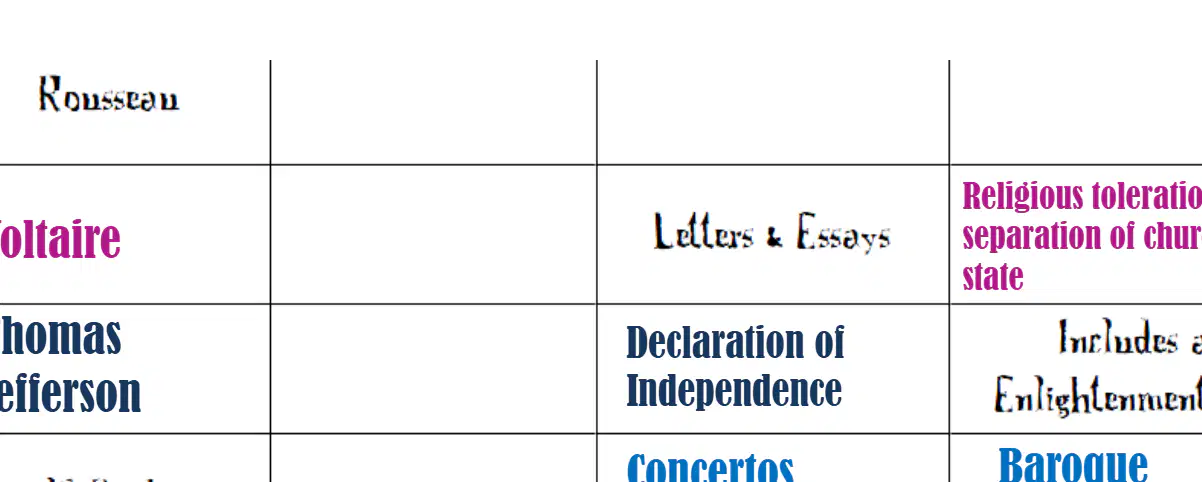
Who wrote 'Don Quixote'?
Fill in the blank: ________ is known for 'Liberty Leading the People; Orphan Girl'.
Eugene Delacroix
Claude Monet
Pierre-Auguste Renoir
Edgar Degas
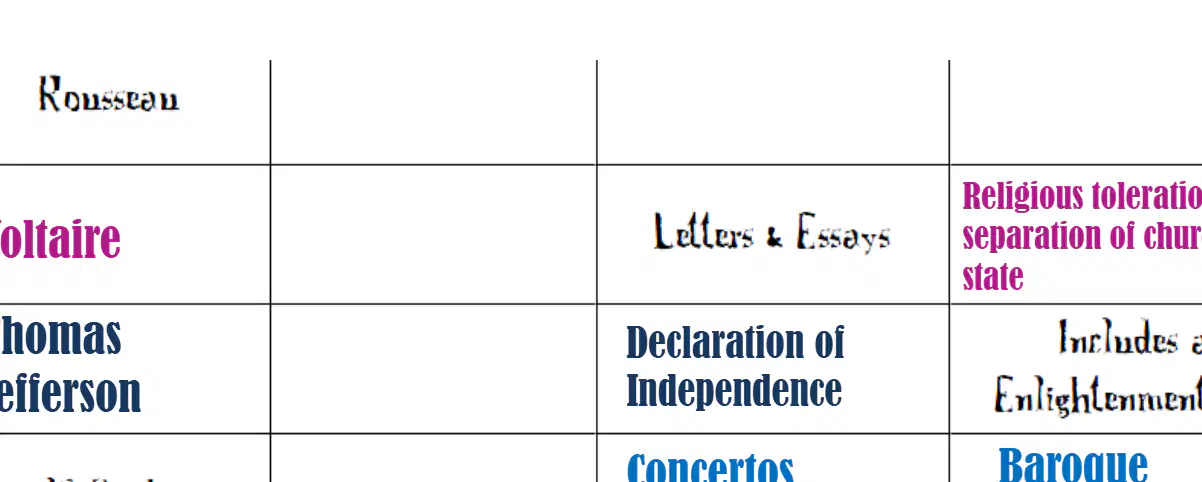
Which composer is associated with 'Concertos, fugues' and is a Baroque composer?
Who is described as a Romantic painter?
Eugene Delacroix
Vincent van Gogh
Claude Monet
Pablo Picasso
Fill in the blank: ________ is known for 'Symphonies, operas' and is a Classical Composer.
Mozart
Beethoven
Bach
Chopin
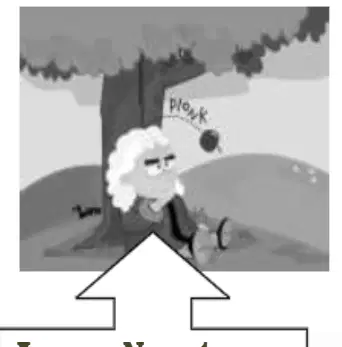
Who discovered the laws of gravity?
Isaac Newton
Albert Einstein
Galileo Galilei
Nikola Tesla
Who developed the heliocentric theory?
Copernicus
Ptolemy
Galileo Galilei
Isaac Newton
Who discovered planetary motion?
Kepler
Newton
Galileo
Copernicus
Who discovered blood circulation?
William Harvey
Louis Pasteur
Alexander Fleming
Edward Jenner
Who used a telescope to support the heliocentric theory?
Galileo
Newton
Copernicus
Kepler
What was one major intellectual movement that influenced the French Revolution?
Enlightenment Ideas on government
Romanticism in literature
Industrial Revolution in technology
Medieval Scholasticism

