
Font size
S
M
L
XL
 Worksheets
Age of Imperialism - Unit Review
Total questions: 15
Worksheet time: 8mins
Name
Class
Date
1.
What distinguished the "new imperialism" of the late 19th century against the "old imperialism" of the 16th century?
a)
Instead of just trading posts, 19th century imperialists sought "direct control over vast territories."
b)
The new imperialists only set up colonies in Africa, North America, & South America.
c)
The old imperialists were after profit, but the new imperialists hoped to convert the natives to Christianity.
2.
Which of these were ways that subject peoples resisted European imperialism?
a)
Sometimes the existing ruling class fought Western domination.
b)
Angry peasants sometimes fought back against foreign invaders.
c)
Westernized intellectuals developed a new kind of resistance based on nationalism.
d)
The planet-goddess Eywa sent wild animals to attack the imperialists.
3.
Who ruled the Congo as an absolute monarch, exploiting its people for maximum profit?
a)
Czar Nicholas of Russia
b)
Kaiser Wilhelm of Germany
c)
King Leopold of Belgium
d)
Cecil Rhodes of De Beers
4.
What natural resources prompted British expansion into the Boer republics & leading to conflict (the Boer Wars)?
a)
Gold
b)
Diamonds
c)
Oil
d)
Cotton
e)
Water
5.
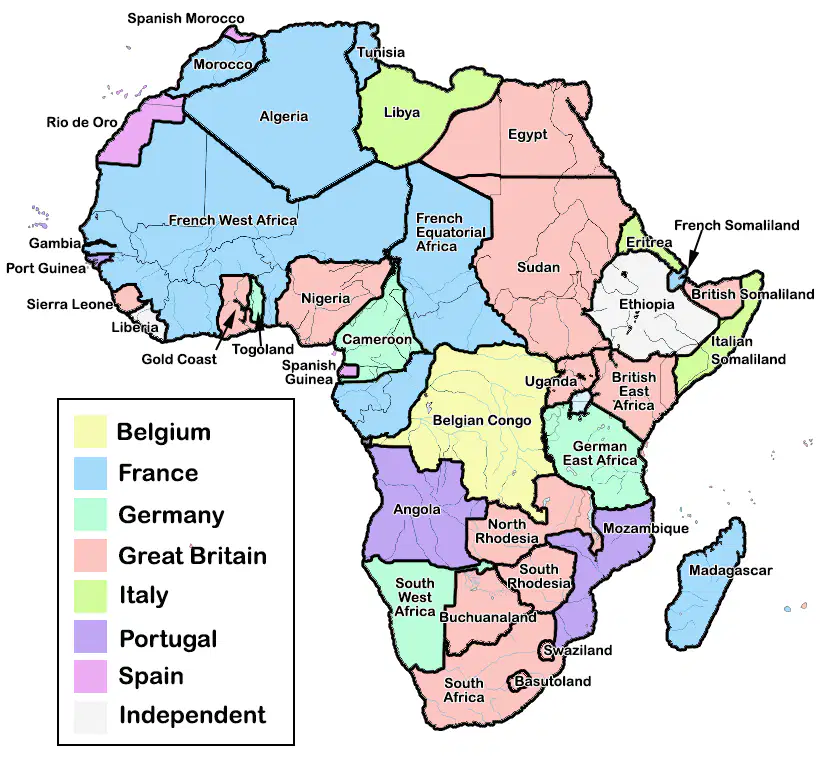
As a result of the "scramble for Africa," which two European countries took over the LARGEST portions of Africa?
a)
Britain
b)
Germany
c)
France
d)
Confederate States of America
e)
Belgium
6.
What people group was the victims of GENOCIDE in the Ottoman Empire in the early 1900s?
a)
Egyptians
b)
Turks
c)
Armenians
d)
Palestinians
7.
Why did Britain take an active interest in Egypt, eventually making it a protectorate?
a)
The Suez Canal was Britain's "lifeline to India," crucial for trade.
b)
The Nile River was "home of the Pharaohs," rich in ancient history.
c)
The Sahara Desert was the world's largest, giving its owner great prestige.
d)
Egypt had huge reserves of oil that Britain wanted to exploit.
8.
As a result of the Sepoy Rebellion, the British Parliament...
a)
immediately gave India its independence.
b)
transferred the East India Company’s power directly to the British government.
c)
granted voting rights to all men over the age of 21.
d)
declared war on India.
9.
The Indian National Congress...
a)
demanded immediate independence from Britain.
b)
wanted to share the governing process with the British.
10.
To improve their balance of trade with China, the British sold ____ to the Chinese.
a)
porcelain
b)
tea
c)
silk
d)
opium
11.
Who were the primary targets of violence during the Boxer Rebellion?
a)
Foreign diplomats & missionaries
b)
Chinese Christians
c)
Japanese samurai
d)
Chinese peasants
e)
Supporters of the Qing emperor
12.
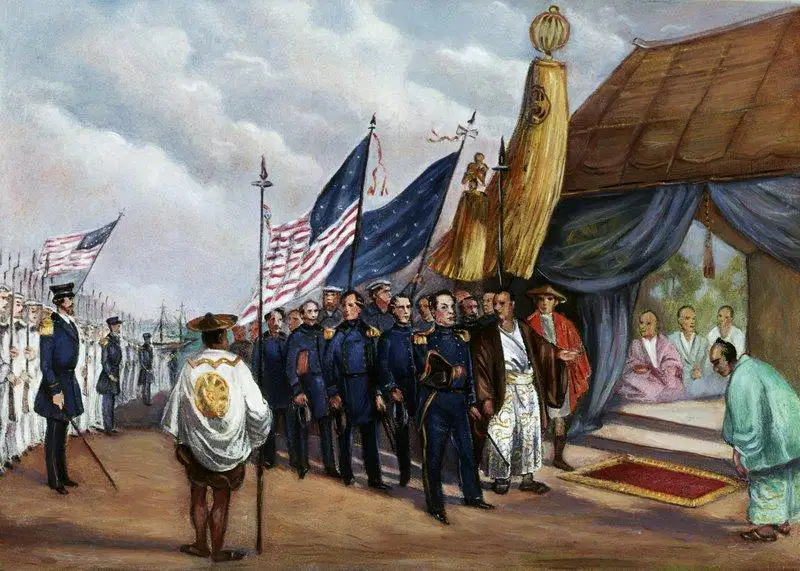
How did the United States convince the Tokugawa shogunate to make concessions & open trade to American merchants?
a)
Commodore Perry's warships created military pressure ("gunboat diplomacy")
b)
President Fillmore promised financial kickbacks to the shogun & his officials (bribes)
c)
Christian missionaries preached the truth of the Bible, convincing the emperor to become a Catholic Christian.
13.
What TWO western countries did Japanese reformers imitate with its public schools and with its new constitution?
a)
United States
b)
German Empire
c)
French Republic
d)
Switzerland
e)
China (specifically the Qing reformers)
14.
What was the basis for the economies of Latin America in the late 1800s & early 1900s?
a)
Exporting a few basic items, such as beef, coffee, or sugar.
b)
Manufacturing high-tech machinery.
c)
Self-sufficient agriculture, growing food for native people to eat.
15.
What country did you research for the in-class storybook project?
4 lines
Reset

