
 Worksheets
Church History FINAL EXAM REVIEW
Total questions: 123
Worksheet time: 4hrs 6mins
The Church is the place where the Son of God remains present.
St. Peter
The Apostles
Jesus
Mary
Who instituted (started) the Church?
The Apostles
Jesus
Pope Leo
Fr. Jordan
What word means "in the flesh" or "in human form"?
Incarnate
Ekklesia
Bom Dia
Andiamo
The heritage of faith contained in Sacred Scripture, Sacred Tradition, and the Magisterium is called.
The Deposit of Faith
Ekklesia
Canon
The Stool
What word literally means "to send forth" or "to send out"?
Deacon
Priest
Canon
Apostle
The title for Jesus that means "the Chosen One" or "the Anointed One".
Lord
Messiah
Apostle
King
Which came first: the Bible or the Church?
The Bible
The Church
What mark of the Church literally means "Universal," indicating that all people are allowed to be part of the Church?
One
Holy
Catholic
Apostolic
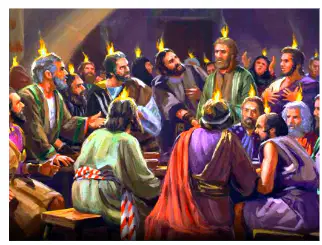
What is the image depicting, showing the Apostles gathered as tongues of fire descend from above?
The Ascension
Pentecost
The Resurrection
Christ’s death
Jesus giving St. Peter the "Keys of the Kingdom" reminds us of what from Old Testament times?
A good shepherd watching over his sheep
A prophet being anointed with oil
The role of the Prime Minister who was given authority in the King's place while he was away from the kingdom
Moses parting the Red Sea
What book of the Bible picks up where the Gospel of Luke ends and recounts how the early Church grew under the guidance of the Holy Spirit?
Acts of the Apostles
The Gospel of John
Revelation
The Epistle to the Ephesians
The first half of the Acts of the Apostles focuses on St. Peter's leadership and the second half of the book focuses on whom and his missionary journeys?
St. James
St. Paul
St. John
Moses
What are the Apostles commissioned to do by Christ?
Make disciples of all nations
Forgive sins
Perform supernatural tasks
All of the above
Non-Jews first attracted to the Gospel message were called.
Gentiles
Israelites
Apostles
Vikings Fans
At Pentecost, how did the Holy Spirit appear to the Apostles?
A pillar of salt
A burning bush
As strong wind and tongues of fire
As dancing clouds
Who is the head of the Catholic Church on earth?
The Pope (currently Pope Leo)
The Bishops
The Cardinals
The laity
Who was the first Pope of the Catholic Church?
St. Peter
St. James
St. Stephen
Fr. Patrick
The Church being unified in its beliefs and forming one body illustrates what mark of the Church?
One
Holy
Catholic
Apostolic
What happened at the Council of Jerusalem?
They decided what day to celebrate Jesus’ birth
They decided that no one would replace Judas in the 12 Apostles
They decided how Gentiles could become Christians
What mark of the Church says that the Church is built on Apostles, and the Pope is her visible head on earth?
One
Holy
Catholic
Apostolic
Where did St. Paul’s conversion take place (where he was knocked off his horse and heard Jesus’s voice)?
Jerusalem
The Road to Damascus
Rome
Green Bay
How was St. Peter martyred?
Beheaded
Fed to the lions in the Colosseum
Crucified upside down
Boiled in oil
What are gifts from the Holy Spirit that serve the Church?
Charisms
Vocations
Abilities
What is a group whose members are not related to one another, but who employ kinship (family) terminology and expect family-like behavior to characterize interactions?
Egalitarian
Fictive Family
Martyr
Clan
Literally means “witness” in Greek. These individuals died for their faith.
Pagans
Deities
Martyrs
Emperors
The proclamation that allowed Christians to practice their religion in ancient Rome is called.
The Edict of Milan
The Magna Carta
Humanism
The Edict of Worm
Someone who is polytheistic (believes in many gods) is called a.
Christian
Pagan
Deity
Canadian
The Church treated women as ________ to men.
Inferior
Equal
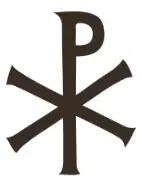
What is the symbol to the right called? (Constantine had a vision that assured him that he would conquer through the Greek symbol of Christ)
Kairos
Chi Roh
Christos Redeemer
X marks the spot
What Emperor started the Great Fire in Rome and blamed it on the Christians?
Constantine
Nero
Decius
Diocletian
Where did the early Christians practice the sacraments/liturgies?
Their homes
The Catacombs
Cathedrals
Both A and B
Higher beings or gods based on the belief system of a particular religion are called.
Pagans
Deities
Relics
Christians
A _____ is a formal statement of beliefs.
Catechism
Chi Rho
Edict of Milan
Creed
What is NOT a reason that Christians were persecuted in the early Church?
They held “secret meetings”
They were believed to be cannibals
They went to the Roman Colosseum and participated in their games
Christians supported family life and were vocal against immoral practices like prostitution and adultery
What is the list of approved books in the Bible called?
Canon
Deposit of Faith
Catechumenate
Popemobile
What is one of the NEGATIVE results from the legalization of Christianity in the Roman empire?
Christians could worship publicly
Christian values became part of society
Emperors interfered in Church business
Christians were no longer killed for their faith
What does Egalitarian mean?
Women have less value than men
Christians considered men and women equal
There should be a strict class system
Eagles soaring above Rome
St. Clement of Alexandria condemned what practice in the pagan world, saying that is a sin?
Polygamy (multiple marriages)
Animal sacrifices for the gods
Arranged marriages of daughters early in life
Who was the Emperor that issued the Edict of Milan, legalizing Christianity?
Nero
Constantine
Diocletian
Trajan
Incorrect understandings or teachings about certain Church doctrines (teachings) are called.
Creeds
Heresies
Dogmas
Doctrine
What is a formal statement of belief called in the Church? (Hint: we recite one at every Mass)
Heresies
Council
Creed
Conciliarism
What do we call the Christian writers who defend the Church against anti-Christian writings or heresies (false teachings) through reason/intellectual defenses (rational arguments)?
Pagans
Apologists
Bishops
NDA Students
What is one of the POSITIVE effects of the legalization of Christianity?
Emperors interfered in Church business
Churches got built so lots of people could worship together
Ordained men put power and civic matters as more important than religious ones
Who was the main apologist against Arianism?
St. Athanasius
St. Basil
St. Cyril
What are meetings of Catholic bishops from around the world, typically convened in order to discuss and resolve pressing theological issues?
Latin Vulgate
Ecumenical Councils
Caesaropapism
Arianism
A belief that a group holds to be true is called a ________.
Heresy
Canon
Doctrine
#facts
What heresy took its name from Arius, a priest from Alexandria, and denied the divinity of Jesus, claiming that he was like the Father except He was created by the Father?
Arianism
Pelagianism
Gnosticism
Skibbido Ohio
The official list of inspired books of the Bible is the ________.
Canon
Codex Vaticanus
Justinian Code
Who was the Byzantine Emperor who created an important code of laws and built the Hagia Sophia church?
Nero
Constantine
Justinian I
What Saint completed the Latin Vulgate (the translation of the Bible into Latin)?
St. Nicholas
St. Athanasius
St. Jerome
Bl. Carlos Acutis
What was St. Augustine’s “Confessions” about?
It is about the Doctrine of the Trinity
It is about his confessions and then conversion to Christ
It attempts to answer the question “why do bad things happen to good people?”
It’s about the Exodus from Egypt
The early format of celebrating the Eucharist comes from what Biblical story?
The Road to Emmaus
The Wedding Feast at Cana
The Transfiguration
Christ’s Baptism in the Jordan river
Who are Christians about the 4th century who withdrew into the desert to live an ascetic life of prayer, fasting, and abstinence? Their teachings had a profound impact on the theology and spirituality of the Church and the development of monasticism.
Desert Fathers
Apologists
Disciples
Ice Bears
What Ecumenical Council of the Church was in response to the heresy of Arianism?
The Council of Jerusalem
The Council of Ephesus
Vatican II
The Council of Nicaea
Who was the 1st pope called "servant of the servants of God"?
Pope St. Leo the Great
Pope Pius X
Pope St. Gregory the Great
Pope Francis
Who was the primary Church Father who fought against the heresy of Arianism?
St. Jerome
St. Athanasius
St. Augustine
Ms. C
True or False: St. Justin Martyr wrote the first surviving outline of the Rite of the Eucharist.
True
False
What profession of faith came out of the Council of Nicaea?
The Apostle’s Creed
The Hail Mary
The Nicene Creed
The Our Father
St. Leo the Great is best known for convincing ______ not to attack Rome.
Attila the Hun
The Lombards
Diocletian
Taylor Swift
When was the Edict of Milan proclaimed?
33 AD
313 AD
2023
1054 AD
In his writing "First Apology" what did St. Justin say about the Eucharist?
That it is a symbol of Christ’s body and blood
The Cup of wine should be passed to each person during the Mass
That the bread and wine are truly the body and blood of Christ. (The flesh and blood of the incarnate Jesus)
What are the three main criteria that was used by the Church in creating the canon (deciding what books would be put in the Bible)?
Authority, Orthodoxy, Codex Vaticanus
Ecumenical Councils, Authority, and Apostolic Origin
Apostolic Origin, Universality, Orthodox Content
What is the collection of laws written in Latin that were instituted by the Byzantine Emperor Justinian (527–565 AD) and became the basis of European law? This was a major reform of civil law?
Codex Vaticanus
On Christian Doctrine
The Edict of Milan
Justinian Code of Law
What Church Father’s most lasting contribution is on the theology of the Holy Spirit which helped expand the Nicene Creed?
St. Jerome
St. Basil
St. Cecilia
St. Gertrude
What Sacrament "makes present the one sacrifice of Christ the Savior (CCC, 1330)"?
Baptism
Reconciliation
Eucharist
Holy Orders
From the Greek term (hypostasis) this word is used to describe the union of the human and divine natures of Jesus Christ, the Son of God, in one Divine Person.
Eucharist
Hypostatic Union
Consubstantial
What word literally means “Of the same substance” and is part of the Nicene Creed?
Filioque
Schism
Hypostatic Union
Consubstantial
__________________ is a break in Christian unity that takes place when a group of Christians separates itself from the Church. This happens historically when the group breaks union with the pope.
Pause
Heresy
Ecumenical Council
Schism
The Sacrament is the "Source and Summit of the Christian life" aka the Catholic Faith?
The Pope
The Eucharist
Reconciliation
Holy Orders
This means “Teaching” and it provided early Christians instruction on the faith, including on Baptism and Eucharist.
Didache
Heresy
Filioque
Theotokos
What did the writings of the Church Fathers do?
Combat heresies
Explain the collapse of the Roman Empire to their contemporaries
Formulate Church doctrine for the future
All of the Above
Who were the Patriarchs?
The Apostle’s Fathers
Bishops of the 5 main episcopal sees (diocese) of Jerusalem, Antioch, Constantinople, Alexandria and Rome
Men who went off into the desert to fast and pray
In 387, who did St. Ambrose baptize?
St. Monica
St. Cecilia
St. Augustine
Father Jordan
Why is the Edict of Milan so important?
It summarized all Catholic beliefs into a statement
It legalized Christianity in the Roman Empire
It battled Arianism
It gave Christians major status and the ability to pull
What Church father introduced a type of music that is called the “Gregorian Chant”?
Pope St. Leo the Great
St. Basil
Pope St. Gregory the Great
Father Pat
What Saint prayed for her son’s conversion for over 33 years?
St. Cecilia
St. Agnes
St. Monica
St. Ambrose
Allegedly, who was the Saint that punched Arius in the face during the Council of Nicaea?
St. Ambrose
St. Nicholas
St. Augustine
Pope St. Leo the Great
What happened after the fall of Rome?
Pagans blamed the Christians and their God
Christians questioned how God could allow the death of innocent people and the destruction of the center of civilization
A power vacuum was created
All of the above
The last book of the Bible is also called “The Apocalypse” (or unveiling) and encourages Christians to remain faithful even when suffering.
The Gospel of John
Maccabees
Romans
Revelation
What Church Father wrote poems and songs to help explain the Catholic Faith?
St. Augustine
St. Leo the Great
St. Ephrem
St. Monica
What book of the New Testament comes after the gospels and recounts the history of the Church from Pentecost to the arrest of St. Paul in Rome?
Revelation
The letter to the Ephesians
Acts of the Apostles
Genesis
Why are Creeds important?
They help Christians to distinguish between essential and nonessential beliefs
They help Christians to focus their faith and worship on the issues that matter most
They correct false teachings
All of the above
What Church Fathers’ lifetimes overlapped with the Apostles themselves?
Apostolic Fathers
Ante-Nicene Fathers
Post-Nicene Fathers
What phrase did Augustine hear that led to his conversion?
“Take and read”
“Love your neighbor”
“Seek the truth”
“Follow your heart”
What is a teaching that directly contradicts an essential belief of the Catholic Church?
Doctrine
Didache
Heresy
Monasticism
Nicene Creed — pick the answer that belongs in the blank: “I believe in one Lord Jesus Christ, the Only __________ Son of God, born of the Father before all ages.” What word is missing?
Consubstantial
God
Salvation
Begotten
Nicene Creed — pick the answer that belongs in the blank: God from God, Light from Light, true God from true God, begotten, not made, __________ with the Father; through him all things were made.
Salvation
One
Consubstantial
Nicene Creed — pick the answer that belongs in the blanks: For us men and our salvation he came down from heaven, and by the Holy Spirit was incarnate of the __________ ____________, and became man.
Holy Spirit
Virgin Mary
Creator and Redeemer
Nicene Creed — pick the answer that belongs in the blank: He will come again in glory, to __________ the living and the dead and his kingdom will have no end.
Redeem
Listen to
Judge
Nicene Creed — pick the answer that belongs in the blank: I believe in one, __________, catholic and apostolic Church. (Hint: these are the four marks of the Church.)
Holy
Salvific
Didache
A time of great achievement in the Middle Ages when the Church and Western society were one. It refers to a group of nations in which Catholicism was the established religion of the state; in a wider sense, the term refers to a larger territory where most people are Christian. We call this...
Feudalism
Christendom
Sheepfold
A practice in the Middle Ages whereby secular rulers (like a king or duke) chose the bishops for their territories, thus usurping (taking away) the right of the pope to choose bishops:
Christendom
Feudalism
Lay Investiture
Jihad
What was the governing system that prevailed in Europe in the Middle Ages in which a superior or lord granted land to a vassal in return for military services of that vassal?
Democracy
Feudalism
Knighthood
Autocracy
The Abrahamic religion founded by Muhammad in the early 7th century; the word Islam refers to the peace the world will only achieve once all people everywhere submit to Allah.
Judaism
Paganism
Islam
Scientology
Individual Islamic believers are called...
Jews
Muslims
Islams
Christians
What is NOT one of the consequences of the Islamic movement on Christianity?
Three ancient patriarchates fell so their influence ceased
Christianity lost control of the Mediterranean Basin so Europe became economically, socially and culturally isolated
Lay investiture
The territory in modern-day central Italy that was overseen by the pope from the 8th century until 1870 is called...
Avignon Papacy
Rome
Papal States
Stealthy Stronghold
What do we call religious life in which men or women leave the world and enter a monastery or convent to devote themselves to solitary prayer, contemplation, and self-denial?
Islam
Monasticism
Scholasticism
Conciliarism
Who was the first “Holy Roman Emperor”? He also said that “The Pope’s job is to pray for the Church, my job is to rule it.”
Nero
St. Peter
Charlemagne
Martin Luther
Who wrote a “Rule” for monastic life in an attempt to reform problems that were widespread in monastic communities?
St. Scholastica (The Rule of St. Scholastica)
St. Jerome
Christiano Renaldo
St. Benedict (The Rule of St. Benedict)
The Church in the Middle Ages pt. 2 (High Middle Ages) (5 points): A series of military expeditions made according to a solemn vow to return holy places to the possession of the Church from the Muslims are called....
Jihads
Crusades
Albigensianism
Transubstantiation
The Church in the Middle Ages pt. 2 (High Middle Ages) (5 points): What Pope was nicknamed “Hellbrand” and tried to eradicate simony and lay investiture?
Pope Nicholas II
Pope St. John Paul II
Pope Francis I
Pope Gregory VII
The Church in the Middle Ages pt. 2 (High Middle Ages) (5 points): What monastery/abbey became a center for reform activity in 910?
The Benedictine Abbey in Monte Cassino, Italy
The Franciscan monastery of Blessed Virgin Mary in Bac
The Benedictine Monastery in Cluny, France
The Norbertine Abbey in Green Bay, WI
The Church in the Middle Ages pt. 2 (High Middle Ages) (5 points): What is Transubstantiation?
Church teaching that holds that the substance of the bread and wine is changed into the substance of the Body and Blood of Christ at the consecration at Mass
The heresy that states that all matter is evil and only the spiritual is good.
An efficacious sign, instituted by Christ, to give grace.
A power source
What Pope convoked (called) the Fourth Lateran Council?
Pope Innocent III
Pope Gregory the Great
Pope Francis I
Pope Nicholas II
What term refers to when kings or nobles appointed church officials instead of the Church itself?
Simony
Lay Investiture
Albigensianism
Papal Bull
The Church in the Middle Ages pt. 3 (Late Middle Ages) (8 pts): What was the main goal of Joan of Arc during the Hundred Years' War?
To become the Queen of France
To lead France to victory against England
To establish a new religious order
To end the Avignon Papacy
The Church in the Middle Ages pt. 3 (Late Middle Ages) (8 pts): What is a Papal Legate?
A cleric sent on a mission, ecclesiastical or diplomatic, by the pope as his personal representative
A member of the Knights Templar
A Black Friar
An influencer
The Church in the Middle Ages pt. 3 (Late Middle Ages) (8 pts): The act of buying or selling church positions or roles is called....
Simony
Chastity
Albigensianism
Capitalism
The Church in the Middle Ages pt. 3 (Late Middle Ages) (8 pts): What was the Black Death?
A war between England and France
A period of darkness across Europe
A widespread outbreak of bubonic plague
The Church in the Middle Ages pt. 3 (Late Middle Ages) (8 pts): What was the nickname given to the Avignon Papacy?
French Papacy
Age of Humanists
Golden Age
The Babylon Captivity
What is the Avignon Papacy?
The period of time when the Papacy was relocated from Rome to Avignon, France and the French Leadership had much influence on the church.
A period of time where the papacy was moved to Turin, Italy
The Papal States
A time when the Italian kings ruled the Papacy
What event led to the Avignon Papacy?
The Black Death
The Hundred Years' War
The conflict between Pope Boniface VIII and King Philip IV of France
The Fourth Crusade
What happened in 1296 that began the fight between the Pope and King Philip IV?
Pope Boniface issued a decree forbidding kings from taxing the clergy without his consent
King Philip attacked the Papal lands
King Philip started spreading the Albigensian Heresy
What Council of the Church reformed priest behavior, condemned the heresy of Albigensian, declared the secrecy of the confessional, required annual Confessions, etc.?
The Council of Nicaea
The Council of Jerusalem
The Fourth Lateran Council
What religious order did St. Francis of Assisi found?
The Dominicans
The Jesuits
The Norbertines
The Franciscans
What is excommunication?
Buying and selling church positions
A statement saying you can't take part in Church services or receive sacraments (you are excluded until you repent)
A drug
What type of architecture is known for its pointed arches, ribbed vaults, and large stained glass windows?
Gothic Architecture
Romanesque Architecture
Baroque Architecture
Byzantine Architecture
Unit #7: Renaissance and Reformation (19 points): This is the cultural rebirth begun in the late Middle Ages that emphasized the pleasures of life, glorified the human body, and celebrated education (this is the time period).
Western Civilization
Renaissance
Reformation
Counter-Reformation
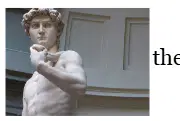
Unit #7: Renaissance and Reformation (19 points): What famous artist painted the Sistine Chapel and sculpted the “David” and “Pieta”?
Michelangelo
Donatello
Raphael
Leonardo da Vinci
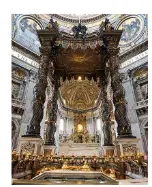
Unit #7: Renaissance and Reformation (19 points): Where is the sculpture pictured on the right located?
Assisi, Italy
St. Paul Outside the Walls Church, Italy
Green Bay, WI
The Vatican
Unit #7: Renaissance and Reformation (19 points): A term applied to the Americas, as compared to the “Old World” of Europe.
Modern World
New World
Age of Discovery
Colonization
Unit #7: Renaissance and Reformation (19 points): What is the cultural and intellectual movement of the Renaissance that emphasized the rediscovery of the literature, art, and civilizations of ancient Greece and Rome?
Conciliarism
Modernism
Humanism
Feudalism

