
 Worksheets
5th Grade Science MOY Test Review
Total questions: 85
Worksheet time: 21hrs 15mins
the size of the object
how crowded or packed the particles are
Q.
What is mass?
The amount of matter an object has.
The force of gravity pulling down on you.
A large number of objects crowded together

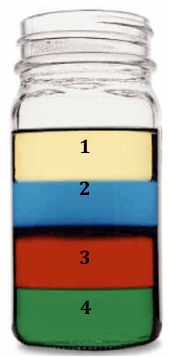
What is the least dense LIQUID in this container?
Honey
vegetable oil
lamp oil
ping pong ball

What is the volume of the fish?
18.0 ml
6.0 ml
38.0 ml

What is the volume of this liquid?
26 mL
24 mL
20 mL
36 mL

What is the volume of the button?
2
20
18
15
WHETHER MATTER IS A SOLID, LIQUID OR GAS
MAGNETISM
MASS
PHYSICAL STATE
TEMPERATURE
THE AMOUNT OF MATTER IN A MATERIAL
MASS
PHYSICAL STATE
TEMPERATURE
MAGNETISM
THE AMOUNT OF THERMAL ENERGY A MATERIAL HAS
RELATIVE DENSITY
MASS
PHYSICAL PROPERTIES
TEMPERATURE
ATTRACTION TO A MAGNET
RELATIVE DENSITY
TEMPERATURE
MAGNETISM
MASS
WHETHER MATTER DISSOLVES IN WATER
SOLUBILITY
MASS
MATTER
PHYSICAL STATE
WHICH IS A GOOD THERMAL CONDUCTOR?
RUBBER
COTTON
IRON
COPPER
WHICH IS A GOOD ELECTRICAL INSULATOR?
COTTON
IRON
RUBBER
COPPER

Gases
don’t have a definite shape and don’t have a definite volume
don’t have a definite volume and have a definite shape
Solids
have a definitive shape and have a definitive volume
have a definitive shape and don't have a definitive volume
allow heat and electricity to flow through easily
conductor
insulator
volume
density
describe matter, i.e. color, texture, smell, taste, and ability to insulate or conduct electricity or heat
soluble
magnetism
properties
matter
type of material that is used on the handles of pots and pans. i.e. rubber
conductor
physical state
density
insulator
A metal that is not magnetic
steel
iron
copper
cobalt
In an experiment, the variable that isn't changed by other variables is the
dependent variable
independent variable
A student is conducting an experiment to see if the height in which a ball is dropped will effect how high the ball bounces. Which is the dependent variable?
the height from which the ball is dropped
how high the ball bounces
A student uses 3 identical flowers but exposes them to different amounts of sunlight to see if the amount of sunlight effects their growth. Which is the independent variable?
the amount of sunlight
thew amount of growth
A student wanted to see how different size sports balls affected how far she could throw them in a field. Which of the following is correct?
Independent Variable: different size balls
Dependent Variable: how far she could throw them
Control: Same amount of force
Independent Variable: how far she could throw them
Dependent Variable: different size spots balls
Control: Same person throwing them
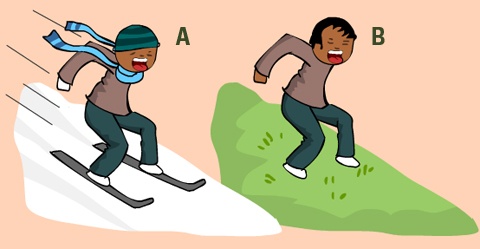
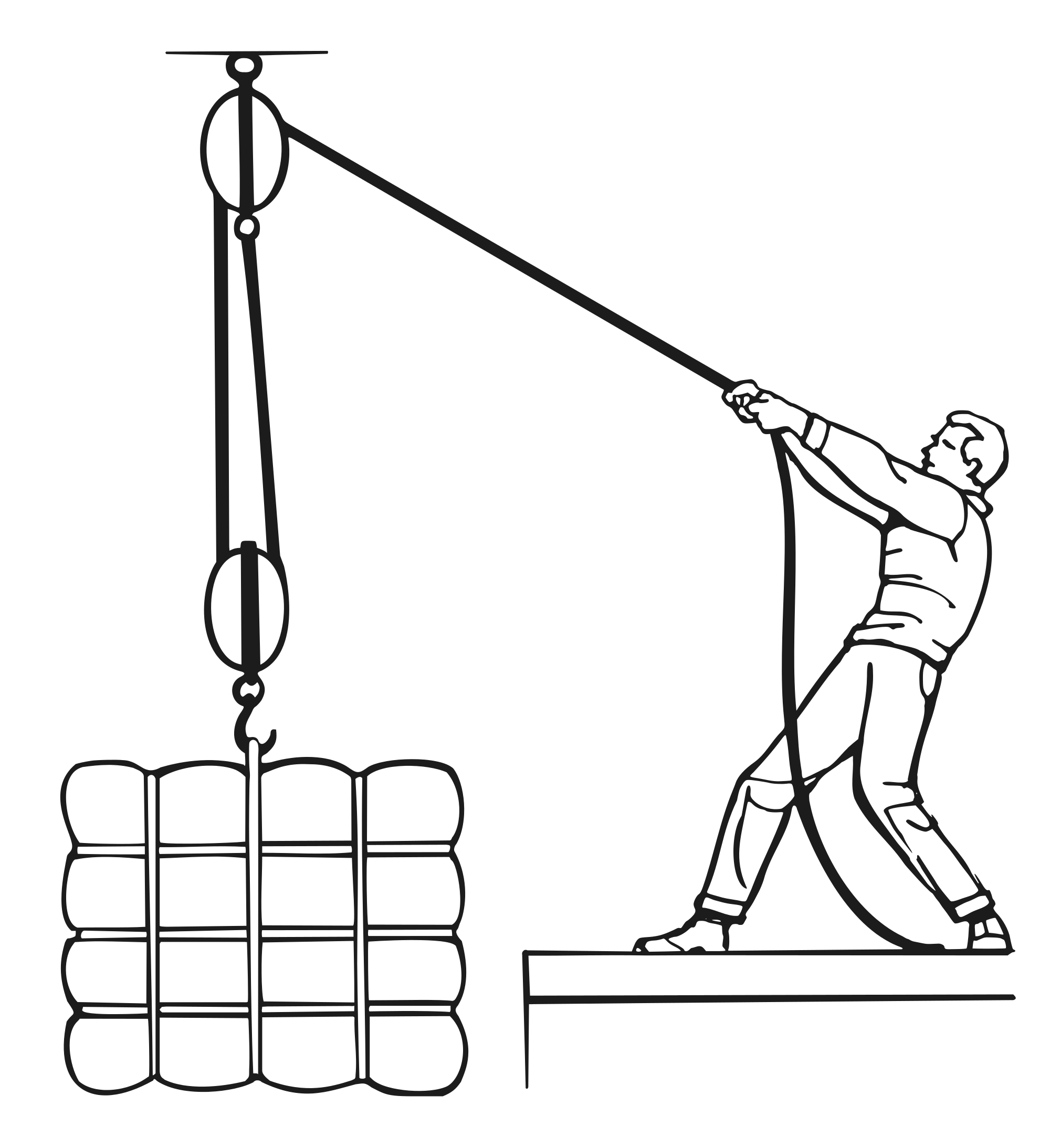

If these boys are pulling with the same amount of force. What will happen?
They will fall
They will not move at all
They will cry
They will crash into each other
Imagine you kick four balls with the same amount of force. Which one will go the farthest?
a 3 pound ball
a 5 pound ball
a 15 pound ball
a 25 pound ball
What does the force of gravity do to objects?
It makes them float
it makes them jump
it pulls them to the center of earth
it pushes them apart
A mixture is....
A combination of 2 or more substances that keep their physical properties
a combination of 2 or more substances that join together for form a new substance
something that has matter

True of False: A mixture can be easily seperated
True
False
An example of a mixture is....
chocolate milk
hot sauce
chex mix
cornuts

A way to separate sand and water is by...
Using a coffee filter
Using a seive
Using a magnet
By drinking the water
A solution is....
something you can drink
a mixture in which the substances are spread out evenly between one another
a mixture of 3 substances ONLY
Solubility is the ability....
of a substance to dissolve into another substance
of an object to conduct heat and electricity
of an object to attract to a magnet
to change into a solid, liquid and gas

True of False: Ocean water is a solution.
True
False
Which is an example of a mixture made with a liquid and a solid?
copper
sawdust and iron filings
oil and vinegar
sugar water

A beaker contains a mixture of salt, sand, gravel, and iron filings. Which substance is soluble in water?
sand
iron filings
salt
gravel
Students are classifying substances. Which of the following substances is a solution?
Sand and water
Sugar and water
Spaghetti and meatballs
Soil and water
A student dissolves 8 g of sugar into 94 g of water. What is the final weight the solution?
102
102g
86
86g
The Law of Conservation of Matter states that....
matter cannot be created or destroyed
matter cannot be created but it is destroyed
matter is created and destroyed
matter is created but not destroyed
Why is sand found at the beach?
it is soluble in water
it forms a solution with water
it evaporates from the seawater
it is insoluble in water and is deposited by waves

This is an example of a
Solution
Mixture
A combination of 2 or more substances that can be easily separated is called-
a mixture
a solution
a solute
a solvent

Which experiment design would be good to test friction?
Drop a ball from the top of a doorway and measure the height of the bounce.
Release a car from the top of a ramp and measure the distance traveled on tile and carpet.
Throw a ball straight up into the air and time how long it takes to come back down.
Test whether a plastic car or metal car would pull toward a magnet.
What type of force produces a change in movement?
unbalanced force
balanced force
gravitional force
frictional force

What is the net force and which direction will the object move?
2N to the right
2N to the left
7N to the right
7N to the left


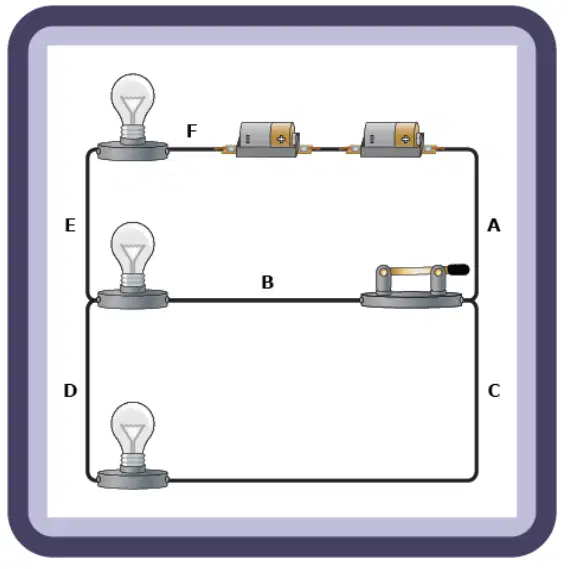
What could be done to the circuit so that only two light bulbs light up? (select all that apply)
Remove Wire A
Remove wire C
Remove wire D
Open the Switch
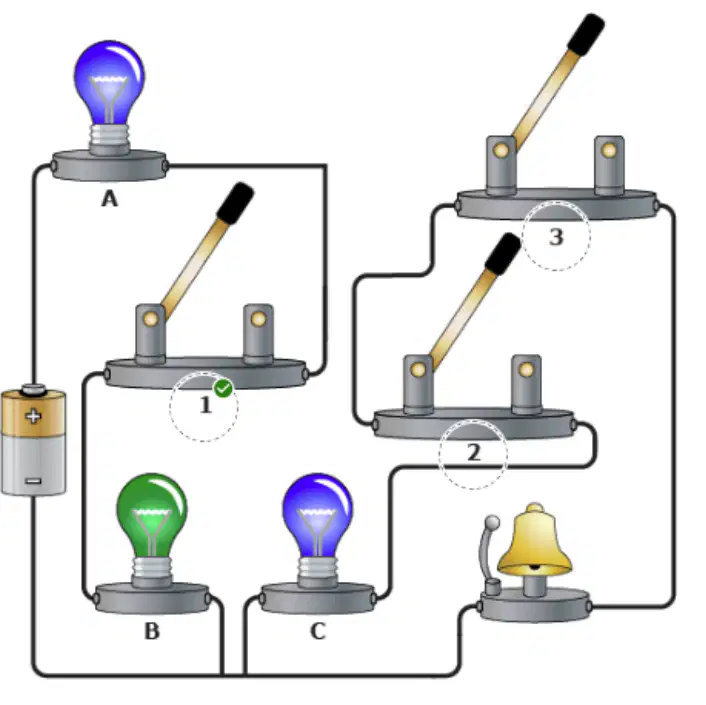
What would happen if I close switch 1?
Bulb A and B light up
Bulb C lights up and the bell works
Bulb B and C light up
Only Bulb A lights up
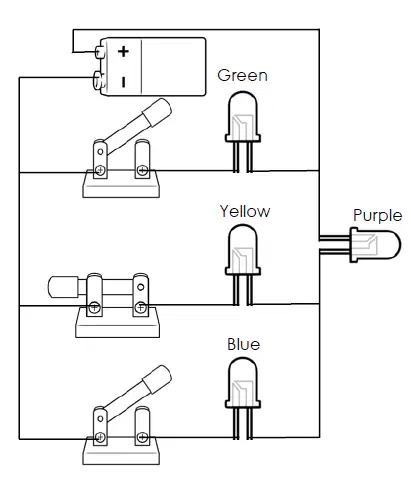
Which light bulbs would light up?
All of them
Green, yellow and purple
Blue and purple
Yellow and Purple
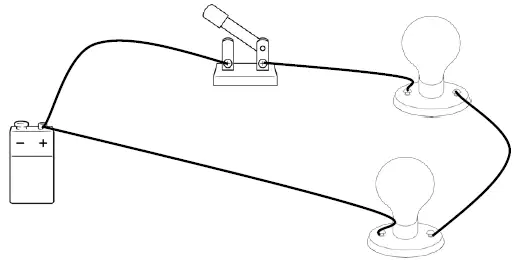
Is the circuit complete?
Yes
No
Unable to tell
What would you have to do to the circuit to make it work? (select all that apply)
Remove one of the light bulbs
close the switch
switch the battery and the light bulb
move one of the wires to the negative side of the battery
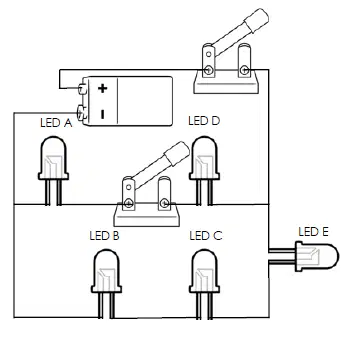
Is the circuit complete?
No, because the switches are open so electricity cannot flow through them
No, because the wires are not connected to the battery correctly
Yes
No, because LED D and A will light up
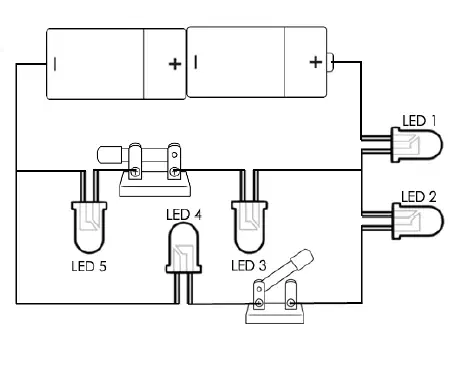
Which light bulbs will not light up?
1, 3, 5
2, 3
2, 4
1, 2, 4
Which circuit shown will produce light when the switch is closed?
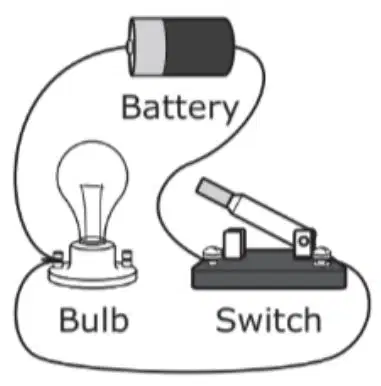
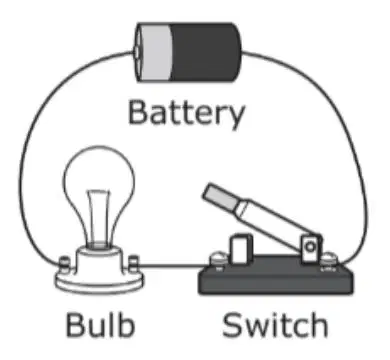
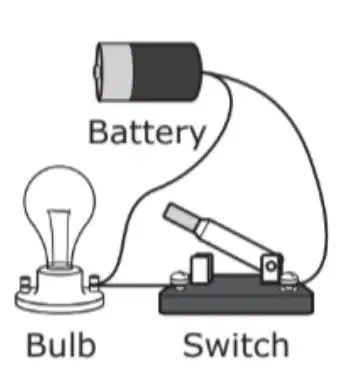
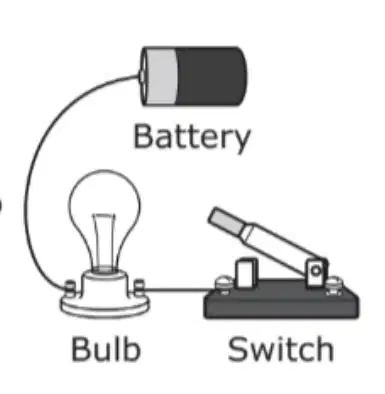
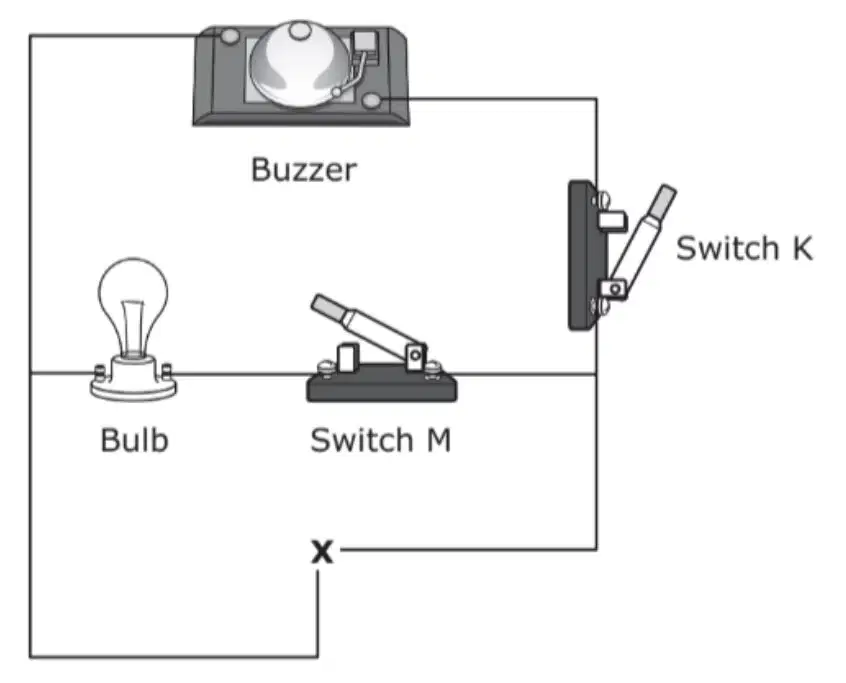
A group of students is building the circuit represented in the diagram.
What object can be used at position X for the buzzer to sound when switch K is closed?
A power source
An insulated wire
Another bulb
Another switch

Water flows through turbines in dams like the one shown. The flowing water makes the turbines spin.
Light energy
Thermal energy
Sound enegy
Mechanical energy
____________________ is the process of separating a solution by changing the liquid water to water vapor leaving behind the solid.
Concentration
Condensation
Evaporation
Filtration

