
 Worksheets
6th Grade ELA Midterm
Total questions: 4
Worksheet time: 10mins
Selection 1: Getting to Know Grandma
1 Molly stared glumly out the living room window as she waited for her parents to return from the airport with her grandmother.
2 Molly’s dismal mood had started earlier that morning, as her grandmother’s visit grew closer and closer. “Do I really have to give up my bedroom?” Molly had whined to her mother over breakfast. “I don’t even know her, so can’t she just sleep on the couch? It’s comfortable enough, isn’t it?”
3 “Molly, you know this will be the first time your lola has visited our home. She’s never been to the United States before, and I know the journey will be tiring for her. Don’t you want to make her feel welcome?” Molly mumbled a begrudging response before heading to her room to enjoy what little time she had left before relinquishing it to a relative she’d never laid eyes on.
4 Molly was still musing at the window, bristling at the thought of having to sleep on the couch, when her dog, Pete, began to bark eagerly. As Molly watched, her parents’ car turned into the driveway, and in no time, her father was helping an elderly woman out of the backseat. She looked twisted and bent with age, and she moved slowly and stiffly. “Look how ancient she is! I don’t think I’ve ever seen anyone so old!” Molly said to her dog.
5 Molly’s mother assisted the elderly woman into the house and introduced her to her granddaughter. “Molly, this is my mother, your Lola, who has traveled a long way from the Philippines to meet you,” Molly’s mother explained.
6 Molly wasn’t quite sure what to do. Lola’s face was a crowded map of wrinkles, and she appeared to be extremely fragile, so much so that Molly was afraid to touch her, let alone give her a hug. Finally, Molly found her voice. “Hi, Lola,” she said. “I’ll take you to my bedroom where you’re sleeping.”
7 Molly spent the next few days observing Lola. Her grandmother didn’t speak much, and she took a lot of naps during the day. “So much for her coming here to meet me,” Molly complained to her mother. “She’s so boring, and all she does is sleep. We have absolutely nothing in common.”
8 “Perhaps you should try talking to her,” her mother suggested. “Tell her about what you’ve learned at school or what you like to do with your friends. Tell her what you are like.”
9 Molly reluctantly took her mother’s advice and found Lola dozing quietly in the living room. Molly sat gingerly next to her grandmother, trying not to startle her; however, Pete, the dog, had other plans. He leapt onto Molly’s lap before wriggling his way between the young girl and her grandmother. Lola woke with a start, and then she grinned widely when she realized who was sitting beside her.
10 “Do you like dogs?” Molly asked Lola. “This is Pete, and he’s pretty much the best dog on the planet.”
11 Lola continued to smile at Pete as she pulled a small object out of her pocket. Pete’s tail wagged furiously as the little, old grandmother held the bone-shaped dog biscuit above his nose. Lola extended her hand to Pete, and the dog responded by giving her his paw. “I’ve never seen Pete do that before!” Molly exclaimed.
12 Lola winked, pulling another treat from her pocket and then, with great care, she pushed herself off the couch as Pete followed. She waved the dog biscuit in a circle above Pete’s head. Pete spun excitedly in a circle before sitting down, patiently waiting for his reward. Molly could hardly contain her delight! Lola had taught Pete new tricks! Molly threw her arms around her grandmother, thrilled by the surprise. Perhaps Lola was not so boring after all!
13 Molly’s mother observed the grandmother, the girl, and the dog from the doorway and smiled. She knew that Molly would never forget this visit, and that she had finally realized just how special her lola really was.
What is the best summary of “Getting to Know Grandma”?
A young girl goes to visit her grandmother in the Philippines. She is excited to learn that her grandmother loves dogs just as much as she does. The young girl and the older woman train a dog together.
A young girl is upset she has to give up her room to her grandmother, who is visiting from the Philippines. Though she does not seem to have anything in common with her grandmother at first, she forms a bond with the older woman over their love of dogs.
A young girl is busy teaching her dog new tricks when her grandmother comes to visit. Her grandmother has never been to the United States. The young girl complains about having to give up her room to the visitor.
A young girl tells her visiting grandmother stories about what she has learned in school. The young girl’s dog jumps on her grandmother’s lap and begs her grandmother for a treat. The grandmother happens to have a dog biscuit in her pocket.
Selection 2: “You Are Old, Father William” by Lewis Carroll
1 “You are old, father William,” the young man said,
“And your hair has become very white:
And yet you incessantly stand on your head—
Do you think, at your age, it is right?”
_____________________
5 “In my youth,” father William replied to his son,
“I feared it might injure the brain:
But now that I’m perfectly sure I have none,
Why, I do it again and again.”
______________________
“You are old,” said the youth, “as I mentioned before
10 “And have grown most uncommonly fat:
Yet you turned a back-somersault in at the door—
Pray what is the reason of that?”
______________________
“In my youth,” said the sage, as he shook his gray locks,
“I kept all my limbs very supple
15 By the use of this ointment—one shilling the box—
Allow me to sell you a couple.”
______________________
“You are old,” said the youth, “and your jaws are too weak
For anything tougher than suet:
Yet you finished the goose, with the bones and the beak—
20 Pray, how did you manage to do it?”
______________________
“In my youth,” said his father, “I took to the law,
And argued each case with my wife;
And the muscular strength, which it gave to my jaw,
Has lasted the rest of my life.”
______________________
25 “You are old,” said the youth, “one would hardly suppose
That your eye was as steady as ever:
Yet you balanced an eel on the end of your nose—
What made you so awfully clever?”
________________________
“I have answered three questions, and that is enough,”
30 Said his father, “don’t give yourself airs!
Do you think I can listen all day to such stuff?
Be off, or I’ll kick you down stairs!”
The following question has two parts. Answer Part A first, and then Part B. Part A What are the points of view of the two narrators, the young man and his elderly father?
The son asks silly questions about his father’s behavior, and the father gives odd answers.
The son asks serious questions about his father’s behavior, and the father gives absurd answers.
The son asks strange questions about his father’s behavior, and the father gives logical answers.
The son asks logical questions about his father’s behavior, but the father’s answers ignore his son’s questions.
The following question has two parts. Answer Part A first, and then Part B. Part B How do the different points of view identified in Part A affect the poem?
The reader is amused by the unusual conversation.
The reader is informed about actual events in the father’s life.
The reader is confused, just as the elderly father’s answers confuse his son.
The reader is informed by the conversation about life in a by-gone time period.
The following question has two parts. Answer Part A first, and then Part B. Part A What is the rhyme scheme in the first stanza of “You Are Old, Father William”?
aaaa
abba
abab
abbc
The following question has two parts. Answer Part A first, and then Part B. Part B What is the effect of the rhyme scheme identified in Part A?
The question in the final line stands out because its rhyme is different.
The alternating rhyming lines give an even movement to the lines and ideas.
The rhyming couplet in the middle of the stanza contrasts the narrator’s youth to the older man.
Having all four lines rhyme gives the lines a sense of speed and action.
Selection 1: “Poem to a Nightingale”
I hear your gentle melody;
I hear your mellow tones.
Do you see me in the woods at night?
Will you sing for me alone?
________________
5 I cock my ear to listen,
As flutelike notes abound;
Even souls with heavy hearts
Are lifted by the sound.
______________________
Gazing upward toward the moon,
10 Enlightened by your charm,
I feel the touch of nature’s balm,
To soothe and heal all harm.
_____________________
Poets writing long ago
Found sadness in your song,
15 Reviving painful memories
Of happy times long gone.
______________________
Yet, I have felt your comfort;
Keep on forevermore.
Your voice, so full of grace—
20 I forever will adore.
Selection 2: from “The Nightingale” by Hans Christian Andersen
In this story, the Emperor of China has never heard of the nightingale, even though the bird lives in the woods near his palace. When he reads books by foreign travelers praising the bird, he commands his followers to bring the bird to him. A servant in the emperor’s kitchen is the only one who knows how to find the bird.
1 There was much questioning about this nightingale, which was known to all the outside world, but to no one at court. At last they found a poor little maid in the kitchen. She said, “Oh heavens, the nightingale? I know it very well. Yes, indeed it can sing. Every evening I am allowed to take broken meat to my poor sick mother: she lives down by the shore. On my way back, when I am tired, I rest awhile in the wood, and then I hear the nightingale. Its song brings the tears into my eyes; I feel as if my mother were kissing me!” …
2 Then they all went out into the wood where the nightingale usually sang. Half the court was there. …
3 “There it is!” said the little girl. “Listen, listen, there it sits!” and she pointed to a little gray bird up among the branches.
4 “Is it possible?” said the gentleman-in-waiting. “I should never have thought it was like that. How common it looks! Seeing so many grand people must have frightened all its colors away.”
5 “Little nightingale!” called the kitchen-maid quite loudly. “Our gracious emperor wishes you to sing to him!”
6 “With the greatest of pleasure!” said the nightingale, warbling away in the most delightful fashion. 7
“It is just like crystal bells,” said the gentleman-in-waiting. “Look at its little throat, how active it is. It is extraordinary that we have never heard it before! I am sure it will be a great success at court!”
Which theme is suggested by the exchange between a younger and an older person in both the poem and the story?
Youth is a time of wonder and excitement.
Young people should listen to the stories of their elders.
Being generous often leads to unexpected rewards.
Old age brings wisdom and many valuable experiences.
How does the poet use rhyme to structure the poem?
The poem has no rhyme scheme, which allows ideas to flow freely from stanza to stanza.
The rhyme scheme links together the ideas in the second and fourth lines of every stanza.
The rhyme scheme connects all the stanzas by rhyming the last line of each stanza.
The rhyme scheme shows how the first three stanzas are connected, but the last stanza is separate and different.
Part A Read lines 5–8 from “Poem to a Nightingale.” I cock my ear to listen, As flutelike notes abound; Even souls with heavy hearts Are lifted by the sound. Which type of figurative language is used in these lines?
onomatopoeia: “I cock my ear to listen, / As flutelike notes abound;”
personification: “I cock my ear to listen, / As flutelike notes abound;”
simile: “Even souls with heavy hearts / Are lifted by the sound.”
metaphor: “Even souls with heavy hearts / Are lifted by the sound.”
Part B How does the figurative language in Part A contribute to the meaning of the poem?
It compares the narrator’s soul to the sound of a heavy heart.
It tells the reader that nightingales sing because they are sad.
It shows the positive effect the nightingale’s song has on those who hear it.
It gives the reader information about the narrator’s conflicting feelings about the bird.
How does the character interaction in paragraphs 2–5 of Selection 2 develop the plot?
The kitchen maid wants to impress the emperor and the people from court, so she convinces the bird to sing for them.
The kitchen maid worries the nightingale will lose its freedom at court, but she asks the bird to sing because she fears the emperor.
People from the court are disappointed by the bird’s appearance, so the kitchen maid asks the bird to sing to show its song is beautiful.
People from the court wonder how the bird lost its beautiful colors, and the kitchen maid is afraid they will not be impressed by its song.
How does the story’s setting affect the characters’ interactions with the nightingale in paragraphs 5–7?
The maid is a loyal follower of the emperor, so she forces the nightingale to sing.
The maid thinks the emperor is cruel, so she tries to convince the nightingale not to sing.
The gentleman-in-waiting cares most about how impressive the nightingale will be at the palace.
The gentleman-in-waiting is surprised the nightingale hasn’t been studied because the court is a place of beauty.
Read the third stanza from “Poem to a Nightingale.” Gazing upward toward the moon, Enlightened by your charm, I feel the touch of nature’s balm, To soothe and heal all harm. Read the following sentences from paragraph 1 of “The Nightingale.” “On my way back, when I am tired, I rest awhile in the wood, and then I hear the nightingale. Its song brings the tears into my eyes; I feel as if my mother were kissing me!” Both texts share the theme that there is great beauty in nature. Which additional theme is best supported by both of these excerpts?
Everyone should spend time in nature each day.
There is a strong connection between music and nature.
You will only understand nature if you take the time to listen to it.
Nature can bring people comfort and healing during difficult times.
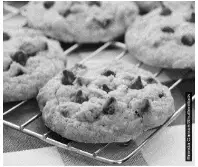
Read the selection. Then, choose the best answer to each question.
How to Adapt the Classic Chocolate Chip Cookie for Every Taste and Preference Introduction
1 Most people can agree that cookies are delicious! But many times, the agreement ends there. Which is better: a soft, gooey cookie or a crunchy, crispy cookie? Perhaps you prefer a fluffy and cakey cookie, or you may even prefer a thick and chewy cookie.
2 Baking is a science. Slight changes can change the results of your recipe in many ways. These changes include ingredients, the cookie-making process, and temperature. No matter what your tastes, it is possible to tweak just a single ordinary recipe to achieve a truly delectable cookie. This tutorial will walk you through the process of making a basic chocolate chip cookie. Then, it will explain the ways you can adapt the recipe.
3 Dry Ingredients
1-1/8 cups of all-purpose flour
3/4 teaspoon of baking soda
3/4 teaspoon of salt
Wet Ingredients
1/2 cup of softened butter (1 stick)
3/8 cup of granulated sugar
3/8 cup of brown sugar
1/2 teaspoon of vanilla
1 room-temperature egg
Other Ingredients
1 cup of chocolate chips
Classic Chocolate Chip Cookie Recipe
4 First, inspect the ingredient list and place all ingredients on a table or counter. Next, preheat your oven to 375 degrees. Then, grease three large baking sheets. (Alternative: line them with parchment paper.) This will make it easier to remove the cookies from the baking sheets after they are baked.
5 Next, whisk together your dry ingredients in a medium-sized bowl. The dry ingredients include the all-purpose flour, baking soda, and salt.
6 In a separate bowl, cream the softened butter and the sugars together. To cream means to whip the butter and sugar together until the mixture is light and fluffy. This can be done using an electric mixer. You may also do this process by hand.
7 Add the vanilla extract and the egg to the butter and sugar mixture. Mix the wet ingredients until everything is incorporated. It is very important that the egg is at room temperature. Adding a cold egg to soft butter will turn the butter into clumps. Finally, use a spoon to mix in the chocolate chips.
8 Drop rounded balls of cookie dough onto the greased baking sheets. It is suggested that you use a tablespoon to help you measure—that way each cookie will be about the same size. Make sure the cookies are spaced about two inches apart on the baking sheets. If the cookies are too close together, they will run into each other as they spread in the oven.
9 Bake the cookies for about nine minutes. Remove them from the oven and allow to cool for several minutes on the baking sheets before moving the cookies to a rack or plate to continue the cooling process. Adapting the Recipe
10 There are many ways to change the classic chocolate chip cookie recipe. Read below to find out how to make the perfect cookie for everyone you know!
11 Soft and Gooey: Increase the amount of flour used in the classic recipe by one cup. Then, add an additional one-half cup of chocolate chips. Bake the cookies at the same temperature and for the same period of time as the classic recipe.
12 Crunchy and Crispy: Add 25 percent more butter (one-fourth of one stick, or two tablespoons) and use double the amount of granulated sugar (three-fourths of a cup).
13 Light and Cakey: Decrease the amount of butter to seven tablespoons, using the tablespoon markers on the butter wrapper to help you measure. Then, decrease the brown sugar by one-third and double the amount of granulated sugar. Add an additional one-half of a teaspoon of baking soda to the dry ingredients.
14 Thick and Chewy: Use bread flour instead of all-purpose flour. The plant proteins in bread flour are a little tougher, which will give the cookie more of a bite. Shape the dough into tall balls on the baking sheets. Freeze them for an hour before placing in the oven.
As used in paragraph 2, what does the word delectable mean?
miraculous
complex
exotic
tasty
The evidence in paragraphs 10–14 supports the author’s central idea by —
giving facts about why people enjoy different types of cookies.
using an anecdote to show how to experiment in the kitchen.
explaining the precise methods needed to bake a good cookie.
providing examples of how to adapt a recipe for different results.
The word inspect comes from the Latin root spec, which means “look” or “see.” What does inspect mean in paragraph 4?
write carefully
review closely
organize
memorize
Which sentence best explains how the author organizes the list of ingredients?
The ingredients are ordered according to their importance.
The ingredients are listed in the order in which they should be used.
The ingredients are organized based on how difficult it will be to mix them by hand.
The ingredients are organized based on how they can be used to adapt the recipe.

