
 Worksheets
The Sermon on the Mount
Total questions: 87
Worksheet time: 44mins
Jesus calls His followers the "salt of the earth" to mean that they:
bring value and preservation to the world
should be wealthy and powerful
must avoid all contact with others
are meant to be hidden from society
As salt preserves meat from rotting, believers in Jesus, distributed around the world, help to preserve humanity from falling into ________, immorality, chaos, and the resulting judgment.
godlessness
wealth
ignorance
prosperity
Read the passage below and answer the question: Salt permanently changes the flavor of food, just as the influence of godly people can change a ________.
culture
recipe
weather
color
The main point of the passage is:
To highlight the central idea of the passage.
To discuss the author's background.
To analyze the writing style used.
To summarize the supporting details.
Who was the first and last person to fulfill the law described in the Jewish Scriptures?
Jesus
Moses
David
Solomon
What did the sacrificial system require to pay for human sin?
Prayer
Killing of animals and blood sacrifices
Fasting
Good deeds
According to the passage, Jesus fulfilled the need for blood sacrifice for sin once and for all.
True
False
According to the passage, what is our righteousness before God based upon?
Our own actions
Faith in Jesus Christ
Following the law perfectly
Sacrificing animals
According to the passage, what is the sixth of the Ten Commandments?
You shall not steal
You shall not murder
You shall not lie
You shall not covet
What was the prescribed judgment for murderers according to Numbers 35:31?
Imprisonment
Exile
Death
Fines
Jesus connects thoughts and actions in relation to the sixth commandment by teaching that:
Anger and hateful thoughts are as serious as the act of murder.
Only physical actions matter, not thoughts.
The sixth commandment applies only to legal matters.
Forgiveness is not related to the sixth commandment.
God's intent behind the sixth commandment is only about not killing people.
True
False
According to the passage 'The Sermon on the Mount: Jesus Teaches About Lust,' Jesus teaches that simply avoiding physical sin is:
not enough; one must also avoid sinful thoughts and desires
sufficient to be righteous
the only requirement for purity
more important than inner thoughts
God's intent for people regarding their hearts and minds is to:
Transform and renew them
Ignore their feelings
Fill them with doubt
Encourage selfishness
Fill in the blank: Jesus stresses the importance of avoiding hell, even at the cost of losing a part of one's own ________.
body
wealth
family
reputation
According to the passage, what was the standard for divorce in the ancient world?
It was very high and difficult to obtain
It was low and a husband could divorce his wife for almost any reason
Only women could initiate divorce
Divorce was not allowed
Fill in the blank: According to Jesus' teaching in the passage, a man may not legitimately divorce his wife unless she violates the marriage through ________ or some other sexual immorality.
adultery
disobedience
poverty
illness
From Jesus' view, false divorces—no matter how legal the religious leaders say they are—lead to more and more adultery.
True
False
According to the passage, what is the consequence for a man who marries a woman whose divorce was not for a valid reason?
He is blessed
He becomes guilty of adultery
He is forgiven
He is not affected
Jesus is teaching about oaths in this passage.
He teaches not to swear oaths at all, but to let your 'Yes' be 'Yes' and your 'No' be 'No'.
He encourages making oaths to prove honesty.
He says oaths should only be made in God's name.
He teaches that breaking oaths is acceptable if you apologize.
According to the passage, God gave the law about oaths because:
He wanted people to be truthful in their promises.
He wanted people to avoid making any promises.
He wanted people to swear by His name often.
He wanted people to make oaths only in secret.
According to the passage, we should always be truthful and not need to swear on anything.
True
False
Read the passage below and fill in the blank: God said we shouldn't take the name of the Lord in ____. This made an oath binding, and one had to abide by what he had said.
vain
joy
anger
silence
Which of the following is an example of a qualifier used to declare honesty?
I promise to help you
Cross my heart
I will try my best
Maybe I will do it
What was the purpose of the law "eye for an eye" according to the passage?
To encourage revenge
To limit violence and retaliation
To allow excessive punishment
To start wars
According to Christ's teaching, what should God's people avoid doing when insulted or abused?
They should avoid seeking revenge or trying to "get even."
They should avoid forgiving others.
They should avoid showing kindness.
They should avoid praying for their enemies.
Modern readers often see "eye for an eye" as vicious or harsh. The reason God gave that law was to prevent escalation, including excessive punishment for crimes. Human nature is to retaliate "plus one." In other words, if you slap me, I'll punch you. If you stab me, I'll shoot you. This pattern of revenge is what turns petty insults into riots, and minor crimes into wars. God's rule for Israel was to limit retaliation and punishment to a fair equivalent of harm. God's teaching about "eye for an eye" was meant to limit violence, not encourage it.
True
False
Christ's teaching about retaliation means that people should respond to insults or abuse by:
Not seeking revenge and responding with forgiveness or kindness.
Responding with equal or greater insults or abuse.
Ignoring the situation completely and doing nothing.
Reporting every insult or abuse to authorities immediately.
According to the passage, is there any Scripture where Jesus' listeners would have been told to hate their enemies?
Yes
No
What did religious leaders teach about hatred toward the wicked enemies of God, according to the passage?
It was justified and required
It was forbidden
It was optional
It was never discussed
Fill in the blank: In Jesus' earthly ministry, He clarified that loving one's _______ was the second-greatest of all God's commandments.
neighbor
enemy
teacher
servant
Jesus expanded the definition of one's 'neighbor' through the parable of the good Samaritan.
True
False
According to the passage, what can be powerful when done as a representative of God?
Loving one's enemies
Hating one's enemies
Ignoring one's enemies
Judging one's enemies
What does Jesus warn his audience about?
Expecting heavenly reward for good acts done to impress others
Serving God with pure devotion
Helping the needy in secret
Practicing righteousness
According to the passage, the difference between righteous and arrogant good works is:
Righteous good works are done with humility, while arrogant good works are done for self-praise.
Righteous good works are always public, while arrogant good works are always private.
Righteous good works require no effort, while arrogant good works require a lot of effort.
Righteous good works are only for friends, while arrogant good works are for strangers.
God rewards behavior done to gain the praise and admiration of others.
True
False
According to 'The Sermon on the Mount: How Not to Pray…', what does Jesus say about those who pray 'for show'?
They will be honored by God
They have received all the reward they're going to get
They will be blessed with more rewards
They should pray more often
Fill in the blank: Jesus has said that regular prayer to the Father should be done in ________, behind closed doors.
secret
public
groups
synagogues
Jesus condemns what aspect of public prayer, according to the passage 'The Sermon on the Mount: How Not to Pray…'?
Praying to be seen by others
Praying silently
Praying in groups
Praying at home
According to the passage, God gives points for mindless repetition in prayer.
True
False
The passage says we don't need to use just the right words for God to understand our prayers because:
God understands our hearts, not just our words.
God only listens to perfect prayers.
God needs us to use special words.
God cannot understand us without the right words.
According to the passage, why should believers address God as 'Our Father in heaven'?
To show respect for tradition
To separate Christian prayer from other faiths
To make it possible for mankind to be in relationship with God the Father through faith
Both B and C
What does the phrase 'hallowed be your name' mean in the context of Christ's model prayer?
God's name is holy
God's name is powerful
God's name is secret
God's name is forgotten
Fill in the blank: Proclaiming to God that His name is holy is to acknowledge His ________ greatness.
absolute
limited
conditional
temporary
According to the passage, Jesus models the importance of submission to God's will and prays for the coming of God's kingdom and the fulfillment of His will in all places and all times.
True
False
According to the passage, Jesus prays for dependence on the Father because:
He wants to show humility and reliance on God's will.
He seeks to demonstrate his power over others.
He wishes to avoid responsibility for his actions.
He desires to impress his followers with his prayers.
According to the passage, what did Jesus come to earth to make possible for those who trust in Him?
To be wealthy
To be fully forgiven by God for their sins
To become famous
To avoid all temptations
Fill in the blank: God expects born-again believers—who have received the gift of total and complete forgiveness—to turn and ______ all who sin against them.
forgive
judge
ignore
punish
According to the passage, God entices people to sin.
True
False
Believers should ask God to do what for them when facing temptation, according to the passage?
Help them overcome temptation
Ignore their struggles
Allow them to fall into temptation
Punish them for being tempted
Jesus resisted temptation when He was in the wilderness for 40 days by:
Quoting Scripture to counter the devil's temptations.
Ignoring the devil and remaining silent.
Leaving the wilderness immediately.
Accepting the temptations offered to Him.
According to the passage, what does fasting involve?
Fasting involves abstaining from food and other activities in order to focus on worship, confession, or specific prayers to God.
Fasting involves eating only fruits and vegetables throughout the day.
Fasting involves participating in community feasts and celebrations.
Fasting involves increasing physical exercise to improve health.
Why did some religious leaders in Jesus' era make their fasting public?
They wanted everyone who saw them to know they were fasting and to give them credit for being highly devout.
They believed public fasting would bring rain for their crops.
They thought it was required by Roman law.
They wanted to avoid eating with non-believers.
What group had a reputation as the most strictly religious people in Israel during Jesus' era?
The Pharisees
The Sadducees
The Zealots
The Essenes
According to the passage, what is the only reward attention-seekers will receive for their fasting?
Human approval
Spiritual enlightenment
Material wealth
Divine forgiveness
According to Jesus, God will reward those who fast only to seek attention from others.
True
False
According to the passage 'The Sermon on the Mount: Jesus Teaches about Treasures in Heaven,' why does Jesus tell His followers not to stockpile material goods in this life?
Because material goods are dependable
Because material possessions are temporary and easily lost
Because wealth guarantees needs are met forever
Because thieves never steal material goods
Based on the passage, what can happen to material possessions according to Jesus?
They can be eaten by moths
They can rust
They can be stolen by thieves
All of the above
Fill in the blank: In short, material possessions are _________. Jesus points out that no one can possibly build up enough wealth to guarantee that they'll have their needs met forever.
temporary
everlasting
unbreakable
infinite
True or False: The passage states that Christians should never have any money or own property.
True
False

According to the passage, what is dangerous about wealth?
Using wealth for God's purposes
Becoming dependent on worldly wealth and crossing into greed or materialism
Providing for families
Planning for the future
According to the passage, what does Jesus command His followers not to worry about?
Their lives, including what they will eat or drink or wear.
Their wealth and possessions.
Their social status and reputation.
Their future careers.
Jesus tells His followers to quit their jobs and wait for God to provide everything.
True
False
What is the main point Jesus makes about life, according to the passage?
A) Life is only about what we eat and wear
B) God has purposes for us beyond temporary details
C) We should not earn money
D) We should be careless
In the context of the passage, what does the word 'worry' or 'be anxious' mean?
To care for or think about something; to obsess or agonize.
To celebrate or rejoice about something.
To ignore or neglect something.
To laugh at or mock something.
What is Jesus commanding His listeners to take control of, according to the passage?
What is going on in their minds and hearts.
Their physical possessions.
The actions of others around them.
The laws of nature.
According to the passage, what does Jesus teach about judging others?
Jesus teaches that right judgment is necessary, but hypocritical or shallow judgment is wrong.
Jesus teaches that all forms of judgment are acceptable.
Jesus teaches that people should never judge under any circumstances.
Jesus teaches that judgment should be based solely on appearances.
Read the passage below and answer the question: This does not teach that God's people should never express an understanding of the difference between right and wrong. In a crystal-clear statement, Jesus teaches that His followers must be careful to make right judgments instead of judging others by external appearances. Also, God often gives Christians the responsibility to make judgments about truth and falsehood, and to hold fellow Christians accountable for sin. True or False: According to the passage, Christians should never make judgments about truth and falsehood.
True
False
What kind of judgment does Jesus condemn according to the passage?
Jesus condemns shallow and hypocritical judgment, especially passing judgment on others as if one were God.
Jesus condemns all forms of legal judgment in society.
Jesus condemns any form of personal opinion or discernment.
Jesus condemns only the judgment of criminals in court.
It is important to understand the proper way to use judgment according to Jesus' teachings because:
it helps us judge others fairly and with compassion.
it allows us to avoid all forms of judgment.
it ensures we never make mistakes.
it guarantees we will be perfect.
What does Jesus teach about God's response to prayer?
God ignores prayers
God hears and answers prayers
God only listens to some people
God gives gifts only to the faithful
According to Jesus, what should His followers do to receive from God?
They should ask, seek, and knock.
They should fast for forty days.
They should give all their possessions to the poor.
They should memorize the scriptures perfectly.
According to the passage, prayer is a way to manipulate God to get what we want.
True
False
Who will find truth in Christ according to the passage?
Those who lack faith, but pursue truth.
Those who ignore the teachings of Christ.
Those who seek material wealth.
Those who avoid spiritual growth.
According to the passage, who was not the first to commend behavior in light of how you would want to be treated?
Jesus
Socrates
Confucius
Buddha
Earlier Jewish and Greek teachers offered the Golden Rule as a negative statement. What is an example of this negative statement?
Don't do to anyone what you would not want done to you.
Always do to others what they do to you.
Treat others better than you treat yourself.
Do to others what you would want them to do to you.

Jesus' phrasing of the Golden Rule only implies that one ought to 'do no harm.'
True
False
What does God expect us to do according to Jesus' teaching about the Golden Rule?
Avoid doing harm to others
Actively pursue what we would like to see from others
Ignore others' needs
Only follow written rules
What is the second greatest commandment described by Jesus in Matthew's book?
To love one's neighbor with the love one has for him- or herself.
To fast twice a week and give tithes of all you possess.
To keep the Sabbath day holy above all else.
To offer sacrifices at the temple regularly.
According to the passage, what does the 'wide gate' represent in Jesus' teaching?
The difficult path of following Jesus
The easy path that most people choose
The path to eternal life
The teaching of Jesus' disciples
What is required to follow the teachings of Israel's religious leaders, according to the passage?
No heart change, only outward, self-promoting obedience to the rules.
A deep personal relationship with God.
Complete rejection of all traditional practices.
Total isolation from the community.
Why is the 'narrow gate' described as difficult in the passage?
Because it is hard to find
Because Jesus' disciples will be persecuted
Because it leads to wealth
Because it is easy to get through
According to the passage, what is the only path to eternal and abundant life?
The path of Jesus
The path of wealth
The path of knowledge
The path of power
The wide gate leads to the hard way of following Jesus.
True
False
Who does Jesus warn his followers about?
True prophets
False prophets
Roman soldiers
Merchants
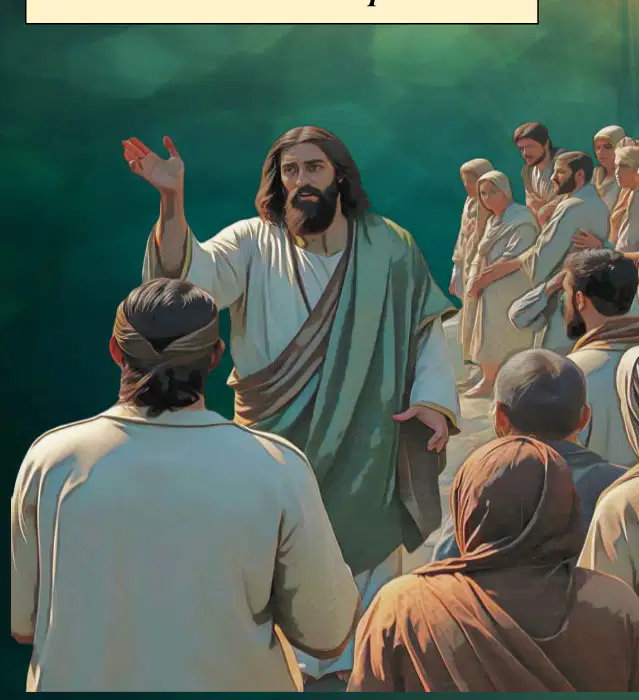
According to the passage, who were the most prominent examples of false prophets for Jesus' original audience?
The religious leaders of Israel
Roman soldiers
Greek philosophers
Tax collectors
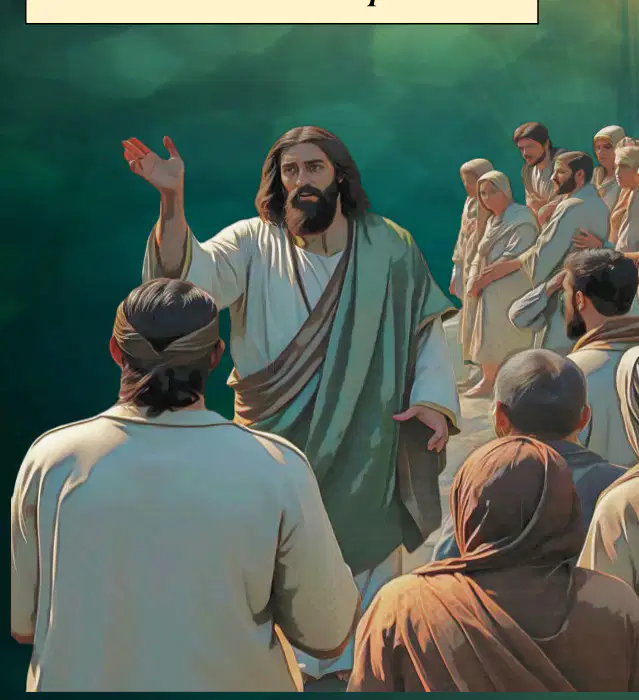
Jesus warned that false prophets would accuse Him of falseness and blasphemy.
True
False

