
 Worksheets
Q3 W2 LONG TEST
Total questions: 40
Worksheet time: 20mins
Identify the style (diction and tone) used to organize opinion editorials based on the author’s purpose and meaning, and target audience.
Style includes diction and tone, which are chosen based on the author's purpose, meaning, and target audience.
Style is only about the length of the editorial, not diction or tone.
Style refers exclusively to the use of statistics and data in the editorial.
Style is determined solely by the publication date of the editorial.
Identify the sentence structure commonly observed in opinion editorials.
Opinion editorials commonly use clear, concise, and varied sentence structures to convey their message effectively.
Opinion editorials typically use only complex and lengthy sentences to impress readers.
Opinion editorials avoid using any structure and rely on random sentence formation.
Opinion editorials use only passive voice to maintain objectivity.
Lesson Purpose: Identify the style (diction and tone) used to organize opinion editorials based on the author’s purpose and meaning, and target audience.
To analyze diction and tone in opinion editorials for author’s intent and audience.
To summarize the main ideas of opinion editorials.
To compare different types of editorials.
To evaluate the historical context of opinion editorials.
Lesson Purpose: Identify the sentence structure commonly observed in opinion editorials.
Opinion editorials commonly use a thesis-support-conclusion structure.
Opinion editorials commonly use a chronological structure.
Opinion editorials commonly use a question-answer structure.
Opinion editorials commonly use a list-based structure.
Fill in the blank: ______ is the way in which something is written, as opposed to the meaning of what is written.
Style
Theme
Plot
Genre
Fill in the blank: ______ is word choice.
Diction
Syntax
Tone
Imagery
Fill in the blank: ______ is the attitude conveyed by an author’s voice.
Tone
Plot
Setting
Theme
Identifying your own writing style is an important step for writers. What is one thing you might do to find your own style of writing?
Look at your own writing and identify your style
Copy another writer's style exactly
Avoid reading your own work
Never revise your writing
The diction you use at school compared to at home, or when talking to your parents vs. your friends, is usually:
Different depending on the situation and audience
Always the same regardless of who you talk to
More formal with friends than with parents
Less respectful at school than at home
What is the appropriate diction when writing journalism articles like news and opinion editorial?
Formal and objective language
Casual and slang language
Highly poetic and figurative language
Overly technical jargon
Fill in the blank: The phrase 'Respectfully, I must disagree.' is an example of ________ diction.
Formal
Colloquial
Slang
Informal
Fill in the blank: The phrase 'You’re full of it!' is an example of ________.
Slang
Proverb
Idiom
Simile
The appropriate tone when writing journalism articles like news and opinion editorials is:
Objective and balanced
Casual and humorous
Highly emotional
Sarcastic and informal
Identify the diction and tone of the passage and gauge the overall style based on author’s purpose and target audience.
The diction and tone reveal the author’s style and intent for the target audience.
The diction and tone are irrelevant to the author’s purpose.
The diction and tone only affect the plot, not the style.
The diction and tone are determined solely by the genre.
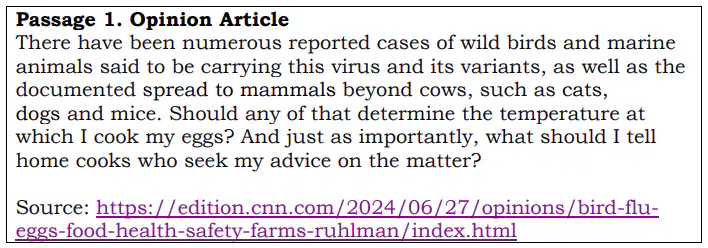
Identify the diction, tone, and style of Passage 1. Fill in the blanks in the table below:
Diction: Informal, conversational Tone: Concerned, questioning Style: Opinionated, advisory
Diction: Formal, technical Tone: Detached, neutral Style: Descriptive, factual
Diction: Poetic, figurative Tone: Joyful, celebratory Style: Narrative, imaginative
Diction: Colloquial, slang Tone: Humorous, sarcastic Style: Satirical, playful

Identify the diction, tone, and style of Passage 2. Fill in the blanks in the table below: Diction: _______ Tone: _______ Style: _______
Diction: Narrative, Tone: Depends on passage (e.g., suspenseful, dramatic), Style: Fictional, descriptive
Diction: Technical, Tone: Objective, Style: Scientific, concise
Diction: Colloquial, Tone: Humorous, Style: Informal, conversational
Diction: Poetic, Tone: Melancholic, Style: Lyrical, expressive
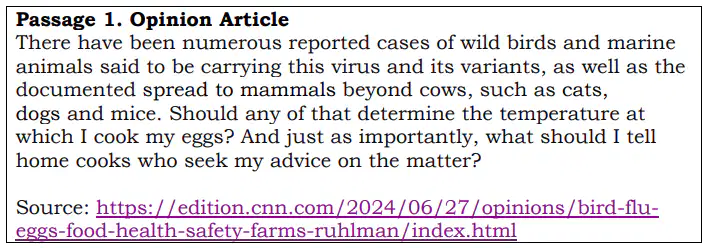
Read Passage 1 and fill in the table with the appropriate diction, tone, and style for the passage.
Diction: informal, colloquial Tone: tired, casual Style: narrative
Diction: formal, academic Tone: enthusiastic, persuasive Style: expository
Diction: poetic, figurative Tone: melancholic, reflective Style: descriptive
Diction: technical, precise Tone: objective, neutral Style: analytical

Read Passage 2 and fill in the table with the appropriate diction, tone, and style for the passage.
Diction: descriptive Tone: informative Style: expository
Diction: informal Tone: humorous Style: narrative
Diction: technical Tone: persuasive Style: argumentative
Diction: poetic Tone: emotional Style: lyrical
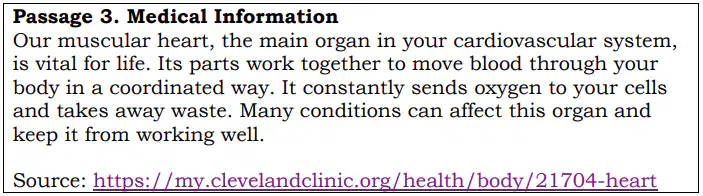
Read Passage 3 and fill in the table with the appropriate diction, tone, and style for the passage.
Diction: technical, scientific Tone: factual, objective Style: informational
Diction: casual, conversational Tone: humorous, sarcastic Style: narrative
Diction: poetic, figurative Tone: emotional, passionate Style: descriptive
Diction: persuasive, biased Tone: critical, negative Style: argumentative
What is a Simple sentence structure? Fill in the blank: Simple: _________.
1 independent clause
2 independent clauses
1 dependent clause
1 independent clause and 1 dependent clause
What is a Compound sentence structure? Fill in the blank: Compound: _________.
2 or more independent clauses
1 independent clause and 1 dependent clause
Only dependent clauses
A single phrase with no clauses
What is a Complex sentence structure? Fill in the blank: Complex: _________.
1 independent clause + 1 or more subordinate clause
2 independent clauses
1 independent clause only
2 subordinate clauses
What is a Compound-complex sentence structure? Fill in the blank: Compound-complex: _________.
2 or more independent clauses + 1 or more subordinate clauses
1 independent clause + 1 subordinate clause
2 independent clauses only
1 independent clause only
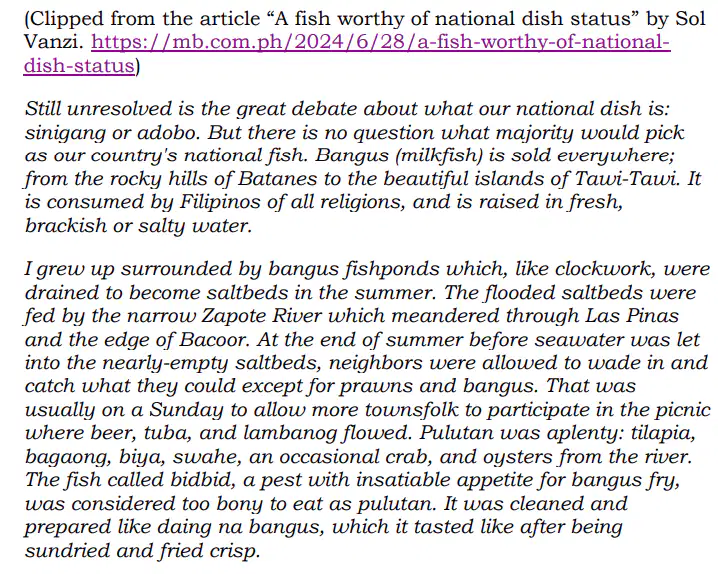
Read the article below and identify the types of sentence structure used.
Simple, compound, complex, and compound-complex sentences
Declarative, interrogative, imperative, and exclamatory sentences
Active and passive voice sentences
Direct and indirect speech sentences
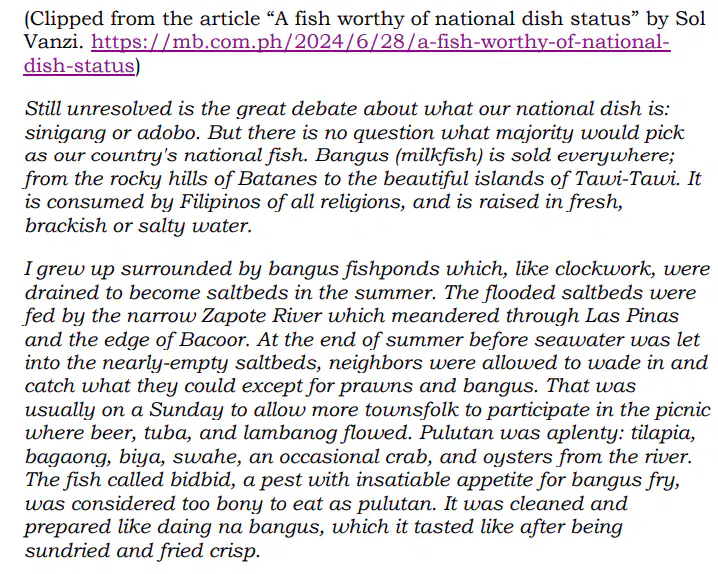
What could be the writer’s purpose for writing this article?
To inform the readers about a particular topic
To entertain the readers with a fictional story
To persuade the readers to buy a product
To describe a personal experience in detail
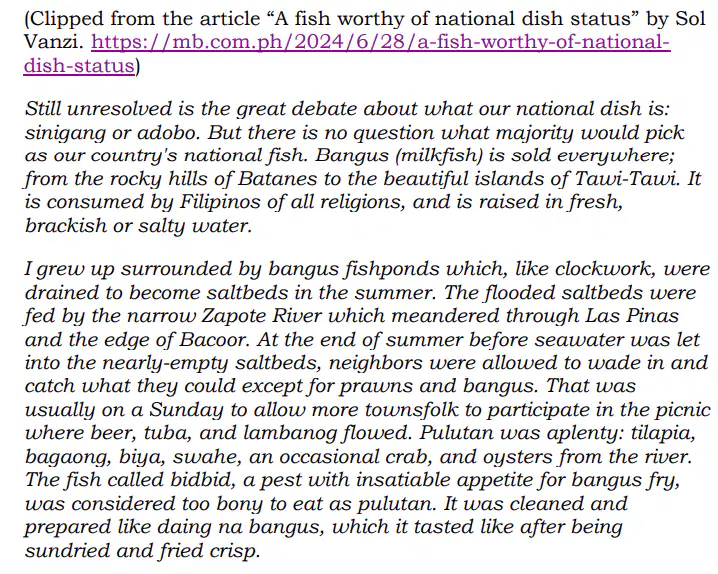
The intended audience of this article could be:
Students interested in the article's topic
Professional athletes
Medical doctors only
Children under five years old
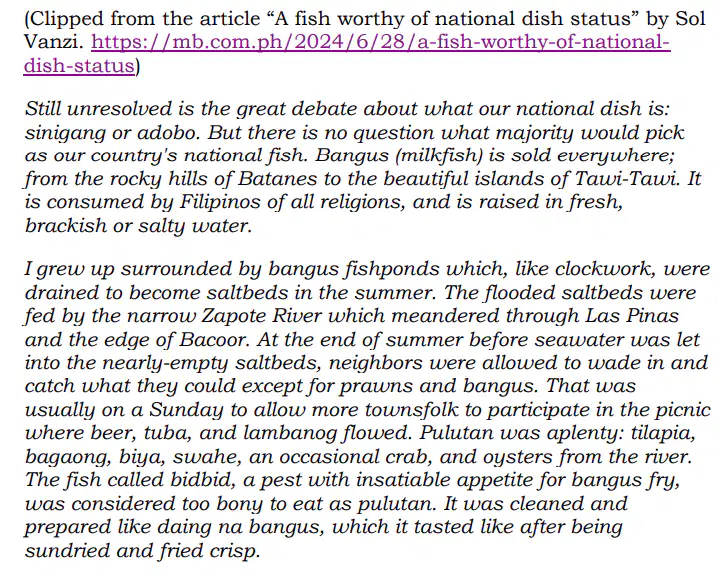
Determining the type of sentence structure to use when writing articles like this one involves:
Considering the purpose and clarity of the article
Using only complex sentences throughout
Following a strict template for every article
Ignoring the audience's reading level
Identify the writer's purpose, target audience, and diction used in the sentence below. Sentence: The heart is a fist-sized organ that pumps blood throughout your body. It’s your circulatory system’s main organ. Muscle and tissue make up this powerhouse organ. Fill in the blanks: Writer’s Purpose: _______ Target Audience: _______ Diction: _______
Writer’s Purpose: To inform Target Audience: General audience (students, readers interested in biology) Diction: Scientific, factual
Writer’s Purpose: To entertain Target Audience: Medical professionals Diction: Poetic, emotional
Writer’s Purpose: To persuade Target Audience: Athletes Diction: Motivational, casual
Writer’s Purpose: To criticize Target Audience: Scientists Diction: Sarcastic, informal
Identify the writer's purpose, target audience, and diction used in the sentence below. Sentence: Sisig has been a mainstay in Filipino cuisine. One of the earliest records related to the dish dates as far back as 1732, after an Augustinian friar defined it in a dictionary he was working on. At the time, it was described as a salad of sorts that utilized green guava or papaya, dressed in salt, pepper, garlic, and vinegar. What are the writer’s purpose, target audience, and diction used?
Writer’s Purpose: To inform Target Audience: General audience (food enthusiasts, readers interested in Filipino cuisine) Diction: Descriptive, historical
Writer’s Purpose: To entertain Target Audience: Children Diction: Humorous, playful
Writer’s Purpose: To persuade Target Audience: Chefs only Diction: Formal, technical
Writer’s Purpose: To criticize Target Audience: Historians Diction: Analytical, critical
Identify the writer's purpose, target audience, and diction used in the sentence below. Sentence: The world of social media today is vastly different from a decade ago. In recent years, platforms like Instagram and TikTok have evolved from entertainment hubs into powerful tools for information dissemination and education. Fill in the blanks:
Writer’s Purpose: To inform Target Audience: General audience (social media users, students) Diction: Analytical, modern
Writer’s Purpose: To entertain Target Audience: Children Diction: Humorous, playful
Writer’s Purpose: To persuade Target Audience: Business professionals Diction: Formal, technical
Writer’s Purpose: To criticize Target Audience: Academics Diction: Sarcastic, complex
Identifying your purpose and target audience prior to writing is important because:
it helps tailor your message effectively.
it guarantees your writing will be published.
it eliminates the need for editing.
it ensures your writing is always formal.
The aspect of the lesson I found most valuable to improve my skills in writing articles and essays was:
Learning how to structure my writing effectively.
Memorizing vocabulary lists.
Practicing handwriting.
Focusing only on grammar rules.
To achieve a well-supported write-up, one should practice more:
providing evidence and examples
using complex vocabulary
writing longer paragraphs
focusing only on opinions
Which of the following tasks requires you to use an informal style of writing or a formal style of writing?
Write a personal narrative using an informal style or an opinion article using a formal style.
Write a scientific report using informal language.
Write a poem using only formal vocabulary.
Write a fictional story using technical jargon.
Reflection guide or prompt: What principles and beliefs informed my lesson?
A reflection guide or prompt to identify the principles and beliefs that informed my lesson.
A list of classroom rules for students to follow.
A summary of the lesson's main activities.
A description of the classroom environment.
Reflection guide or prompt: The reason I taught the lesson the way I did was because:
I had specific learning objectives in mind.
I wanted to finish the lesson quickly.
I followed the same method for every lesson.
I did not plan the lesson in advance.
In our topic, "Analyzing Editorials", the roles my students played in my lesson were:
Active participants
Observers only
No roles assigned
Lesson planners
Reflection guide or prompt: What did my students learn? How did they learn?
A reflection guide helps assess what students learned and how they learned it.
A reflection guide is used to assign grades to students.
A reflection guide is only for teachers to evaluate their teaching methods.
A reflection guide is a tool for creating lesson plans.
Reflection guide or prompt: What could I have done differently?
Consider alternative actions taken
Ignore past decisions
Repeat the same mistakes
Avoid self-reflection
Exploring what you can learn in the next lesson is an important part of reflection. What should you consider for the next lesson?
What can I explore in the next lesson?
What did I already know?
Who is teaching the lesson?
What time is the lesson?

