
 Worksheets
N5 Latin Pliny Ghost
Total questions: 76
Worksheet time: 38mins
Which Latin word best translates to “house” in the passage’s vocabulary list?
domus
nox
ferrum
barba
In the translation, what reputation does the Athenian house have?
Bad and haunted
Sacred and famous
Quiet and empty
New and luxurious
Which Latin term means “night”?
sonus
nox
silentium
catena
According to the description, where is the story set?
In Carthage
In Athens
In Alexandria
In Rome
What sequence describes how the chain sounds are heard?
Far off, then nearer
Nearer, then far off
Only once, then silence
Constant, without change
Which phrase describes the ghost’s physical condition?
Tall and armored
Headless and glowing
Young and handsome
Thin and filthy
What is the meaning of “attendere acrius” given in the vocabulary list?
To listen more carefully
To walk more quickly
To speak more softly
To look more closely
Which item is worn on the legs by the apparition?
Vinculum
Compedes
Ferrum
Barba
Which Latin word in the list is glossed as “ghost”?
idolōn
pestilens
sonus
infamis
What action is the ghost performing with the chains?
Hiding them
Breaking them
Dropping them
Shaking them
Which literary technique groups three descriptive elements to create vivid imagery of the ghost?
Tricolon listing three vivid features
Greek loanword adding foreign tone
Alliteration repeating harsh consonants
Synonym pairs reinforcing key ideas
What is the effect of pairs of words like spatiōsa et capax in the description?
They create a rhyme scheme
They intensify size and potential
They shift focus to the ghost’s actions
They suggest silence over sound
Which choice best explains why vocabulary such as sonus ferri and strepitus vinculorum is emphasized?
To portray the house’s bright colors
To highlight the ghost’s Greek origin
To contrast silence with chain sounds
To describe gentle, soothing noises
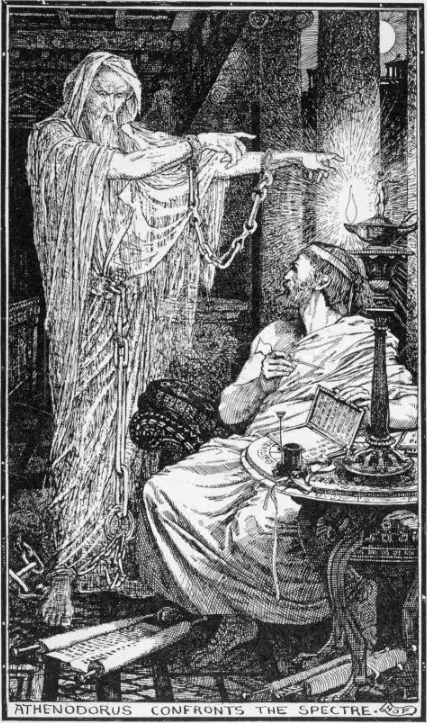
What immediate consequence did the house’s inhabitants suffer during the nights?
Peaceful sleep and calm dreams
Fearful nights without sleeping
Short naps with mild discomfort
Normal rest with brief disturbances
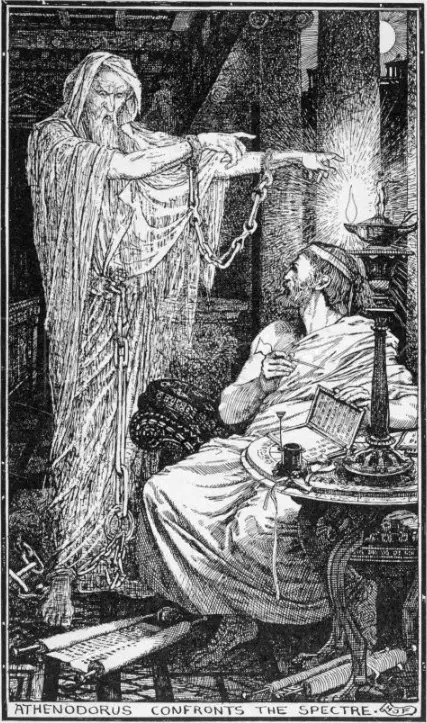
Which progression best describes the impact of sleep loss on the people?
Drowsiness ending in strong health
Fatigue leading to recovery quickly
Illness first and then death
Headache followed by happiness
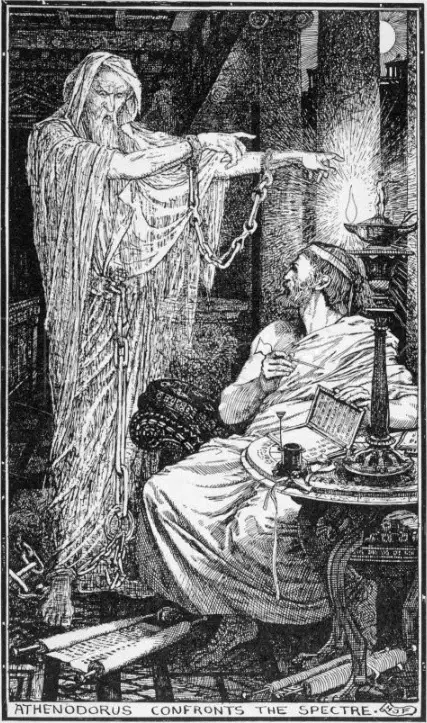
Explain why the terror persisted even during the day.
The ghost screamed in daylight hours
The memory stayed in their imaginations
Neighbors kept telling scary stories
The house made loud mechanical noises
What happened to the house after no one could live there anymore?
It became a bustling inn for travelers
It turned into a school for children
It was repaired and modernized fully
It stood empty and was abandoned
Why was the empty house later advertised for rent or sale?
To attract buyers unaware of haunting
To punish the ghost for mischief
To host nightly festivals for locals
To train guards against spirits
Which feature most directly reinforces the ever-present idea of the supernatural in the community?
Precise dates and locations given
Detailed eyewitness testimonies
Repetition of the word ghost
Occasional mention of apparitions
Which set of words best exemplifies fear language used to heighten tension?
silent roads, calm, serenity
curious tales, puzzled, wonder
fearful nights, terrified, terror
joyful days, relieved, comfort
How does deliberate vagueness in storytelling most likely affect readers?
It clarifies the plot with specifics
It amplifies uncertainty and fear
It proves events were historical facts
It reduces suspense and interest
Which best describes why Athenodorus becomes suspicious when he reads the sale notice and hears the price?
The notice lacks any legal details
The location is far from the city
The owner refuses to meet buyers
The house is grand yet oddly cheap
What action does Athenodorus take after making enquiries and learning everything about the house?
He warns others to avoid it
He delays until the next month
He petitions the magistrates
He rents it even more enthusiastically
When evening approaches and it begins to grow dark, what does Athenodorus order?
Torches lit in every room
Couches placed in the front part
Doors barred and guarded
Meals prepared for his slaves
Which items does Athenodorus specifically request for himself as he prepares for the night?
Blankets, pillows, and food
Wax tablets, a pen, and a lamp
A sword, a shield, and armor
Incense, wine, and offerings
What does Athenodorus do with his slaves once his own preparations are complete?
He stations them at the entrance
He dismisses them for the night
He assigns them to patrol outside
He sends all of them into the interior
Which best captures Athenodorus’s strategy to avoid fear during the night?
Sleep early to regain strength
Pray loudly to ward off spirits
Keep talking to stay awake
Focus mind, eyes, and hand on writing
Identify the correct English meaning of pugillares as used in the passage.
Metal tools for repairs
Incense sticks for rituals
Small daggers for defense
Wax tablets for writing
Which Latin verb meaning “to rent” is central to Athenodorus’s decision?
poscere
legere
conducere
demittere
What is implied by the phrase immo tanto magis in describing Athenodorus’s attitude?
He remains cautiously neutral
He is even more enthusiastic
He becomes somewhat hesitant
He grows increasingly fearful
In organizing the space, where does Athenodorus have the couches placed for himself?
In a locked inner chamber
On the roof under the stars
In the courtyard near the gate
In the front part of the house
What mental precaution does Athenodorus take to prevent his mind from inventing empty fears?
He sings hymns continuously
He concentrates on writing tasks
He counts time until dawn
He drinks calming herbal tea
In narrative Latin, what effect is commonly achieved by switching verbs into the present tense at a key moment?
It slows the pace and adds reflection
It indicates reported speech exclusively
It creates immediacy and vividness
It marks a change of location only
Which description best captures a tricolon as used by Pliny?
A list of four related items
A long periodic sentence
A repeated idea three times
A pair of balanced clauses
Athenodorus prepares to face the haunting. Which action most shows his philosophical self‑discipline rather than superstition?
He drinks a calming herbal potion
He sleeps with a protective charm
He invites priests to bless rooms
He sits alone and focuses on work
To avoid imagining the ghost, which strategy would best reduce suggestibility during the vigil?
Keeping slaves nearby for protection
Listening for every sound intensely
Staring into the darkness constantly
Maintaining routine tasks like writing
Which Latin pair best translates “the iron rattled, chains were shaken” from the scene?
initio silentium, quale ubique
adventare iam ut, audiri
fragor crebrescere, intra limen
concuti ferrum, vincla moveri
In the episode, what does Athenodorus choose not to do while the sounds grow louder?
He does not light a lamp
He does not lift his eyes
He does not leave the room
He does not speak to anyone
Which Latin verb means “to recognise,” describing Athenodorus identifying the figure?
agnoscere
adventare
respicere
audiri
What action of the ghost signals a summons to Athenodorus?
It whispers a warning
It waves a chain
It beckons with a finger
It points to the doorway
Which phrase indicates the growing intensity of the clanking?
tum crebrescere fragor
initio silentium noctis
iam ut intra limine
similis vocanti
Translate the Latin “ille non tollere oculos” into English.
He does not put down his pen
He does not shut his ears
He does not move the chains
He does not lift his eyes
Which vocabulary pair is correctly matched with its meaning?
vinclum — eye
digitus — chain
stilus — pen
effigies — doorway
What does Athenodorus do to maintain focus amid the noise?
He hides behind the doorway
He speaks calmly to the ghost
He steadies his mind and closes his ears
He writes faster to keep pace
At what location does the sound seem to be heard before entering further in?
At the threshold
At the courtyard
At the sleeping chamber
At the city gate
Which sequence best captures the rising tension in the scene?
Wind, rain, thunder, lightning strikes
Chant, distant music, door opens, torches lit
Noise, open window, quiet footsteps, sudden shout
Silence, rattling iron, louder clanking, ghost beckons
Which Latin expression conveys “as if summoning him”?
dein concuti
quale ubique
ut intra limen
similis vocanti
When Athenodorus turns and looks around, which verb describes this action?
stare
respicit
moveri
tollere
Which term describes using present-tense verbs to narrate past events in Latin?
present continuous
future imperative
historic present
perfect passive
Pliny increases tension by listing a series of what verb forms ending in -re or -ri?
infinitive verbs
subjunctive verbs
imperative verbs
participle verbs
When Athenodorus first hears the ghost, what is his initial action?
He hides under the bed
He runs outside quickly
He prays aloud loudly
He keeps writing calmly
In the phrase audiri, which element remains the subject of the passive verb?
no subject remains
Athenodorus remains subject
umbra remains subject
fragor remains subject
In the scene, what does Athenodorus first signal to the ghost with his hand?
To wait a little while
To lead him outside
To put down the chains
To bring more light
Which tool is Athenodorus using when the ghost rattles its chains over his head?
Chisel and tablet frame
Papyrus scroll and reed
Bronze mirror and lamp
Wax tablets and stylus
What does Athenodorus do immediately after looking back at the figure?
He lifts a lamp and follows it
He shuts the door and prays
He hides behind the desk
He calls for companions
How does the ghost move as Athenodorus follows?
Swiftly in circles around him
Floating upward toward the roof
Stumbling and pausing at intervals
At a slow pace as if weighed down
Where does the ghost turn before fading away?
Down the main street
Into the courtyard of the house
Into the upper sleeping room
Toward the city gate
What happens to the ghost right after turning in the courtyard?
It suddenly fades and deserts its companion
It vanishes in a burst of fire
It grows louder and pulls on chains
It kneels and points to the floor
After the ghost disappears, what does Athenodorus place to mark the spot?
Grass and gathered leaves
Ash and wax shavings
Stones and broken tiles
A coin and wooden peg
Choose the best English meaning of the Latin word "lumen, luminis."
Marker or sign
Light or lamp
Chain or fetter
Courtyard or yard
Select the correct English meaning of "catenae" in this episode.
Wax instruments
House courtyard
Leaves collected
Chains rattling
Which Latin phrase matches the action "he followed it"?
postquam
nec moratus
lento gradu
et sequitur
Which Latin term best fits "at a slow pace"?
lento gradu
quasi gravis
rursusque
deflectit
Which detail most clearly shows Athenodorus acting without hesitation?
He immediately lifts the lamp
He debates with the ghost
He pauses to finish writing
He calls for help first
Why does Athenodorus ask the ghost to wait?
He needs to fetch the slaves
He fears the ghost’s anger
He plans to hide behind a door
He wants time to finish writing
What does Athenodorus do to mark the spot where the ghost disappears?
He places reeds on the ground
He scratches the floorboards
He draws a circle in dust
He sets a lamp beside it
Which language feature best describes iubet, poscit, dimittit in this passage?
A tricolon of action verbs
A single extended metaphor
A pair of balanced clauses
An example of alliteration
The repeated non…non in the analysis highlights which effect?
Introduction of new character
Echo of chain sounds
Contrast between actions
Shift in narrative tense
Which term names the pattern crebescere…advenire…audire?
Tricolon emphasizing growth
Chiasmus of sound motifs
Polysyndeton for urgency
Anaphora of participles
What action did Athenodorus take the next day to address the haunting?
He asked magistrates to order a dig
He performed a private exorcism ritual
He chained the doors shut overnight
He moved out of the house immediately
Where were the remains discovered during the investigation?
Hidden behind a wall tapestry
Buried in the ground with chains
Submerged in a backyard well
Inside a locked chest in the attic
Why did the bones have no flesh left on them?
They were cleaned by officials
They were washed by flood waters
They were burned in a funeral pyre
They were eaten away over time
What civic role contributed to resolving the haunting?
Priests conducted sacred rites
Magistrates authorized excavation
Soldiers guarded the property
Merchants funded renovations
Which phrase best exemplifies vivid, graphic imagery used to describe the ghost’s body?
twisted and tangled
by these chains
graphic image
repetition across lines
Why does Athenodorus avoid digging up the ground himself?
He fears the ghost’s wrath
He awaits official permission
He lacks proper tools
He doubts the bones exist
According to ancient Greek beliefs, why would the Athenian council pay for the burial of the bones?
To gain favor from neighboring cities
To obey a new legal decree
To honor a famous philosopher
To prevent the dead from returning

