
 Worksheets
Respiratory System Test — 25 Multiple-Choice Questions
Total questions: 28
Worksheet time: 14mins
The main function of the respiratory system is to:
Transport nutrients
Exchange oxygen and carbon dioxide
Produce hormones
Remove solid wastes
The process of breathing in is called:
Expiration
Hyperventilation
Inspiration
Diffusion
The nose is divided into two cavities by the:
Hard palate
Septum
Nasal conchae
Turbinates
The throat, or passageway for air and food, is the:
Larynx
Pharynx
The epiglottis functions to:
Produce mucus
Vibrate to create sound
Protect the airway during swallowing
Trap dust particles
The windpipe is known as the:
Larynx
Trachea
Bronchus
Bronchiole
The voice box is the:
Pharynx
Larynx
Epiglottis
Sinus
The trachea divides into two:
Alveoli
Bronchi
Bronchioles
Pleural sacs
The smallest airways in the lungs are called:
Bronchi
Bronchioles
Alveoli
Capillaries
Gas exchange occurs in the:
Bronchi
Bronchioles
Alveoli
Pleura
The muscle responsible for breathing is the:
Pectoralis major
Intercostals
During inspiration, the diaphragm:
Relaxes and moves up
Contracts and moves down
Remains still
Thickens and narrows
The membrane that encloses the lungs is the:
Pleura
Peritoneum
Pericardium
Synovial membrane
The respiratory center is located in the:
Cerebrum
Cerebellum
Medulla oblongata
Pons
The exchange of gases between the lungs and the bloodstream is called:
Internal respiration
External respiration
Cellular respiration
Pulmonary diffusion
The exchange of gases between the body cells and blood is called:
External respiration
Pulmonary ventilation
Internal respiration
Cellular metabolism
What lines the nose to trap pathogens and particles?
Bronchi
Mucous membranes and cilia
Capillaries
Pleural fluid
The structure that warms and filters air as it enters the body is:
trachea
nasal cavity
bronchi
larynx
A chronic inflammatory disease causing airway narrowing is:
Pneumonia
Asthma
Tuberculosis
Influenza
A respiratory disease caused by a bacterial infection leading to lung damage is:
Asthma
Tuberculosis
Emphysema
Bronchitis
A condition in which the alveoli lose elasticity is:
Emphysema
COPD
Asthma
Pneumonia
What is the term for rapid breathing?
Bradypnea
Dyspnea
Hyperventilation
Apnea
Blue discoloration of the skin due to lack of oxygen is:
Jaundice
Cyanosis
Pleurisy
Edema
Inflammation of the pleura is called:
Pneumonia
Laryngitis
Pleurisy
Bronchitis
Which structure allows oxygen to diffuse into the bloodstream due to its thin, one-cell-thick walls?
Bronchi
Capillaries
Bronchioles
Alveoli
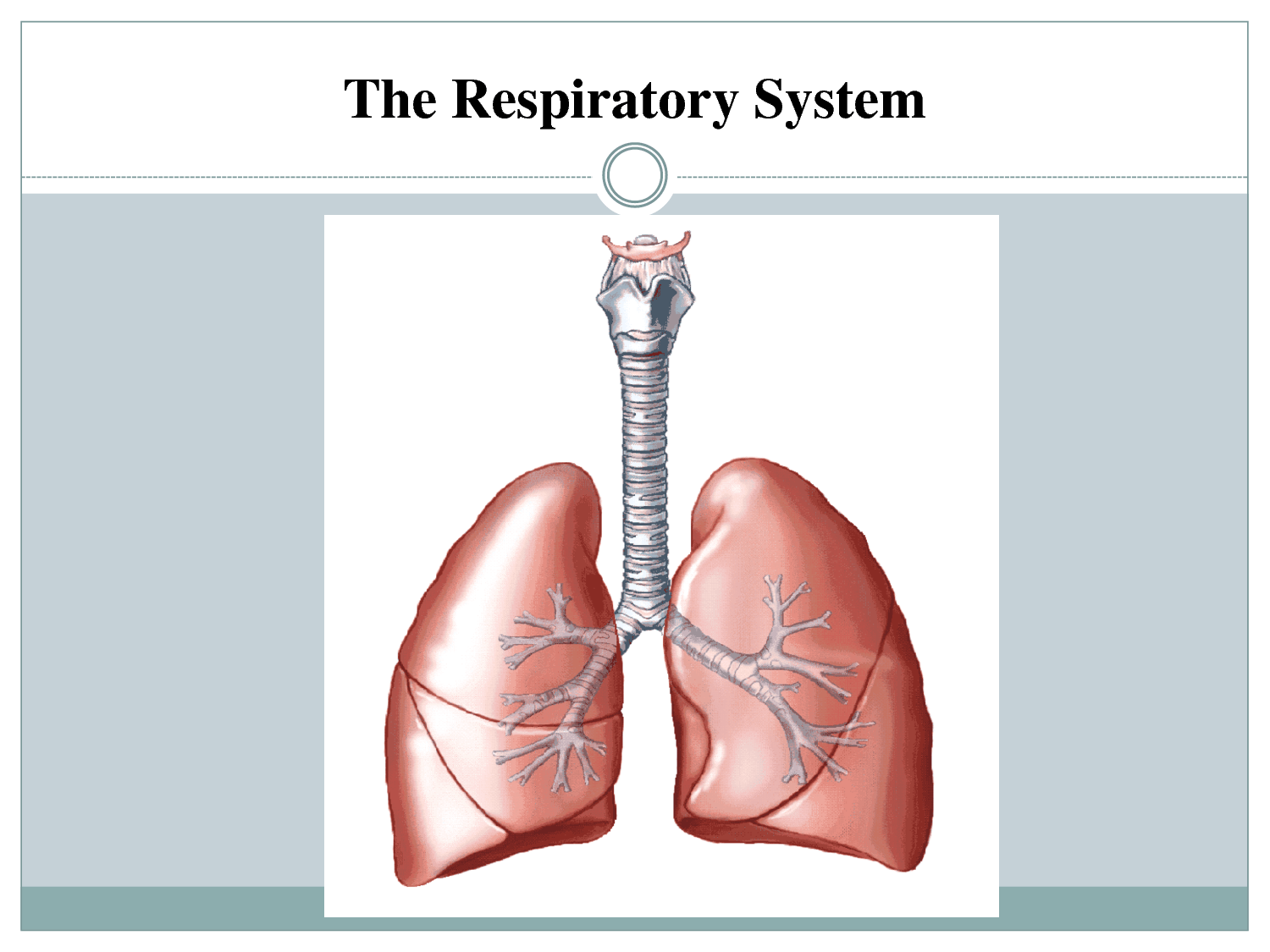


The organs of the respiratory system work together to do what? (pick 2)
Take carbon dioxide out of blood
Add oxygen to blood
Add glucose to blood
Add water to blood
Take water out of blood

