

wayground logo

Free Printable Worksheets

Font size

S
M
L
XL
Worksheets

Biology and Scientific Concepts Quiz

Total questions: 33

Worksheet time: 34mins

Name
Class
Date
1.

What is biology the study of?

4 lines
2.

What is the difference between an independent variable and a dependent variable?

a)
The independent variable is always constant, while the dependent variable varies.
b)
Both variables are measured simultaneously without manipulation.
c)

The independent variable is tested on, while the dependent variable is measured.

d)
The dependent variable is manipulated, while the independent variable is measured.
3.

Why do experiments have a control group?

a)
Experiments have a control group to establish a baseline for comparison and isolate the effects of the independent variable.
b)
Control groups are necessary to ensure all variables are manipulated.
c)
Control groups help in randomizing the selection of participants.
d)
Control groups are used to increase the sample size of an experiment.
4.

What are the steps of the scientific method? List and describe them.

a)
Question, Experiment, Observation, Conclusion, Hypothesis, Analysis, Review.
b)
Hypothesis, Analysis, Experiment, Observation, Conclusion, Question, Report.
c)
Observation, Hypothesis, Conclusion, Review, Experiment, Analysis, Report.
d)

The steps of the scientific method are: prediction, Observation, Hypothesis, Experiment, and Conclusion.

5.

What term best describes the shape of DNA?

a)
circular loop
b)
triple helix
c)
double helix
d)
single strand
6.

What are the three components of a DNA nucleotide?

a)
Amino acid, ribose sugar, phosphate group
b)
Nitrogen base, glucose sugar, phosphate group
c)
Phosphate group, ribose sugar, amino acid
d)
Phosphate group, deoxyribose sugar, nitrogenous base
7.

What are the names of the four bases in DNA? How do these bases pair together?

a)
Adenine (A), Uracil (U), Cytosine (C), Guanine (G); A pairs with U, C pairs with G.
b)
Adenine (A), Thymine (T), Cytosine (C), Guanine (G); A pairs with T, C pairs with G.
c)
Adenine (A), Thymine (T), Cytosine (C), Uracil (U); A pairs with C, T pairs with G.
d)
Adenine (A), Thymine (T), Cytosine (C), Guanine (G); A pairs with G, C pairs with T.
8.

One strand of DNA reads AAG - TAT - CGT - GAG - AAC. What will the complementary strand of DNA be?

4 lines
9.

What is a group of three bases in DNA or RNA known as?

a)
quartet
b)
duplet
c)
triplet
d)
codon
10.

What molecule passes genetic information from parent to offspring in all living things?

a)
DNA
b)
Carbohydrates
c)
Proteins
d)
RNA
11.

A segment of DNA that codes for a protein is called…

a)
chromosome
b)
nucleotide
c)
protein
d)
gene
12.

List the three components of the cell theory below.

a)
All cells have the same structure and function.
b)
Cells can spontaneously generate from non-living matter.
c)
1. All living organisms are composed of cells. 2. The cell is the basic unit of life. 3. All cells arise from pre-existing cells.
d)
All cells contain DNA and RNA.
13.

Define organelles.

a)
Organelles are specialized structures within cells that perform specific functions.
b)
Organelles are the energy-producing components of the cell wall.
c)
Organelles are the genetic materials found in the nucleus.
d)
Organelles are the outer membranes of cells that protect them.
14.

Write the levels of organization from smallest to largest below.

a)
cell, tissue, organ, organism, population, ecosystem, biosphere
b)

cell, tissue, organ, organ system, organism,

c)
cell, organ, organism, population, community, ecosystem, biome
d)
atom, molecule, cell, tissue, organ, organ system, organism
15.

What are the two steps of protein synthesis? Provide a brief description of each step in order.

4 lines
16.

What are the names of the four bases in RNA? How do these bases pair together?

a)
Adenine (A), Uracil (U), Cytosine (C), Guanine (G); A pairs with U, C pairs with G.
b)
Adenine (A), Uracil (U), Cytosine (C), Guanine (G); A pairs with C, U pairs with G.
c)
Adenine (A), Uracil (U), Cytosine (C), Thymine (T); A pairs with U, C pairs with T.
d)
Adenine (A), Thymine (T), Cytosine (C), Guanine (G); A pairs with T, C pairs with G.
17.

Why is the sequence of DNA important?

a)
The sequence of DNA determines the color of an organism's eyes.
b)
The sequence of DNA is irrelevant to the survival of species.
c)
The sequence of DNA only affects physical appearance, not function.
d)
The sequence of DNA is important because it encodes the genetic information necessary for the development and functioning of living organisms.
18.

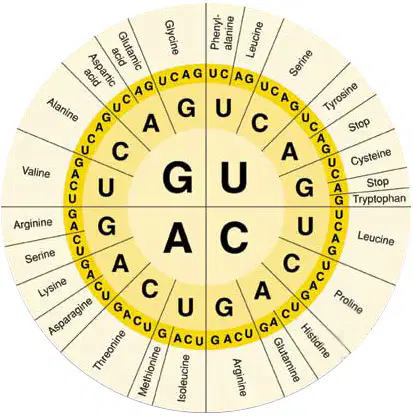
A sequence of bases in DNA reads GGA - TTC - CAG - GTC - CCA. What will the complementary strand of mRNA read?
4 lines
19.

A sequence of bases in mRNA reads TAC - CCT - TCA - ACC - GAG - ATC. What will be the sequence of amino acids from this strand?

4 lines
20.

What are the four major types of macromolecules in biology? List them, give a brief description of their functions, and give an example of each one.

a)
Vitamins: essential nutrients (e.g., vitamin C);
b)
Minerals: inorganic elements (e.g., calcium);
c)
Enzymes: catalysts for reactions (e.g., amylase);
d)

1. Carbohydrates: energy and structure (e.g., glucose); 2. Proteins: 3. Lipids: energy storage 4. Nucleic acids:(e.g., DNA).

21.

Explain why, without any available food, a 200-pound person would survive longer than a 150-pound person.

a)
A 150-pound person has better hydration levels, allowing for longer survival without food.
b)
A 200-pound person requires more food to maintain their weight, reducing survival time.
c)
A 200-pound person would survive longer than a 150-pound person due to having more stored energy reserves.
d)
A 150-pound person has a higher metabolic rate, leading to quicker energy depletion.
22.

Explain why a diet high in carbohydrates leads to significant weight gain.

4 lines
23.

What kind of macromolecule is an enzyme?

a)
Enzyme is a protein.
b)
Enzyme is a nucleic acid.
c)
Enzyme is a lipid.
d)
Enzyme is a carbohydrate.
24.

What do enzymes do?

a)
Enzymes create energy in cells.
b)
Enzymes transport molecules across membranes.
c)
Enzymes speed up chemical reactions.
d)
Enzymes break down proteins.
25.

What factors affect the ability of enzymes to function?

a)
Enzyme shape, reaction pathway, temperature stability, cofactor presence.
b)
Chemical structure, molecular weight, reaction time, product concentration.
c)
Substrate type, enzyme size, reaction pressure, product stability.
d)
Temperature, pH, substrate concentration, enzyme concentration, inhibitors, and activators.
26.

What happens when an enzyme is not in its proper environmental conditions?

a)
The enzyme will become more active and efficient.
b)
The enzyme will increase its reaction rate significantly.
c)
The enzyme may denature and lose its functionality.
d)
The enzyme will remain unchanged and functional.
27.

Using the graph below, identify the approximate pH at which each enzyme shown functions the best.

4 lines
28.

Which macromolecule is the most useful for building muscle mass?

a)
Carbohydrates
b)
Fats
c)
Nucleic acids
d)
Proteins
29.

What is the barrier that separates the inside and outside of a cell?

a)
Cell wall
b)
Nuclear membrane
c)
Cell membrane
d)
Cytoplasmic barrier
30.

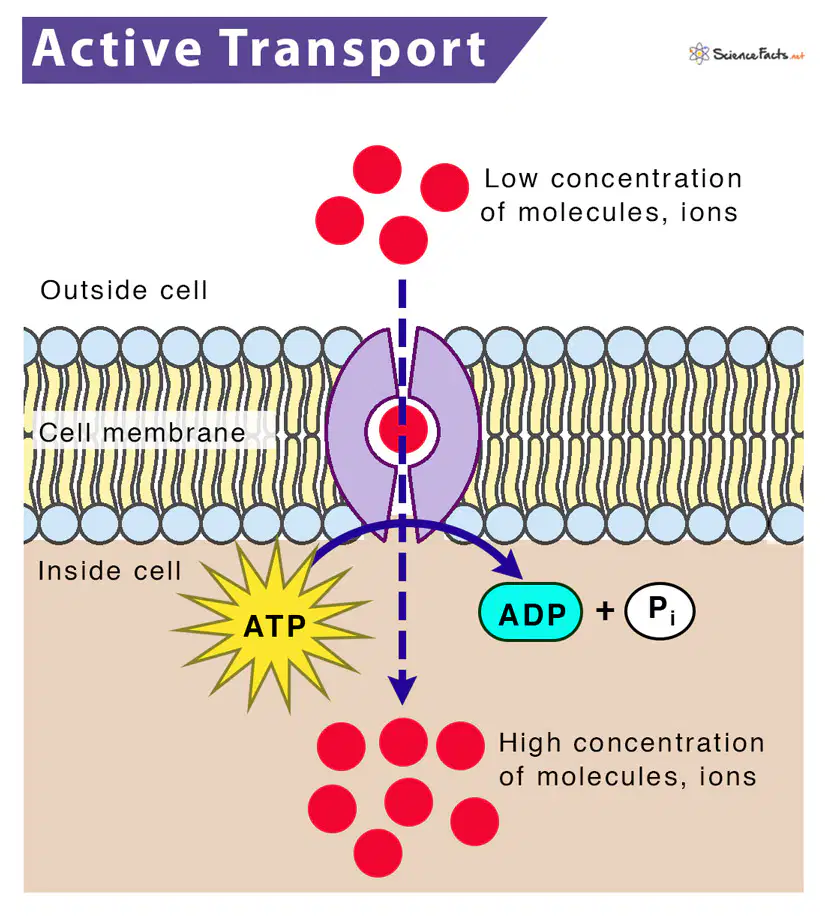
Define passive transport. What direction do the molecules move in passive transport?
a)
Molecules move from higher concentration to lower concentration.
b)
Molecules move from lower concentration to higher concentration.
c)
Molecules move randomly without any specific direction.
d)
Molecules move in and out of the cell at equal rates.
31.

Define active transport. What direction do the molecules move in active transport?

a)
In active transport, molecules move from low concentration to high concentration.
b)
In active transport, molecules move randomly within the same concentration.
c)
In active transport, molecules move from high concentration to low concentration.
d)
In active transport, molecules move in and out of the cell equally.
32.

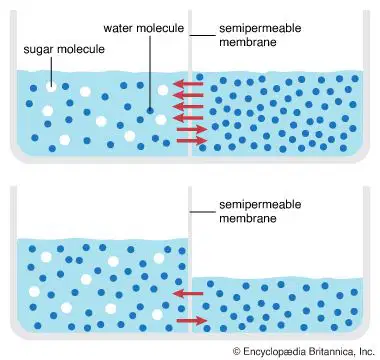
What happens to a cell in the three types of solutions discussed in class (hypertonic, isotonic, and hypertonic)?
a)
In hypertonic solutions, cells swell; in isotonic solutions, cells burst; in hypotonic solutions, cells shrink.
b)
In hypertonic solutions, cells maintain size; in isotonic solutions, cells swell; in hypotonic solutions, cells burst.
c)
In hypertonic solutions, cells burst; in isotonic solutions, cells shrink; in hypotonic solutions, cells maintain size.
d)
In hypertonic solutions, cells shrink; in isotonic solutions, cells maintain size; in hypotonic solutions, cells swell.
33.

Define osmosis.

a)
Osmosis is the movement of water across a membrane from a region of low solute concentration to a region of high solute concentration.
b)
Osmosis is the movement of water into a cell without any concentration gradient.
c)
Osmosis is the process of solute movement through a permeable membrane to equalize concentrations.
d)
Osmosis is the diffusion of solutes across a membrane from high to low concentration.
