
 Worksheets
CHEM MQ3: Engineering Materials
Total questions: 80
Worksheet time: 3600secs
How does density influence engineering design in chemical applications?
It affects reactor vessel wall thickness and buoyancy in multiphase systems.
It determines the color and texture of materials.
It influences the electrical conductivity of materials.
It affects the magnetic properties of materials.
Which property is crucial for high-temperature applications in chemical processes such as reactor internals and process linings?
Electrical conductivity
Melting point
Thermal conductivity
Density
What does thermal conductivity (k) measure?
Ability to transfer heat
Ability to conduct electric current
Ability to resist corrosion
Ability to change from solid to liquid
Which property is important for cooling systems and brake design in mechanical applications?
Electrical conductivity
Melting point
Thermal conductivity
Density
Which engineering field uses the Coefficient of Thermal Expansion to prevent cracking in heat exchanger shells and reactors during temperature cycling?
Civil
Chemical
Mechanical
Mining
What property is described as the ability to resist chemical or electrochemical attack?
Optical and Surface Properties
Coefficient of Thermal Expansion
Corrosion Resistance
Oxidation Resistance
What is the primary application of Oxidation Resistance in chemical engineering?
Prevents rebar rusting and structure weakening.
Required for furnace tubes, reformer reactors, and catalytic converters.
Extends life of pumps, heat exchangers, and vessels.
Avoids oxidation of terminals and connectors.
Which property influences product aesthetics and light interaction?
Coefficient of Thermal Expansion
Optical and Surface Properties
Corrosion Resistance
Oxidation Resistance
In mechatronics, which property is used in optical sensors and machine vision systems?
Coefficient of Thermal Expansion
Optical and Surface Properties
Corrosion Resistance
Oxidation Resistance
What is the primary function of tensile strength in materials?
Governs stiffness and deflection under load
Determines load-bearing capacity of tanks, pipelines, roof trusses, and beams
Ensures safety in chemical storage tanks
Protects insulation from ozone and UV degradation
What does the Elastic Modulus (E) measure in materials?
Maximum stress a material can withstand while being stretched
Ratio of stress to strain in the elastic region
Resistance to decomposition under chemical exposure
Tendency to react with other substances
What is the ability of a material to absorb energy before fracture called?
Hardness
Toughness
Fatigue Strength
Creep Resistance
What is the resistance to indentation or wear in materials known as?
Toughness
Hardness
Fatigue Strength
Creep Resistance
What is the ability of a material to resist failure under cyclic loading called?
Fatigue Strength
Toughness
Hardness
Creep Resistance
What is the ability of a material to resist deformation over time under high temperature called?
Toughness
Creep Resistance
Fatigue Strength
Hardness
Which property indicates formability and mode of failure in reinforced concrete?
Toughness
Ductility/Brittleness
Hardness
Fatigue Strength
Which of the following is an example of an electronic property?
Sheet metal forming
Flexible printed circuits and connectors
Corroded roof
Cracked pipeline
Which of the following is NOT a characteristic of metals?
High melting points.
Silvery gray color.
Poor conductors of electricity and heat.
Easy to work into various shapes and forms.
How are metals and nonmetals separated on the periodic table?
By a zig-zag line stepping through carbon, phosphorus, selenium, and iodine.
By a straight line dividing the table into two equal halves.
By grouping metals on the left and nonmetals on the right.
By arranging metals at the top and nonmetals at the bottom.
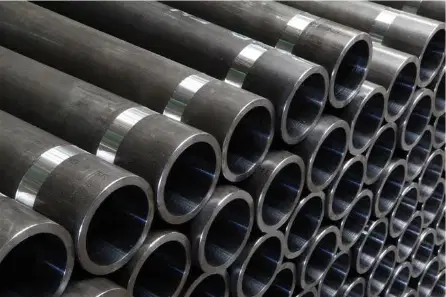
What is a characteristic of plain low-carbon steel?
High responsiveness to heat treatment
Contains high amounts of alloying elements
Greatest quantity produced and least expensive
Poor weldability and machinability
What is the carbon content range for medium carbon steel?
0.1% to 0.3%
0.3% to 0.6%
0.6% to 1.4%
1.4% to 2.0%
What is the ductility of heat-treated medium carbon steel compared to untreated steel?
Higher ductility
Lower ductility
Same ductility
No ductility
Which alloying element in steel increases strength and hardness but decreases ductility and weldability?
Manganese
Phosphorous
Sulfur
Silicon

Which type of cast iron contains graphite flakes in a ferrite or pearlite matrix?
White cast iron
Grey cast iron
Nodular cast iron
Malleable cast iron
What is the silicon content range in grey cast iron?
0.5 - 1.0 wt%
1.0 - 3.0 wt%
3.0 - 4.5 wt%
4.0 - 5.0 wt%
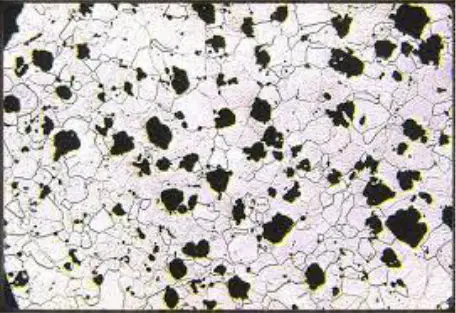
What is the heat treatment process for malleable cast iron?
Isothermal holding at 950°C followed by holding at 720°C
Rapid cooling from 950°C to room temperature
Heating to 720°C and cooling slowly
Holding at 720°C followed by rapid cooling
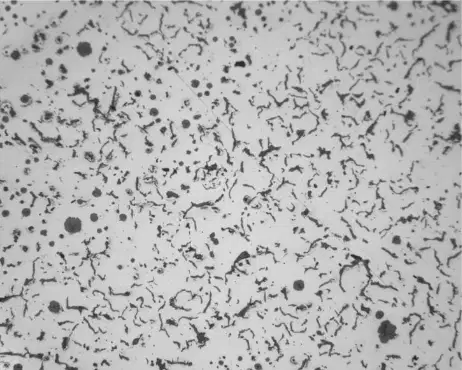
Which property of Compact Graphite Iron (CGI) makes it suitable for applications requiring high thermal conductivity?
Low shrinkage
Good resistance to thermal shock
High tensile strength
Excellent machinability
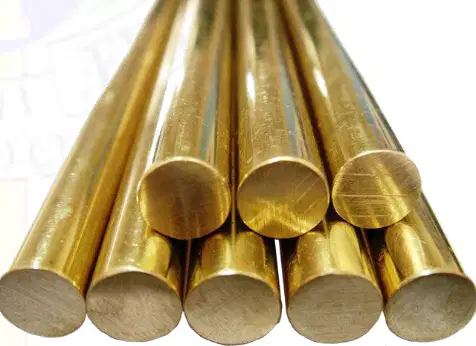
What is brass primarily composed of?
Copper and aluminum
Copper and zinc
Copper and silver
Copper and nickel
What is one of the earliest alloys to be discovered, as Cu ores invariably contain Sn?
Brass
Bronze
Steel
Aluminum alloy
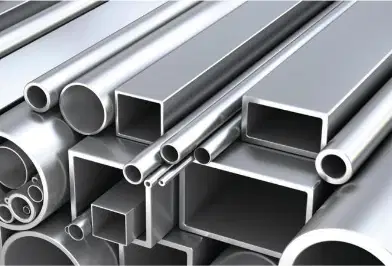
What is the density of aluminum?
2.7 g/cc
4.5 g/cc
1.5 g/cc
3.2 g/cc

Why is titanium considered a strong deoxidizer?
It has high affinity to oxygen
It has low density
It has high melting point
It is highly reflective
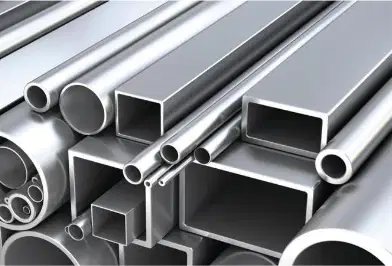
Which alloy is the lightest among all aluminum alloys?
Al-Li alloy
Al-Mg alloy
Al-Cu alloy
Al-Zn alloy
Which type of Nickel alloys can return to their original form and are widely used in engineering applications?
Ni-base super alloys
Shape memory alloys
Nickel-cobalt alloys
Nickel catalysts
What is the melting point of magnesium?
450°C
650°C
750°C
850°C
Which type of cast iron is known for its excellent wear resistance?
Malleable cast iron
White cast iron
Grey cast iron
Nodular cast iron
Which type of steel is known for its high wear resistance and toughness?
Alloy steel
Carbon steel
Tool steel
Stainless steel
What is the main characteristic of high-carbon steel?
Low tensile strength
Good weldability
High hardness and strength
High ductility
What is synthetic quartz primarily used for?
Creating jewelry
Making silicon metal and semiconductors
Cutting stone blocks
Producing intense light
Which material is used in watches and other mechanical instruments for its scratch-resistant properties?
Synthetic quartz
Synthetic ruby
Diamond dust
Pure quartz sand
What is crystallography?
The study of the arrangement of atoms in crystalline solids.
The study of chemical reactions in liquids.
The study of the behavior of gases under pressure.
The study of the properties of plasma.
Which of the following best describes a crystal or crystalline solid?
A material with randomly arranged atoms.
A solid material with highly ordered microscopic structure forming a crystal lattice.
A liquid with highly ordered molecules.
A gas with symmetrical molecular patterns.
What is a molecule?
A positively charged ion.
A negatively charged ion.
An electrically neutral group of two or more atoms held together by chemical bonds.
A single atom with a net electrical charge.
What is the difference between a cation and an anion?
A cation is negatively charged, while an anion is positively charged.
A cation is positively charged, while an anion is negatively charged.
A cation is electrically neutral, while an anion has a net charge.
A cation is a molecule, while an anion is an atom.
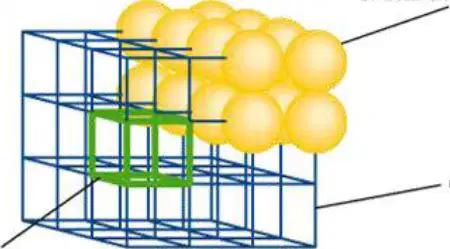
What is the smallest group of particles in a material that constitutes the repeating pattern of the structure?
Unit cell
Crystal lattice
Coordination number
Packing efficiency
What does the coordination number represent in a crystal structure?
The number of atoms in the unit cell
The number of atoms in direct contact with each atom
The symmetry of the crystal lattice
The packing efficiency of the unit cell
In a simple cubic lattice, how do the atoms touch each other?
Along the diagonal
Along each edge
At the corners
At the center
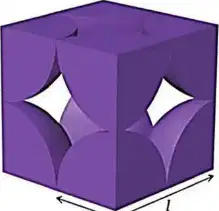
What is the packing efficiency of a simple cubic lattice?
52%
68%
74%
48%
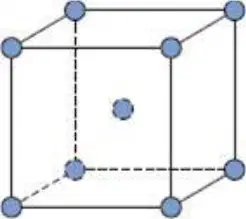
What is the packing efficiency of a body-centered cubic lattice?
52%
68%
74%
48%
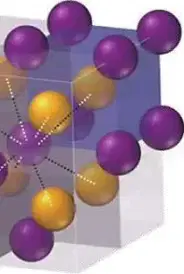
What is the coordination number of a face-centered cubic lattice?
6
8
12
4
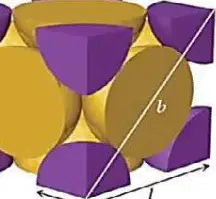
In a face-centered cubic lattice, where do atoms touch each other?
Along the edges
Along the diagonal face
At the corners
At the center of the unit cell
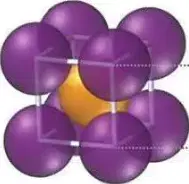
How many atoms are present per unit cell in a face-centered cubic lattice?
1
2
4
8
What is the atomic packing factor for a body-centered cubic (BCC) crystal structure?
0.52
0.68
0.74
0.47
Which crystal structure has the lowest percentage of empty space?
Simple cubic
Body-centered cubic
Face-centered cubic
Hexagonal close-packed
What are polymers made up of?
Atoms
Monomers
Molecules
Nanomaterials
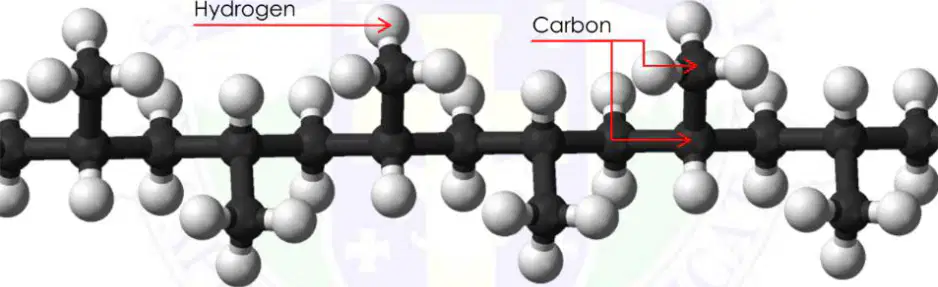
What is the process called in which monomers react together to form polymer chains?
Polymerization
Hydrolysis
Crystallization
Oxidation
Which of the following is an example of a natural polymer?
Nylon-6, 6
Polyester
Starch
Polyethylene
What is the most common synthetic polymer used in industries?
Starch
Rubber
Plastic
Cellulose
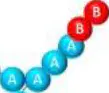
What is the defining characteristic of a block polymer?
It consists of branched monomers.
It consists of relatively long sequences of identical monomer units.
It has a stronger covalent bond compared to other polymers.
It is composed of bifunctional monomers.
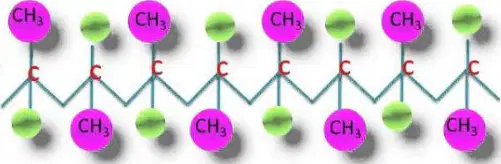
What is the arrangement of side groups in syndiotactic polymers?
On the same side of the chain
In an alternate arrangement
In a random manner
Irregularly distributed
Which type of polymer can be easily stretched by applying small stress?
Fiber
Thermoset
Elastomer
Thermoplastic
What type of polymer has strong intermolecular forces between the polymer chains?
Elastomer
Fiber
Thermoplastic
Thermoset
Which of the following is NOT one of the four nucleotides that form DNA?
Thymine
Guanine
Cytosine
Methionine
What type of protein is produced by silkworms to make their cocoon?
Rubber
Silk
Starch
DNA
Which type of bonding enables polymers to have high flexibility?
Hydrogen bonding
Ionic bonding
Dipole-dipole bonding
Van der Waals forces
Which property of polymers allows them to change their refractive index with temperature?
Physical properties
Chemical properties
Optical properties
Mechanical properties
Which of the following is a characteristic of condensation polymerization?
Produces no by-products
Requires monomers with double or triple bonds
Eliminates small molecules like H₂O and NH₃
Uses radical initiators as catalysts
Which polymer is commonly used in textiles, packaging, stationery, plastics, aircraft construction, rope, and toys?
Polystyrene
Polypropylene
Polyvinyl chloride
Bakelite
What is a common use of polystyrene?
Vinyl flooring
Non-stick cookware
Packaging bottles, toys, containers, and trays
Adhesives and moulds
What is the definition of nanoscience?
The study of large-scale phenomena and manipulation of materials
The study of phenomena and manipulation of materials at atomic, molecular, and macromolecular scales
The study of the universe and its large-scale properties
The study of chemical reactions at the molecular level

What is the impact of Gold Nanoparticles in Biomedical Engineering?
Improved concrete durability
Magnetic separation and alloy improvement
Targeted drug delivery and imaging
Lightweight composite materials
Polymers may be classified based on their structural geometry. Which classification is characterized by chains that are intertwined but not chemically bonded together, allowing the polymer to be easily softened and reshaped, as seen in Polyethylene and Polystyrene?
Thermoplastics
Thermosets
Cross-linked Polymers
Elastomers
Engineered Nanomaterials (ENMs), such as Carbon Nanotubes (CNTs) and Graphene, exhibit properties vastly different from their bulk counterparts. This unique behavior is fundamentally due to the fact that they have:
A change in the primary chemical bonding type
A dramatic decrease in density compared to the bulk material
An increase in the crystal lattice parameter
A significantly high surface area to volume ratio
In materials selection for high-precision, temperature-sensitive applications like sensors or engine parts, which physical property dictates the extent to which a material will change its size (expand or contract) with a change in temperature?
Thermal Conductivity
Specific Heat
Coefficient of Thermal Expansion
Melting Point
Which mechanical property is most critical for components like reactor shells that may be subjected to sudden temperature changes or impacts, as it is defined as the "Ability to absorb energy before fracture"?
Stiffness
Hardness
Toughness
Yield Strength
Crystallography is the experimental science concerned with determining the arrangement of atoms in a solid material. Which term describes the smallest group of particles within the material that constitutes this three-dimensional repeating pattern?
Crystalline Lattice
Bravais Lattice
Unit Cell
Coordination Sphere
A polymer that, once solidified, cannot be softened by heating due to the presence of rigid, permanent, three-dimensional cross-links between the molecular chains is classified as a:
Thermoplastic
Thermoset
Linear Polymer
Elastomer
Which of the following elements is considered the most critical alloying agent in converting iron into various types of Steel?
Silicon
Manganese
Nickel
Carbon
Bronze is a non-ferrous alloy historically significant for weapons and art. While Brass is an alloy of Copper and Zinc, what are the two main metallic elements that constitute Bronze?
Copper and Aluminum
Copper and Nickel
Copper and Tin
Copper and Zinc
Copper is highly valued in electrical engineering applications. Which of the following best describes the two key properties that make it essential for wires and electrical contacts?
High density and high strength-to-weight ratio
High electrical conductivity and high thermal conductivity
Low corrosion resistance and low ductility
Low thermal expansion and high hardness
Which mechanical property represents a material's stiffness and is defined as the ratio of stress to strain in the elastic region of the stress-strain curve?
Toughness
Yield Strength
Modulus of Elasticity
Ductility

