
 Worksheets
Exploring Hinduism — Beliefs (Page 1)
Total questions: 91
Worksheet time: 46mins
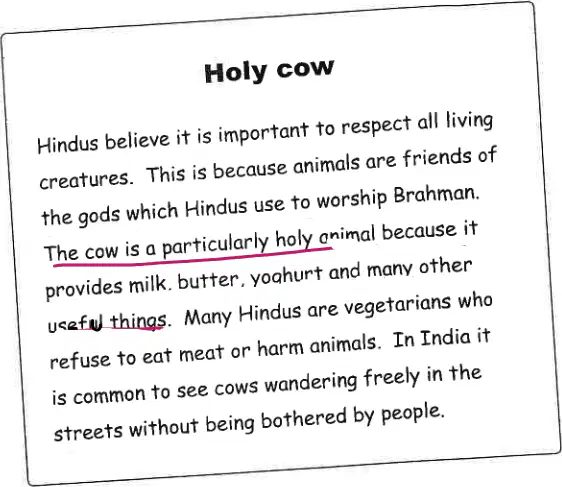
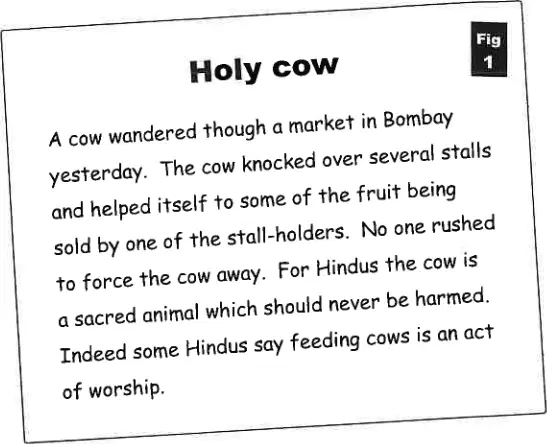
Based on the Holy cow text, why do Hindus think it is important to care for all living creatures?
Because animals are friends of the gods whom Hindus use to worship Brahman
Because animals bring wealth and good luck to every family
Because Brahman forbids people from working with animals
Because harming animals is believed to make festivals unsuccessful
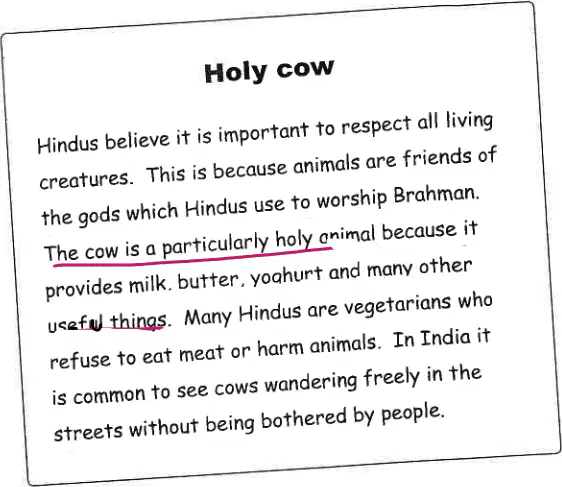
According to the Holy cow text, why are cows particularly holy?
They provide milk, butter, yoghurt and many other useful things
They are the only animals mentioned in the sacred texts
They can be used for transport during pilgrimages
They protect shrines from harm
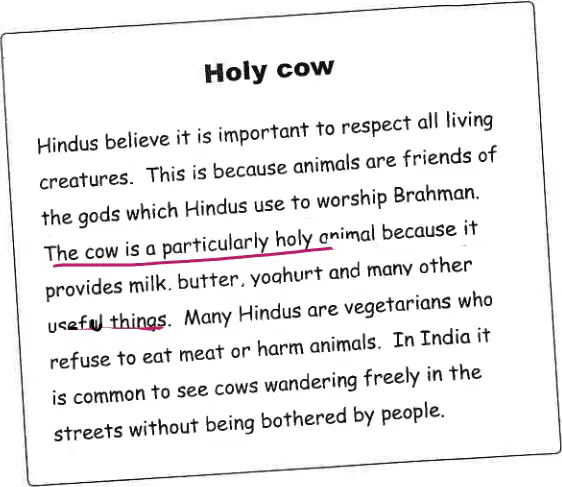
In the Holy cow text, what does it mean that many Hindus are vegetarian?
They refuse to eat meat or harm animals
They eat only dairy products and sweets
They avoid food during festivals
They will eat meat only at home
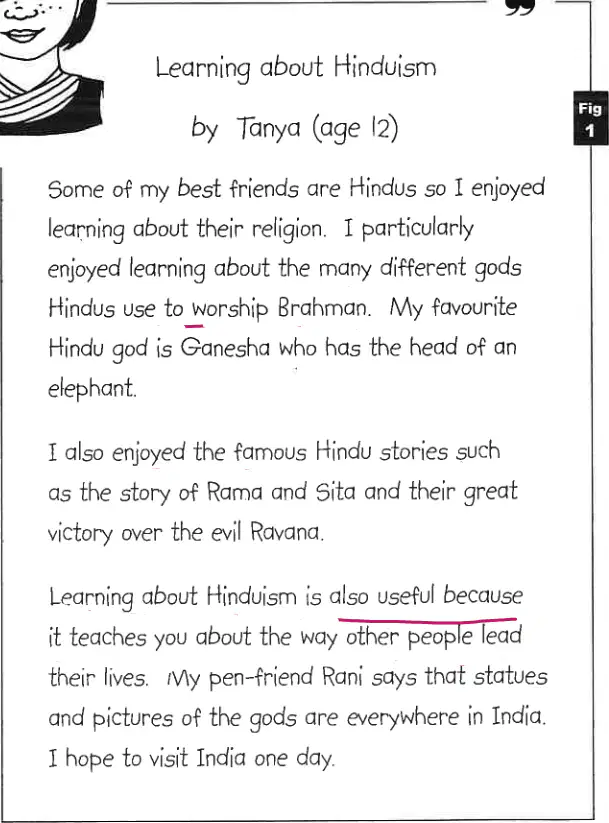
Read Fig 1. According to Tanya, what is one clear reason learning about Hinduism is useful?
It teaches you about the way other people lead their lives
It guarantees you will meet a Hindu god
It explains how to travel for free in India
It shows you how to build a family shrine
Read Fig 1. Which aspect of Hinduism did Tanya particularly enjoy learning about?
The many different gods Hindus use to worship Brahman
The climate and geography of India
Traditional Hindu cooking methods
Mathematical ideas in Hindu schools
Read Fig 1. Which statement best reflects a reason someone might find learning about Hinduism useful, based on Tanya’s comments?
It helps you understand how other people live
It mainly teaches you advanced mathematics
It guarantees admission to a mandir
It focuses on European history
According to the Yoga text, what is yoga?
A practice meaning "to control" that involves concentrating to control the mind and body
A festival where gifts are offered to different gods
A journey to a sacred place
A type of incense burned during worship
According to the Yoga text, why do many Hindus practise yoga?
To help in the search for moksha, a total freedom from pain and suffering
To prepare offerings of fruit, sweets and money
To learn the words used in puja
To replace reading the sacred texts

According to the Yoga text, what benefit can controlling the mind and body provide?
It helps the mind concentrate on important matters
It increases physical strength only
It replaces the need for prayer
It guarantees immediate moksha
When might you want to try to control your mind? Select all that apply.
Before sitting an exam
Before performing on stage
While making an important decision
While sleeping without any responsibilities
Why would you want to control your mind at challenging times?
To stay calm and focused so your actions and choices are thoughtful
To avoid learning anything new
To ensure others make decisions for you
To stop all emotions permanently

What does Fig 3 show?
Incense sticks in a holder with flowers
A priest reading from sacred texts
A small lamp called arti
A statue of Ganesha
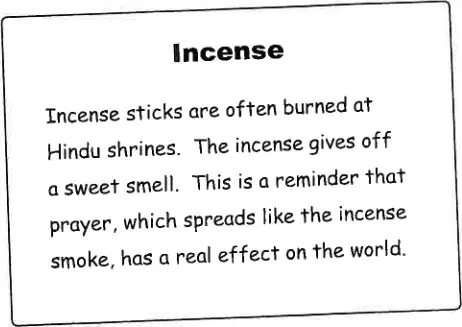
According to the Incense text, why is incense burned at Hindu shrines?
It gives off a sweet smell and reminds worshippers that prayer, like the smoke, spreads and has a real effect on the world
It is a substitute for chanting prayers
It is used only to mark the end of a pilgrimage
It keeps the shrine warm during winter
Hindus believe in one Great Power called Brahman. Brahman has no form or shape and is difficult to picture. What is Brahman?
A single Great Power without form or shape
One of three gods with human shape
A temple where Hindus worship
A holy book of Hindu teachings
Thousands of different gods and goddesses are used to help Hindus understand and worship the different aspects of Brahman. What is the purpose of the thousands of different gods and goddesses?
To help Hindus understand and worship different aspects of Brahman
To replace Brahman in daily worship
To teach only about Shiva
To limit the number of rituals
Brahma, Vishnu and Shiva are known as the ‘Trimurti’ or ‘three forms’ of Brahman. What is the ‘Trimurti’?
Three forms of Brahman: Brahma, Vishnu and Shiva
Three stages of Hindu festivals
Three sacred rivers of India
Three holy books in Hinduism
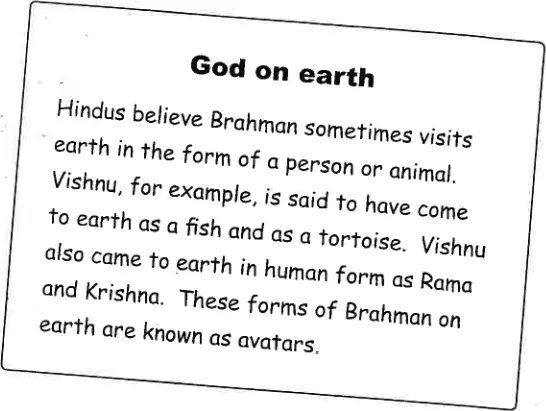
God on earth: Hindus believe Brahman sometimes visits earth in the form of a person or animal. Vishnu came to earth as a fish, as a tortoise, and in human form as Rama and Krishna. These forms of Brahman on earth are known as avatars. What are avatars?
Earthly forms of Brahman appearing as a person or animal
Priests who lead worship in temples
Images used only for decoration
Stories told about ancient kings
Read Fig 1 and the passage ‘Lord Krishna’: Many Hindus worship Brahman as Lord Krishna—the god of love. As a protector, Krishna destroys evil. Who is Lord Krishna?
A form of Brahman worshipped as the god of love who protects and destroys evil
A warrior king who founded a city
A temple priest who teaches rituals
A poet who wrote hymns
Read Fig 1 and the passage ‘Lord Krishna’: Vishnu came to earth in human form as Rama and Krishna. In what way is Krishna different from human beings?
Krishna is an avatar of Vishnu
Krishna has no physical body
Krishna is a historical king only
Krishna is a festival celebrated in spring
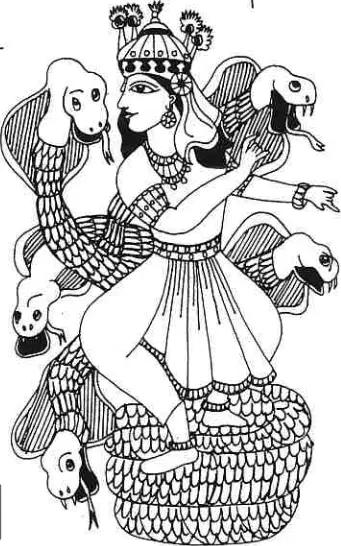
Read the passage ‘Lord Krishna’: In a popular story Krishna saved the River Yamuna by dancing on the five‑headed serpent Kaliya until the serpent agreed to remove the poison and swim out to sea. What does Fig 2 show?
Krishna dancing on Kaliya, the five‑headed serpent, in the river
Krishna sitting in meditation under a tree
Krishna riding a chariot in battle
Krishna offering flowers at a shrine
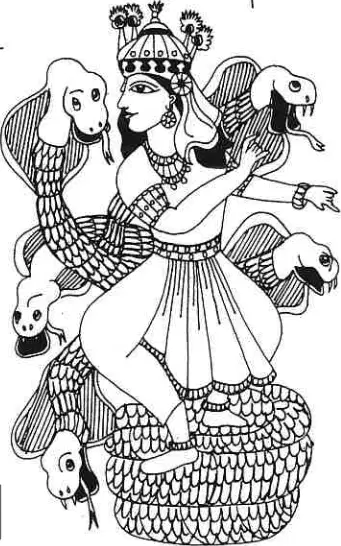
Draw your own picture of Krishna saving the river. Choose the scene that best represents Krishna saving the River Yamuna in the story described.
Krishna dancing on the five‑headed serpent Kaliya while the poison is removed from the river
Krishna playing the flute in a forest
Krishna lighting lamps at a festival
Krishna riding a horse across a field
Ganesha is the god of wisdom and the remover of obstacles. He is often worshipped at the start of a journey or at a wedding ceremony. Why is Ganesha worshipped?
Because he removes obstacles
Because he rules over war
Because he controls the weather
Because he guards sacred rivers
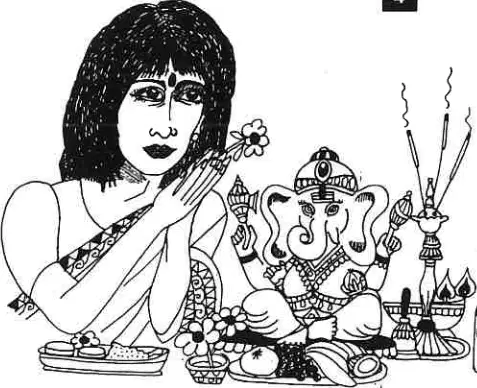
Pictures and statues of Ganesha are often included in wedding ceremonies because he is the remover of obstacles. Why are pictures and statues of Ganesha often included in wedding ceremonies?
To ask Ganesha to remove obstacles at the start of married life
To honour the god of rain for a good harvest
To remember ancient kings
To decorate the hall with bright colours only
According to the story in the passage ‘Ganesha’: Shiva cut off the head of a stranger at his door, then discovered it was his son, and replaced it with the head of a passing elephant. How did Ganesha come to have the head of an elephant?
Shiva replaced his son’s lost head with the head of a passing elephant
Ganesha was born with an elephant head
An elephant blessed him and he changed shape
A sculptor carved an elephant mask for ceremonies
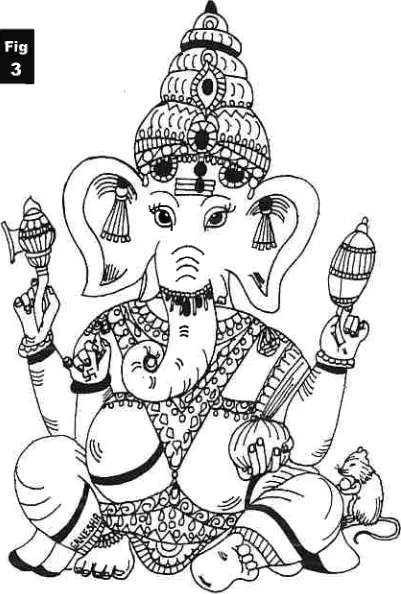
Draw a labelled sketch to show the main features of Ganesha including his elephant head, his four arms and the mouse which he travels on. Which set lists the main features to label for Ganesha?
Elephant head, four arms, mouse mount
Lion head, two arms, eagle mount
Human head, four legs, horse mount
Tiger head, six arms, bull mount
Use the story of Rama and Sita, and the notes on Hanuman in the box opposite, to help you answer the following question: Who is Hanuman?
The king of the monkeys who helped Rama rescue his wife Sita
The evil demon Ravana who ruled Lanka
Rama’s step-mother who wanted her son to be king
A goddess of wealth worshipped in temples
Use the story of Rama and Sita, and the notes on Hanuman in the box opposite, to help you answer the following question: What did Hanuman do to help Rama?
He helped Rama rescue Sita from Ravana
He banished Rama from his father’s kingdom
He kidnapped Sita and took her to Lanka
He lit ‘diva’ lamps to guide Rama and Sita home
Use the story of Rama and Sita, and the notes on Hanuman in the box opposite, to help you answer the following question: Why is Hanuman seen as a symbol of loyalty?
He remained devoted to Rama and served him faithfully, even in danger
He ruled Lanka as a just king after defeating Ravana
He created the world and protects it from evil
He refused to help anyone other than himself
Use the story of Rama and Sita, and the notes on Hanuman in the box opposite, to help you answer the following question: Why do you think Hanuman is a popular god with wrestlers?
He is a symbol of strength
He is the king of Lanka
He invented wrestling tournaments
He forbids the lighting of lamps at festivals
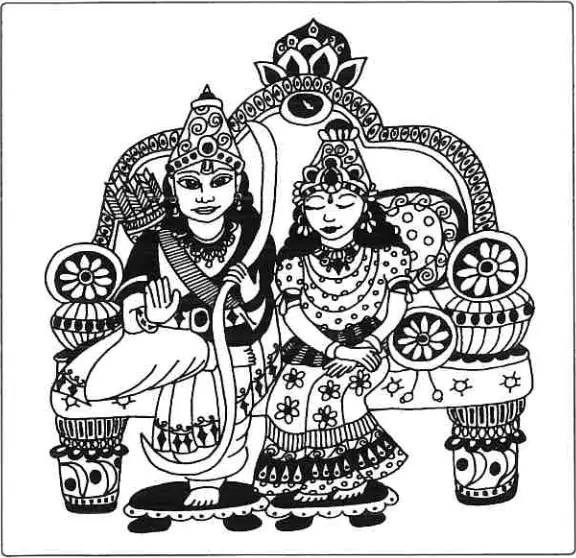
Read Fig 2. Which statement best describes how Rama and Sita are portrayed in the figure’s caption?
Rama is strong and brave and is an excellent example of how a man should behave
Sita is loyal and faithful and is an excellent example of a perfect wife
Both statements are presented in Fig 2
Neither statement appears in Fig 2
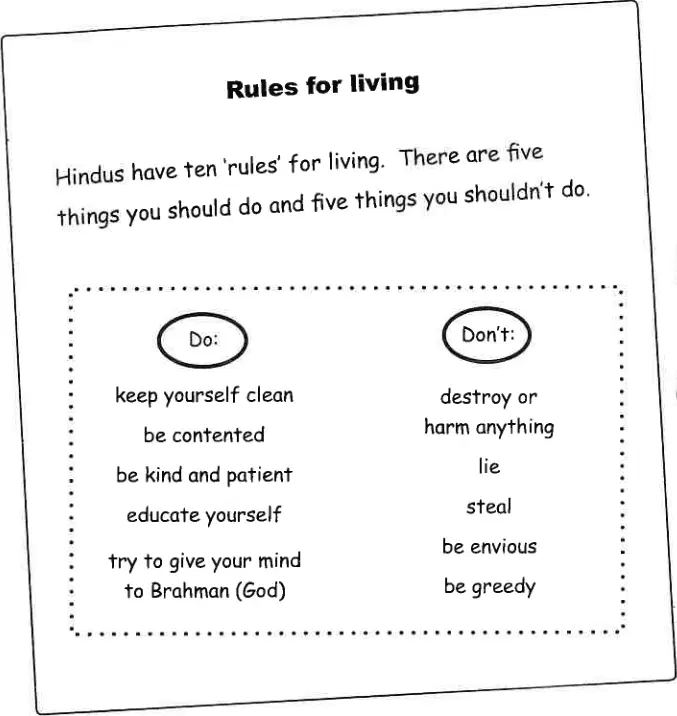
Read about Hinduism’s rules for living. The poster shows five things you should do and five things you shouldn’t do. Do: keep yourself clean; be contented; be kind and patient; educate yourself; try to give your mind to Brahman (God). Don’t: destroy or harm anything; lie; steal; be envious; be greedy. Which rule would you think would be the hardest to keep?
try to give your mind to Brahman (God)
be kind and patient
keep yourself clean
be contented
educate yourself
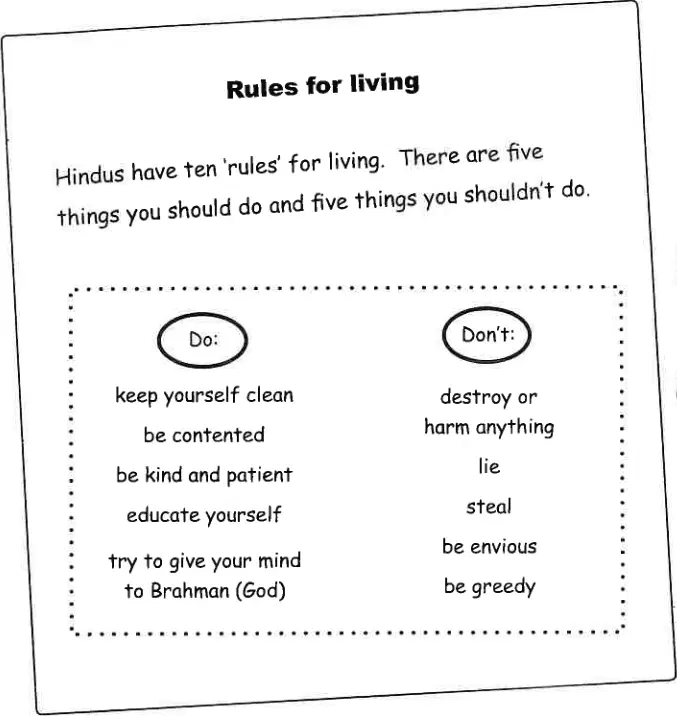
Read about Hinduism’s rules for living. The poster shows five things you should do and five things you shouldn’t do. Do: keep yourself clean; be contented; be kind and patient; educate yourself; try to give your mind to Brahman (God). Don’t: destroy or harm anything; lie; steal; be envious; be greedy. Which rule would you think would be the easiest to keep?
keep yourself clean
destroy or harm anything
lie
be greedy
steal
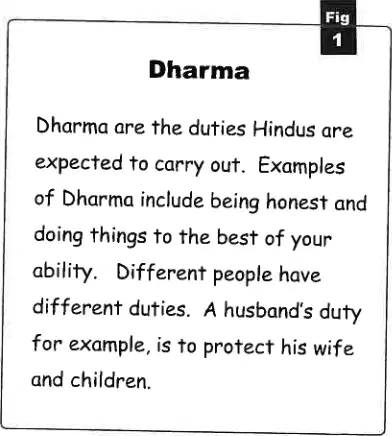
Read Fig 1. What is Dharma? The box explains: Dharma are the duties Hindus are expected to carry out, such as being honest and doing things to the best of your ability. Different people have different duties; for example, a husband’s duty is to protect his wife and children.
the duties Hindus are expected to carry out
the belief in rebirth called Samsara
the ultimate release from rebirth called Moksha
material wealth and financial security called Artha
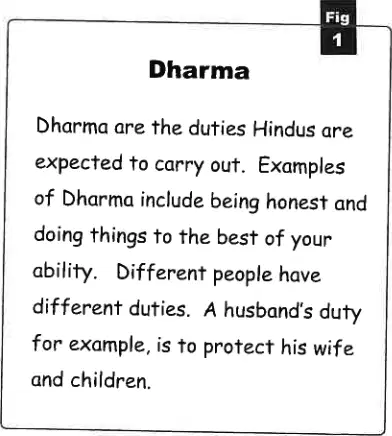
Read Fig 1. Which Dharma would be suitable for someone of your age? Consider the examples given: being honest and doing things to the best of your ability, while adult duties (e.g., protecting a wife and children) apply to grown-ups.
being honest in everyday life
doing things to the best of your ability at school
protecting your wife and children
managing household finances for a family
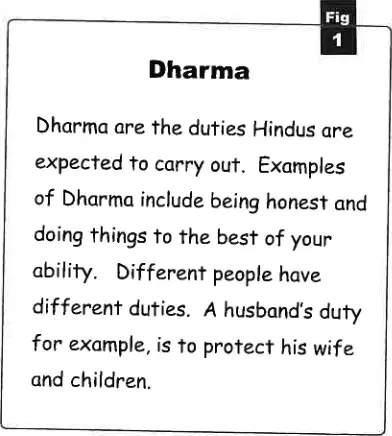
Read Fig 1. Do you think Dharma are a good idea? Choose the statement that best reflects the reason given in Fig 1.
They help people be honest and do their duties to the best of their ability
They allow people to ignore responsibilities whenever they choose
They mean everyone has exactly the same duty regardless of age or role
They apply only to husbands and not to other people
Read the passages on Evil and Suffering and Life After Death. Based on these beliefs (karma affects suffering and rebirth; suffering is an opportunity to learn and not repeat mistakes; helping victims of natural disasters can gain merit; living according to scriptures aims toward moksha), which behaviors would most likely follow from these beliefs? Select all that apply.
Reflect on one’s actions to learn from mistakes and avoid repeating them
Help people affected by disasters as an act of compassion and to gain merit
Ignore ethical teachings because fate alone determines outcomes
Live by scriptural teachings to progress toward moksha
From the passages on Evil and Suffering and Life After Death, which statements accurately summarize core Hindu beliefs described? Select all that apply.
Human life is part of a cycle of death and rebirth called samsara
Good and bad actions produce karma that influences future rebirths
Natural disasters are always punishments sent directly by God
Living according to scriptures ultimately leads toward moksha

Fig 2 shows five ways sacred writings help people. Which of the following statements are included in Fig 2? Select all that apply.
Sacred writings answer life’s difficult questions
Sacred writings provide advice on how to lead good and useful lives
Sacred writings provide advice on how to be happy
Sacred writings provide ideas for dealing with problems
Sacred writings provide advice on how to deal with suffering
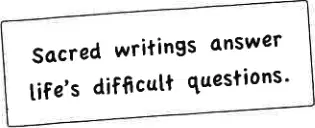
Fig 2 shows five ways sacred writings help people. Which of these ways is the most important? Choose the best answer.
Answering life’s difficult questions
Providing advice on how to lead good and useful lives
Providing advice on how to be happy
Providing ideas for dealing with problems
Providing advice on how to deal with suffering

Fig 2 shows five ways sacred writings help people. Which of these ways is the least important? Choose the best answer.
Answering life’s difficult questions
Providing advice on how to lead good and useful lives
Providing advice on how to be happy
Providing ideas for dealing with problems
Providing advice on how to deal with suffering
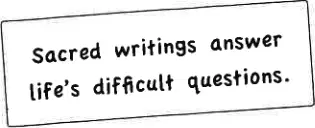
Fig 2 shows five ways sacred writings help people. Choose the option that lists these five ways in order of importance from most to least important.
Answer life’s difficult questions; lead good and useful lives; deal with suffering; deal with problems; be happy
Lead good and useful lives; answer life’s difficult questions; deal with problems; be happy; deal with suffering
Deal with suffering; deal with problems; be happy; lead good and useful lives; answer life’s difficult questions
Be happy; deal with problems; lead good and useful lives; deal with suffering; answer life’s difficult questions
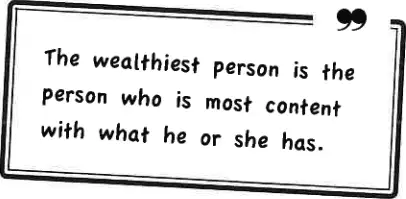
Fig 3 shows the statement: “The wealthiest person is the person who is most content with what he or she has.” What does Fig 3 mean?
True wealth is measured by contentment rather than material possessions
People become wealthy only by earning large incomes
Contentment prevents anyone from becoming wealthy
Wealth depends entirely on other people’s opinions
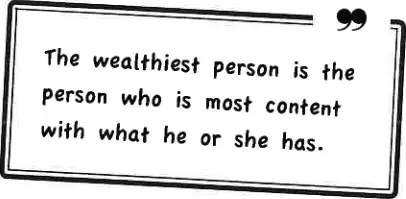
Fig 3 states, “The wealthiest person is the person who is most content with what he or she has.” Do you agree with this statement? Choose the best answer.
Agree, because contentment makes a person feel rich regardless of possessions
Disagree, because money alone determines who is truly wealthy
Disagree, because wealth depends on luck
Agree, because wealth is only about having status symbols
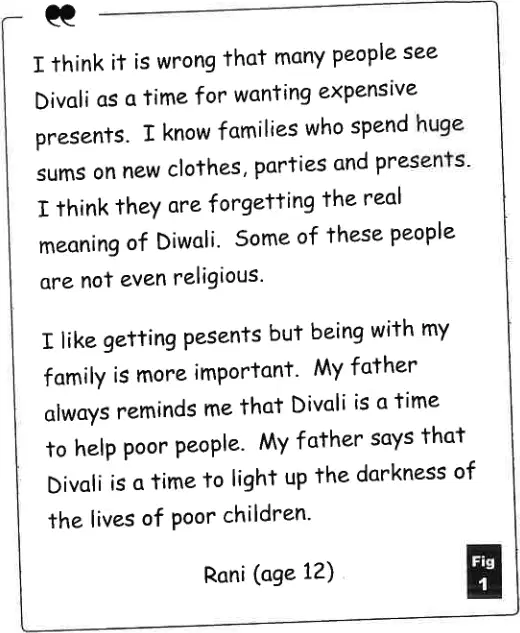
Read Fig 1. Based on Rani’s statement in Fig 1, what is the main message about Divali?
Divali should focus on helping poor people and not on expensive presents.
Buying new clothes and presents is the essential meaning of Divali.
Divali should be celebrated only by religious people.
Fireworks are the most important part of Divali.
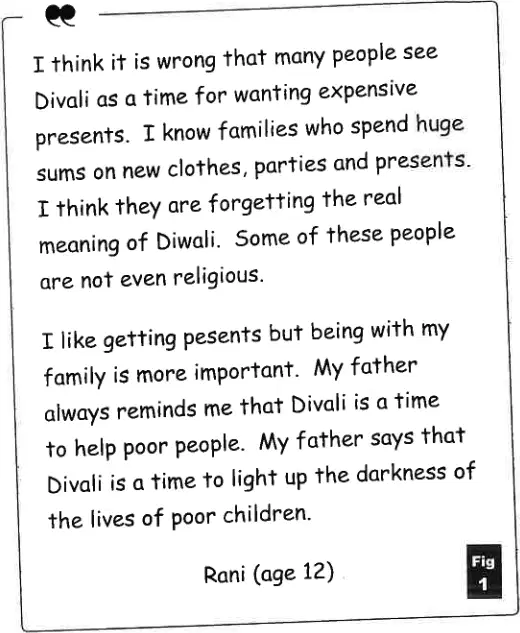
Read Fig 1. Which actions are suitable for people your age to help poor people during Divali? Select all that apply.
Donate clean clothes and toys to local shelters.
Volunteer with a local charity or food drive.
Organize a class fundraiser for children in need.
Spend money on expensive presents for yourself.
Set off fireworks without involving the community.
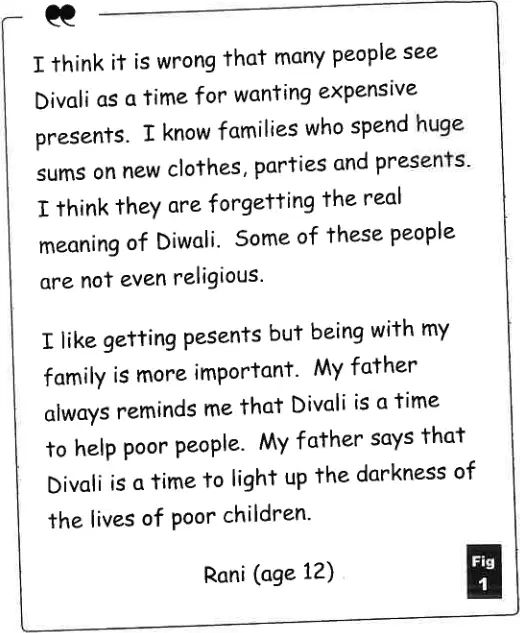
Read Fig 1. Which statement matches Rani’s view about who celebrates Divali?
Some people who celebrate Divali are not even religious and may forget the real meaning.
Only priests are allowed to celebrate Divali.
Divali is never celebrated by families.
Non‑religious people must never attend Divali events.
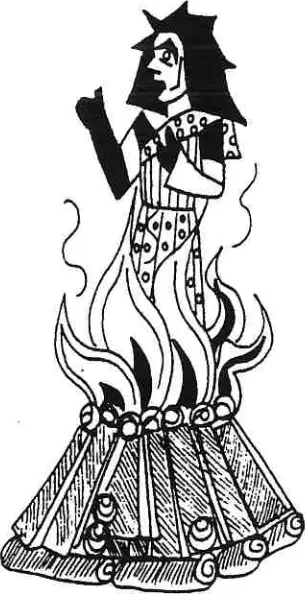
Describe what Fig 2 shows.
A model of Holika burning on a bonfire during Holi.
Lamps called divas arranged for Divali.
Fireworks over a river at night.
A family exchanging cards and presents.
Read about the Hindu marriage ceremony. According to the passage, why is the choice of partner such an important decision? The passage explains that most Hindus choose to marry and that a good choice of partner means happiness while a poor choice means unhappiness and suffering.
Because it decides whether the wedding will be expensive or simple
Because it determines the couple’s happiness or unhappiness in life
Because it shows which family is wealthier
Because it tells whether the ceremony will include mendhi
Read about the Hindu marriage ceremony. According to the passage, why do young Hindus accept their parents’ help in choosing suitable partners? The passage states that parents often help their sons and daughters to choose suitable partners and have more experience of life and are good judges of suitable partners.
Parents know modern fashion better than young people
Parents have more experience and are good judges of suitable partners
Parents can pay for the wedding
Parents choose partners from the same neighborhood
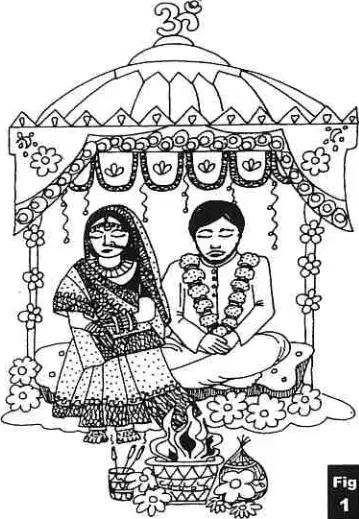
Read about the Hindu marriage ceremony. Based on the illustration labeled Fig 1 and the passage, what does Fig 1 show?
The groom sitting under a special canopy while part of the wedding ceremony takes place
A procession to the temple before the wedding
The couple exchanging garlands outdoors at night
A statue of Ganesha being decorated
Read about the Hindu marriage ceremony. According to the passage, what do the seven steps the couple make together around the fire represent? The passage explains that the seven steps represent seven things the couple hope to have throughout their marriage.
Seven gifts given by the guests
Seven promises about wealth and status
Seven hopes the couple wish to have in their marriage
Seven names of the god Ganesha
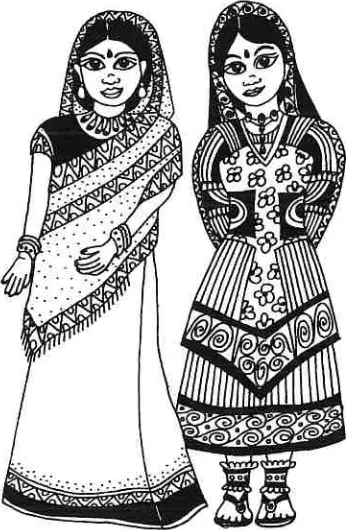
Sketches A, B and C show three parts of the Divali festival. What does Sketch A show?
Women dressed in special clothes and jewellery for Divali
A tray of sweets and offerings
Fireworks and sparklers used during Divali
A temple decorated with lights
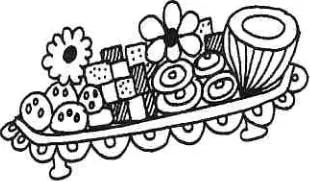
Sketches A, B and C show three parts of the Divali festival. What does Sketch B show?
Women preparing rangoli patterns
A tray with sweets, fruit, and a small lamp used in Divali
Children reading a story of Rama and Sita
People visiting the temple at dawn

Sketches A, B and C show three parts of the Divali festival. What does Sketch C show?
A market selling Divali decorations
Fireworks, sparklers, and party poppers used during Divali
A prayer ceremony with a priest
A procession carrying a statue
Divas are special lamps lit during Divali. What does the light from a diva represent? The text explains that the light represents good overcoming evil, which is represented by darkness.
Good overcoming evil
Darkness overcoming light
Wealth increasing during the festival
Good luck for business only

When designing and drawing a card to send to Rani for Divali, which feature must be included according to the instruction?
A sketch of a diva lamp
A photo of fireworks
A picture of a palace
A list of family names
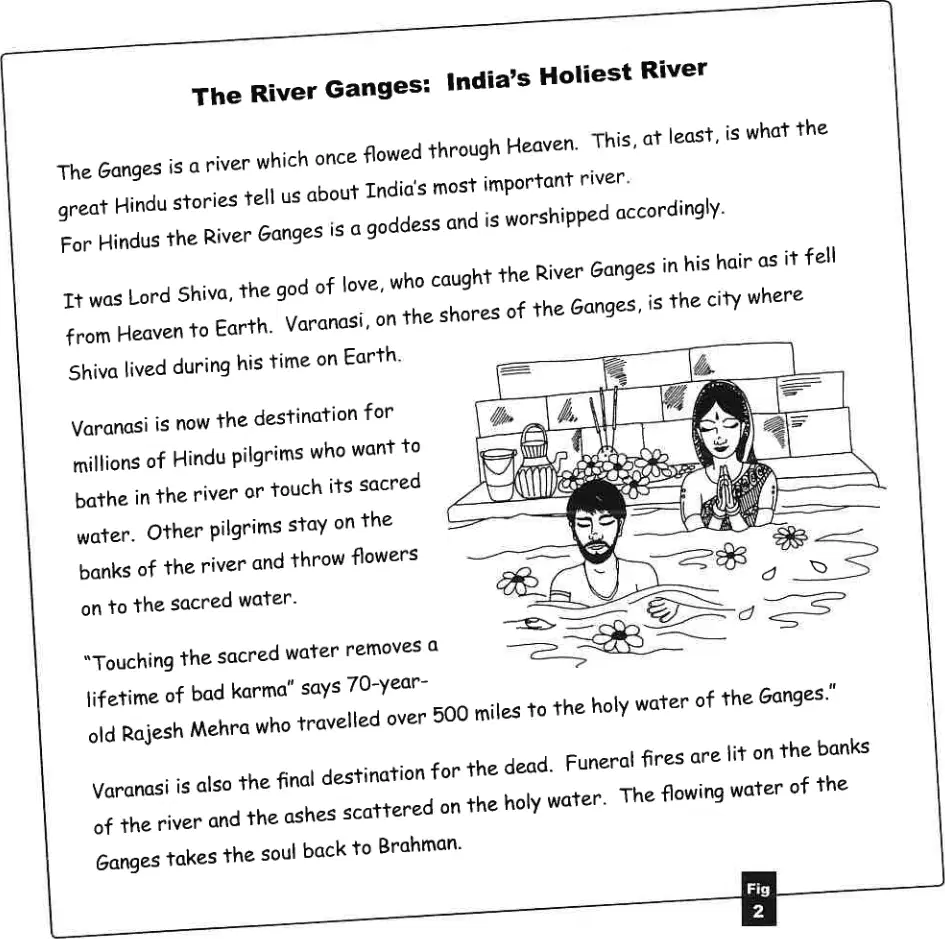
Read Fig 2. The passage describes beliefs and practices at the River Ganges. Why do so many Hindus want to visit the River Ganges?
To bathe in or touch the sacred water to remove bad karma
To see amusement parks along the river
Because it is the birthplace of the Buddha
To go scuba diving in the river
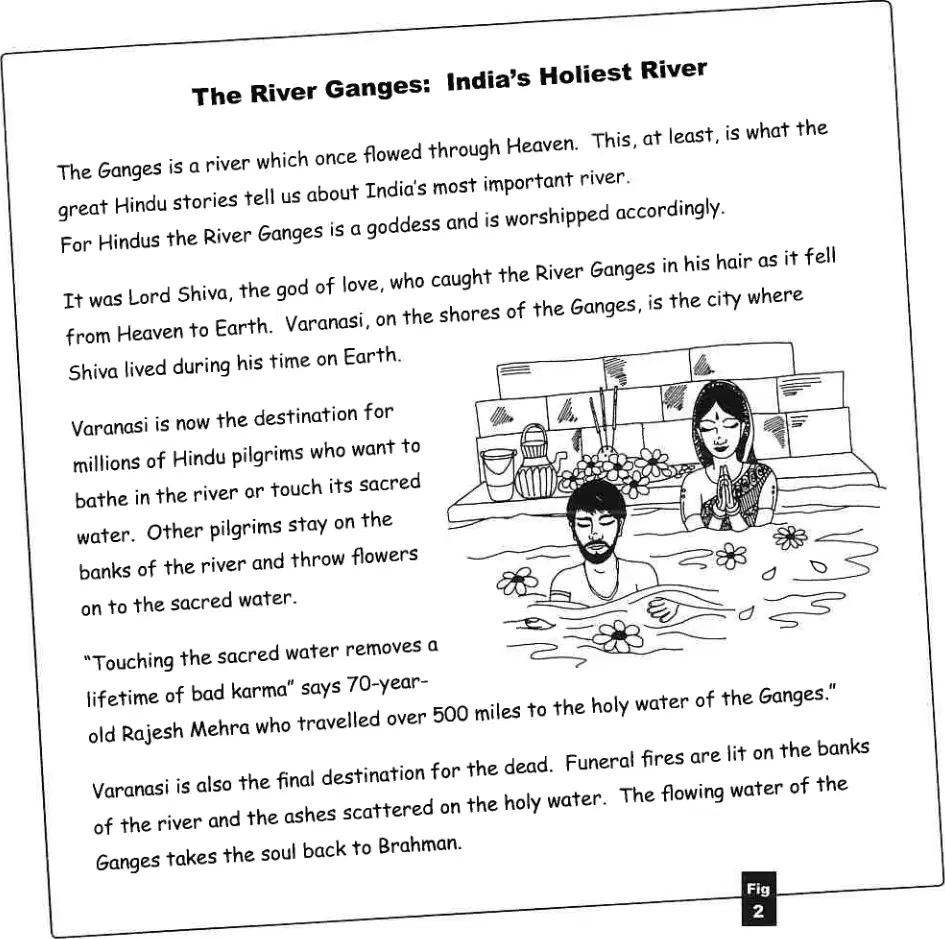
Read Fig 2. What is Varanasi?
A city on the shores of the Ganges where Lord Shiva lived
A mountain range in northern India
A single temple located in Delhi
A desert region near the Thar
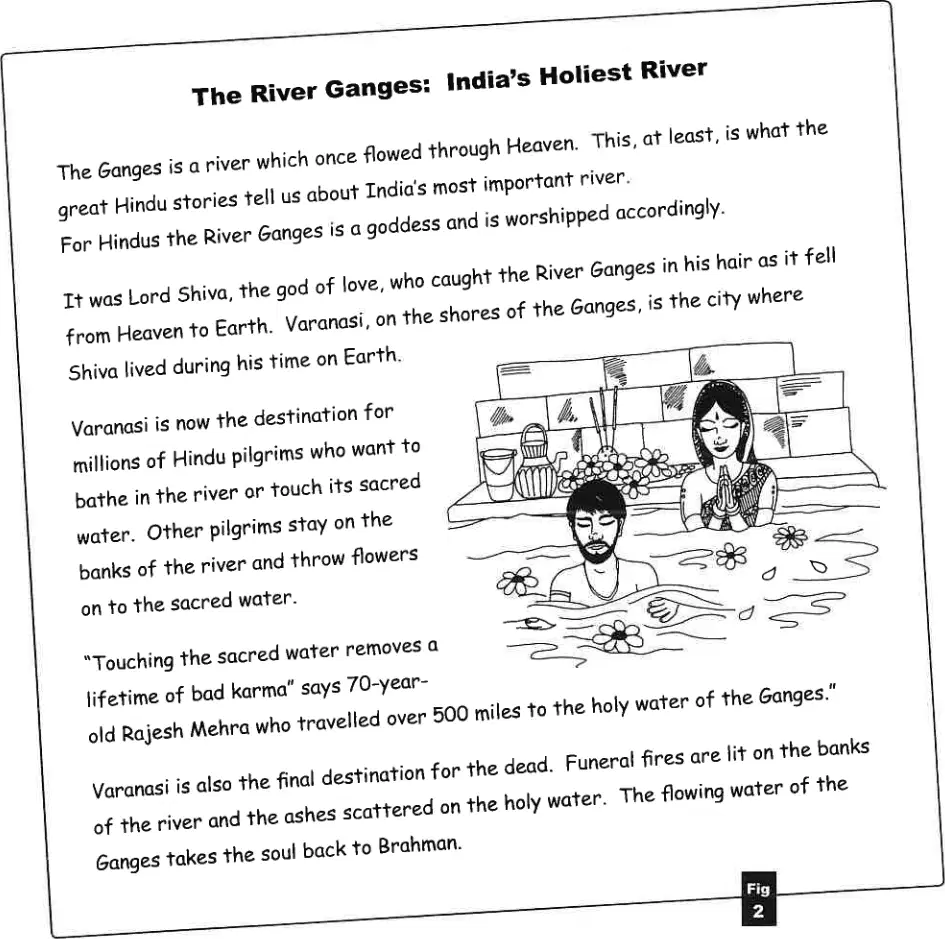
Read Fig 2. What do pilgrims do when they reach the River Ganges? Select all that apply.
Bathe in or touch the sacred water
Throw flowers on to the sacred water from the banks
Build permanent shrines along the river
Plant trees to mark the pilgrimage
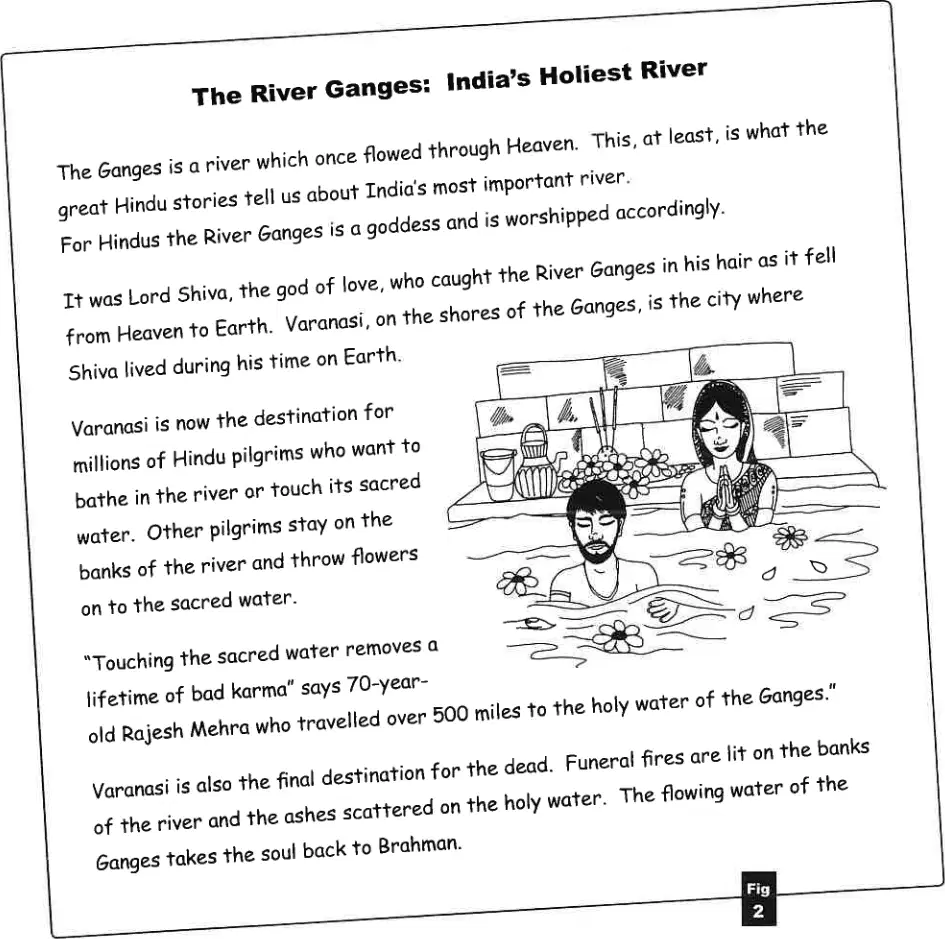
Read Fig 2. Why are the banks of the Ganges such a popular place for funeral fires?
Hindus believe the flowing water of the Ganges carries the soul back to Brahman
The banks are the only safe place to light any fire in India
Funeral fires are illegal elsewhere
The banks are used because there is more space for large crowds

Read Fig 2. Imagine you must find information about Hindu pilgrimages and can speak to someone who has made a pilgrimage to the River Ganges. Which interview question would be most useful to ask?
What rituals did you perform at the Ganges and why were they meaningful to you?
How long have you lived in Varanasi?
What is your favorite Indian movie?
Did you travel by train or bus to the river?
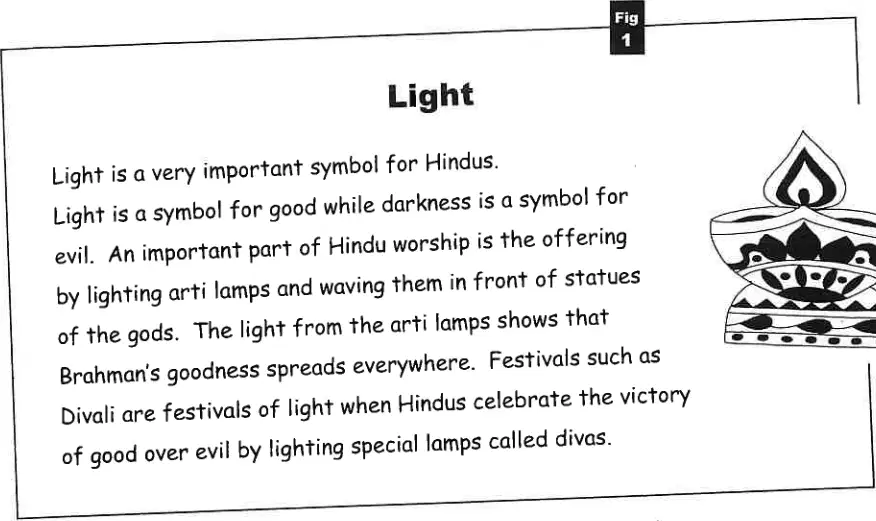
Read Fig 1. Light is a very important symbol for Hindus. Light is a symbol for good while darkness is a symbol for evil. What is light a symbol for?
Good
Evil
Darkness
Confusion
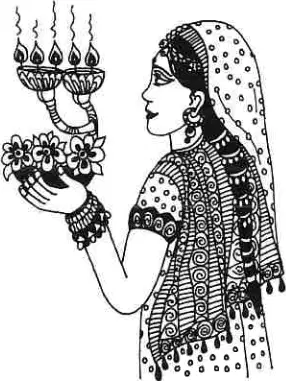
Read Fig 1. An important part of Hindu worship is the offering by lighting arti lamps and waving them in front of statues of the gods. What is arti and what does it involve?
A Hindu ritual that involves lighting lamps and waving them before statues of the gods
A festival where families exchange gifts of food
A silent personal prayer said before sleep
A painted floor design made during celebrations
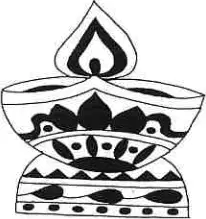
Read Fig 1. Festivals such as Divali are festivals of light when Hindus celebrate the victory of good over evil by lighting special lamps called divas. What are divas and when are they used?
Special lamps lit during Divali to celebrate good defeating evil
Sacred scriptures read at temple services
Marks worn on the forehead during prayer
Songs sung to welcome guests at weddings
Read Fig 1. Light is a symbol for good while darkness is a symbol for evil. Which two of the following would make suitable symbols for good? Select two.
A sunrise
A white dove
A thorn bush
Storm clouds
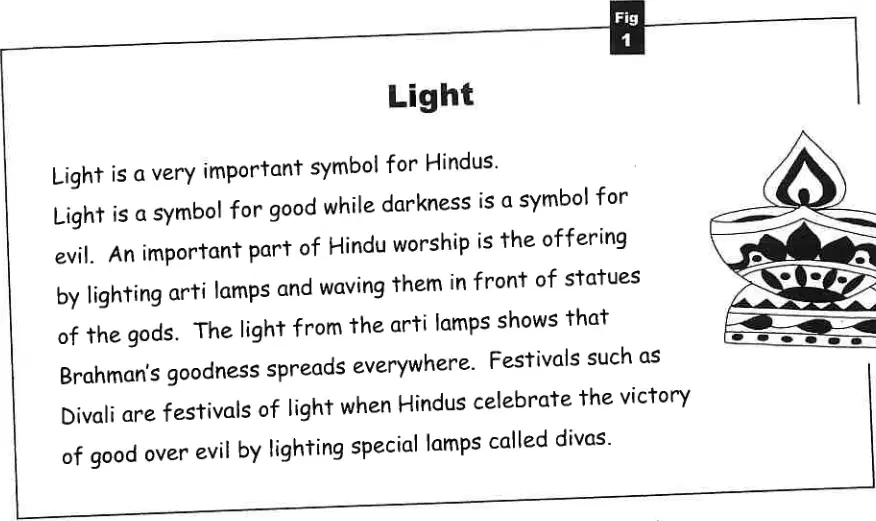
Read Fig 1. Light is a symbol for good while darkness is a symbol for evil. Which two of the following would make suitable symbols for evil? Select two.
A raging fire destroying homes
Dark storm clouds
A blooming flower
A lit lamp
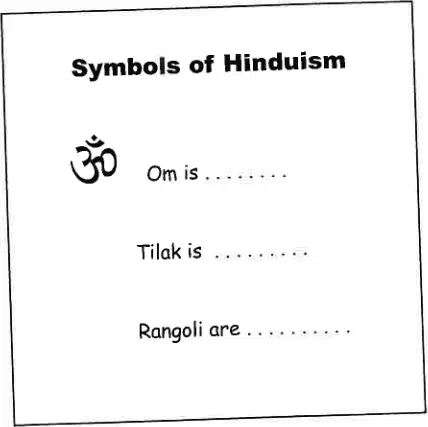
Make an information sheet about the different symbols of Hinduism. Your information sheet should include pictures as well as words. According to the instruction, what should the information sheet include?
Both pictures and words
Only words without pictures
Only pictures without text
Tables and numbers only
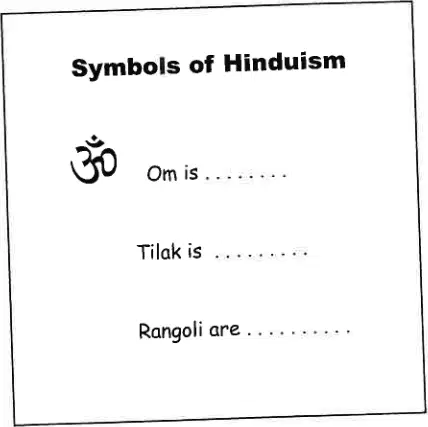
Symbols of Hinduism: Om is ________. Choose the best completion based on common descriptions used in Hindu studies.
A sacred sound and symbol representing ultimate reality
A ceremonial lamp lit at Divali
A forehead mark worn during worship
A floor pattern made with coloured powders
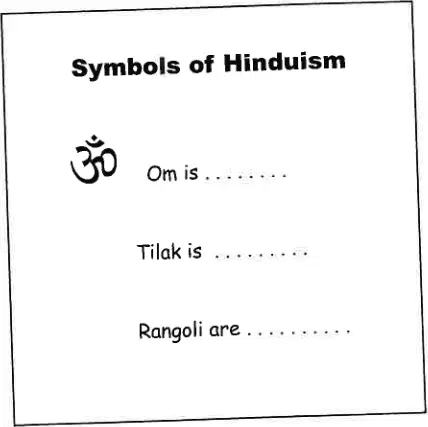
Symbols of Hinduism: Tilak is ________. Choose the best completion based on common descriptions used in Hindu studies.
A mark worn on the forehead during worship
A sacred sound representing ultimate reality
A special lamp lit during Divali
A decorative floor pattern made with coloured powders
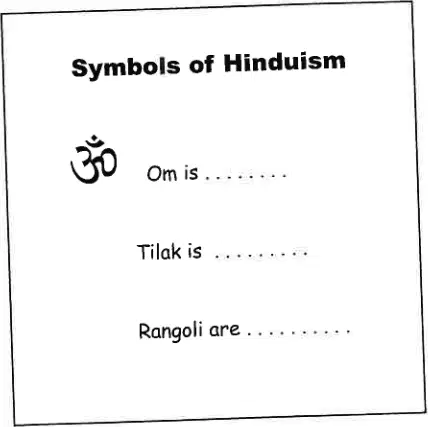
Symbols of Hinduism: Rangoli are ________. Choose the best completion based on common descriptions used in Hindu studies.
Decorative floor patterns made with coloured powders at festivals
Sacred verses recited in the temple
Oil lamps waved in front of statues
Small bells rung during prayer
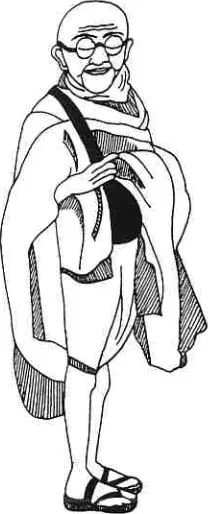
Read about Mahatma Gandhi. Mahatma Gandhi was one of India’s greatest leaders and a Hindu who believed in non-violence (‘Ahimsa’). Who was Mahatma Gandhi?
An Indian leader known for his belief in non-violence
A British governor who ruled India
A military general famous for victorious battles
A poet who wrote devotional songs
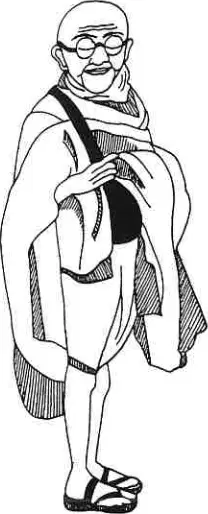
Read about Mahatma Gandhi. Gandhi believed in ‘Ahimsa’ or non-violence and refused to support violence even when violence was used against him. What is ‘Ahimsa’?
Non-violence
Military resistance
Silent meditation
Economic prosperity
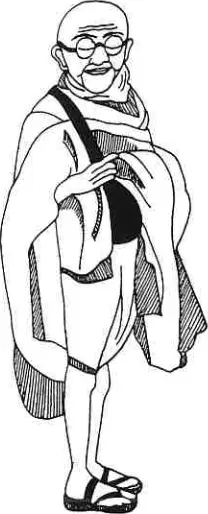
Read about Mahatma Gandhi. Gandhi spoke out against violence and refused to support violence even when it was used against him. Was Gandhi brave or foolish according to this account? Choose the best reasoned answer.
Brave, because he held to non-violence despite threats and punishment
Foolish, because he avoided all political action
Foolish, because he encouraged violent revolts
Brave, because he commanded armies to fight
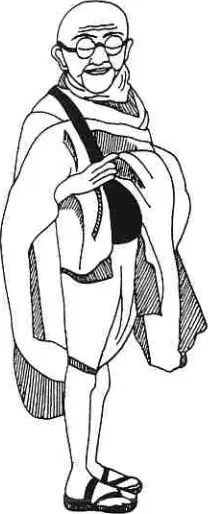
Read about Mahatma Gandhi. Gandhi’s stand against violence encouraged many people to join his campaigns and he organised peaceful boycotts of British goods. How did Gandhi’s stand against violence help him?
It gained public support and participation in peaceful campaigns
It made the British appoint him governor
It caused his followers to abandon him
It led him to form an army
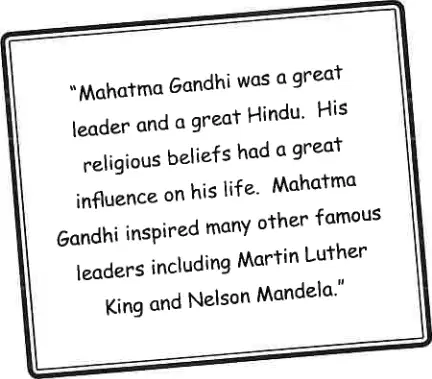
Read about Mahatma Gandhi. Gandhi achieved many important things without the use of violence. Which statement best reflects his view on non-violent action?
Non-violent action can achieve significant change
Only violence forces governments to change
Non-violent action has no effect
Economic boycotts must be violent to work
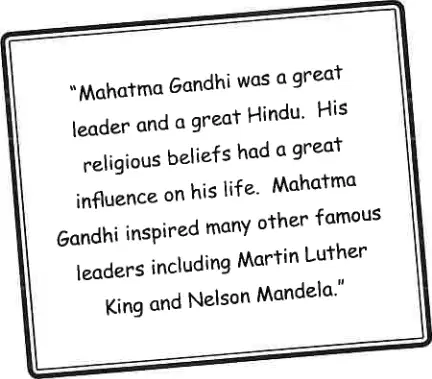
Read about Mahatma Gandhi. Gandhi was a Hindu who believed in ‘Ahimsa’ or non-violence, and he worked to bring people from different religions together. How did Gandhi’s religion influence his life?
It led him to reject violence and promote unity
It made him support violent rebellion
It caused him to avoid public life
It led him to become a government official
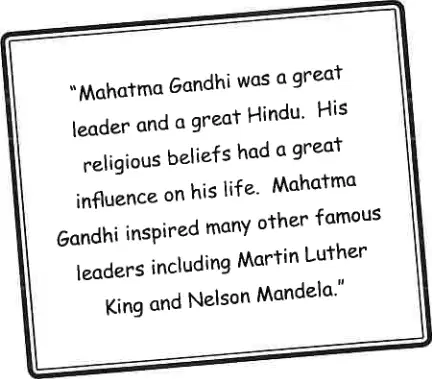
Read about Mahatma Gandhi. Gandhi organised peaceful boycotts, encouraged many people to join his campaigns, helped win better conditions for the Indian people, and worked to bring people from different religions together. Why was Gandhi an inspiration to other people? Select three.
He organised peaceful boycotts of British goods
He helped win better conditions for the Indian people
He worked to bring people of different religions together
He supported violent attacks on opponents
He avoided leadership roles
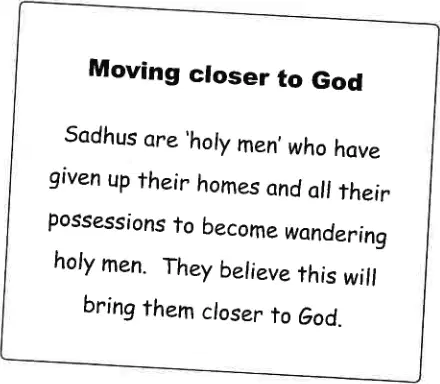
Moving closer to God: Sadhus are ‘holy men’ who have given up their homes and all their possessions to become wandering holy men. What are sadhus?
Holy men who give up homes and possessions to wander
Temple musicians who perform at festivals
Teachers who lead government schools
Merchants who sell religious goods

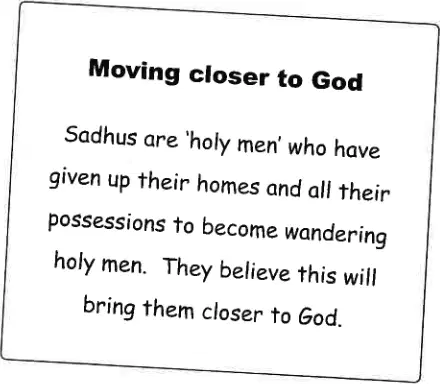
Moving closer to God: Sadhus are ‘holy men’ who have given up their homes and all their possessions to become wandering holy men. They believe this will bring them closer to God. Why do sadhus give up their homes and possessions?
To move closer to God
To increase their wealth
To gain political power
To avoid travel
Moving closer to God: Sadhus give up homes and possessions to become wandering holy men because they believe this brings them closer to God. Which statement best explains why this practice might be seen as helping someone become ‘wise’?
Letting go of possessions reduces distraction and focuses life on spiritual growth
Owning many things proves success and wisdom
Political authority is the source of wisdom
Avoiding travel makes people wiser
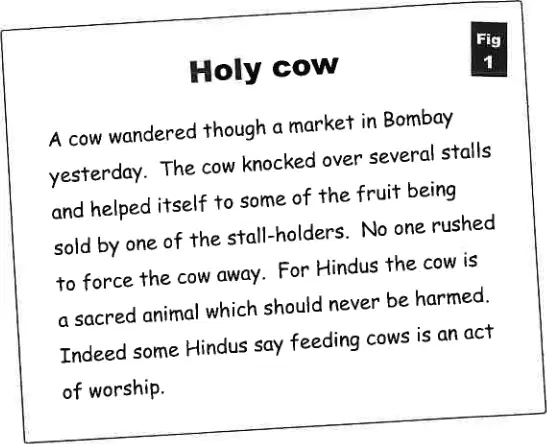
Read Fig 1. Based on the report titled Holy cow, why do Hindus never harm cows?
Because the cow is considered a sacred animal
Because cows are government property
Because cows only produce milk during festivals
Because cows are dangerous and should be avoided
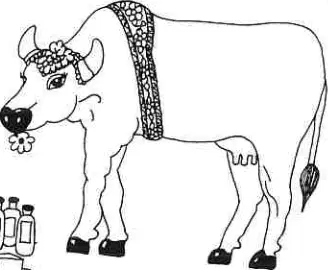
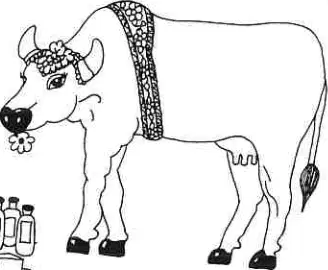
Read Fig 1. Which statements best support the view that animals are treated badly in this country? Select all that apply.
Factory farming can cause suffering for animals kept in cramped conditions
Strict animal-welfare laws mean cruelty almost never occurs
Some animals are used for testing of products
Many pets are well cared for and adopted from shelters
"Don't fight with nature. Fighting with nature is a cause of many problems." Which actions are examples of 'fighting with nature'? Select all that apply.
Clearing large areas of forest for development
Building on floodplains while ignoring river patterns
Polluting rivers with industrial waste
Planting native trees to restore habitats
"Don't fight with nature. Fighting with nature is a cause of many problems." What problems might arise if people 'fight with nature'? Select all that apply.
Habitat loss and decline in wildlife populations
Increased flooding and soil erosion
Climate change impacts becoming worse
Improved biodiversity and healthier ecosystems
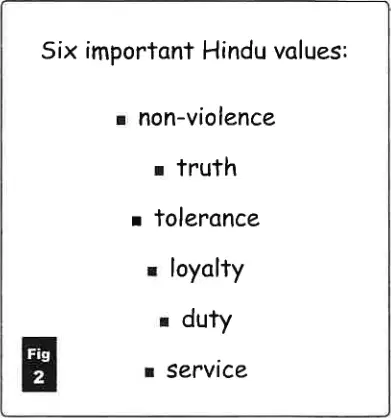
Examine Fig 2. Which of these Hindu values most directly supports avoiding harm to living beings?
non-violence
truth
tolerance
loyalty
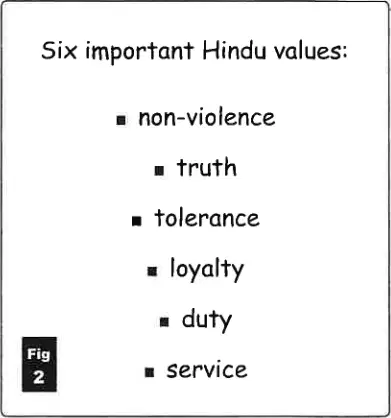
Examine Fig 2. Which value emphasizes being honest and telling the facts as they are?
truth
service
duty
tolerance
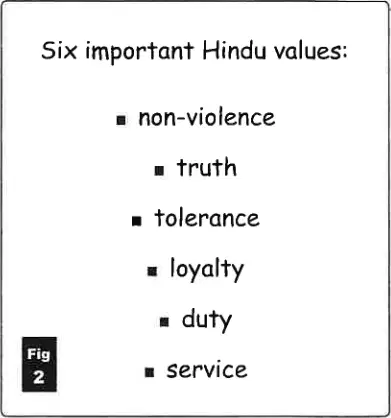
Examine Fig 2. Which value best describes helping others without expecting reward?
service
loyalty
tolerance
duty
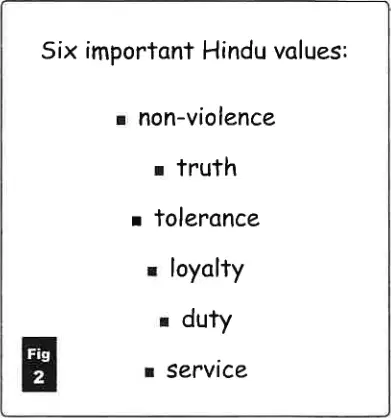
Examine Fig 2. Which value refers to remaining faithful and reliable toward people or commitments?
loyalty
service
truth
tolerance
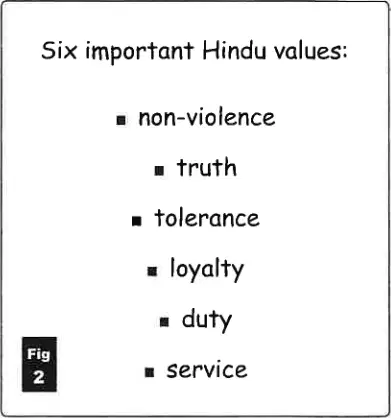
Examine Fig 2. Which value is about being patient with differences and allowing others their beliefs or ways of life?
tolerance
non-violence
duty
loyalty
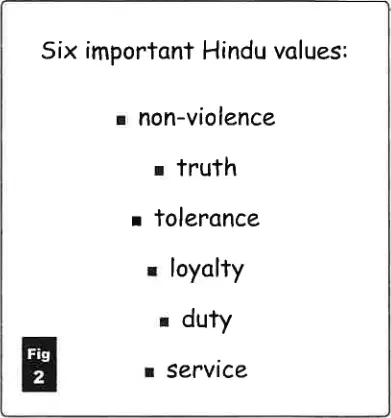
Examine Fig 2. Which combination would most reasonably be placed at the top of an importance ranking focused on ethical behavior in society?
non-violence and truth
loyalty and duty
service and tolerance
duty and loyalty
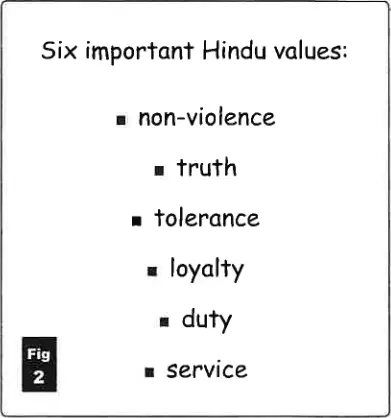
Examine Fig 2. How could the beliefs of Hinduism influence society? Select all that apply.
Encouraging peaceful conflict resolution
Promoting community service and care for others
Increasing intolerance toward different groups
Strengthening honesty and a sense of duty

