
NEW
Font size
 Worksheets
Introduction to Advanced Materials
Total questions: 20
Worksheet time: 10mins

Which statement best defines a biomaterial in engineering?
A material compatible with the human body
A material stronger than structural steel
A material that dissolves inside the body
A material made only from natural tissues
Which property makes Nitinol especially suitable for arterial stents that must be delivered collapsed and then expanded in the body?
Shape memory that enables expansion
Low density
High electrical conductivity for pacing signals
A startup must fabricate a small batch of intricate sculptures within one week. Which processing method best fits the need for fast turnaround and low-volume production?
Slip casting with reusable moulds
Extrusion followed by high-temperature sintering
Hot isostatic pressing with long cycles
Selective Laser Sintering using polymer-coated powder
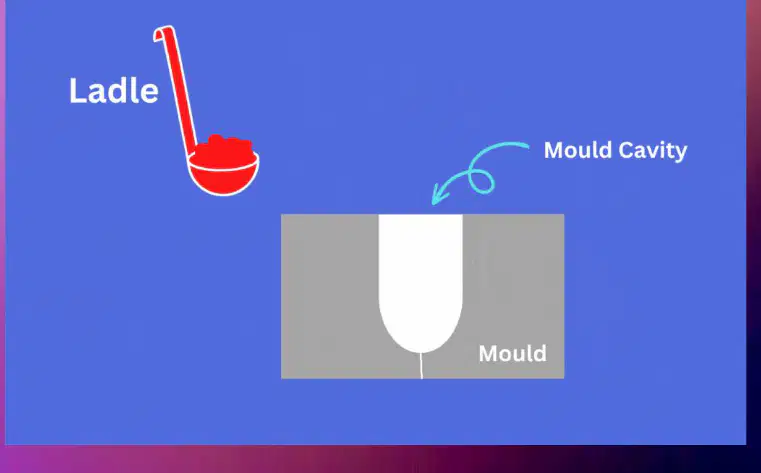
In slip casting, which sequence correctly describes the material and process flow to obtain a shaped ceramic component?
Powder mixed to slurry, poured into mould, liquid removed, body dried
Powder extruded as filament, wound on spools, fused into shape
Powder pressed in die, sintered first, mixed with polymer
Powder compacted dry, laser scanned, binder cured, part ejected
Which sequence correctly describes the powder metallurgy route for making a dense metal part?
Cold rolling billet, annealing, hardening
Powder production, compaction to green state, sintering
Casting molten alloy, machining, stress relieving
Sintering loose powder, hot working, quenching
During sintering of a compacted metal powder part, shrinkage occurs. What should be done to maintain the dimensional accuracy of the final component?
Design the green compact oversized by predicted shrinkage
Avoid using binders altogether
Lower furnace temperature
A manufacturer needs continuous lengths of a polymer profile with the same cross-section to make cable trunking. Which process is the most suitable?
Thermoforming over a simple mould tool
Compression moulding using heated matched dies
Extrusion through a shaped die plate
Injection moulding into a closed cavity
Which statement best contrasts extrusion and thermoforming for thermoplastics?
Extrusion forms uniform cross-sections; thermoforming stretches sheets over moulds
Extrusion cures powdered resin; thermoforming compacts granules with pressure
Extrusion creates thin shells; thermoforming produces solid rods continuously
Extrusion requires matched dies; thermoforming pushes hot material through a die
A factory must produce 50,000 identical, complex plastic clips with tight tolerances in a short time. Which process best fits this requirement?
Vacuum forming thin plastic sheets
Lay-up with open moulds
Injection moulding into metal moulds
Casting large thermoset resins
You need to make a bathroom surround with smooth surfaces and moderate detail from a polymer resin. Planning the method, what steps are most appropriate?
Extrude molten polymer through a shaped die
Heat thermoplastic pellets, inject into small metal moulds
Stretch heated sheet over a former using vacuum
Prepare large moulds, pour thermoset resin, allow curing
As discussed, smart alloys can have which unique properties?
High electrical conductivity
Extreme brittleness
Shape memory and superelasticity
High thermal resistance
The nanoscale is defined as:
1-100 × 10⁻³ meters
1-100 × 10⁻⁶ meters
1-100 × 10⁻⁹ meters
1-100 × 10⁻¹² meters
In additive manufacturing, what does DMSL stand for?
Direct Metal Laser Sintering
Digital Manufacturing Structural Layering
Dynamic Metal Structural Linking
Direct Manufacturing Solid Layering
What makes a composite material different from an alloy?
Composites always contain metals
Composites are chemically and physically different materials
Composites are always stronger
Composites cannot be mixed
Which nanoengineered material application protects against UV rays?
Lithium-ion batteries
Flexible solar cells
Sunscreen
Self-cleaning glass
In powder metallurgy, what is the "green state"?
A fully processed metal component
A component with maximum strength
A delicate component with minimal strength
A completely hardened metal piece
What is a key characteristic of crystalline ceramics?
High flexibility
Low melting points
Brittleness and hardness
Easy deformation
Carbon fiber structures can be stiffened using...
Copper particles
Iron particles
Silica nanoparticles
Zinc particles
In CFRP moulding, what does "prepreg" refer to?
Carbon fiber impregnated with epoxy resin
A moulding and curing technique
A cooling process
What is a "tow" in CFRP manufacturing?
A manufacturing machine
A cutting tool for precision
A narrow ribbon or tape of carbon fiber material

