
 Worksheets
Unit 4 Test Review
Total questions: 96
Worksheet time: 3hrs 48mins

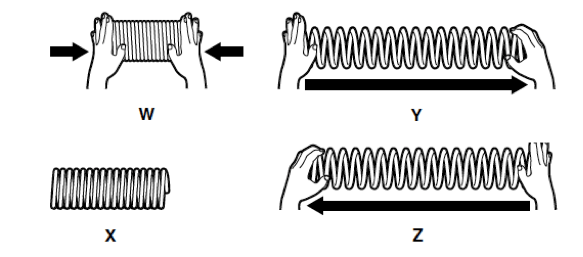
Elastic potential energy is energy stored in an object, such as a spring, due to the object being stretched or compressed. In which position is it most likely that the spring has lost its elastic potential energy?
W
Y
X
Z
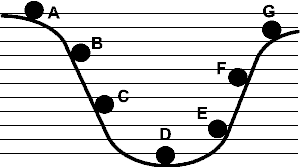
At which point does the ball has the greatest gravitational potential energy (GPE)?
A
G
D
C
G
Which would have the LEAST gravitational potential energy (GPE)?
A ball sitting on the ground
Moon viewed from the Earth
An airplane flying 30,000 feet above the ground
A rock sitting on top of Mt. Everest


What are the two factors that affect kinetic energy?
time and energy
power and mass
mass and velocity
time and work


Where would you find the least kinetic energy?
W
X
Y
Z
Where would you find the least potential energy?
W
X
Y
Z
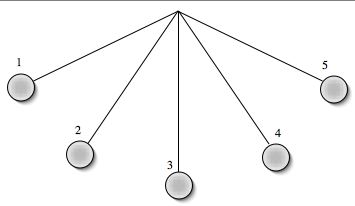
When a pendulum swings, at which point is kinetic energy highest?

A bicycle rider is traveling up a hill. When the rider reaches the top of the hill, she stops to rest. Then she travels down the hill. The diagram shows the rider in the three different positions. Which of these correctly describes the potential energy and the kinetic energy of the bicycle rider?
When the rider is at the top of the hill, her potential energy is the greatest, and her kinetic energy is the least.
As the rider moves up the hill, her kinetic energy increases, and her potential energy decreases.
When the rider goes down the hill, her potential energy increases, and her kinetic energy decreases.
As the rider reaches the bottom of the hill, her kinetic energy and her potential energy decrease.

Which point represents maximum potential energy?
W
X
Y
Z

The diagram shows a child on a swing. The child is swinging back and forth between points X and Z, through point Y. Points X and Z are at the same height. Which of the following statements best describes the kinetic energy and the gravitational potential energy of the child?
The child has no potential energy and no kinetic energy at position X and position Y.
The child has the same kinetic energy and potential energy at position X and position Y.
The child has more potential energy and less kinetic energy at position X than at position Y.
The child has more kinetic energy and less potential energy at position X than at position Y.

What energy is an arrow pulled back
Kinetic
Potential
A compressed spring is an example of ____
Gravitational Potential Energy
Chemical Potential Energy
Elastic Potential Energy
Electrical Potential Energy
Differences in gravitational potential energy depend on an object's _________.
mass and speed
mass and height
height and speed
mass only
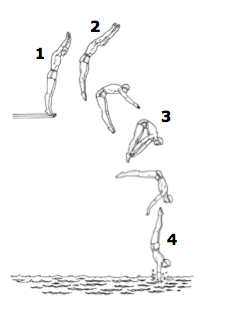

What type of energy is greatest when the cannonball is at point C?
kinetic energy
potential energy
elastic energy
compressed energy

Which ball has the greater potential energy and why?
The blue ball has more PE because it is closer to the ground.
The blue ball has more PE because it has more mass.
The green ball has more PE because it's height is greater.
The green ball has more PE because it has less mass.

Why does Object C have greater potential energy than both Objects A and B?
It has the same height as Object B and the same mass as Object A.
It is more massive than Object B and has a higher position than Object A.

When you stretch a rubber band, you are storing __________ energy.
kinetic
potential


What type of energy is food energy stored in your muscles?
mechanical
nuclear
thermal
chemical
Which of the following is the correct chain of energy that takes place when a flashlight is turned on?
chemical => electrical => light
mechanical => electrical => light
nuclear => chemical => light
thermal => chemical => mechanical

Is the energy in a battery, chemical or electrical (Not connected to any devices)?
electrical
chemical
thermal
thermal
According to the law of conservation of energy, the total amount of mechanical energy in a system ____.
remains constant
changes constantly
increases
decreases

Pick the correct formula to solve for Kinetic Energy.
KE = 1/2mv2
KE = mgh
KE = d/t
v2 = 2KE/m
Pick the correct formula to calculate for Potential Energy.
PE = 1/2mv2
PE = mgh
m = PE/gh
h = PE/mg
Wind is what type of energy?
Renewable
Non-Renewable

Hydroelectric dams use ______________ to turn the turbines.
electricity
wind
rushing water
heat from the earth

Solar energy uses solar panels to capture energy from the sun and turn it into ____________.
electricity
sound
fuel
coal

Renewable resources are things that we can ________________.
only use once
burn
dig up from the ground
use over and over again

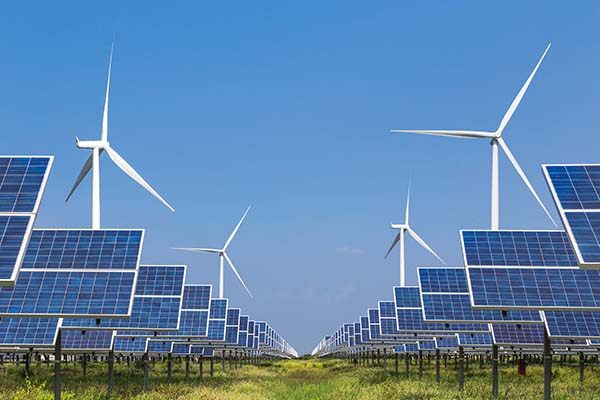
The following picture is an example of what energy source?
Wind
Biomass
Coal
Hydroelectric power
What is the primary purpose of a wind turbine?
To create sound
To store water
To produce electricity
To generate heat

A teacher rubbed a match against a piece of sandpaper. The match started to burn. Which statement best describes the energy changes that occurred?
The chemical energy stored in the match changed to thermal energy and light energy
The thermal energy stored in the match changed to light energy and chemical energy
The light energy and thermal energy stored in the match changed to mechanical energy
The light energy and thermal energy stored in the match changed to chemical energy

What energy transformations occur when a wind turbine is spinning?
Mechanical energy to electrical energy
Electrical energy to mechanical energy
Thermal energy to mechanical energy
Chemical energy to mechanical energy

What best describes the energy conversion that occurs when you turn on a hair dryer?
electric to kinetic to thermal and sound
chemical to thermal to light and sound
nuclear to electrical to thermal and sound
kinetic to light to thermal and sound
What energy transformations take place when a battery operated radio is in use?
electrical to chemical to sound
thermal to nuclear to electrical
chemical to electrical to sound
chemical to sound to thermal
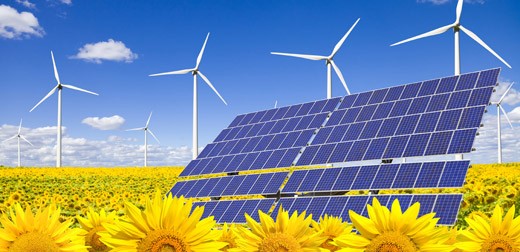
__________ is an energy resource that WILL NOT run out in the next several hundred years.
Renewable Energy Resource
Nonrenewable Energy Resource
Fossil fuels
biodegradable
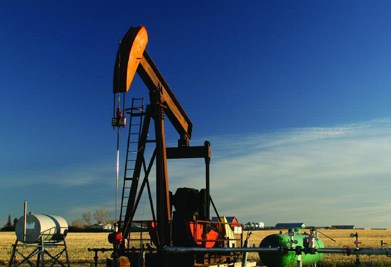
__________ is an energy resource that WILL run out in the next several hundred years.
Renewable Energy Resource
Nonrenewable Energy Resource
natural resources
pollution
What are renewable resources?
A limited amount and cannot be replaced in a human life time.
Plastic bags
Coal, oil, and natural gas
Can be replaced in our lifetime through natural processes

Trees are renewable resources.
True
False

Coal is a renewable resource.
True
False

Wind is a renewable resource.
True
False

Oil is a renewable resource.
True
False
This type of resource is cleaner for the environment.
renewable
nonrenewable

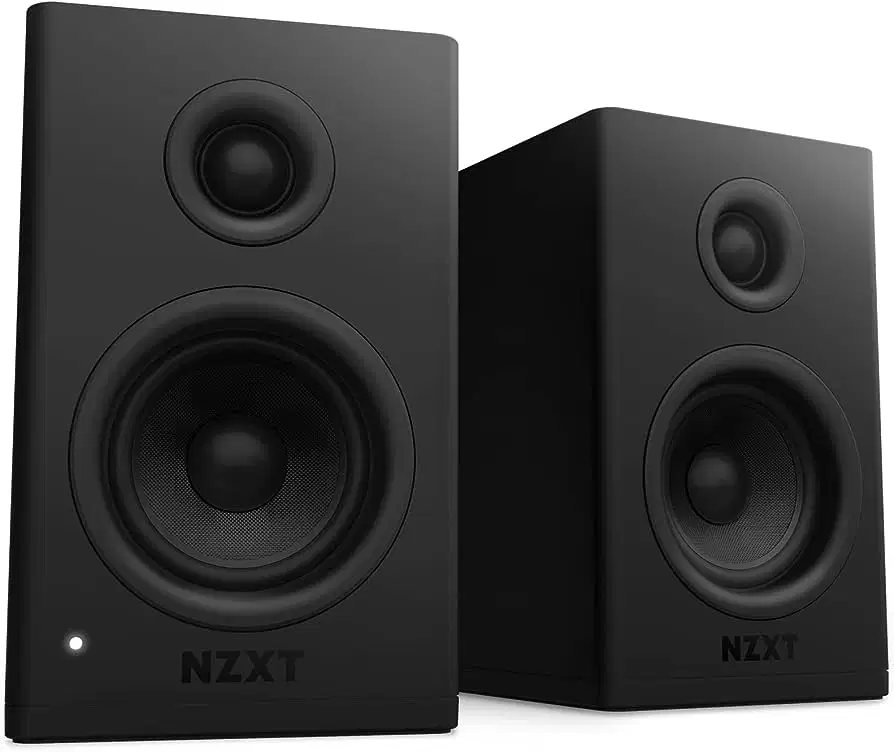
A stereo speaker
thermal to radiant
electrical to sound
electrical to radiant
sound to radiant
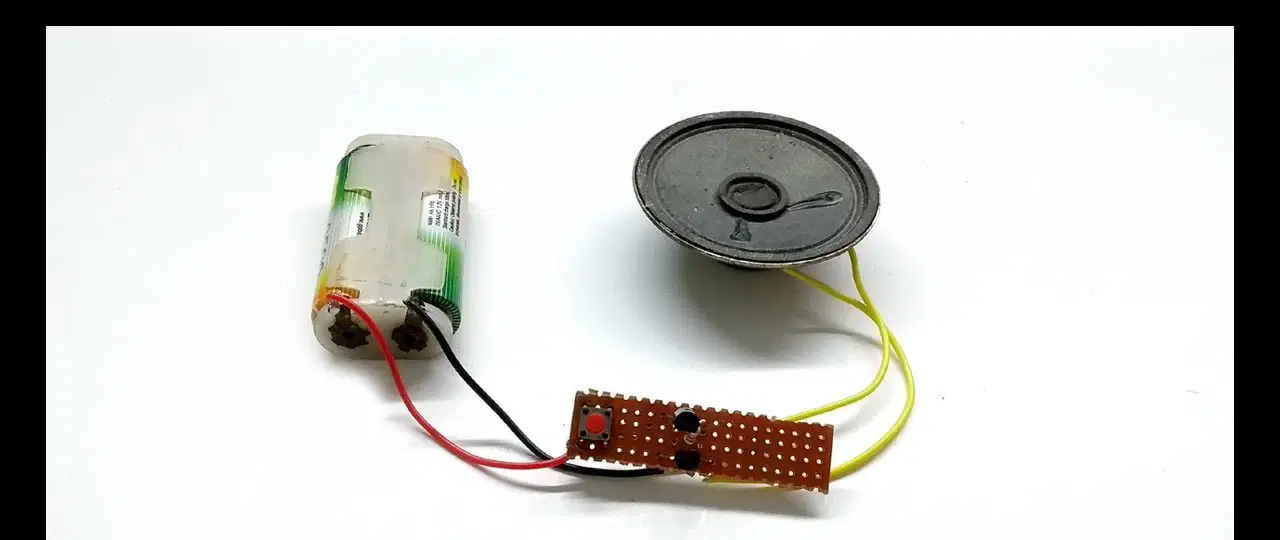
Circuit with a bell
chemical to radiant to thermal
chemical to thermal to sound
chemical to electrical to sound
sound to electrical to chemical
This kind of energy is almost always produced during an energy transformation
Mechanical
Radiant
Thermal
Chemical
What is the KE of a football which has a mass of 0.8 kg and is kicked at a velocity of 10m/s?
80 J
3.2 J
160 J
40 J

What is the kinetic energy of a zorb and human with a total mass of 90Kg rolling at 10m/s?
3,700J
900J
4,500J
6,500J
What is the kinetic energy of a 4kg shotput thrown with a velocity of 13m/s?
676 J
3.25 J
17J
338 J
You serve a volley ball with a mass of 2.1 kg. The ball leaves your hand with a speed of 30m/s. How much kinetic energy does the ball have?
1890 J
3780 J
945 J
31.5 J
A golf pro swings his driver which has a mass of 0.75Kg at a velocity of 60 m/s. Calculate the kinetic energy of the club.
2700 J
16.9 J
1350 J
45 J
A crate with a mass of 15.3 kg is pulled 9.2 m up in order to place it on top of a shelf. Calculate the GPE of the crate.
140.76 J
1.66 J
1,379.4 J
5.89 J
What is the kinetic energy of a zorb and human with a total mass of 90Kg rolling at 10m/s?
3,700J
900J
4,500J
6,500J
Calculate the gravitational potential energy of a 65 kg climber on top of Mount Everest (8.8 km high). (G=9.8m/s2)
6864.3 J
5605.6 J
7206 J
None of the answers are correct
A rabbit of mass 3 kg walks at a hops at a speed of 0.5 m/s. Calculate its kinetic energy.
0.5 J
0.75 J
0.255 J
0.375 J

