
 Worksheets
Astro 1500 - Exam Review Pt 2
Total questions: 25
Worksheet time: 13mins
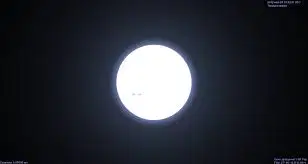
What will the sun become at the end of it's life?
Brown Dwarf
White Dwarf
Neutron Star
Black Hole
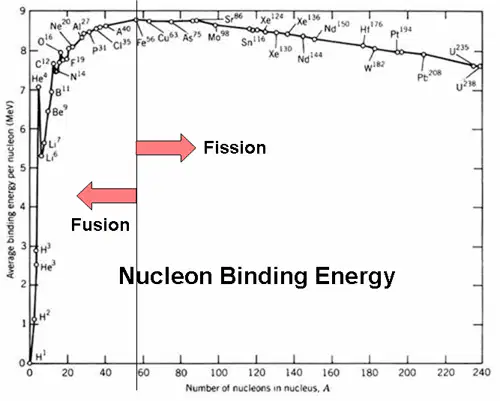
What is the last element stars will fuse before they die?
Helium
Carbon
Iron
Uranium

Alrighty then smart guy, then how is there gold in my phone right now?
There isn't
It was made in colliders on earth
Created in other astronomical phenomena (supernovae, etc.)
Results of chemical reactions on earth

Rank these from strongest to weakest: Neutron Degeneracy Pressure , Fusion Pressure, Electron Degeneracy Pressure
Fusion, Electron, Neutron
Electron, Fusion, Neutron
Neutron, Election, Fusion
Electron, Electron, Electron

What would happen to the earth if the moon were replaced by a black hole of mass equal to the moon?
Tidal Forces would rip the earth apart
Nothing much, tides would still be the same too
It would slowly spiral inwards
It would leave earth's orbit and begin orbiting the sun
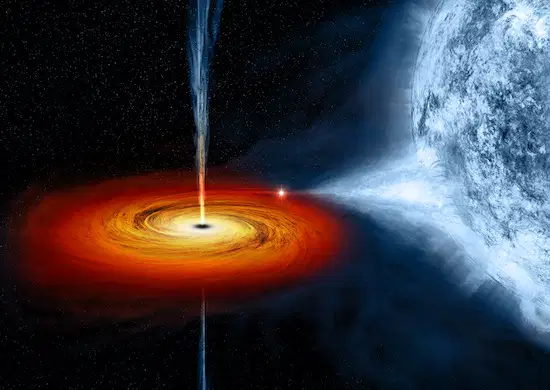
What does the solar system orbit?
The black hole at the middle of the milky way
The cumulative center of mass of everything in the milky way
Proxima Centauri
Nothing, the solar system only experiences random motion about the disk of the milky way

If you triple the mass of a black hole, by how much does the escape velocity on the surface change?
1/3
3
9
It does not change
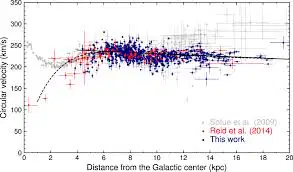
What is our best evidence for dark matter?
Rotation curves of stars in our galaxy
Obscuration of light from far away stars
Mysterious x-ray emissions from massive parts of galaxies
All of the above

Very roughly, how many stars formed in the milky way last year?
6
10 million
1 billion
100 billion

How do we know what happens during galaxy mergers?
Our galaxy merged with another in 1995, just ask an astronomy >30 yrs old
Computer Simulations and observations of nearby galaxies
CMBR perturbations
The spin-flip line in hydrogen

Where do elliptical galaxies generally form?
In large voids of space
In dense areas of galaxies
13th and grand
At least 5 Mpc from the nearest other elliptical galaxy (Pauli Exclusion Principle)

We have direct, observational evidence for which kinds of black holes?
Primordial
Stellar Mass
Intermediate mass
Supermassive
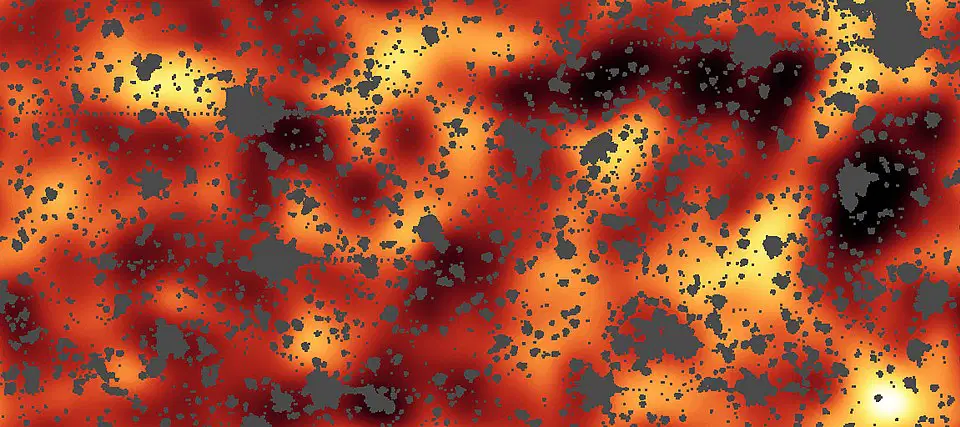
Where are we most likely to find population I stars in the milky way?
The disk
The center
The Halo
The image in the top left
A neutron star will results from which of the below candidate stars?
A star is 1.2X solar masses
A star with 8X solar masses
A star with 15X solar masses
A star with 0.5X solar masses
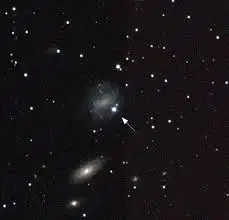
A short duration GRB is caused by ____, and a long duration GRB is caused by ____
A Black Hole, Merging Black Holes
Merging Neutron Stars, Hypernovas or Collapsars
Hypernovas or Collapsars, Supernovas
Pulsars, Merging Neutron Stars
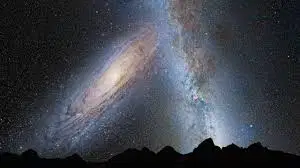
Is our galaxy moving towards or away from andromeda?
Towards, the Universe is contracting and pulling everything together
Towards, locally, gravity is strong enough to overpower the universe's expansion
Away, locally, gravity is repulsive
Away, the universe is expanding and pulling everything apart
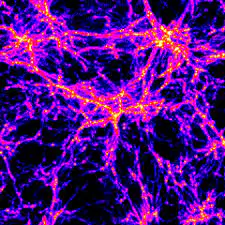
The mass of galaxies themselves are not enough to hold together huge filaments of material, what makes up the difference?
Dark Energy
Dark Matter
The mass of the stars in the galaxies
Nothing, these filaments are a momentary fluctuation of matter
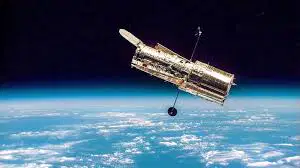
What disproved Einstein's notion that the universe is static and unchanging?
Copernicus discovering the heliocentric orbit (meaning we move around the universe)
Hubble's discovery the universe is expanding
Supernovae
The 1919 solar eclipse

Of these options, which is the oldest?
Globular Clusters
Open Clusters
Galaxy Clusters
Black Holes

What wavelength did the CMBR emit at 380,000 years post big bang?
IR
Visible
Microwave
Gamma Ray
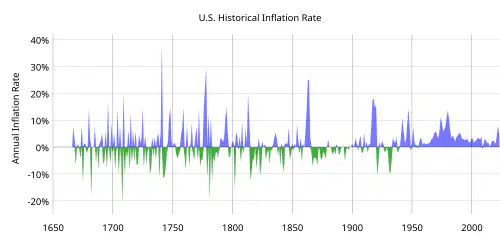
What is inflation in Astronomy?
A period after the big bang where small scale density waves because large scale structures
Everything gets more and more expensive which makes it harder for astronomers to get jobs
A star quickly increases in size while not at the end of it's life
Gas prices going up
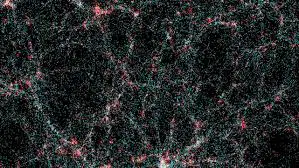
Gravity would resist expansion of the universe, what overpowers gravity to accelerate this expansion?
Dark Matter
Dark Energy
Neutron Degeneracy Pressure
Electron Degeneracy Pressure
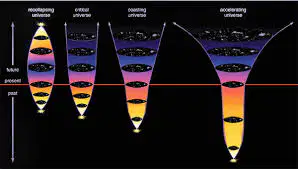
What percent of the universe is dark energy, by mass?
5%
27%
68%
95%
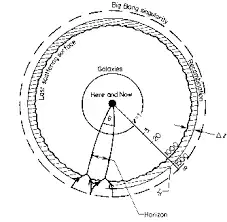
Rank the boundaries of the universe from innermost to outermost.
Surface of last scattering, Hubble sphere, Particle horizon
Particle horizon, Surface of Last Scattering, Hubble Sphere
Hubble sphere, Surface of last scattering, Particle Horizon
The universe has no boundary

What is the generally accepted value for H0?
68 m/s/Mpc
35 km/s/Mpc
70 km/s/pc
None of these options

