
 Worksheets
Hydraulic System Components 1: Objectives and Understanding
Total questions: 29
Worksheet time: 29mins
Which Principle applies to the operation of a hydraulic system based on?
Pascal’s Law
Newton’s Law
Boyle’s Law
Ohm’s Law
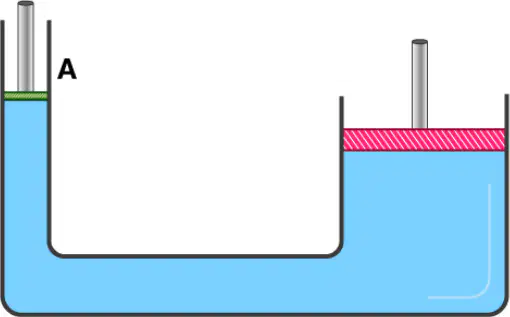
What does Pascal's Law state about pressure applied to a confined fluid?
Pressure is transmitted equally in all directions
Pressure is only transmitted upwards
Pressure is transmitted only to the nearest wall
Pressure is not transmitted at all

Which of the following is enabled by Pascal's Law?
Hydraulic force multiplication
Electrical current flow
Magnetic field generation
Thermal expansion

To which components does the brake pedal connect mechanically?
Servo and master cylinder
Steering wheel and tires
Battery and alternator
Radiator and fan

What does the brake pedal provide to indicate the condition of the brake system?
Pedal feel
Engine noise
Dashboard light
Air conditioning

What is the function that initiates movement in a hydraulic system layout?
Input force (pedal/actuator)
Output movement
Load Sensing Valve
Master cylinder

Which part of the hydraulic system layout is responsible for transferring fluid between components?
Pipes and hoses
Brake Servo
Wheel cylinder / caliper
Output movement
Which part's condition is specifically mentioned to be checked during pedal inspection?
Rubber pad
Steering wheel
Headlights
Seat belt
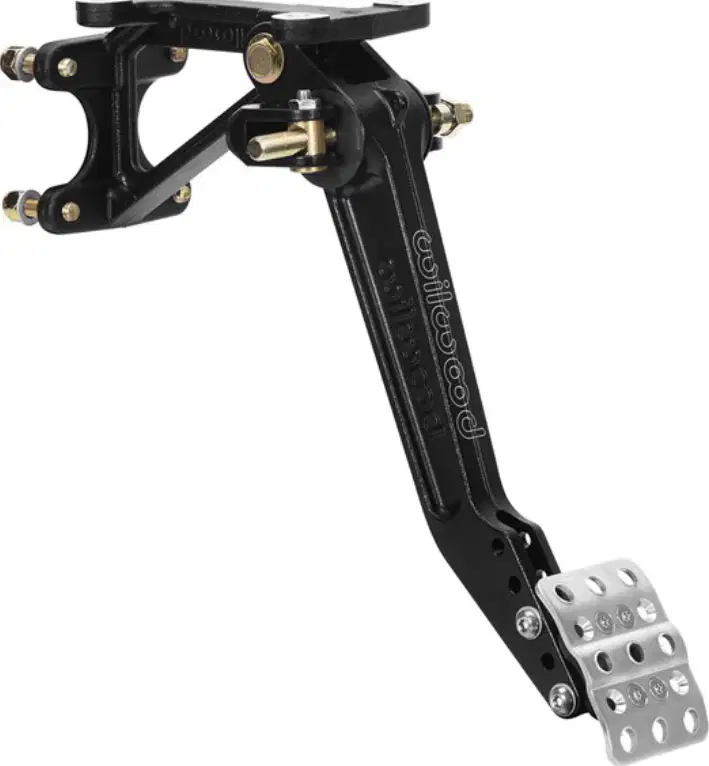
What is one of the actions to inspect in a vehicle pedal?
Pedal return action
Tire pressure
Fuel injection
Air conditioning
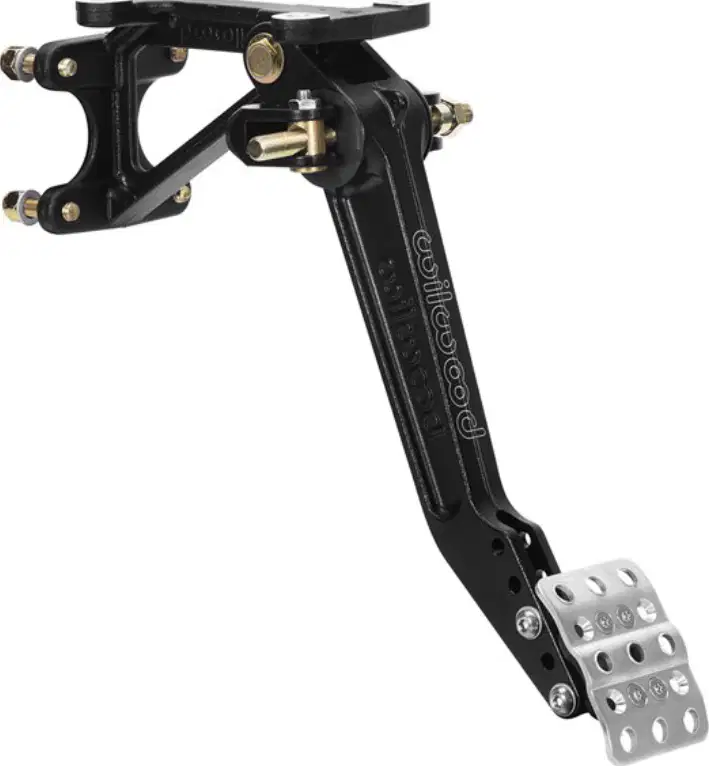
Which component is checked for wear and movement during pedal inspection?
Pedal pivot & bushes
Radiator cap
Door hinges
Window glass
What is a possible symptom of excessive free play in a pedal?
Reduced grip, safety risk
Long pedal travel, delayed braking response
Side-to-side wobble, squeaks, sloppy feel
Pedal slow to return, drag feel
Which type of assist can a brake servo use?
Hydraulic or pneumatic assist
Vacuum or electronic assist
Manual or automatic assist
Thermal or magnetic assist
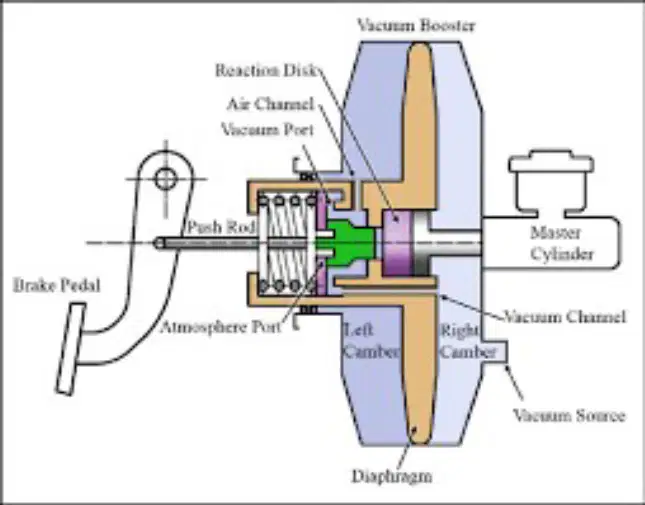
What is the main function of a brake servo (vacuum brake booster) in a vehicle's braking system?
To reduce the effort needed on the brake pedal
To increase the speed of the vehicle
To cool the brake system
To lubricate the brake pedal
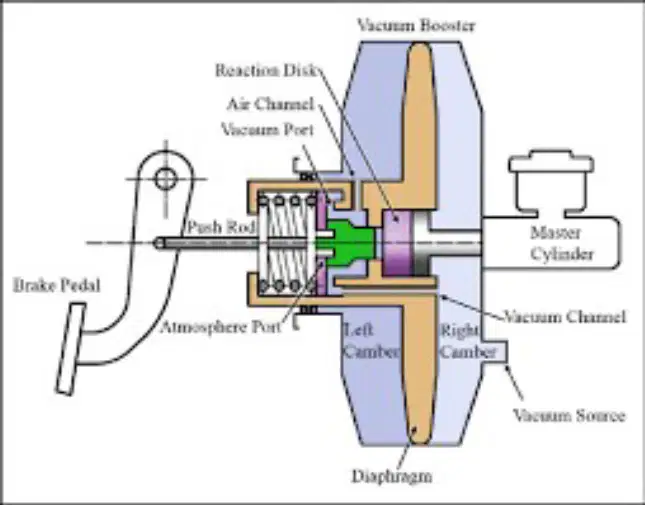
What happens when you press the brake pedal in a system with a vacuum brake booster?
Atmospheric pressure fills one chamber while the other stays under vacuum
Both chambers fill with atmospheric pressure
Both chambers stay under vacuum
The vacuum is released from both chambers
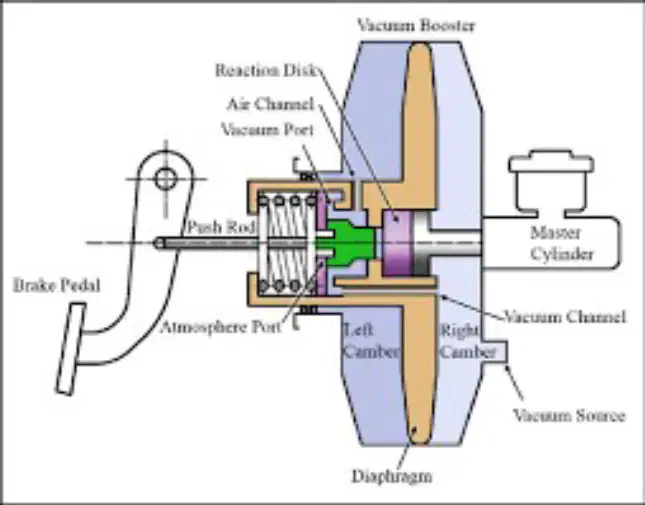
If vacuum is lost in a brake servo system, what happens to the brake pedal?
The pedal becomes much harder to press
The brakes stop working completely
The pedal becomes easier to press
The master cylinder is bypassed
What should you check during a brake system inspection related to vacuum?
The vacuum source and hoses
The tire pressure
The windshield wipers
The battery terminals
During a brake system inspection, what should you listen for?
Vacuum leaks
Engine knocking
Radio static
Exhaust noise
Which of the following should be checked while driving as part of a brake system inspection?
Brake pedal feel
Air conditioning temperature
Headlight brightness
Windshield clarity
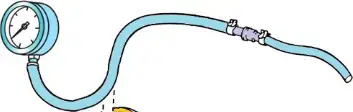
What is the first step in using a vacuum tester according to the instructions?
Start the engine
Connect the vacuum gauge to the servo vacuum hose or with a T-piece
Read the vacuum level
Turn the engine off
A good vacuum reading but a hard pedal during a test most likely indicates what problem?
Servo diaphragm failure
Faulty check valve
Leaky valve
Loose valve guides
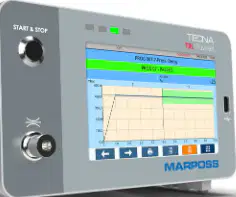
Which of the following is a type of testing tool shown in the image?
Pressure Decay Test
Temperature Test
Vibration Test
Color Test
Which common fault is associated with a hard brake pedal, hissing sound, poor brake assist, and braking requiring more effort?
Vacuum leak in hose
Blocked/kinked vacuum hose
Internal servo air valve sticking
Contaminated or water-ingressed servo
Reduced brake assist at idle, intermittent hard pedal, and poor braking when engine load is high are symptoms of which fault?
Low vacuum supply (engine or pump issue)
Vacuum leak in hose
Contaminated or water-ingressed servo
Internal servo air valve sticking
If the pedal feels “notchy” or slow, braking response is delayed, and assist is inconsistent, which fault is most likely present?
Internal servo air valve sticking
Vacuum leak in hose
Blocked/kinked vacuum hose
Contaminated or water-ingressed servo
Which of the following components are found in a master cylinder?
Primary and secondary pistons
Spark plugs and wires
Gears and belts
Valves and springs
What does the master cylinder work with to function properly?
Fluid reservoir
Air filter
Radiator
Battery
What is the purpose of seals in a master cylinder?
Maintain pressure
Increase temperature
Reduce noise
Control speed
Which inspection check focuses on the connection between the servo and master cylinder?
Servo-to-Master Cylinder Interface
Visual Checks
Fluid Checks
Road Test Symptoms

Which inspection check is performed to identify symptoms during a road test?
Road Test Symptoms
Fluid Checks
Visual Checks
Pedal Operation Checks

