
 Worksheets
Science 8 pre quarter exam
Total questions: 84
Worksheet time: 2hrs 35mins
Energy that an object has due to its motion, shape, position, or a combination of these factors.
Nuclear Energy
Mechanical Energy
Electrical Energy
Chemical Energy
Energy that is stored in the nucleus.
Chemical Energy
Mechanical Energy
Thermal Energy
Nuclear Energy
A nuclear reaction when a nucleus splits into smaller pieces.
Fusion
Fission
A nuclear reaction when small nuclei combine to form one large nucleus.
Fusion
Fission
The center of an atom is called the ______________.
electron
nucleus
liquid
neutron
Nuclear energy is released through a _____________________.
chemical reaction
physical change
nuclear reaction
chemical change
Objects that are very ________ have a lot of thermal energy.
hot
cold
big
small
The total potential and kinetic energy of particles in an object is called _______________________. It can also be called heat energy.
mechanical energy
chemical energy
electromagnetic radiation
thermal energy
Energy stored in chemical bonds.
chemical energy
nuclear energy
electrical energy
electromagnetic radiation
We get chemical energy from our (a) .
Energy of electric charges.
mechanical energy
electrical energy
thermal energy
electromagnetic radiation
Different charges can result in ________________.
sunlight
heat
electricity
chemical bonds
Form of kinetic energy that travels through space in waves.
Electromagnetic Radiation
Electrical Energy
Chemical Energy
Nuclear Energy
Electromagnetic radiation does not need a (a) to travel through.
Nuclear power plants use _____________ to create electricity.
fission
fusion
Which of the following is NOT an example of electromagnetic radiation?
X-Rays
Microwaves
Phone Signals
Drinking Water
Radio Waves
Which type of energy is most closely related to temperature?
chemical energy
thermal energy
mechanical energy
nuclear energy
Which types of energy are only potential energy?
nuclear
thermal
electrical
chemical
electromagnetic
Which types of energy are both potential and kinetic?
electromagnetic
mechanical
thermal
nuclear
electrical
Which type of energy is only kinetic energy?
electromagnetic
thermal
nuclear
mechanical
Which temperature scale has no negative temperatures?
Celsius
Fahrenheit
Kelvin

Device/Object that measures temperature.
Thermal energy
Temperature
Thermometer

The absolute coldest anything can get.
In Celsius it's -273.15 degrees. Or 0 degrees Kelvin.
Absolute cold
Kelvin
Absolute zero
which is the metric scale?
Fahrenheit
Celsius
Kelvin
What is the definition of CONDUCTION?
When heat is transferred from objects like rays of light or electromagnetically.
a hot liquid or air that expands, becomes less dense, and rises or becomes more dense, and sinks.
When heat transfers from objects that are touching.
What is the definition of CONVECTION
When heat transfers through waves.
When heat transfers from objects that are touching.
a hot liquid or air that expands, becomes less dense, and rises or becomes more dense, and sinks.
What kind of heat transfer happens when the sun is heating your body?
Conduction
Radiation
Convection
Density changes are responsible for which method of thermal energy transfer?
conduction only
convection only
radiation only
What are Conductors?
A conductor is a material that allows heat to move through it easily
an insulator
A material or an object that does not easily allow heat, electricity, light, or sound to pass through it. Air, cloth and rubber are good electrical insulators; feathers and wool make good thermal insulators. Compare conductor.
What is a example of a conductor?
wood
metal
rubber
What is Thermal expansion?
The transfer of thermal energy between materials by the collisions of particles
Is a decrease in a materials volume when temperature decreases
An increase in a materials volume when temperature increases
The amount of energy required to raise the temperature 1ºC for every kilogram is called____?
Thermal Energy
Specific Heat
Temperature
What has particularly high specific heat?
Water
Gases
Metals
What is a example of a insulator?
metal
rubber
silver
The kind of heat transfer that travels through space in electromagnetic waves is ______________________.
insulation.
Radiation
Conduction
In heat transfer, heat always flows from the _______________ substance to the _______________ substance.
Hotter to colder
Colder to hotter
Hotter to hotter
What is Thermal expansion?
The transfer of thermal energy between materials by the collisions of particles
Is a decrease in a materials volume when temperature decreases
An increase in a materials volume when temperature increases
What is the difference between a conductor and an insulator?
An insulator allows heat to flow through it easily and a conductor does not
A conductor allows heat to flow through it easily and an insulator does not.
An insulator is magnetic and a conductor is not
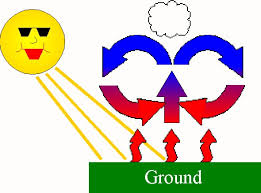
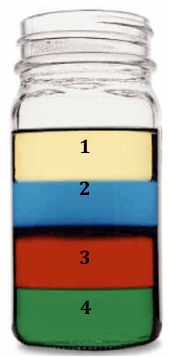
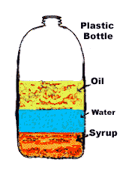

As an object is heated its density
increases
decreases
remains the same


Which of the options is the scientific explanation for a WAVE?
Any disturbance that transfers energy from place to place
Something you can surf on.
A transfer of thermal energy from one medium to another.
When molecules disperse as a result of Charles' Law
What is a medium?
Someone that talks to ghosts.
A material/matter in which a wave travels through.
The length of a transverse wave.
An absence of all matter
What is the scientific definition of a vacuum?
A straw or syphon that transfers liquid when suction is applied.
A device that cleans the floors using suction.
An absence of matter.
Which type of wave must have a material to transfer through?
Electromagnetic radiation
Mechanical waves
Radio waves, x-rays, and microwaves are all examples of what?
The light spectrum
Electromagnetic radiation
Potential energy
1980s New Wave music
Which of these images show a transverse wave?


What wave feature is B indicating on the diagram?
crest
trough
amplitude
wavelength
What wave feature is D indicating on the diagram?
crest
trough
amplitude
wavelength
What wave feature is G indicating on the diagram?
crest
trough
amplitude
source of energy
What wave feature is C and E indicating on the diagram?
crest
resting position
amplitude
wavelength
What term does the following sentence describe?
The distance between the highest point of a wave crest and the resting position of the wave is the _________.
frequency
amplitude
trough
resting position
Which of these images show a longitudinal wave?
True or false?
A transverse wave travels perpendicular (at 90 degree/right angles) to the direction of the wave source's energy?
True
False
Which wave travels in the SAME DIRECTION as the vibrations that are produced my the source?
Longitudinal
Transverse

What type of wave is shown in this image?
Transverse wave
Longitudinal wave

What type of wave does this image display?
Transverse wave
Longitudinal wave
You place a ping pong ball in a wave machine that is producing transverse waves. Which of these statements is true about the ball?
The ball will travel in the direction of the wave
The ball will travel against the direction of the wave.
The ball will bob up and down and remain in the same position.
The ball will sink below the surface of the water.
Fill in the blank:
The distance a wave travels from crest to crest in know as the _________.
Frequency
Wave length
trough
refraction

What is letter A indicating?
Wave compression
Wave rarefaction
What is letter B indicating?
Wave compression
Wave rarefaction

