
 Worksheets
Bio Monster Review Fall 25
Total questions: 100
Worksheet time: 3hrs 20mins
Living things are made up of units called
DNA
Cells
Homeostasis
Seeds
If an organism is made entirely of one cell it is called...
Multicellular
Prokaryotic
Unicellular
Eukaryotic
The combination of chemical reactions through
which an organism builds up or breaks down
materials as it carries out its life processes is called ...
absorption
metabolism
digestion
consumption
Maintaining a stable internal
environment is called
homeostasis
equilibrium
balance
evenness
Reorder the following with the smallest on the left
quark
subatomic particle
atom
molecule
organelle
Reorder the following with the smallest on the left
organelle
cell
tissue
organ
organ system
Reorder the following with the smallest on the left
organism
population
community
ecosystem
biome
Biology is the study of...?
animals
plants
bacteria
life (all living things)
What are the 3 domains of life? (Select all 3)
Animalia
Eukarya
Bacteria
Archaea
Plantae
Which of the following is the correct form for writing a scientific name?
Pomacea bridgesii
Pomacea bridgesii
Pomacea Bridgesii
pomacea bridgesii
Pomacea Bridgesii
Match the following Kingdoms with the Types of Cell Walls they can have:
Animalia
No Cell Walls
Fungi
Chitin Cell Walls
Bacteria
Peptidoglycan Cell Walls
Plantae
Cellulose Cell Walls
Protista
No cell wall or chitin or cellulose wall
Put the following levels of Taxonomy in Order from broadest on the left to most specific on the right
Domain
Kingdom
Phylum
Class
Order
Ursus americanus is the American Black Bear and Ursus maritimus is the Polar Bear. Select all of the following which polar bears and black bears have in common:
Same Domain
Same Species
Same Genus
Same Class
Same Kingdom
Which Kingdom has Peptidoglycan cell walls?
Archaea
Plantae
Fungi
Bacteria
Animalia
David and Jen did an experiment to see whether or not earth worms like certain foods. To do the test, they got a piece of paper, wet it slightly, and placed three earthworms in the center. They then put ketchup on one corner of the paper, maple syrup in the second corner, cooked oatmeal in the third corner, and they did not put anything in the final corner. David and Jen then watched the earthworms for 10 minutes, and recorded which direction the earthworms traveled and where they were at the end of the 10 minutes.
In this experiment, which of the following is the control group?
the location of the worms at the end of the experiment
the number of earthworms
the water on the paper
the type of food on the three corners
the corner without anything
David and Jen did an experiment to see whether or not earth worms like certain foods. To do the test, they got a piece of paper, wet it slightly, and placed three earthworms in the center. They then put ketchup on one corner of the paper, maple syrup in the second corner, cooked oatmeal in the third corner, and they did not put anything in the final corner. David and Jen then watched the earthworms for 10 minutes, and recorded which direction the earthworms traveled and where they were at the end of the 10 minutes.
In this experiment, the (a) was the independent variable and the (b) was the dependent variable.
Match each part of a lab report with the best description:
Materials
List of things you needed to do the lab
Introduction
Background info. and initial question
Method
What you did step by step
Hypothesis
What you thought would happen
Data
The information collected during the lab
Label the Levels of Taxonomy
Species
Genus
Order
Phylum
Domain
Family
Class
Kingdom
One is testing fertilizers on tomato plants. In plant A, there is no fertilizer. In plant B, you are using one brand of fertilizer. In plant C, you are using a different fertilizer. Every week, the plants are measured to see which plant has grown the tallest.
Which is the control?
The plant
The Fertilizer
The height of each plant
The unfertilized plant
Name one common type of nucleic acid:
(a)
(a) are (b) that act as little machines to (c) reactions.
What is the abbreviation for the nucleic acid that has Deoxyribose for the sugar component of its nucleotides?
(a)
How many layers of structure does a protein have?
(a)
Cholesterol is an example of which type of Biomolecule?
(a)
Select ALL of the following atoms that Lipids always contain:
Match each function with the Biomolecule that is most responsible for that function:
Short-term Energy Storage
Long-Term Energy Storage
Speeds Up Reactions
Information Storage
Select the part of the phospholipid which is hydrophobic:
On the image, which dot represents the Nitrogenous Base?

The image shows what type of monomer?
A Fatty Acid
Fill in the labels on the stages of an enzymatic reaction
active site
enzyme
substrate
Match each Biomolecule to its Monomer:
Lipids
Fatty Acids and Glycerol
Carbohydrates
Monosaccharides
Proteins
Amino Acids
Nucleic Acids
Nucleotides
Sort the foods by which Biomolecule you would expect them to contain the most of:
Olive oil
Butter
Bread
Pasta
Cake
Lean Beef
Fish
Which part of the amino acid is referred to as the "variable side chain" because it is different between different amino acids?
Match the images by which Biomolecule they are an example of:
What type of bond holds amino acids together?
A hydrophilic bond
A hydrogen bond
A peptide bond
A gravitational bond
Match the vocabulary words and word parts with their meanings:
mono-
one
poly-
many
di-
two
saccharide
sugar
peptide
protein
Put the stages of the enzymatic reaction in order with the first stage on the left and the last stage on the right.
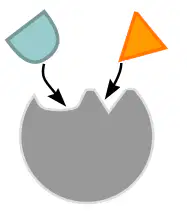


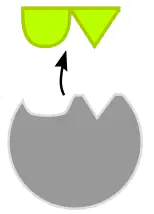
Which picture shows a line graph


None of them
Which picture shows a pie chart?
None of them
Match the following Biomolecules to their Function
Carbohydrate
Short-term energy storage
Protein
Enzymes and structural
Lipid
Long-term energy storage
Nucleic Acid
Information Storage
Catalase is an enzyme that breaks down ________ into water and oxygen.
Vinegar
Hydrogen Peroxide
Carbon Dioxide
Glucose
Ammonia
Enzymes fall under what category of biomolecule?
Protein
Carbohydrate
Lipids
Nucleic Acids
_________ are biological catalysts that speed up reactions in our body by lowering the activation energy.
Carbs
Hydrates
Enzymes
Nucleotides
Controls
All enzymes have an optimum temperature at which they work best. If a enzyme is heated too high above it's optimum temperature, the enzyme will unfold and stop working. This is called ______.
Nicking
Optimizing
Denaturing
Catalyzing

The graph shows the activity of an enzyme at different temperatures. What is the optimum temperature of the enzyme?
-5
40
30
62
55
The graph shows the activity of an enzyme at different temperatures. At about what temperature does this enzyme denature?
-5
40
30
62
55
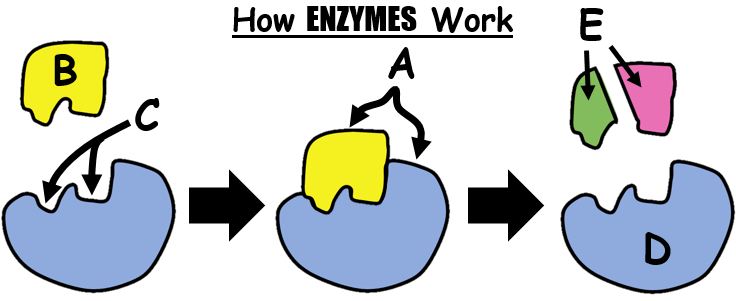
Match the letters in the diagram to the name of each part.
Enzyme-substrate complex
A
Enzyme
B
Substrate
C
Active Site
D
Product
E
One of the main reasons that some organisms can live at extreme temperatures and pH's is because they have enzymes which are adapted to work in those extreme conditions.
True
False
Label the parts of the nucleotide
Amino Acid
Fatty Acid
Glycerol
Phosphate Group
Sugar
Nitrogenous Base
Match the Image with the correct Nucleic Acid
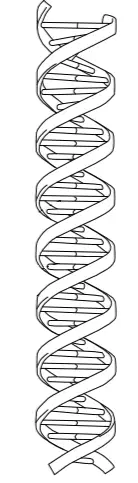
DNA

RNA
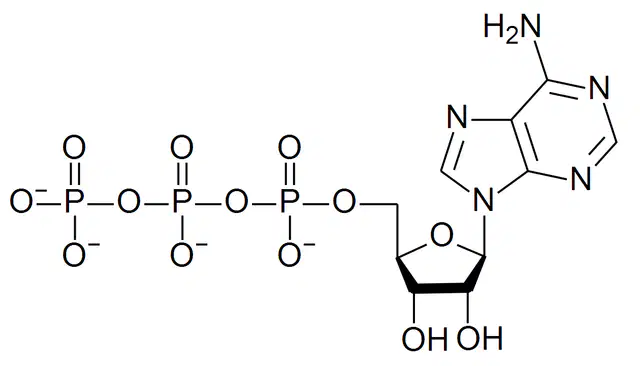
ATP
On the picture, which part represents a monomer?
Which part of an amino acid can be different from one amino acid to the next?
The Carboxyl Group
The Amine Group
The R Group
Your body can not produce all 20 amino acids. Some of them are called "Essential Amino Acids" because they have to come from our food. How many "Essential Amino Acids" are there?
(a)
Use the Sections below to compare an contrast Animal and Plant Cells
Has Cell Membrane
Has Cell Wall
Has Nucleus
Has Mitochondria
Has Lysosomes
Can have Chloroplasts
Has Golgi
Label which of the cells is a prokaryote and which is a Eukaryote

Students are trying to identify a few cells. Based on the table, Cell W is a (a) Cell, Cell X is a (b) Cell,
Cell Y is a (c) Cell,
and Cell Z is a (d) Cell.
Label the Animal Cell
Match the following functions/descriptions with the correct cell structure:
In all cells. Regulates what enters and leaves the cell
Cell Membrane
Produces ATP from sugar and Oxygen
Mitochondria
Fibers that give the cell structure and hold things in place inside the cell
Cytoskeleton
Provides extra support to the cell and helps protect
Cell Wall
Uses sunlight to Produce Glucose
Chloroplasts
Match the following functions/descriptions with the correct cell structure:
Small Machine that Produces Proteins
Ribosome
Holds DNA
Nucleus
Small container that transports materials around the cell
Vesicle
Sorts and packages materials
Golgi
Breaks down materials to be reused
Lysosome
Match the pictures with the correct organelle names

Golgi

Rough Endoplasmic Reticulum

Vesicle

Cytoskeleton

Mitochondria
Select ALL of the following that ALL cells have:
Cell Membrane
Cell Wall
Ribosome
Nucleus
Mitochondria

Is this a prokaryotic cell, eukaryotic cell, or virus?
Virus, because it has a nucleus
Prokaryotic cell, because it has a nucleus
Eukaryotic cell, because it has a nucleus
Eukaryotic cell, because it has a cell wall
what is the smallest unit of an organism that is classified as living?
an atom
a molecule
an organ
a cell
What type of microscope do we use in this science classroom?
compound light microscope
scanning electron microscope
tunneling electron microscope
magnifying glass
The viral infection cycle that will most rapidly cause cell destruction is called the _______ cycle.
lysogenic
lysozyme
lytic
lysol

The microscopic object shown has genetic material, but no cellular structure. It cannot reproduce on its own, and is measured in nanometers. It must be a:
Quetzalcoatlus
Virus
Prokaryotes
Eukaryotes
Which of the following is true for both bacteria and viruses?
both contain genetic material
can be killed using antibiotics
have a cell membrane
have a protein coat
One important way to control the spread of viruses in through
the use of vaccines
drinking a lot of tea
the use of other types of bacteria
the use of antibiotics
The use of what modern technology has cause the rise in resistant bacteria
vaccines
antibiotics
fertilizers
solar panels
What do viruses depend on for their reproduction?
A source of oxygen
An energy source
Living Cells
A blood supply
Which of the following occurs during a lytic infection?
Viral genes are quickly transcribed, and new viruses are made by the host cell.
The host cell is taken over by the virus over a long period of time.
The virus remains outside a living cell and absorbs the living cell's DNA.
Viral nucleic acid is inserted into the host cell's DNA, where it becomes a prophage.
The Genetic Material inside a virus is
Proteins
Lipids
Carbohydrates
DNA or RNA
A bacteriophage is
A virus that infects Bacteria
a type of Bacteria
a type of Vaccine
A type of medication
A bacteria that infects plants

A student produces a labeled drawing of a virus for a presentation. The student states that the capsid has a function similar to the nuclear membrane found in animal cells.
Which of these describes the similar functions of capsids and nuclear membranes?
Both transport proteins throughout the structures.
Both provide energy for activities in the structures.
Both protect genetic information for the structures.
Both code for the proteins needed for reproduction of the structures.
Viruses are
bigger than cells
same size as cells
smaller than cells
Which 4 things are viruses not able to do?
Grow + Develop
Obtain + Use Energy
Respond to Environment
Mutate + Evolve
Reproduce on their own
Sort the diseases by whether they are caused by a bacteria, a virus, or a prion
Tetanus
Strep Throat
Tuberculosis
Mad Cow Disease
Shingles
Flu
Lyme Disease
HIV/AIDS
Label the parts of a virus
Label the virus by which biomolecule each part is primarily composed of
Label the two possible cycles of a viral infection
Select the arm of the microscope
Select the stage
Select the focus knob
Select the objective lens
Select the nose piece
Select the base
Select all of the parts that you should be holding onto when carrying a microscope
A Venn diagram comparing viruses to bacteria is shown. Which traits apply to each section of the diagram?
Move the answers to the correct boxes.
Utilize a capsid structure
Have active metabolism
Contain genetic material
Replicate independently
Scientists observe the traits of cells on four microscope slides and record their observations in a table. Based on the scientists' observations, identify the cell type for each microscope slide in the table.
Move the correct answer to each box.
Prokaryotic Cells
Eukaryotic Cells
Eukaryotic Cells
Eukaryotic Cells

The Venn diagram compares two kingdoms.
Which labels could be used to fill in the blanks?
1: Multicellular
2: Unicellular
1: Unicellular
2: Multicellular
1: Heterotroph
2: Autotroph
1: Autotroph
2: Heterotroph
The function of an enzyme in a biochemical reaction is to --
raise the temperature of the system
speed up the rate of the reaction
increase the amount of substrate added
change the type of product formed
A student is looking at a classroom aquarium full of goldfish (Carassius auratus). The student tells a friend, "I love this community of goldfish."
Why is the student incorrect to classify the goldfish as a community?
A community has two or more species.
A community must exist outside.
A community must also inclue abiotic components.
A community must have multiple generations.

