

wayground logo

Free Printable Worksheets

Font size

S
M
L
XL
Worksheets

Geography and Culture Worksheet

Total questions: 148

Worksheet time: 2hrs 39mins

Name
Class
Date
1.

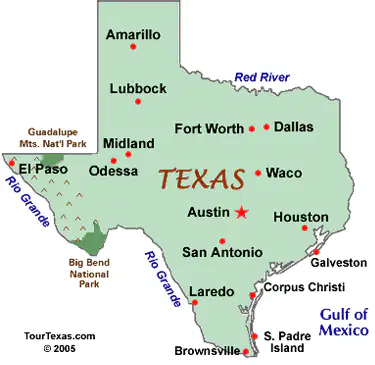
Name a city in Texas close to the ranges.

a)

Dallas

b)

Austin

c)

El Paso

d)

Houston

2.

The term used for shared beliefs, traits, and values.

a)

Religion

b)

Culture

c)

Language

d)

Custom

3.

13. The ________ is the largest body of water bordering Texas.

a)

Gulf of Mexico

b)

Pacific Ocean

c)

Atlantic Ocean

d)

Mississippi River

4.

__________ is on the northern border of Texas.

a)

Rio Grande River

b)

Red River

c)

Atlantic Ocean

d)

Gulf of Mexico

5.

__________ is the international border of Texas.

a)

Red River

b)

Rio Grande River

c)

Gulf of Mexico

d)

Mississippi River

6.

What is the capital of Texas and where is it located?

a)

Austin – Central Texas

b)

Dallas – North Texas

c)

Houston – South Texas

d)

El Paso – West Texas

7.

Which city is in the western tip of Texas?

a)

Houston

b)

Dallas

8.

Closest city to the Gulf of Mexico?

a)

Dallas

b)

Austin

c)

Galveston

d)

San Antonio

9.

What is a tributary?

a)

A river that floods yearly

b)

An underground layer that stores water

c)

A river or stream flowing into a larger river or lake

d)

A river mouth

10.

Artificial lake used for drinking, recreation, and irrigation.

a)

Tributary

b)

Aquifer

c)

Reservoir

d)

Bay

11.

What is an aquifer?

a)

A river that floods yearly

b)

An underground layer that stores water

c)

A lake created by humans

d)

A river mouth

12.

What is an important fact about lakes in Texas?

a)

Most are natural

b)

Most are man-made

c)

All are used for shipping

d)

They all connect to rivers

13.

What is the significance of Guadalupe Peak?

a)

It is the lowest point in Texas

b)

It is the longest river

c)

It is the highest point in Texas

d)

It is a famous battle site

14.

How is a plateau different from a mountain?

a)

Mountains are flat; plateaus are pointed

b)

Plateaus are flat on top; mountains rise to a peak

c)

Mountains have no elevation

d)

Plateaus are always coastal

15.

Which group brought their language and Catholic faith to Texas?

a)

Americans

b)

Africans

c)

Spanish

d)

Asians

16.

What landform is most common in Texas?

a)

Volcanoes

b)

Mountains

c)

Hills

d)

Canyons

17.

Texas is the leading producer of which energy source?

a)

Solar

b)

Wind

c)

Oil

d)

Nuclear

18.

Which region of Texas produces the most wind energy?

a)

Gulf Coast

b)

North and West Texas

c)

Hill Country

d)

Piney Woods

19.

What happens to precipitation from east to west in Texas?

a)

It increases

b)

It stays the same

c)

It decreases

d)

It becomes snow only

20.

Why does the Gulf of Mexico keep coastal land cooler in summer and warmer in winter?

a)

It creates more storms

b)

Water heats and cools slowly

c)

It blocks sunlight

d)

It creates a desert

21.

How does the landscape change from west to east Texas?

a)

Becomes drier and flatter

b)

Gets wetter and more forested

c)

Turns into desert

d)

Becomes mountainous

22.

In the past, most Texans lived in _______.

a)

Urban areas

b)

Rural areas

c)

Suburbs

d)

Coastlines

23.

Texas is mostly populated by people from other lands because…

a)

Everyone is required to move to Texas

b)

Immigration and migration bring diverse groups

c)

Native Texans moved away

d)

Texas advertises free land

24.

Which river forms the border between Texas and Oklahoma?

a)

Rio Grande

b)

Sabine

c)

Colorado

d)

Red River

25.

How does Texas’ growing population affect diversity?

a)

Fewer people move in

b)

It becomes less diverse

c)

More people from many backgrounds increases diversity

d)

Only one group moves in

26.

Early U.S. settlers settled in East Texas because:

a)

the land was fertile and good for farming

b)

it was close to major cities

c)

it had a cooler climate than other regions

d)

gold was discovered there

27.

Why did settlers choose to live in certain areas?

a)

It was closest to Mexico

b)

It reminded them of the land back home

c)

The land was fertile and had plentiful water

d)

They were forced to live there

28.

Why do some Texas regions have similar ethnic backgrounds?

a)

Everyone speaks the same language

b)

People like to settle near those similar to themselves

c)

The state requires it

d)

It happens randomly

29.

Climate, water, soil, and sun are agricultural resources.

a)

True

b)

False

30.

Cultural influences contributed to Texas include…

a)

Cars, airplanes, robots

b)

Art, food, religion, holidays, music

c)

Trade only

d)

Mountains only

31.

Name two nonrenewable resources.

a)

Water & wind

b)

Coal & natural gas

c)

Solar & wind

d)

Trees & sunlight

32.

Name two renewable resources.

a)

Oil & coal

b)

Solar & wind

c)

Natural gas & petroleum

d)

Copper & iron

33.

Animals common to TX forests & prairies include:

a)

Dolphins & sharks

b)

Raccoons & deer

c)

Alligators & whales

d)

Coyotes & penguins

34.

Animals common to TX waters include:

a)

Bears & cougars

b)

Dolphins & fish

c)

Wolves & elk

d)

Horses & deer

35.

River forming border between Texas & Louisiana:

a)

Red River

b)

Colorado River

c)

Sabine River

d)

Nueces River

36.

What is migration?

a)

Staying in one place

b)

Movement from one place to another

c)

Building a home

d)

Changing jobs

37.

Name the four ancient civilizations we studied.

a)

Maya, Inca, Aztec, Olmec

b)

Olmec, Toltec, Puebloans, Maya

c)

Aztec, Olmec, Hopi, Maya

d)

Maya, Apache, Inca, Aztec

38.

In what region of Texas was Moscoso exploring?

a)

West

b)

South

c)

East

d)

Panhandle

39.

Two specific ways Native tribes were different from each other include:

a)

Language and housing styles

b)

Favorite sports and movie preferences

c)

Internet usage and smartphone brands

d)

Car models and fashion trends

40.

Which of the following was a major difference among Native American tribes?

a)

All tribes were almost identical

b)

Language and leadership style

c)

Clothing and buildings were always the same

d)

They all had the same religion

41.

The Spanish expeditions to the Americas began with which explorer?

a)

Coronado

b)

Moscoso

c)

Columbus

d)

Pineda

42.

Tenochtitlán was the leader of the Aztecs.

a)

True

b)

False

43.

What was the result of the Narváez expedition?

a)

They found gold

b)

They settled Texas permanently

c)

The expedition shipwrecked and many died

d)

They reached Asia

44.

Spain had little interest in Texas after _____

a)

The Columbian Exchange ended

b)

Queen Isabella died

45.

On which expedition was oil discovered, later bringing great wealth to Texas?

a)

Pineda

b)

Narváez

c)

Coronado

d)

Moscoso

46.

What does the term “native” mean?

a)

Someone who moves often

b)

Someone originally from a place

c)

Someone who is a visitor

d)

Someone who studies plants

47.

Spaniards never really expected to find gold in Texas.

a)

True

b)

False

48.

What would be considered a success of Moscoso’s expedition?

a)

Finding large amounts of gold

b)

Discovering petroleum for the first time

c)

Learning about East Texas land and bison

d)

Establishing New Spain

49.

Who led the conquest of the Aztec Empire?

a)

Moscoso

b)

Coronado

c)

Cortés

d)

Pineda

50.

How did Cortés conquer the Aztecs?

a)

He was invited peacefully

b)

Superior weapons, disease, and alliances

c)

He had a larger army

d)

He bribed their leaders

51.

What two areas were the ancient civilizations from?

a)

Europe and Africa

b)

Asia and South America

c)

Mexico and Central/South America

d)

North and West Texas

52.

What were the two main reasons Spain wanted to take over the Americas?

a)

Adventure and better weather

b)

Wealth and to spread Christianity

c)

To escape Europe

d)

To bring democracy

53.

Which two major bodies of water did explorers cross to reach New Spain, and which direction were they traveling?

a)

Pacific → East

b)

Gulf of Mexico & Atlantic → West

c)

Arctic Ocean → South

d)

Amazon River → North

54.

Why would there be conflict between the Spanish and the Natives?

a)

They shared the same culture

b)

Spaniards wanted land already inhabited

c)

Natives invited the Spanish to rule

d)

No conflicts occurred

55.

Which of the following is NOT true?

a)

Spain claimed much of southern North America

b)

Texas was a buffer for New Spain

c)

Spain gained knowledge of land and people

d)

After defeating the Aztecs, Spain continued gaining riches beyond the Aztec wealth

56.

Spain is on which continent?

a)

Asia

b)

Africa

c)

North America

d)

Europe

57.

Conquistadores were _____

a)

Governors in New Spain

b)

Soldiers who led expeditions for gold, glory, and land

c)

Merchants

d)

Priests

58.

Much of Spanish exploration in the Southwest occurred because _____

a)

They enjoyed the desert

b)

Natives told them stories of cities of gold

c)

They had no other lands

d)

The climate was identical to Spain

59.

Pineda was known for _____

a)

Mapping the northern Gulf coast

b)

Conquering the Aztecs

c)

Governing New Mexico

d)

Finding Florida

60.

Onate was known for _____

a)

Governing a Spanish colony in New Mexico

b)

Mapping the Gulf

c)

Being the first conquistador

d)

Finding the Pacific

61.

People who move from place to place are called _____

a)

Travelers

b)

Wanderers

c)

Nomads

d)

Migrants

62.

Who were the first Texans?

a)

Spaniards

b)

Conquistadores

c)

Native peoples

d)

Americans

63.

A result of Columbus’ exploration was:

a)

the discovery of the Americas by Europeans

b)

the invention of the steam engine

c)

the signing of the Magna Carta

d)

the fall of the Roman Empire

64.

What was the Columbian Exchange?

a)

A. A peace treaty

b)

B. The transfer of plants, animals, and diseases between continents

c)

C. A slave trade

d)

D. A map-making expedition

65.

Give one positive and one negative result of the Columbian Exchange.

a)

Positive: New foods / Negative: Diseases spread

b)

Positive: Gold found / Negative: No trade

c)

Positive: Fewer crops / Negative: More war

d)

Positive: Less travel / Negative: No contact

66.

Explain the significance of the mustang horse.

a)

It caused the fall of the Aztecs

b)

It improved travel & hunting but changed Native culture

c)

It was only used for decoration

d)

It had no impact

67.

The Age of Contact was _____?

a)

a period when Europeans first made contact with Native Americans.

b)

a time when the Industrial Revolution began.

c)

an era of space exploration.

d)

a period of global internet expansion.

68.

When did the first interactions between Europeans and Natives occur in the Americas?

a)

When Texas became a state

b)

When Europeans and Natives first interacted in the Americas

c)

When cities were built

d)

A war between Spain and France

69.

Cabeza de Vaca had positive relations with Natives because _____

a)

He stole from them

b)

He fought them

c)

He lived among them as a healer and trader

d)

He conquered them

70.

How does the term “epidemic” relate to the chapters?

a)

Diseases brought by the Spanish killed many Natives

b)

Natives sent diseases to Spain

c)

Epidemics caused explorers to stop traveling

d)

Epidemics only harmed Europeans

71.

What area was considered “New Spain”?

a)

Present-day Florida

b)

Mexico and parts of the American Southwest

c)

All of Canada

d)

Only Central America

72.

Who is Sam HOuston ?

a)
Sam Houston was a famous musician from California.
b)
Sam Houston was a military and political leader in Texas history.
c)
Sam Houston was a fictional character in a novel.
d)
Sam Houston was a renowned scientist in the 19th century.
73.

Who was William B. Travis ?

a)
William B. Travis was a general in the Civil War.
b)
William B. Travis was a commander at the Battle of the Alamo.
c)
William B. Travis was a renowned author in the 19th century.
d)
William B. Travis was a famous Texas politician.
74.

Who was Jim Bowie?

a)
Jim Bowie was an American pioneer and soldier known for his role in the Texas Revolution.
b)
Jim Bowie was a political leader in the American Civil War.
c)
Jim Bowie was a renowned scientist known for his inventions.
d)
Jim Bowie was a famous musician from the 19th century.
75.

Who was James Bonham and Mobile Grays?

a)
James Bonham was a famous musician from Alabama; the Mobile Grays were a band that performed in Texas.
b)
James Bonham was a politician in the American Civil War; the Mobile Grays were a cavalry unit from Georgia.
c)
James Bonham was a soldier in the Texas Revolution; the Mobile Grays were a militia unit from Alabama that fought in the same conflict.
d)
James Bonham was a writer during the Revolutionary War; the Mobile Grays were a group of settlers in Florida.
76.

What is the importnace of Susanna Dickinson?
a)
Susanna Dickinson is known for her military leadership during the Texas Revolution.
b)
Susanna Dickinson played a key role in the founding of San Antonio.
c)
Susanna Dickinson was a prominent political figure in early Texas history.
d)
Susanna Dickinson is important for her eyewitness accounts of the Battle of the Alamo and her role in preserving its history.
77.

Where is Houston ?

a)
Houston is in New York.
b)
Houston is in Florida.
c)
Houston is in California.
d)
Houston is in Texas.
78.

Where is Dallas?

a)
Houston is in New York.
b)
Houston is in Florida.
c)
Houston is in California.
d)
Houston is in Texas.
79.

What direction is Austin from Ft. Worth?

a)
Houston is in New York.
b)
Houston is in Florida.
c)
Houston is in California.
d)
Houston is in Texas.
80.

What direction is the Rio Grande River from Houston ?

a)
Houston is in New York.
b)
Houston is in Florida.
c)
Houston is in California.
d)
Houston is in Texas.
81.

What direction is the Rio Grande River from Houston ?

a)
Houston is in New York.
b)
Houston is in Florida.
c)
Houston is in California.
d)
Houston is in Texas.
82.

Which Texas city is located on the coast?

a)

Amarillo

b)

Waco

c)

El Paso

d)

Galveston

83.

Which river forms the southern border of Texas?

a)

Trinity River

b)

Colorado River

c)

Rio Grande River

d)

Sabine River

84.

Which resource is considered renewable in Texas?

a)

Oil

b)

Natural gas

c)

Coal

d)

Wind

85.

DEfine Anglos

a)
Anglos are people of English descent or English speakers.
b)
Anglos are a type of traditional English dish.
c)
Anglos refer to a style of English literature.
d)
Anglos are a group of historical English kings.
86.

What is a frontier?

a)
A boundary or edge of a settled area, or a new area of exploration.
b)
A type of economic market or trade area.
c)
A historical term for a military zone.
d)
A line separating two countries or regions.
87.

Who was Moses Austin?

a)
Moses Austin was a Spanish explorer who discovered Texas in the 18th century.
b)
Moses Austin was an American businessman and land promoter who initiated the colonization of Texas.
c)
Moses Austin was a renowned artist known for his paintings of Texas landscapes.
d)
Moses Austin was a famous Texas politician and military leader.
88.

What was Moses Austin's plan? Was is successful?

a)
Moses Austin's plan was to establish a colony in Texas, and it was ultimately successful through his son Stephen F. Austin.
b)
Moses Austin's plan was to create a trade route in California, and it failed miserably.
c)
Moses Austin's plan was to establish a mining operation in Mexico, and it was very successful.
d)
Moses Austin's plan was to build a military base in Texas, and it was partially successful.
89.

Why is Stephen F. Austin significant to Texas History?

a)
He is known for his role in the Texas Revolution against Mexico.
b)
He was a prominent military leader during the Civil War.
c)
He established the first university in Texas.
d)
He is significant for leading the colonization of Texas and advocating for its independence.
90.

What is a militia and hose does it pertain to this time period of settling Texas?

a)
A militia is a local military force made up of civilians, significant for defense during the settlement of Texas.
b)
A militia is a government agency responsible for law enforcement in Texas.
c)
A militia refers to a group of foreign mercenaries hired for protection in Texas.
d)
A militia is a formal army composed of professional soldiers, irrelevant to Texas settlement.
91.

Who were the old 300?

a)
The first 300 families who settled in Texas under Stephen F. Austin.
b)
The original 300 settlers of California during the Gold Rush.
c)
The first 300 soldiers who fought in the Texas Revolution.
d)
The 300 families who migrated to Texas from Mexico in the 1800s.
92.

What was San Felipe De Austin?

a)
San Felipe De Austin was a military fort established in the 1800s.
b)
San Felipe De Austin was a major trading post in Mexico.
c)
San Felipe De Austin was the first Anglo-American colony in Texas, established by Stephen F. Austin.
d)
San Felipe De Austin was the capital of Texas during the revolution.
93.

Who was Jane Long?

a)
Jane Long was a renowned scientist in the field of biology.
b)
Jane Long was an early Texas settler and a key figure in Texas history.
c)
Jane Long was a famous artist in the 19th century.
d)
Jane Long was a prominent politician in California.
94.

What was an empresario? What role did they play in settling Texas?

a)
Empresarios were land agents who facilitated the settlement of Texas by attracting settlers and distributing land.
b)
Empresarios were wealthy landowners who opposed settlement in Texas.
c)
Empresarios were government officials who regulated trade in Texas.
d)
Empresarios were military leaders who fought against settlers in Texas.
95.

What was Coahuila y Texas? Why is it significant?

a)
Coahuila y Texas was a territory in the United States famous for its gold mines.
b)
Coahuila y Texas was a Mexican state significant for its role in the Texas Revolution.
c)
Coahuila y Texas was a city in Mexico recognized for its ancient ruins.
d)
Coahuila y Texas was a province in Canada known for its cold climate.
96.

What did Coahuila y Texas do in the Texas Revolution ?

a)
Coahuila y Texas remained neutral in the Texas Revolution.
b)
Coahuila y Texas joined forces with Spain during the Texas Revolution.
c)
Coahuila y Texas declared independence from Mexico during the Texas Revolution.
d)
Coahuila y Texas supported Mexico during the Texas Revolution.
97.

What were Reasons people moved to TExas?

a)
High taxes and regulations
b)
Limited job prospects
c)

Cheap land, easy payment, escape debt, Escape US authority

d)
Harsh weather conditions
98.

What did GTT Stand for?

a)
Global Technology Transfer
b)
Global Trade Team
c)
Global Trade Trends
d)

Gome To Texas

99.

What was a squatter? What did they do in Texas?

a)
Squatters in Texas were landowners who legally rented their property.
b)
Squatters in Texas were government officials managing public lands.
c)
Squatters in Texas were nomadic tribes that hunted for food.
d)
Squatters in Texas settled on unclaimed land without legal permission, often aiming to establish ownership.
100.

What was Dogtrot cabin?

a)
A Dogtrot cabin is a type of modern apartment with open floor plans.
b)
A Dogtrot cabin is a small tent used for camping in the woods.
c)
A Dogtrot cabin is a traditional log cabin with a central breezeway separating two living areas.
d)
A Dogtrot cabin is a mobile home designed for travel and relocation.
101.

What ways did early texans need to be self reliant?

a)
They depended on government for shelter and tools.
b)
Early Texans used modern technology for farming.
c)
Early Texans relied on trade for food and supplies.
d)
Early Texans were self-reliant by growing their own food, building shelters, making tools, and hunting.
102.

What is an import?

a)
An import is a tax imposed on goods leaving a country.
b)
An import is a service provided by a domestic company.
c)
An import is a type of currency exchange between nations.
d)
An import is a good or service brought into a country from another country.
103.

Imported items to Texas?

a)
jewelry, cosmetics, sports equipment, tools
b)
food products, chemicals, textiles, art supplies
c)
clothing, furniture, toys, books
d)

manufactured and luxury products?

104.

Wha are exports?

a)
Exports are taxes imposed on foreign goods.
b)
Exports are goods imported from other countries.
c)
Exports are services provided only within a country.
d)
Exports are goods and services sold by one country to another.
105.

Exported products of texas?

a)

corn, cattle, cotton, furs, horses, pork and salt

b)
Textiles and clothing
c)
Automobiles and parts
d)
Pharmaceuticals and chemicals
106.

What was the most valuable crop for profit during the 1820's-30's n Texas?

a)
Wheat
b)
Cotton
c)
Tobacco
d)
Rice
107.

what is a plantation?

a)
A plantation is a market where crops are sold directly.
b)
A plantation is a type of forest reserved for wildlife.
c)

large farms that specialize in one crop

d)
A plantation is a small garden for growing various plants.
108.

Which river forms part of the southern border of Texas?

a)

Mississippi River

b)

Colorado River

c)

Rio Grande River

d)

Red River

109.

Texas is on which continent?

a)

North American

b)

South America

c)

Europe

d)

Asia

110.

Where is Houston located?

a)

Great Plains

b)

Coastal Plan

c)

Mountains

d)

central

111.

Which river forms the southern border between Texas and Mexico?

a)

Sabine River

b)

Trinity River

c)

Colorado River

d)

Rio Grande

112.

Which city is known for being a major port on the Gulf of Mexico?

a)

Houston

b)

El Paso

c)

Dallas

d)

San Antonio

113.

Which of the following is NOT considered an agricultural resource?

a)

Soil

b)

Climate

c)

Plastic

d)

Water

114.

Which river forms the southern border between Texas and Mexico?

a)

Rio Grande

b)

Sabine River

c)

Trinity River

d)

Colorado River

115.

Which Texas city is known for its rich cultural blend of Mexican and American traditions?

a)

Amarillo

b)

Houston

c)

Dallas

d)

San Antonio

116.

What is one reason why settlers were attracted to the Hill Country region of Texas?

a)

Large urban centers

b)

Fertile soil and scenic landscapes

c)

Proximity to the ocean

d)

Abundant oil reserves

117.

This Map shows the physical geography such as mountains and forests. What type of map is this

a)

Specific Map

b)

Physical Map

c)

Political Map

d)

Special Purpose Map

118.

The Mountains in Texas are what direction?

a)

West

b)

South

c)

North

d)

East

119.

The Region that receives the most rain is the...

(a)  

120.

El Paso is in what direction?

a)

North

b)

East

c)

South

d)

West

121.

Moses Austin died BEFORE his plan of bringing 300 families could be completed. pg 166

a)

True

b)

False

122.

Stephen F. Austin, Moses' son, carried out his father's plan. pg 166

a)

True

b)

False

123.

Most of the people who settled in Texas were from ______________.

a)

Mexico

b)

United States

c)

China

d)

Africa

124.

What is an empresario?

a)

A person who rules a country as the representative of his or her king.

b)

A Spanish solider.

c)

A rebel solider.

d)

A land agent who brought settlers, divided up land, and kept the law.

125.

How did the Tejanos help settlers from the United States?

a)

The lead guided tours.

b)

They helped the new Mexican government write laws allowing the settlers to come.

c)

They were helpful to the elderly.

d)

They worked on the farms of the rebels.

126.

What is a viceroy?

a)

A movie star

b)

A person who rules a country as the representative of his or her kind ans is empowered to act in the king's name

c)

Another name for Father Miguel Hidalgo

d)

Another name for Juan Bautista de las Casas

127.
Name the French explorer who shipwrecked on the coast of Texas in 1685, set up a French settlement, and was later killed by his own men.
a)
Cabeza de Vaca
b)
Columbus
c)
La Salle
d)
Coronado
128.
Where did the Texas Revolution begin?
Hint - a flag that said "Come and Take It", and Texans fighting to defend their town's cannon
a)
Gonzales
b)
Goliad
c)
Galveston
d)
Georgetown
129.
Name the era of Texas History that saw people migrate from Asia to North America, learn to farm, and then separate into different culture groups.
a)
Age of Contact
b)
Republic of Texas Era
c)
Natural Texas and Its People
d)
Mexican National Era
130.
Which region of Texas is the largest and most populated? [and it's the one that YOU live in]
a)
Coastal Plains
b)
North Central Plains
c)
Mountains and Basins
d)
Great Plains
131.
How did learning to farm around 100 B.C. completely change the culture of early people?
a)
They stayed in one place for longer periods of time
b)
They had a more dependable source of food
c)
They developed more complex societies
d)
ALL  OF  THESE  ANSWERS  ARE  CORRECT
132.
Name the era of Texas History that saw European explorers [from places like Spain and France] search the "new world", motivated by Gold, God, and Glory.
a)
Texas Revolution
b)
Age of Contact
c)
Spanish Colonial Era
d)
Natural Texas and Its People
133.
What important event happened in 1519? [hint: this was the same year that Cortes conquered the Aztecs]
a)
Coronado found the seven cities of Cibola
b)
Columbus discovered Australia and Antartica
c)
Cabeza de Vaca was killed by angry Karankawas
d)
Pineda mapped the coast of Texas
134.
Name the French explorer who shipwrecked on the coast of Texas in 1685, set up a French settlement, and was later killed by his own men.
a)
Cabeza de Vaca
b)
Columbus
c)
La Salle
d)
Coronado
135.
Name the era of Texas History that involved Spain setting up dozens of missions and presidios in different parts of Texas.
a)
Spanish Colonial Era
b)
Natural Texas and Its People
c)
Republic of Texas Era
d)
Mexican National Era
136.
What mission was the first permanent settlement of Europeans set up in Texas?
Hint - it was built in 1682 and located in the El Paso area
a)
San Juan Bautista
b)
Diego del Paso
c)
Corpus Christi de la Ysleta
d)
San Francisco de los Tejas
137.
What important mission was built in 1718?  hint: it will eventually be called "the Alamo"
a)
San Francisco de los Tejas
b)
San Juan Bautista
c)
San Antonio de Valero
d)
Santa Cruz de San Saba
138.
Name the era of Texas History that saw Mexico win its independence from Spain, and saw the start of the American colonization of Texas [led by an empresario named Stephen F. Austin].
a)
Republic of Texas Era
b)
Mexican National Era
c)
Spanish Colonial Era
d)
NONE  OF  THESE  ARE  CORRECT
139.
In what year did Mexico win its independence from the country of Spain?
Hint - This is the same year that Stephen F. Austin brought the first of the "Old 300" settlers to Texas
a)
1803
b)
1810
c)
1817
d)
1821
140.
Who was the most successful Texas empresario, and later known as the "Father of Texas"?
a)
Moses Austin
b)
Sam Houston
c)
Santa Anna
d)
NONE  OF  THESE  ARE  CORRECT
141.
Name the era of Texas History that includes the Battle of the Alamo, the Texas Declaration of Independence, the Goliad Massacre, and the capture of Santa Anna.
a)
Age of Contact
b)
Mexican National Era
c)
Texas Revolution
d)
Republic of Texas Era
142.
Where did the Texas Revolution begin?
Hint - a flag that said "Come and Take It", and Texans fighting to defend their town's cannon
a)
Gonzales
b)
Goliad
c)
Galveston
d)
Georgetown
143.
How did the Texan's LOSS at the Battle of the Alamo help them eventually WIN independence?
a)
Santa Anna was killed on the third day of the battle
b)
The courage of the Texan defenders inspired others to keep fighting
c)
The Mexican army was forced to retreat as a result of the battle
d)
ALL  OF  THESE  ARE  CORRECT
144.
Where did the Texans win a decisive 18-minute battle against the Mexican Army, and then they managed to capture the Mexican dictator on the following day?
a)
San Jacinto
b)
San Felipe
c)
San Antonio
d)
San Marcos
145.
In what year did the Texans win their independence from the country of Mexico and elect their 1st President of Texas?
a)
1821
b)
1836
c)
1845
d)
1861
146.
Name the era of Texas History that involved the Texan's efforts to achieve annexation into the U.S. while trying to survive as a newly independent nation.
a)
Natural Texas and Its People
b)
Republic of Texas Era
c)
Mexican National Era
d)
NONE  OF  THESE  IS  CORRECT
147.
Who was elected as the 1st and 3rd President of Texas during its years as an independent nation?
a)
David G. Burnet
b)
Mirabeau B. Lamar
c)
Stephen F. Austin
d)
Sam Houston
148.
When did U.S. President James K. Polk sign the resolution that made Texas the 28th state in the United States [officially annexing Texas into the U.S.]?
a)
January 7, 1803
b)
April 15, 1821
c)
September 21, 1836
d)
December 29, 1845
