
 Worksheets
World History Review
Total questions: 20
Worksheet time: 12mins
Why do historians and scientists study cave paintings?
To understand what life was like for early humans
To see what tools early people used
To show how farming changed people’s lives
To learn about early jobs people had

What do cave paintings show about how early humans lived?
Only hunted animals
Could build towns and cities
Didn't believe in any gods
Took part in many social and cultural activities
Why did people begin building villages in places with many resources?
Climate warmed and food became more plentiful
Metal machines replaced stone and bone tools
Empires promised protection to settlers
Rulers forced families to stop migrating

Look closely at the frieze showing workers, tools, and animals. What does this image best show about how people and animals lived?
People started to raise animals while farming
Cities were ruled by animal tribes
People in cities used all parts of animals
People prayed to animals

Buildings that display friezes like this appear in developed societies. What do you need for buildings like this to exist in a civilization?
Government
Special jobs
Writing
Religion

Why did some groups adopt a pastoralist, nomadic way of life?
To pray to animals each day
Because they didn’t want to tame animals
To avoid trading with other groups
Because the land wasn’t good for farming

What do Central Asian artifacts suggest about people who moved with their herds?
They didn’t act like people in towns
They only cared about their animals
They traded just to survive
They had similar customs as people who lived in towns

The first message sounds upset at unfair copper. What does this suggest about early city life?
Workers were mostly extra and unemployed
People had different social groups and roles
City-states were preparing for constant war
People trusted religious leaders most
Kings often linked themselves to gods using public monuments. Which action best demonstrates this practice in ancient Mesopotamia?
Constructing irrigation pipes for farms
Keeping clay tablets of market records
Writing epic stories for entertainment
Building large temples and stone stelae
When a ruler says laws are given by a god, what conclusion can you draw about how that ruler expects people to view those laws?
As temporary policies for conquered cities
As advice that priests may change later
As divine commands that deserve obedience
As rules less important than family tradition
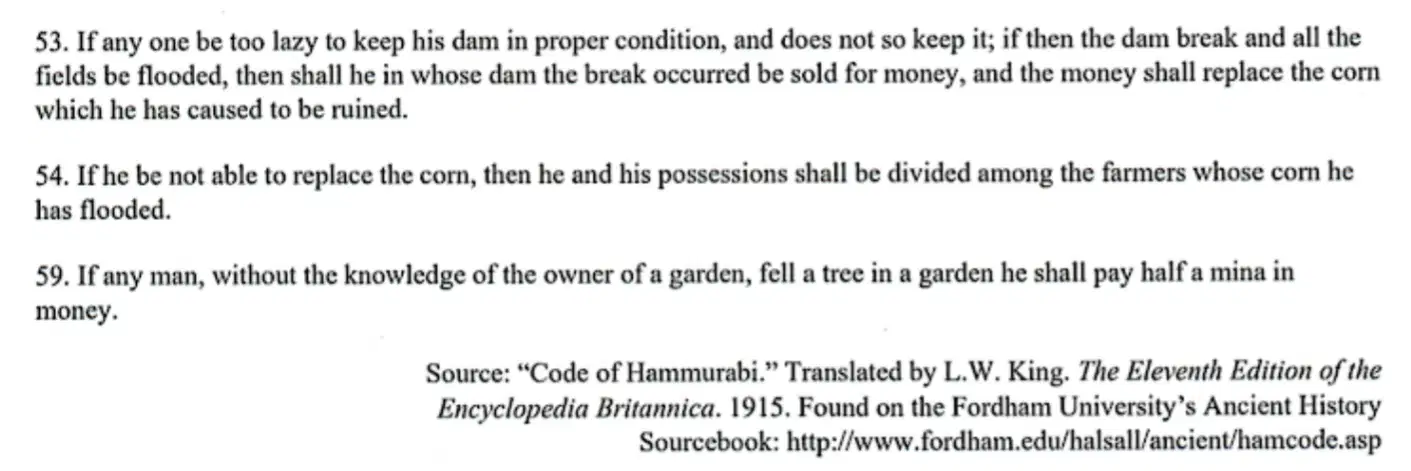
What do these agricultural laws suggest about Mesopotamia’s farming challenges shown in the image?
They had to manage rivers to grow crops
They lived mainly in mountain villages
They rarely produced enough grain
They relied on sea fishing for food
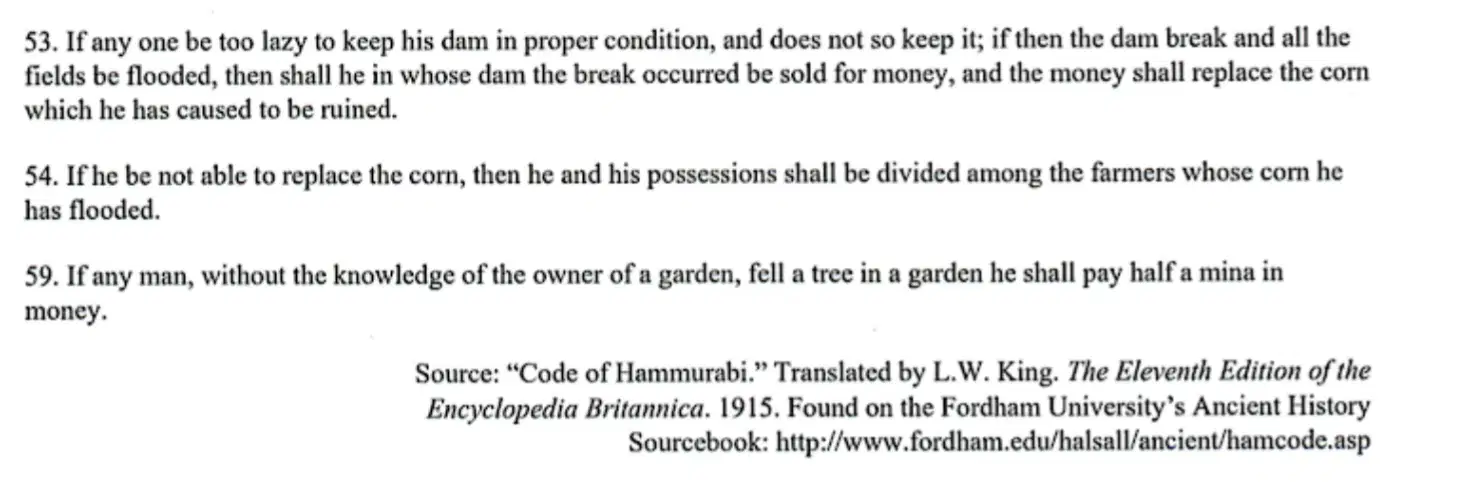
What do these laws reveal about King Hammurabi’s approach to governing agriculture and property in Mesopotamia as seen in the image?
He used laws to protect farming and the economy
He punished everyone exactly the same way
He allowed people to rule themselves freely
He personally funded all irrigation projects
What is the main reason these family and marriage laws were written?
To punish women no matter what they did to husbands
To make families work for the king’s government
To help solve problems between husbands and wives
To stop divorce and make people stay married forever
What do these laws show about how men and women were treated in ancient Mesopotamia?
Showing that men and women were treated equally
Giving women the right to marry many husbands
Explaining the rules of getting married
Showing that men were in charge and had more power
What is Source 1 (Pericles’ speech) saying about Athens at that time?
Athens was cut off from others because of its mountains
Athens is rich and strong with good government and peace
Pericles is telling Sparta to choose freedom and democracy
Pericles is a rich Athenian talking about how great his city is
What does Source 2 (Xenophon’s writing) show the Spartan king thought was most important?
Being fast and athletic
Saving and not wasting food
Wearing simple clothes
Learning how to survive hard times

Why do coins from around 180 BCE show both Greek and Indian deities together?
People in India abandoned local beliefs for Greek gods
Both regions made identical money to improve trade
Indian rulers forced Greeks to worship Indian gods
Alexander’s empire created contact that spread ideas
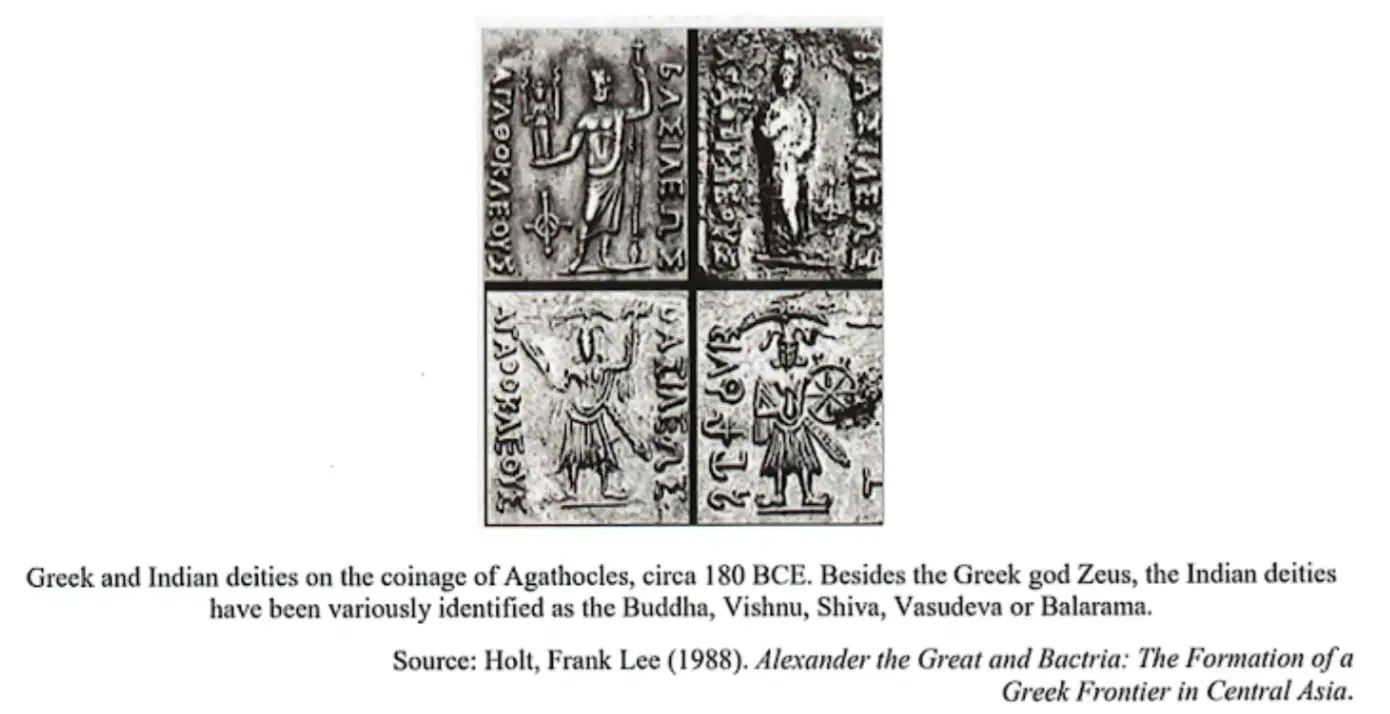
Look closely at the mixed-deity coins. What does their design suggest about religious beliefs shared between Greeks and Indians?
Both believed in only a single god
Both believed many gods influenced people and nature
Both focused mainly on meditation and peace
Both rejected each other’s culture and beliefs
Read the passage: “The roads in Persia were safe and well-built. Travelers could stop and rest at different places. At rivers, there were strong gates and guards to help people cross. Messengers could travel very fast because horses and men were ready at every stop.” — From The Histories by Herodotus
What does the writer think about the quality of the Persian roads?
They were safe and well-built
They were unsafe and poorly made
They were short and not connected
They were empty and rarely used
Why did the Persians include rest stations and guards along the roads?
To collect taxes from farmers
To let travelers rest and cross safely
To hide soldiers from enemies
To store gold from conquered lands
Which reason best explains how messengers could travel very fast on Persian roads?
Rivers blocked many crossings
Horses and helpers waited at stops
Wagons carried heavy supplies
Roads had markets and inns
Which development most directly led to social stratification and specialized roles in ancient societies?
Trade with distant regions without settlements
Nomadic hunting and gathering in small bands
Seasonal migration along river valleys
The Neolithic Revolution and surplus farming

