
 Worksheets
Econ Thursday
Total questions: 58
Worksheet time: 36mins
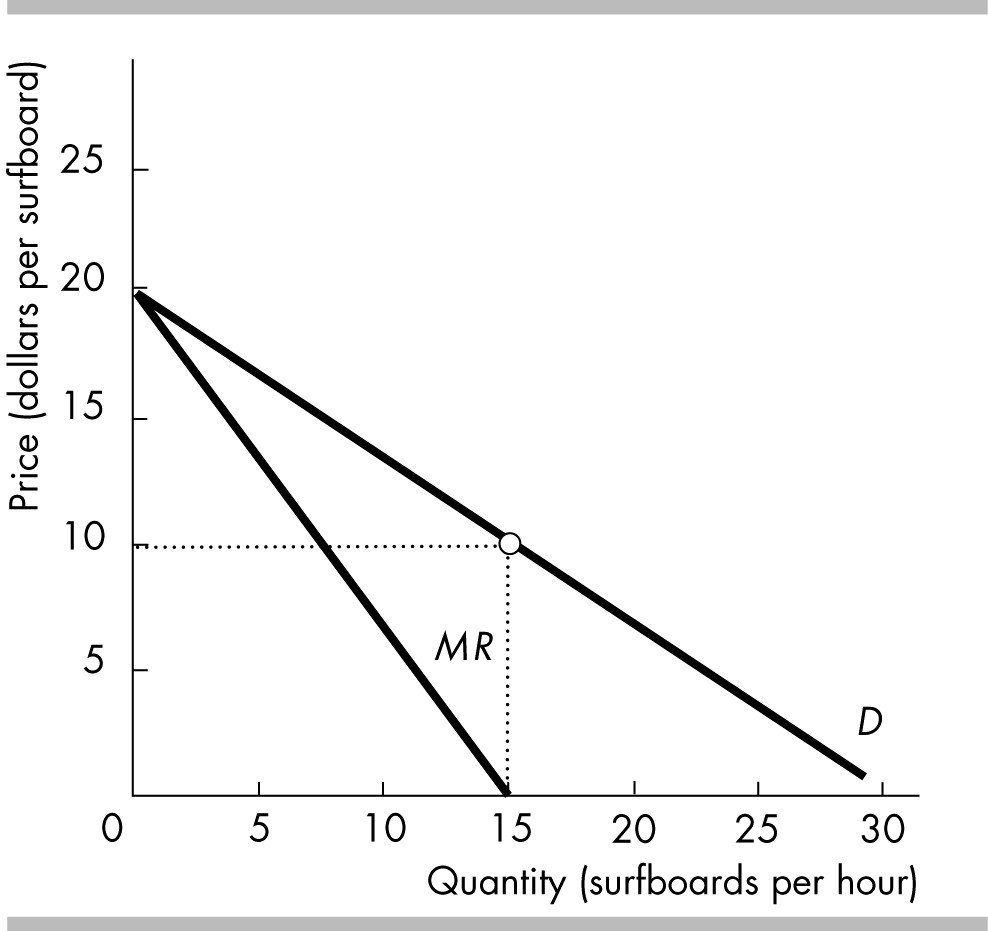
Sue's Surfboards is the sole renter of surfboards on Big Wave Island. Sues demand and marginal revenue curves are illustrated in the figure above. Sue's Surfboards currently rents 15 surfboards an hour. Sue's total revenue from the 15 surfboards is
$300
$220
$150
$100
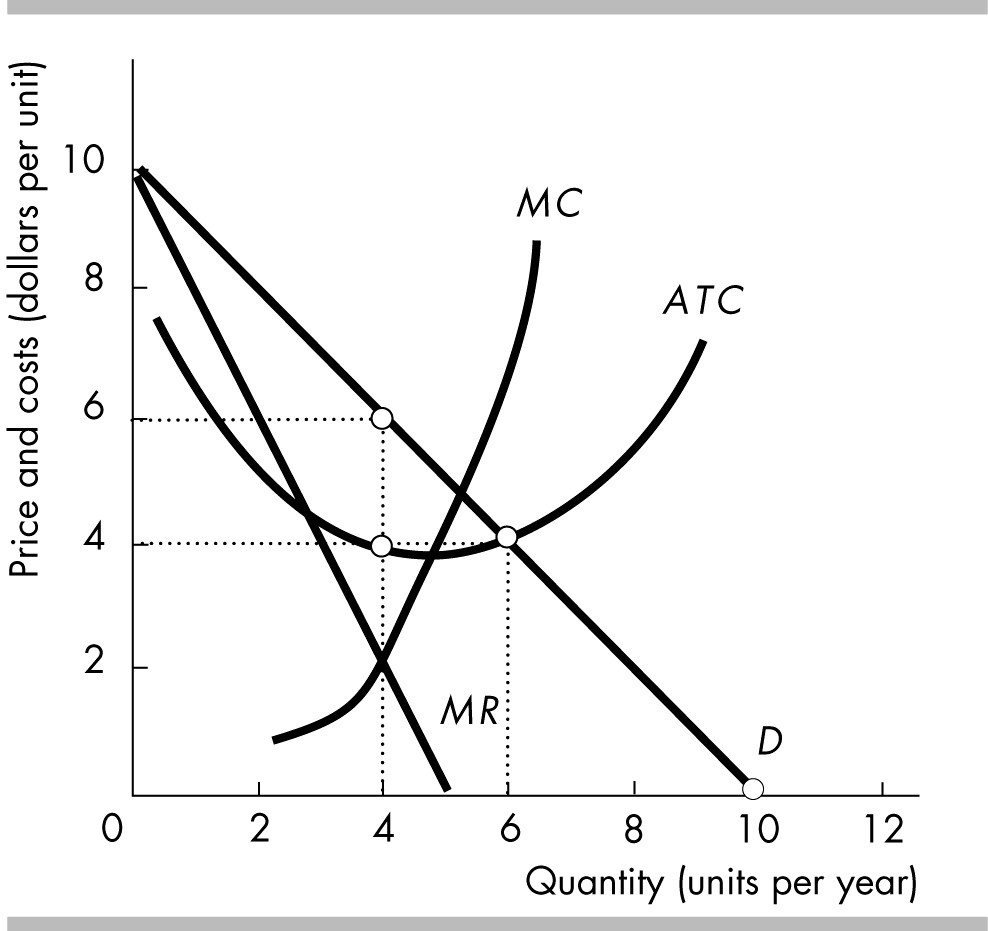
For the unregulated, single-price monopoly shown in the figure above, when its profit is maximized, output will be
4 units per year and the price will be $6.
4 units per year and the price will be $4.
6 units per year and the price will be $4.
None of the above answers is correct.
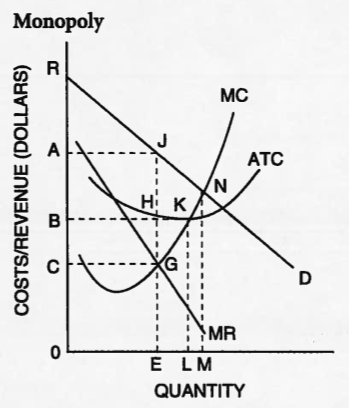
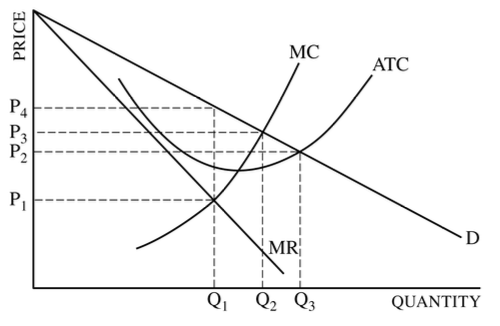
If the monopolist were to produce at the socially optimal output, quantity and price would be
Q1, P4

In this supply & demand schedule, what would happen if the price of the socks was set at $2.50 a pair?
All socks would sell because it would be the equilibrium price.
a shortage.
a surplus.
No socks would be produced because it would be the equilibrium price.

In a perfect market economy, for what price will the socks be sold?
$1.50
$2.00
$3.00
$4.50
Product differentiation is MOST important in which market structure?
monopoly
corporation
monopolistic competition
pure competition
A market structure in which a large number of firms all produce the same product and no single seller controls supply or prices.
Monopoly
Monopolistic Comeptition
Oligopoly
Perfect Competition
What is the Profit Maximizing Formula?
Revenue > Expenses
MR > ATC
MR = MC
AFC + AVC = ATC
What is the difference between Accounting (Normal) Profit and Economic Profit?
Merchandise Costs
Opportunity Cost
Labor Cost
Expenses

According to the Profit Maximizing Formula, how many units should this firm produce?
2
3
4
5
Which of the following is the best definition for Marginal Cost?
The cost of producing more units
The cost of producing one additional unit
Fixed costs
Variable Costs

With which worker does this firm begin to experience Diminishing Marginal Returns?
First
Second
Third
Fourth

A firm expands its fixed resources and its overall costs of production go down. It is experiencing...
Increasing returns to scale
Constant returns to scale
Negative returns to scale
In the long run, a Perfectly Competitive Firm will..
Earn zero economic profit
Earn an economic profit
Make an economic loss
Shut down
Which of the following best describes Productive Efficiency? (Maximum output for minimum cost)
Minimum ATC
Minimum AVC
Minimum MC
Minimum AFC

The image above shows a firm making
Economic Profit
Economic loss
Breaking even
Shutting down

The above figure shows a perfectly competitive firm. If the market price is $15, the firm
is incurring an economic loss.
is making an economic profit.
is making zero economic profit.
will immediately shut down.
might shut down but more information is needed about the AVC.

Should the following firm shutdown?
Yes
No
Not enough information present
What is the maximum legal price set below the equilibrium price that causes shortages?
Price Ceiling
Price Floor
Surplus
Shortage
What states as the price of a good rises the good consumers are will and able to buy will decrease?
Law of Supply
Monopoly
Supply Schedule
Law of Demand
What is it called when there is a larger quantity supplied than there is quantity demanded?
Surplus
Shortage
Market Clearing or Equilibrium Price
Dividend
What market structure has only a few sellers of a product who dominate the market?
Monopoly
Partnership
Sole Proprietorship
Oligopoly
What market structure has a large number of buyers and sellers of products that are similar to one another and can be differentiated by brand, quality, etc.?
Monopoly
Oligopoly
Monopolistic Competition
Partnership
What states that as the price rises the quantity a seller is willing and able to sell will increase?
A volcano erupts in Hawaii that destroys or damages many of the orchards that supply the U.S. with pineapples. What will be the effect on price and quantity of pineapples sold, assuming all else is equal?
Price will rise and quantity will also rise.
Price will drop and quantity will also drop.
Price will drop but quantity will rise.
Price will rise but quantity will drop.
A market that has few barriers to entry, in which products that are not of identical quality and style are sold, and, therefore, firms can make greater-than-normal profits for short periods of time, is BEST described as
monopolistic.
oligopolistic.
perfectly competitive.
monopolistically competitive
A breakthrough in nanotechnology allows silicon chips for computers to be produced much more quickly and cheaply. If demand for computers remains unchanged, what will be the effect upon market price and supply?
Both price and supply will rise.
Both price and supply will fall.
The supply will rise while the price falls.
The supply will fall while the price rises.
All of the following are characteristics of perfectly competitive markets EXCEPT
the firm's prices are kept confidential.
production is similar in quality.
there is a large number of buyers and sellers.
there are few barriers to entering the market.
A key characteristic of oligopolistic firms is
no barriers to entry or exit
differentiated products
interdependence between firms
no long-run economic profits
The primary goal of a cartel is to
increase demand to increase member profits
increase market concentration
decrease market concentration
decrease supply to increase member profits
The kinked demand curve model assumes that your competition will
not consider your actions
match your price increases but not match your price decreases
engage in predatory behavior
match your price decreases but not match your price increases
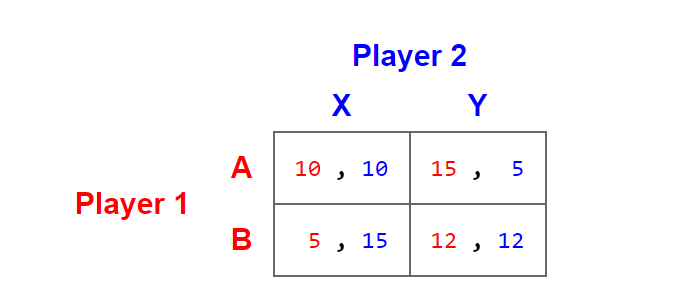
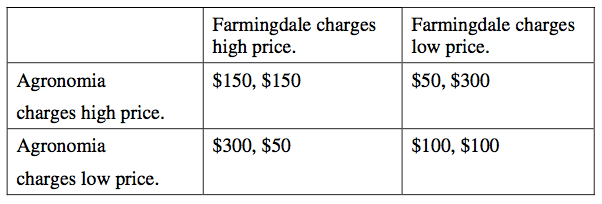
If a firm follows their dominant strategy they will
do what's best for them regardless of what their competition does
do what's best of them in response to the actions of their competition
pursue a strategy that leads to the best joint outcome for all firms involved
not engage in pricing competition
Both monopolistically competitive and oligopolistic firms maximize profits where
P > ATC
P = ATC
MR > MC
MR = MC
Game theory is used to analyze the behavior of oligopolistic industries because
there are many firms and it makes it easier to predict their behavior
firms are interdependent
it makes economics more enjoyable to learn
firms do not compete with one another

What will Breadbasket do if Quicklunch chooses a low price?
low price
high price

What will Breadbasket choose if Quicklunch chooses a High PRICE?
low price
high price

Does Quicklunch have a dominant strategy? If so what is it?
Yes, high price
Yes, low price
No

If both companies know all the information in the payoff matrix, what will the daily profit end up being for Quicklunch?
130
80
110
70

If both companies know all the information in the payoff matrix, what will be the daily profit for Breadbasket?
120
75
105
40

What is LaPizza's daily profit if they choose to Not Advertise?
300
400
200
500

Does PieCrust have a dominant strategy? If so, what is it?
yes, advertise
yes, not advertise
no

If both firms know all the information in the payoff matrix, what will be the daily profit of PieCrust?
250
450
180
300
When firms in an oligopolistic market structure work together to ensure the best result?
confusion
collusion
induction
mutual dependence
The most recognizable form of non-price competition is:
Advertising
Price discounts
Product bundling
Cost leadership
The big difference between oligopolies and monopolies is:
Oligopolies have many sellers, while monopolies have only one.
Oligopolies have only one seller, while monopolies have many.
Oligopolies and monopolies both have many sellers.
Oligopolies and monopolies both have only one seller.
What is the difference between collusion and price leadership? Be sure to include whether or not these practices are legal in your descriptions.
Collusion is an illegal agreement between firms to fix prices, while price leadership is a legal practice where one firm sets the price and others follow.
Collusion is a legal agreement between firms to fix prices, while price leadership is an illegal practice where one firm sets the price and others follow.
Both collusion and price leadership are illegal practices where firms agree to fix prices.
Both collusion and price leadership are legal practices where firms agree to fix prices.
True or False? In a monopolistic competition there are many sellers.
True
False
What characterizes a free market?
Only one seller controls the market
The government does not intervene in day-to-day economic activities
The government intervenes in day-to-day economic activities
There are no buyers in the market
What is NOT a characteristic of a perfectly competitive market?
It's difficult for businesses to enter and leave the market
Everyone has all the information needed to make informed decisions
Businesses have to compete on price
A large number of small businesses
Which of the following is an example of an oligopoly?
The oil industry
The online retail industry
The grocery store industry
The local farmers market

