
 Worksheets
Evolutionary History Test - Fogarty
Total questions: 22
Worksheet time: 11mins

This fossil snake and this living rat both have a structure in their skull called the quadrate bone. What best explains why both species have a quadrate bone?

This fossil bird and this living salamander both have tails. However, they appear to look different. What most likely explains why both the bird and salamander have tails and why the tails are different?

This bandicoot, this sea lion, and this zebra have similarities and differences in their body structures. What does the information about these structures tell you about the ancestors of these species?
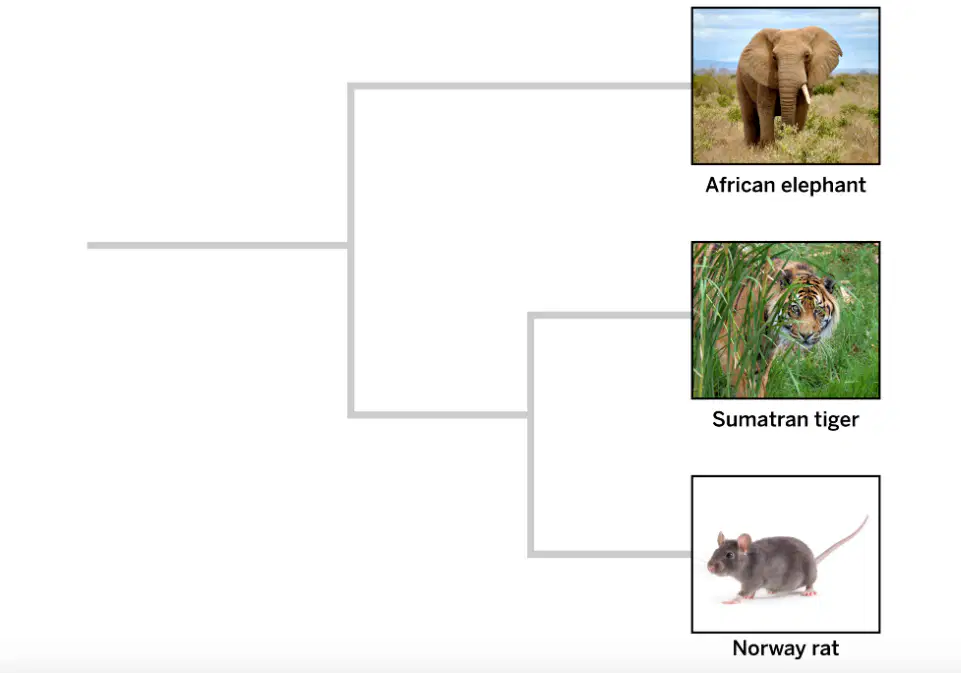
What does this diagram show?
This living jumping grasshopper and this fossil eurypterid both have body structures called chelicerae. Chelicerae are a body structure used for eating. What best explains why both species have chelicerae?
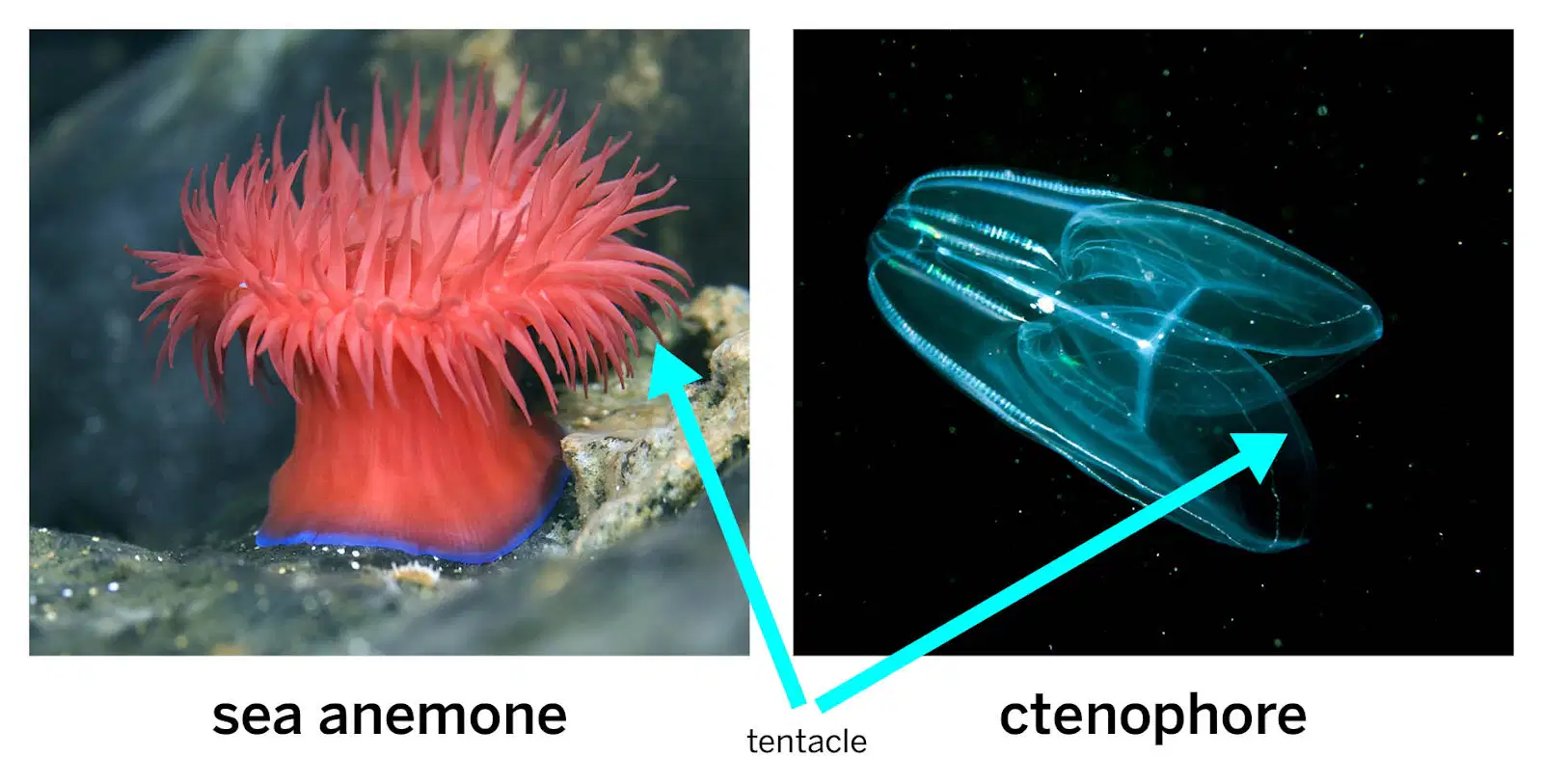
This sea anemone and this ctenophore both have tentacles, which are body structures that help them catch food. What most likely explains why both species have tentacles and why the tentacles are different?
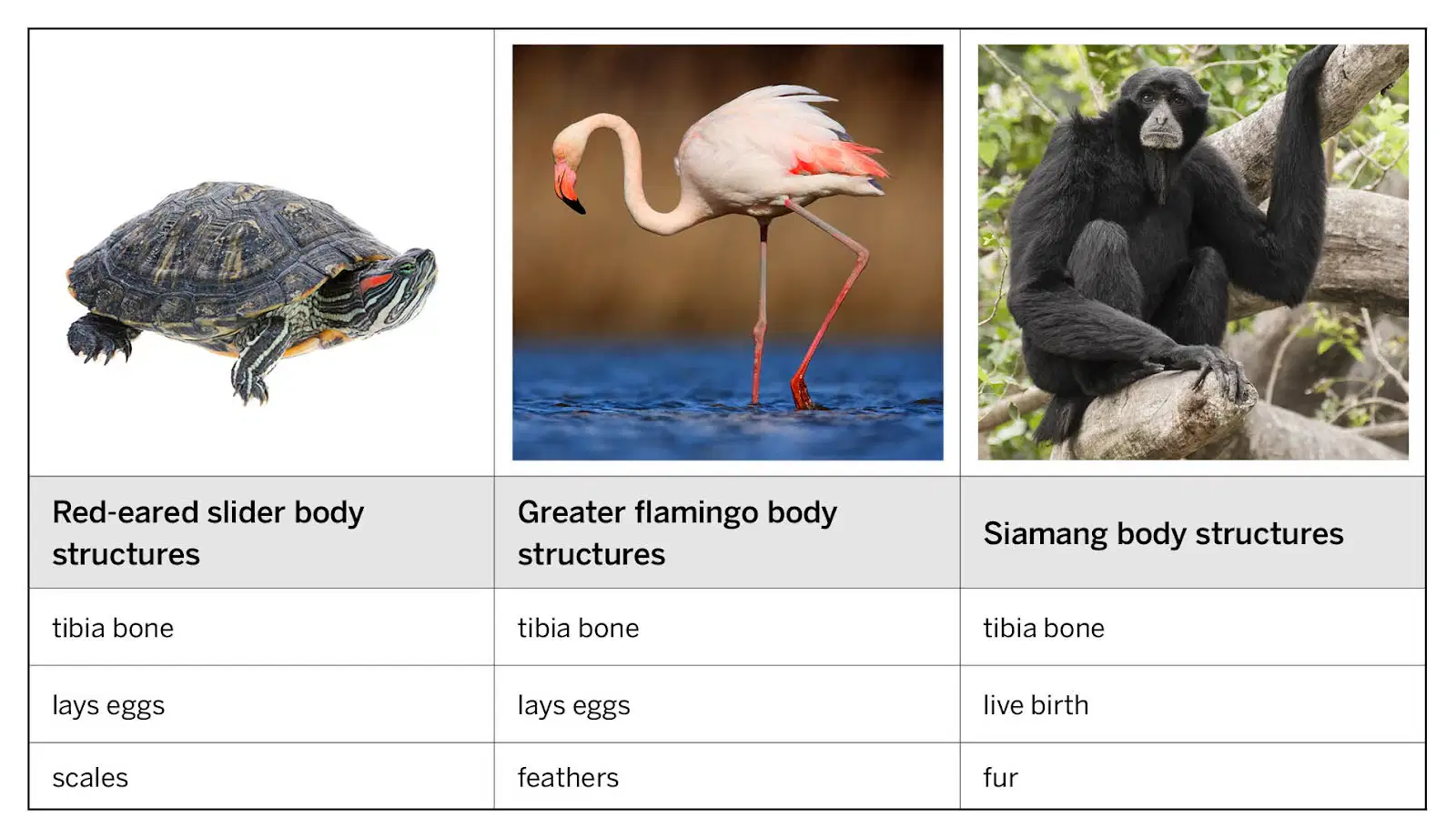
This red-eared slider, this greater flamingo, and this siamang have similarities and differences in their body structures. What does the information about these structures tell you about the ancestors of these species?
The body structures for a population of green herons (a species of bird that lives near water) were stable for a long time. Then, their body structures changed to make the green herons taller. Why did this happen?

This living manta ray and this fossil shark both have a skeleton made of cartilage (which is softer than bone). What best explains why both species have a skeleton like this?

This octopus and this surf clam both have a body structure called a mantle, which covers their soft bodies. What most likely explains why both the octopus and surf clam have mantles and why the mantles are different?

This echidna, this natterjack toad, and this blue tang have similarities and differences in their body structures. What does the information about these structures tell you about the ancestors of these species?

This living sea star and fossil sea urchin both have body structures that are formed along five lines. What best explains why both species have this five-lined body structure?
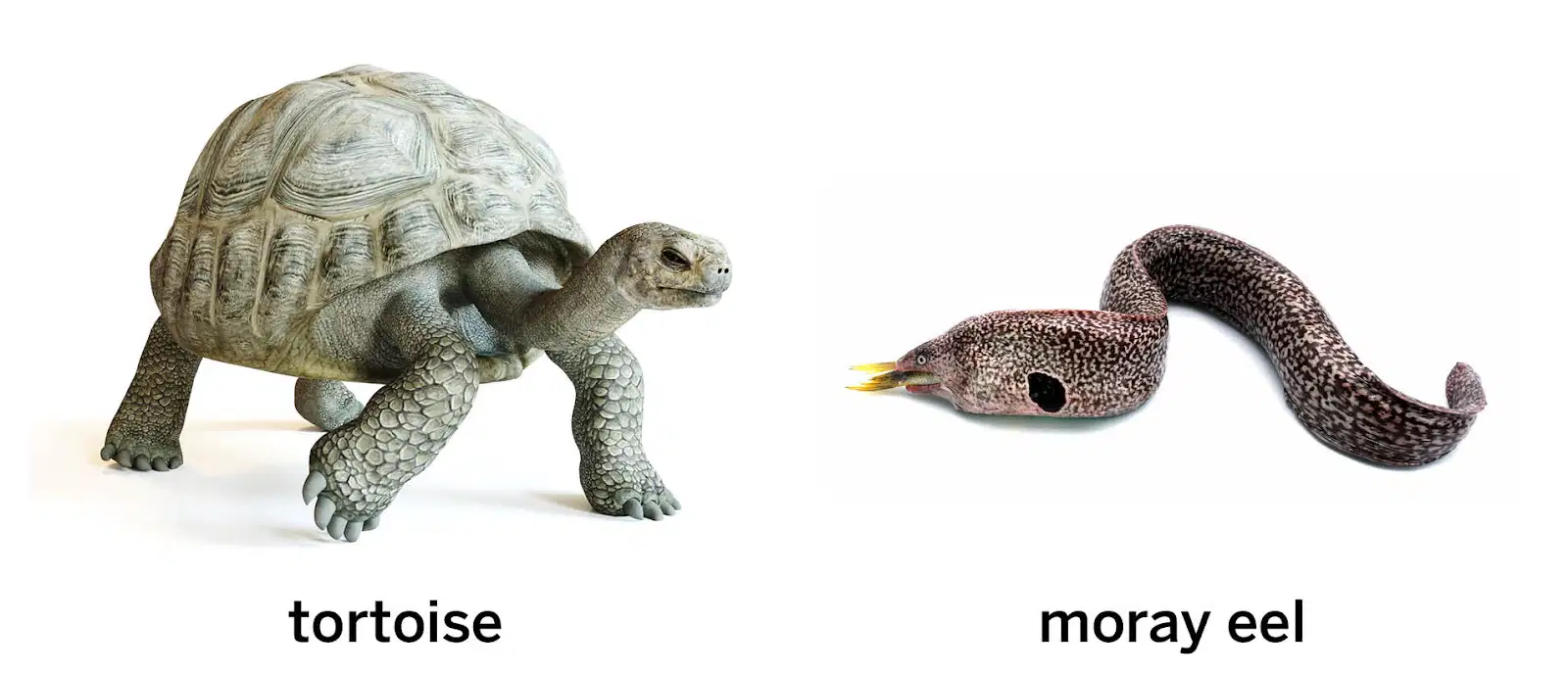
This tortoise and this moray eel both have jaws that help them grab food. What most likely explains why both have jaws and why the jaws are different?
The body structures for a population of chimpanzees were stable for a long time. Then, their body structures changed, making the chimpanzees stronger. Why did this happen?
The South American rainforest has continued to be a stable environment for a long period of time. What would be the best way to describe the animals in their environment?

Refer to the evolutionary tree below. What term should replace the question mark?
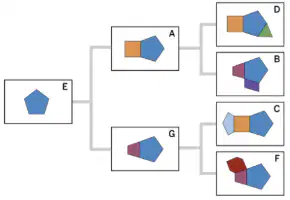
Which organisms might lead you to believe that this model is incorrect?
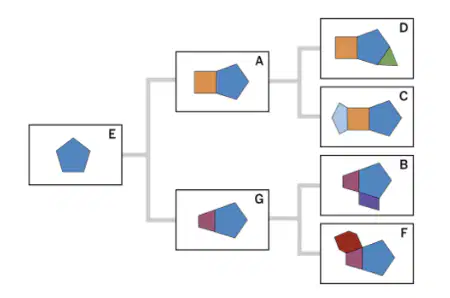
Which species is the least closely related to Species D?
Suppose a certain species of speckled moth lives in a forest of white trees. Some of the moths are white in color, and some are black. What do you expect to happen to the populations of the white and the black moths over time?
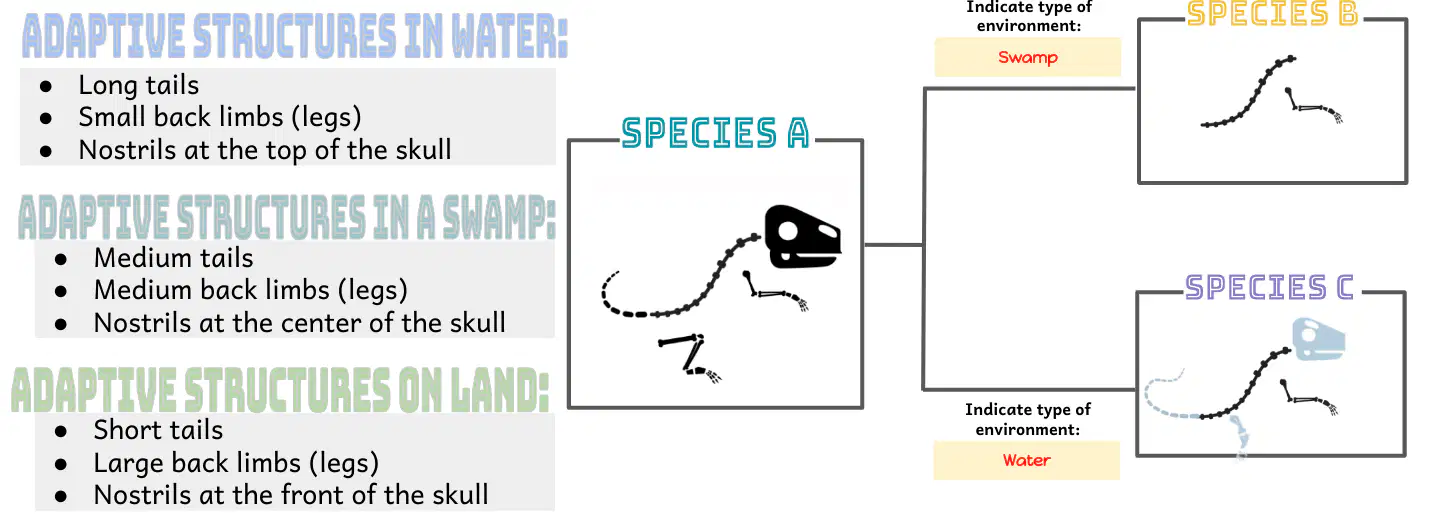
Select the best option to fill in for Species B that has the adaptive traits for a Swamp environment.
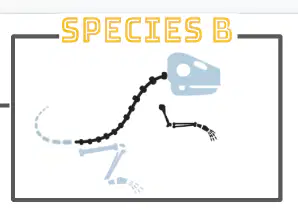
Option 1
Option 1
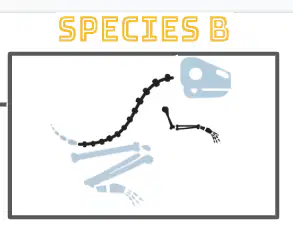
Option 2
Option 2
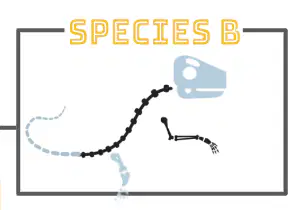
Option 3
Option 3
Which option shows the correct order of events in the process of speciation?
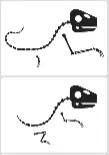
Which of the following structures are shared between the following fossils?

