
NEW
Font size
 Worksheets
Task: Product Analysis
Total questions: 67
Worksheet time: 34mins
Examine the wooden clothes peg. What property of the spring makes it suitable for this product?
High electrical insulation for safety
Elasticity to provide clamping force
Thermal resistance for cooking use
Transparency for visual appeal
Which statement best describes why designers analyse existing products before developing new ones?
To learn materials and technologies
To avoid market competition entirely
To make products more expensive
To copy features without changes
Which learning outcome focuses on evaluating how products are manufactured?
Materials and processes
Life cycle assessment
Impact on society
Marketing and branding

Which factor is primarily about how a product looks and feels to the user?
Function considerations
Aesthetic qualities
Environmental impact
Usability testing
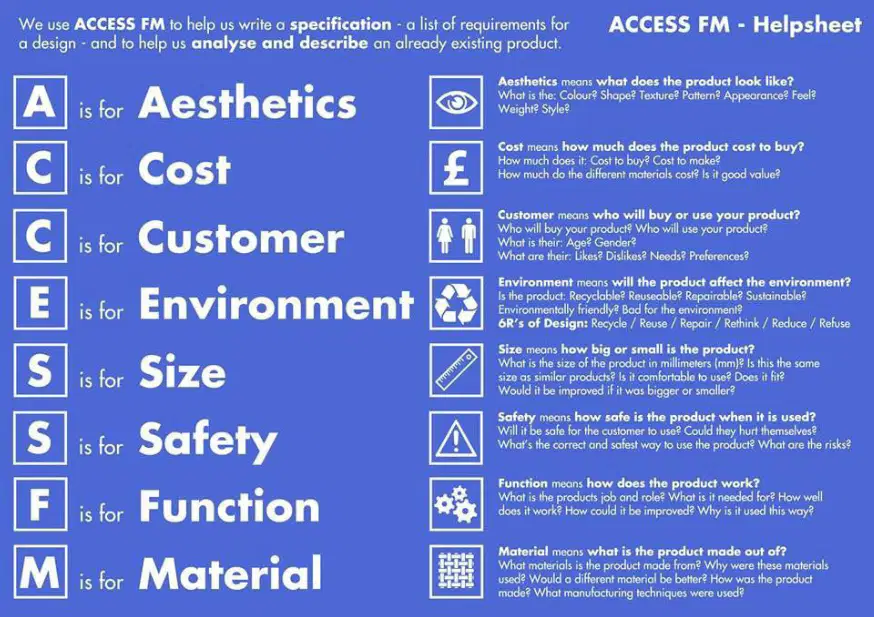
What is the main aim of using ACCESS FM during product evaluation?
To generate advertising slogans
To guide comprehensive specification
To choose a single best material
To increase production speed only
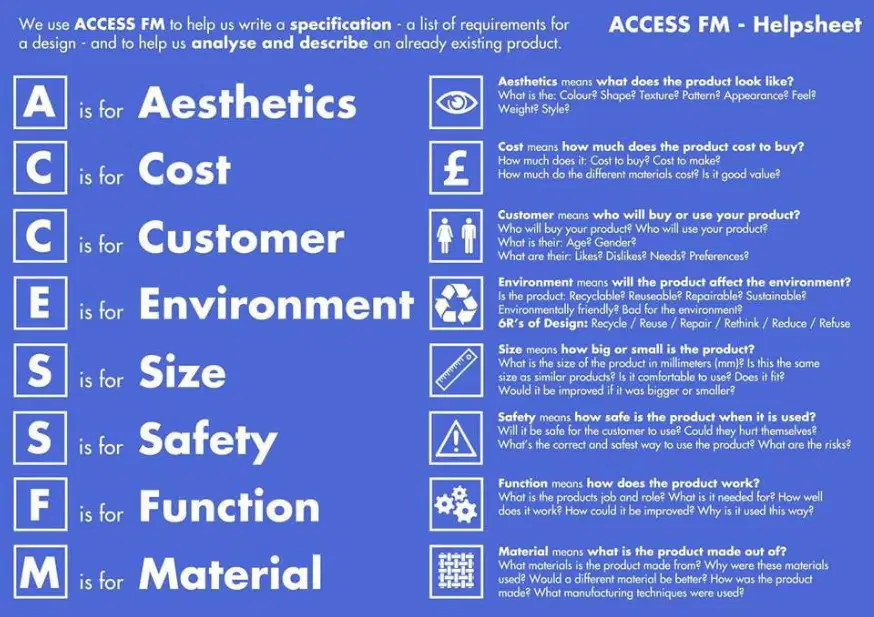
In ACCESS FM, which category asks who will buy or use the product?
Material
Function
Customer
Aesthetics
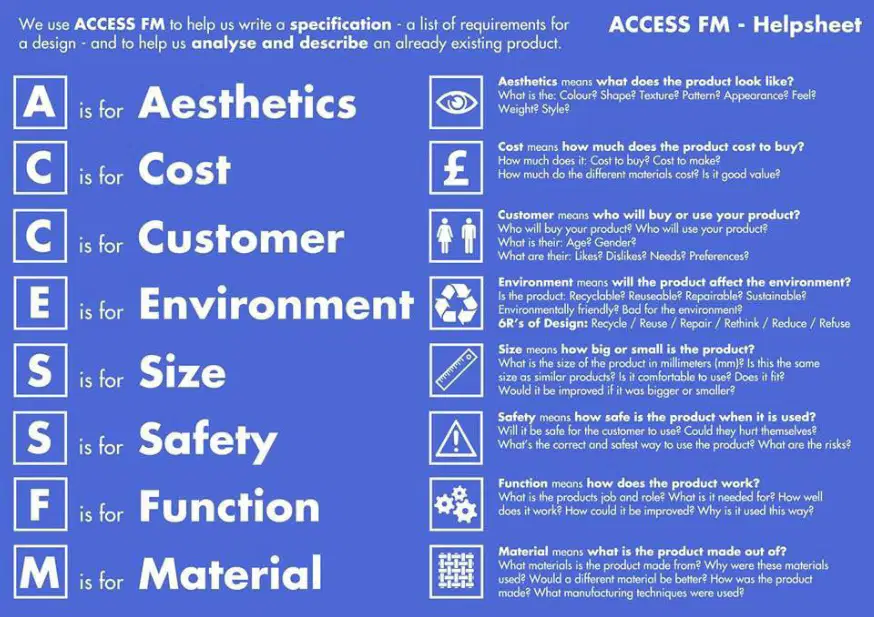
Which consideration deals with dimensions, fit, and ergonomics when assessing a product?
Size evaluation
Marketing plan
Safety review
Cost analysis
When analysing manufacturing, which question is most appropriate?
What is the colour palette used?
Is it mass or batch produced?
Who is the target demographic?
How will branding affect demand?
Which item from the learning outcomes addresses environmental responsibility across a product's lifespan?
Life cycle assessment
Influence of trends
Usability impact
Work of past designers
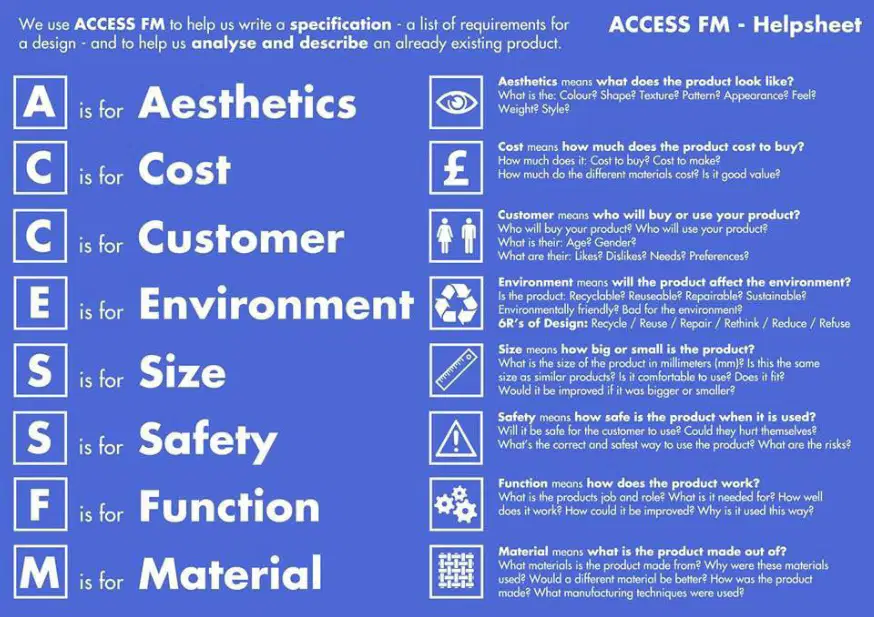
Which ACCESS FM category prompts you to consider energy use and recyclability?
Material
Cost
Safety
Environment
Which factor is most relevant when checking whether a product could injure users during normal use?
Aesthetics
Safety
Function
Customer
What is a key benefit of analysing actual products rather than only images?
Hands-on reveals real strengths
Images show more accurate colours
It guarantees higher sales numbers
It prevents any bias completely
Which statement best fits the ‘Function’ category in ACCESS FM?
Who prefers its style and look?
What tasks does it perform well?
What raw materials are used?
How much does it cost to make?
Which influence considers fashion and trends affecting design decisions?
Manufacturing process
Life cycle impacts
Aesthetic and style
Ergonomic constraints
When assessing usability, which question is most suitable?
How many parts can be recycled?
How famous is the brand designer?
Which supplier offers cheapest steel?
What is the weight and balance like?
Which statement best describes the main purpose of product disassembly in design analysis?
To reduce manufacturing costs immediately
To create identical replicas without changes
To examine materials, components, and assembly
To clean internal parts for maintenance only
When identifying materials during disassembly, which factor should you justify most clearly?
Colour choice for marketing appeal
Cost of brand packaging graphics
Why specific materials were selected
How many screws are visible externally
Which is the most appropriate method to evaluate ergonomics in a disassembled product?
Estimate size by photos only
Measure packaging weight and volume
Compare user measurements to product
Ignore user comfort and focus cost
During coursework, you must document manufacturing methods. Which example fits this requirement best?
Listing paint colours used
Explaining injection moulding choice
Counting the marketing slogans
Describing shop display layout
Which consideration links disassembly ease with sustainability most directly?
Speed of shipping from factory
Number of brand logos printed
Potential for parts to be recycled
Ability to add decorative stickers
Which design movement is shown as occurring roughly between 1890 and 1905 on the timeline?
Art Nouveau
Streamlining
Art Deco
Modernism
Which statement best describes the Arts and Crafts movement?
A late 20th century postmodern style
A minimalist reduction of ornament
A mid-century industrial efficiency trend
A British-American reformist aesthetic movement
Who’s writings inspired the height of the Arts and Crafts movement around 1880–1910?
Charles Eames
Le Corbusier
John Ruskin
Walter Gropius
Which time span aligns with Art Deco on the timeline?
1925–1939
1890–1905
1900–1930
1935–1955
Which movement focuses on sleek forms and occurred from 1935 to 1955?
Streamlining
Bauhaus
Pop Art
Victorian
Which designer from the influential list is known for industrial design principles such as 'Less, but better'?
Norman Foster
Dieter Rams
Philippe Starck
Zaha Hadid
Which item is required in the presentation criteria?
Use the provided Google Slides template
Submit a handwritten poster only
Include exactly ten slides minimum
Avoid explaining personal preferences
What must your presentation include about the designer or movement?
Personal opinions without evidence
A brief history and key influences
Only a list of unrelated facts
Just dates without context
According to the AI Assessment Scale, what does 'AI Planning' allow?
Extensive AI-generated final work
Automatic grading by AI
Planning, idea development, research
No AI use at any point
What is a requirement regarding examples in the presentation criteria?
Include at least four examples with explanations
Include examples only from architecture
Include one example without any explanation
Exclude examples from product design
Which designer in the lists is renowned for fluid, futuristic architecture?
James Dyson
Zaha Hadid
Johnny Ive
Michael Thonet
Which movement from the lists is associated with geometric abstraction and Dutch design principles?
Organic
De Stijl
Scandinavian
Memphis
Which statement best describes how modern designers approach style and materials?
They only follow traditional manufacturing
They reject history to be fully futuristic
They blend past styles with new trends
They copy historic styles without updates
What is the primary role of trend forecasters in design?
Create logos for popular brands
Set legal standards for materials
Anticipate global consumer behavior
Manufacture products on factory lines
Contemporary design typically involves which combination?
Past successes and future innovations
Only current market data
Old materials and local production
Future visions without history
Which option best defines ethical design for products?
Fast production with low cost
Design that looks expensive and trendy
Correct, good, and honourable practice
Design that copies a famous brand
Twenty-first century design is best described as
Static and tradition-focused design
Local craft without global collaboration
Forward-thinking practice shaping behavior
Nostalgic design ignoring new tech
In marketing and branding, why is understanding the target market crucial?
To tailor strategies and attract buyers
To eliminate research and development
To make products identical to rivals
To avoid advertising costs entirely
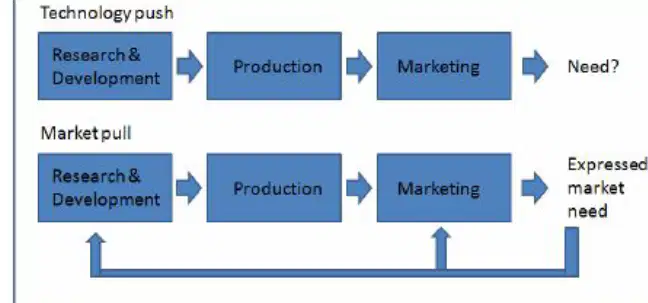
Which path describes market pull in product development?
Research to production, then marketing
Marketing launches before any research
Expressed need drives development steps
Production starts without consumer input
Which statement best defines market pull?
Need arising from customers or research
Technology created inside laboratories
Government rules forcing new products
Designer inspiration without feedback
Technology push occurs when
Retailers request larger packaging
Consumer demand dictates features
Marketing teams choose brand colours
New technology drives product creation
Which example illustrates technology push in smartphones?
Celebrity endorsement campaigns
Customer survey about case colours
Price discounts during holidays
Touchscreen and fingerprint advances
How can branding influence purchasing decisions even with similar product quality?
Branding eliminates the need for ads
Popular brands increase perceived value
Logos reduce manufacturing costs
Brands guarantee highest durability
Effective marketing aims to achieve which outcome?
Replace design with slogans only
Limit sales to local customers
Hide product information from buyers
Promote image and expand markets
Which factor best explains why younger people adopt digital shopping faster than older people?
Better eyesight than older adults
Higher disposable income than elders
More free time after school hours
Generational exposure to digital platforms
What is the primary goal of ergonomics in product design?
Add decorative appearance
Reduce manufacturing cost
Increase advertising reach
Improve comfort and usability
Which example shows how anthropometric data can improve a handheld tool?
Packaging it in recycled cardboard
Adjusting grip width on a garlic crusher
Painting the tool a brighter color
Adding a larger company logo
Usability analysis should balance functionality with which other factor?
Ergonomics and appearance
Warranty length
Marketing and branding
Price and discounts

Which statement best describes a throwaway society?
Marketplace limiting advertising reach
Culture driven by excessive consumption
Community focused on repair skills
System based on long-term durability
Why did many products historically prioritize low cost over environmental concerns?
To increase affordability and sales
To reduce ergonomic risk factors
To meet cradle-to-cradle goals
To comply with strict eco laws
Which environmental impact often occurs during both production and disposal phases?
Enhanced product aesthetics
Improved community health
Lowered transportation demand
Resource use and pollution
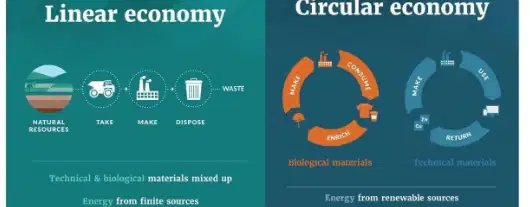
Which design approach aims to keep materials in use for as long as possible?
Linear economy model
Single-use manufacturing
Circular economy model
Planned obsolescence
In a circular economy, which product feature helps end-of-life recovery?
Exclusive brand partnerships
Glossy marketing packaging
Easy disassembly of components
Limited replacement parts
Which trend has pushed consumers and companies toward greener practices?
Rise of traditional advertising
Decline in digital technologies
Awareness of irreversible impacts
Lower interest in usability
Which statement contrasts linear and circular economies most accurately?
Linear relies recycling; circular bans remanufacture
Linear reduces energy; circular increases waste
Linear emphasizes ergonomics; circular ignores usability
Linear takes–makes–disposes; circular reuses materials
Which factor most directly explains why not every advanced product succeeds immediately?
High marketing budgets guarantee success
Pros and cons need balanced assessment
Celebrity endorsements ensure quick adoption
Fast production always meets user needs

What was a key reason the Sinclair C5 struggled after its 1985 launch?
Battery technology was perfect but expensive
Competition from smartphones was overwhelming
Roads and societal attitudes were unsuitable
International safety laws banned the vehicle
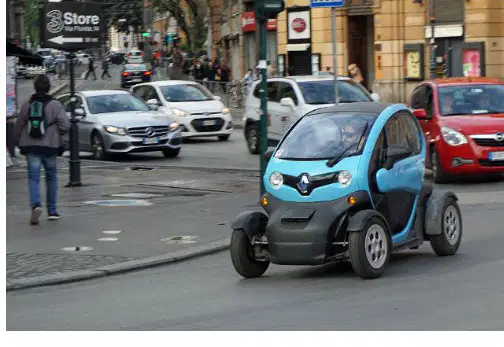
Improved infrastructure and education today mainly affect which design decision area?
Homes require fewer safety features
Medical devices avoid regulatory testing
Alternative transport becomes more viable
Fashion design demands fewer materials

What best describes Google Glass’s early reception and outcome?
Immediate ban due to safety legislation
Excitement followed by bugs and privacy concerns
Quiet release with no media attention
Universal praise with strong long‑term sales
Which statement shows iterative product development using Apple as an example?
Newton failed, later iPad refined the concept
Newton dominated, iPad copied competitors
Newton succeeded, iPad discontinued quickly
Newton and iPad released in the same year
What is the most accurate definition of emerging technologies?
Technologies likely within five to ten years
Technologies already obsolete and discarded
Technologies limited to mechanical devices
Technologies banned by international law
Which ethical issue is directly tied to mineral extraction for electronics?
Political conflict and environmental damage
Lower prices and improved battery life
Easier recycling and cleaner production
Reduced need for global supply chains
Continuous upgrades that increase capabilities often lead to what consequence?
Elimination of electronic waste
Unlimited product lifespans
Older products becoming obsolete
Guaranteed compatibility with all devices
Why is managing short electronic life cycles important for companies?
To reduce waste and plan upgrades
To stop all innovation completely
To avoid customer education costs
To remove the need for new materials
Which challenge arises when new systems must work with older technologies?
Users never experience learning curves
Design teams need fewer tests overall
Profits always increase without effort
Compatibility issues can slow development

Which factor could hinder widespread adoption of a novel wearable like Vision Pro?
Total lack of public attention
Absence of any software updates
Guaranteed celebrity endorsements
Privacy concerns and everyday usability
When evaluating a new product’s potential impact, what should designers examine first?
Only market trends and sales projections
Primarily celebrity opinions and reviews
Effects on people, society, economy, environment
Mainly the number of available color options

