
 Worksheets
6th Grade BM Review
Total questions: 227
Worksheet time: 5hrs 7mins
In order of sedimentary rock to form, which of the following must occur?
Compaction
Intrusion
Oxidation
Metamorphism

This rock formed when bits of other rocks became pressed into a solid. What type of rock is it?
Sedimentary Rock
Igneous Rock
Metamorphic Rock
This rock was formed when molten rock cooled into a solid. What type of rock is it?
Igneous Rock
Sedimentary Rock
Metamorphic Rock
What are the 3 major types of rock?
Igneous, Metamorphic, Sedimentary
Brown, Red, Gray
Metamorphic, Igneous, Cementation
Streak, Hardness, Breakage

This rock was formed by smaller pieces of rock that settled at the bottom of a lake millions of years ago. What type of rock is this?
Sedimentary
Igneous
Metamorphic
Which of the words below describe mud, sand, and tiny bits of rocks that cement together to form a type of rock?
Stalagtites
Metamorphs
Magma
Sediments
What causes igneous rocks to form?
Pressure
Compaction
Cooling Magma and Lava
Cementation
Metamorphic rocks were once...
igneous rocks that cooled quickly
seashells that pressed together
sedimentary rocks that were changed by time, heat, and pressure
layers of mud and sand that built up over time
Rocks formed by heat and pressure beneath the Earth's surface are...
Igneous
Sedementary
Metamorphic
Magma
A rock made of magma that cools inside the Earth and contains large crystals?
Igneous
Sedimentary
Metamorphic
Magma
A rock that contains pieces of shells and fossils compacted and cemented together over time is...
metamorphic
sedimentary
igneous
sediments
When heat and water and ice break down rock into sediments this is called?
Erosion
Weathering
Compaction
Deposition
The rock that forms by heat and pressure deep under ground?
Igneous
Sedimentary
Metamorphic
Lava
Which of the following describes the process of sediments being picked up and carried away by wind, moving water, or ice
Erosion
Weathering
Deposition
Compaction
How does a metamorphic rock become a sedimentary rock?
Heat, pressure, and radiation
Weather, Erosion, Compaction and Cementation
Melting, cooling, and evaporation
Cooling of magma over time
How can metamorphic rock become an igneous rock?
Weather and Erosion
Heat and Pressure
Compaction and Cementation
Melting and Cooling

What numbers indicate melting and cooling?
1,2,4
6,7,11
7,8,9
4,5

Letter C represents what rock type?
Igneous
Metamorphic
Sedimentary

Sedimentary rocks are represented by which letter?
A
B
C

Weathering and erosion can be represented by which numbers?
2,4,7
7,8,9,10
1,5,6
2,3,4
What does the word part BIO mean?
life
rock
water
gas
What does the word part GEO mean?
water
rock
gases
ice
What does the word part ATMOS mean?
gases
rock
ice
water
What does the word part HYDRO mean?
rock
ice
water
land

What sphere does this belong?
biosphere
hydrosphere
geosphere
atmosphere

What sphere does this belong?
biosphere
hydrosphere
geosphere
atmosphere

What sphere does this belong?
biosphere
hydrosphere
geosphere
atmosphere

check all the spheres interacting in this picture.
atmosphere
biosphere
geosphere
cryosphere

check all the spheres interacting in this picture.
atmosphere
biosphere
hydrosphere
cryosphere

check all the spheres interacting in this picture.
atmosphere
biosphere
hydrosphere
geosphere

What sphere does this belong?
biosphere
hydrosphere
geosphere
atmosphere

What sphere does this belong?
biosphere
hydrosphere
geosphere
atmosphere

check all the spheres interacting in this picture.
cryosphere
biosphere
hydrosphere
geosphere

What are the 3 main layers of the Earth?
Atmosphere, Hydrosphere, Biosphere
Crust, Mantle, Core
Rock, Magma, Ocean
Top, Middle, Bottom

What is the thinnest layer of the Earth?
Crust
Mantle
Outer Core
Inner Core

What is the thickest layer of the Earth?
Crust
Mantle
Outer Core
Inner Core

Which layer of the Earth is liquid Iron and Nickle?
Crust
Mantle
Outer Core
Inner Core

Which layer of the Earth is a dense solid ball of Iron and Nickle?
Crust
Mantle
Outer Core
Inner Core

What layer of the Earth is represented by the letter A?
Crust
Mantle
Outer Core
Inner Core

What layer of the Earth is represented by the letter B?
Crust
Mantle
Outer Core
Inner Core

What layer of the Earth is represented by the letter C?
Crust
Mantle
Outer Core
Inner Core

What layer of the Earth is represented by the letter D?
Crust
Mantle
Outer Core
Inner Core

The most dense layer of the Earth is:
Crust
Mantle
Core
What are convection currents?
the cycle of heated rock or metal rising, and cooling rock or metal falling.
the cycle of cooling rock or metal rising, and heated rock or metal falling.
an electric current found in the mantle.
and electric current found in the outer core.

Temperature _____________________ as you go deeper into the earth.
increases
decreases
goes up and down depending on the layer
stays the same
Pressure ______________________ as you go deeper into the Earth.
increases
decreases
goes up or down depending on the layer
stays the same
Density ______________________ as you go deeper into the Earth.
increases
decreases
goes up or down depending on the layer
stays the same
Oceanic crust is more dense than continental crust?
true
false


Which layer is composed mostly of iron?
Z
Y
V
X
Which layer of the Earth is the thinnest?
Crust
Mantle
Outer core
Inner core


What is a high tide?
Sea pulled TOWARD the moon where Earth is CLOSEST to the moon
Sea pulled AWAY from the moon where Earth is FARTHEST to the moon
Sea pulled AWAY from the moon where Earth is CLOSEST to the moon


What is the correct alignment needed for a SPRING tide to occur?
Sun, Earth, Moon
Earth, Sun, Moon
Sun, Moon, Earth
None of these
A neap tide occurs during which two lunar phases?
Full Mooon and New Moon
Waxing Crescent and Waning Crescent
Waxing Gibbous and Waning Gibbous
1st Quarter and 3rd Quarter
A spring tide occurs during which two lunar phases?
New Moon and Full Moon
Waxing Crescent and Waning Crescent
Waxing Gibbous and Waning Gibbous
1st Quarter and 3rd Quarter
How many times a day to we experience a change in tidal levels?
1
2
3
4
When sea levels are higher than average what type of tide is occurring?
High Tide
Low Tide
Moon Tide
1st Quarter Tide
What causes a spring tide to have a higher tidal range?
Gravity of the Moon
Gravity of the Earth
Gravity of the Sun
None of the Above
A[n] ___________ tide occurs when the sun, Earth, and the moon are inline.
spring
high
low
neap

You visited the beach at 12 pm (lunchtime) and it is low tide. If you return 6 hours later, what tide will you see?
high
low
none
spring
_______are daily changes in ocean water.
Waters
Tides
Colors
Earths


What is an Equinox
Full tilt toward sun
Full tilt away from sun
Shortest day
Equal day and night


What season is represented by this diagram?
Fall
Summer
Winter
Spring

Which location appears to be receiving more direct (and thus intense) insolation?
a
b


What is the difference between rotation and revolution?
Rotation is the movement of the Earth around the Sun, while revolution is the spinning of the Earth on its axis.
Rotation is the spinning of the Earth on its axis, while revolution is the movement of the Earth around the Moon.
Rotation is the spinning of the Earth on its axis, while revolution is the movement of the Earth around the Sun.
Rotation and revolution are the same processes that describe the Earth's movement.
Which season is taking place in the Northern Hemisphere in Position 1?
Spring
Summer
Winter
Autumn
What is the Autumnal Equinox?
It occurs around September 23rd, marking the start of fall in the Northern Hemisphere.
It occurs around June 21st, marking the start of summer in the Northern Hemisphere.
It occurs around December 21st, marking the start of winter in the Northern Hemisphere.
It occurs around March 21st, marking the start of spring in the Northern Hemisphere.
What causes the seasons on Earth?
The distance of the Earth from the Sun.
The tilt of the Earth's axis and its orbit around the Sun.
The rotation of the Earth on its axis.
The gravitational pull of the Moon.
Earth moves around the Sun because the Sun’s _________________ pulls on Earth.
Magnetism
Gravity
Friction
Pressure
When does the Spring Equinox occur?
Around March 21st, when day and night are approximately equal in length.
On June 21st, marking the start of summer.
On December 21st, indicating the winter solstice.
On September 23rd, signaling the start of autumn.
The spinning of an object on its axis is called______
Revolution
Rotation
Translation
Circumference
How does the tilt of the Earth affect climate?
It changes the Earth's distance from the sun.
It affects the angle of sunlight received, influencing temperature and weather patterns.
It increases the amount of greenhouse gases in the atmosphere.
It has no significant effect on climate.
What is the tilt of the Earth’s axis?
20 degrees
23.5 degrees
25 degrees
30 degrees
What is the Winter Solstice?
The longest day of the year, occurring around June 21st in the Northern Hemisphere.
The shortest day of the year, occurring around December 21st in the Northern Hemisphere.
A day when the sun is directly overhead at the equator, occurring around March 21st.
A day that marks the beginning of spring, occurring around March 21st.
What happens during the Summer Solstice?
Most direct sunlight.
Longest night of the year.
Equal day and night.
Shortest day of the year.
What is the Summer Solstice?
The shortest day of the year, occurring around December 21st in the Northern Hemisphere.
The longest day of the year, occurring around June 21st in the Northern Hemisphere.
A day when day and night are of equal length, occurring around March 21st.
A celebration of the summer season, marked by festivals and feasts.
What happens during the Winter Solstice?
Most direct sunlight.
Least direct sunlight.
Equal day and night length.
Longest day of the year.
What is the significance of the Equator?
It is the line that marks the boundary between land and sea.
It is an imaginary line that divides the Earth into the Northern and Southern Hemispheres.
It is the point where the sun is directly overhead at noon during the equinoxes.
It is the longest line of latitude on Earth.
What is the role of the Sun in the Earth’s seasons?
The Sun provides light and heat, which vary in intensity due to the tilt of the Earth.
The Sun's position remains constant throughout the year, affecting the seasons.
The Sun has no impact on the Earth's seasons, which are solely determined by the moon.
The Sun only affects the temperature but not the seasons.
What is inertia?
The force that causes an object to move in a circular path.
The tendency of an object to resist changes in its state of motion.
The speed at which an object travels in a straight line.
The mass of an object multiplied by its velocity.
What is frictional force?
A force that accelerates an object in motion.
A force that opposes the motion of an object when it is in contact with another surface.
A force that increases the speed of an object.
A force that acts only on stationary objects.
What is a net force?
Net force is the total force acting on an object when all the individual forces are combined.
Net force is the force that opposes motion.
Net force is the sum of all forces acting on an object in one direction.
Net force is the force exerted by gravity on an object.
What is a force?
A force is a type of energy that can be stored in objects.
A force is a push or pull that can cause an object to move, change direction, or change shape.
A force is a measurement of the weight of an object.
A force is a reaction that occurs when two objects collide.
What is applied force?
A force that is exerted by gravity on an object.
A force that is applied to an object by a person or another object.
A force that opposes the motion of an object.
A force that is generated by friction between two surfaces.
What is gravitational force?
Gravitational force is the attraction between two objects due to their mass.
Gravitational force is the repulsion between two objects due to their mass.
Gravitational force is the force that keeps objects in motion.
Gravitational force is the energy produced by an object's mass.
What is normal force?
The force exerted by a surface to support the weight of an object resting on it.
The force that opposes the motion of an object in a fluid.
The gravitational force acting on an object in free fall.
The force that causes an object to accelerate in the direction of the net force.
What factors affect gravitational force?
The color of the objects and the distance between them.
The mass of the objects and the distance between them.
The temperature of the objects and their speed.
The shape of the objects and the distance between them.
What is the difference between mass and weight?
Mass is the amount of matter in an object, while weight is the force of gravity acting on that mass.
Mass and weight are the same; both refer to the quantity of matter in an object.
Weight is the amount of matter in an object, while mass is the force of gravity acting on that matter.
Mass is a measure of an object's volume, while weight is a measure of its density.
What is the formula for calculating weight?
Weight = mass + gravitational acceleration (W = m + g)
Weight = mass × gravitational acceleration (W = m × g)
Weight = mass ÷ gravitational acceleration (W = m ÷ g)
Weight = mass - gravitational acceleration (W = m - g)
What is tension force?
A force that pushes objects apart
A pulling force transmitted through a string, rope, or cable when it is pulled tight
A force that acts on an object in motion
A force that resists the motion of an object
What is the relationship between force and motion?
A force applied to an object can change its speed or direction, resulting in motion.
Force and motion are unrelated concepts in physics.
Motion can occur without any force acting on an object.
Force is only necessary to stop an object from moving.
What is the significance of balanced and unbalanced forces?
Balanced forces cause an object to accelerate, while unbalanced forces do not change an object's motion.
Balanced forces do not change an object's motion, while unbalanced forces cause an object to accelerate.
Balanced forces always result in motion, while unbalanced forces always result in rest.
Balanced forces are stronger than unbalanced forces, leading to a change in motion.
What are the two main types of forces?
Frictional forces and gravitational forces.
Contact forces and non-contact forces.
Magnetic forces and electrical forces.
Tension forces and buoyant forces.
What is the role of air resistance?
Air resistance is a type of friction that acts against the motion of objects moving through the air.
Air resistance helps objects to move faster through the air.
Air resistance has no effect on the motion of objects.
Air resistance is a force that propels objects forward.


If both people are exerting a force of 20 N, what is the net force?
20 N
40 N
400 N
0 N

If the boy is pulling with a force of 10 N and the girl is pushing with a force 20 N, what is the net force on the box?
10 N
20 N
30 N
0 N
If the wind is heading south with a force of 5 N, and a car is going north with force of 78936 N, what is the Net Force and Direction.
78931 N North
78931 N South
78531 N North
78531 N South

How do you find the net force of this image.
Add up all the arrows
Add a green arrow and the orange arrow.
Subtract all the arrows.
Add the green arrows and subtract the orange arrow.

What is the overall Net Force and which side has a greater Net Force?
641, Left
571, Left
601, Right
480, Right
If a person is picking up a book with the force of 50 N and the gravity is pushing down with 15 N, what is the net force?
50 N
35 N
65 N
15 N
You and your friend, are playing tug of war. Your friend pulls with a force of 55 N, to the rights. You pull with a force of 65 N, to the left. What is the net force on the rope?
20 N, to the left
20 N, to the right
10 N, to the right
10 N, to the left


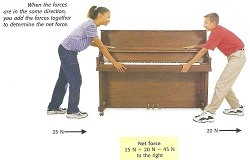
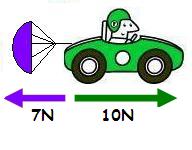

Student A is pulling at 57 newtons and student B is pushing at 96 newtons. What is the net force (calculation).
153 N Left
39 N Left
153 N Right
39

Mrs. Jones is pulling a rope at 73 newtons, and a student is pulling a rope at 47 newtons. What is the net force (calculation).
26
120 N Left
26 N Left
120

What is the net force (calculation).
5 N Right
19 N Left
13 N Right
13 N Left

Determine whether the following example is Potential Energy (PE) or Kinetic Energy (KE):
flashlight turned off
Potential Energy
Kinetic Energy

Determine whether the following example is Potential Energy (PE) or Kinetic Energy (KE):
fire burning
Potential Energy
Kinetic Energy

Determine whether the following example is Potential Energy (PE) or Kinetic Energy (KE):
a beaker of vinegar and a container of baking soda
Potential Energy
Kinetic Energy

Determine whether the following example is Potential Energy (PE) or Kinetic Energy (KE):
a cat running along a fence
Potential Energy
Kinetic Energy

Determine whether the following example is Potential Energy (PE) or Kinetic Energy (KE):
a baseball thrown by a pitcher
PE
KE

Determine whether the following example is Potential Energy (PE) or Kinetic Energy (KE):
a battery
PE
KE

Determine whether the following example is Potential Energy (PE) or Kinetic Energy (KE):
a toaster producing heat
PE
KE

Determine whether the following example is Potential Energy (PE) or Kinetic Energy (KE):
a book sitting on a desk
PE
KE


A cart carrying a brick is pulled up an inclined plane. At what point does the cart have the greatest amount of potential energy?
A
B
C

Roller coasters use potential and kinetic energy to move carts around the track. Which selection below organizes the points of potential energy from GREATEST to LEAST?
C, D, H, K, N
B, D, H, J, L
A, D, H, K, M
A, E, G, I, M

A rock falls over a waterfall as shown in the diagram. At which point does the rock have the most potential energy?
2
3
4

In the classroom demonstration shown below, a rubber ball is dropped from Position 1. The ball bounces as shown. At which of these positions does the ball have both the greatest kinetic energy and the least PE?
1
2
3
4

According to the above diagram, at what point would the roller coaster car have the greatest kinetic energy?
3
4
5
6

The drawing shows two identical airplanes at an air show. The airplanes are flying at the same speed. Airplane W is flying 50 m higher than Airplane X. Which statement best describes the energy of the two airplanes?
Airplane W has a greater kinetic energy than Airplane X.
The two airplanes have the same gravitational potential energy but different kinetic energies.
Airplane X has more gravitational potential energy than Airplane W.
The two airplanes have the same kinetic energy but different gravitational potential energies.

A bicycle rider is traveling up a hill. When the rider reaches the top of the hill, she stops to rest. Then she travels down the hill. The diagram shows the rider in the three different positions.Which of these correctly
When the rider is at the top of the hill, her potential energy is the greatest, and her kinetic energy is the least.
As the rider moves up the hill, her kinetic energy increases, and her potential energy decreases.
When the rider goes down the hill, her potential energy increases, and her kinetic energy decreases.
As the rider reaches the bottom of the hill, her kinetic energy and her potential energy decrease.
Potential energy depends on the ________ and ________ of the object.
Speed and Direction
Height and Mass
State of Matter and Properties

When a pendulum swings, at which point is potential energy at its greatest?
5
4
3
2
1

When the pendulum swings, at which point is potential and kinetic energy are 50%?
1
2
3

When the pendulum swings, at which point is maximum kinetic energy?
1
2
3
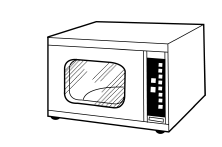


Which of the following is the correct chain of energy that takes place when a flashlight is turned on?
chemical => electrical => light
mechanical => electrical => light
nuclear => chemical => light
thermal => chemical => mechanical
What type of energy is food energy stored in your muscles?
mechanical
nuclear
thermal
chemical
What is the correct energy chain from the sun to grass to cow?
light and thermal => chemical => chemical
light => heat => mechanical => chemical
light => thermal => mechanical
nuclear => chemical => potential
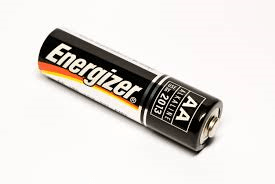


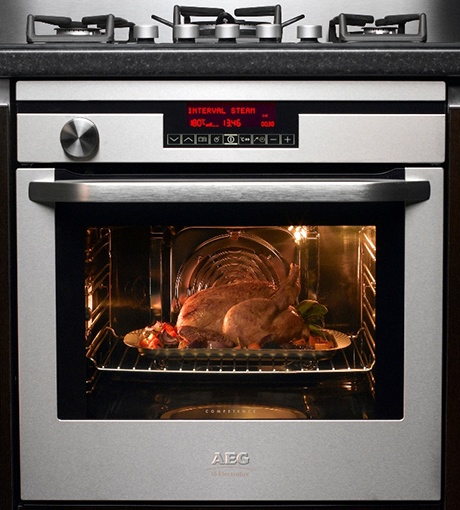
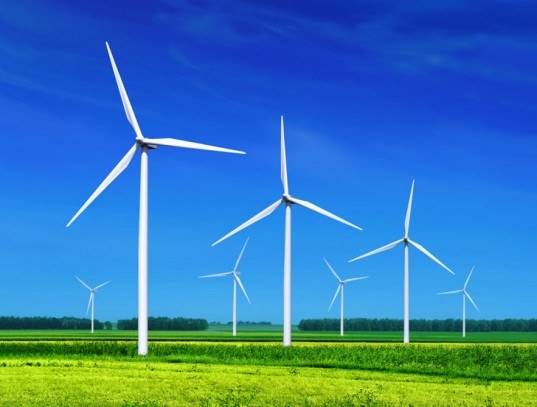


Which of the following best describes the energy transformations that occur when a flashlight that runs on batteries is turned on?
chemical to mechanical to electrical to radiant
radiant to electrical to sound
chemical to radiant to mechanical to electrical
electric to radiant to chemical

What energy transformation occurs during photosynthesis?
Chemical --> Radiant
Thermal --> Chemical
Radiant --> Chemical
Mechanical --> Thermal

What energy transformation occurs in the chameleon as it quickly launches its tongue to catch an insect?
Radiant --> Chemical
Thermal --> Chemical
Chemical --> Mechanical
Mechanical --> Chemical
ductile means...
can be made into wire
can be bent or hammered
can light up a light bulb
it's shiny

Which group of elements could have the characteristic of brittle?
Metal
Nonmetal
Conductivity is the ability to
reflect light from a lustrous surface
transfer thermal and electrical energy
exist as a solid, liquid, or gas
be hammered into thin sheets