
Font size
 Worksheets
Failures of the American Democracy Comprehensive Assessment
Total questions: 100
Worksheet time: 3hrs 46mins
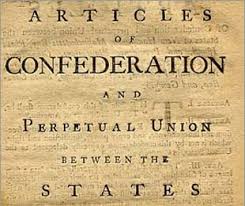
Which of the following statements best explains the reason why the Founding Fathers created such a weak national government under the Articles of Confederation?
The Founding Fathers created the document during the American Revolution, so they were in a hurry!
The Founding Fathers saw Great Britain's model of government and attempted to copy their ideas.
The Founding Fathers were fearful of the federal government becoming too powerful.
The Founding Fathers created a strong federal government under the Articles of Confederation.
What act forced American Indians in the East to move west of the Mississippi River?
The American Indian Act
The Trail of Tears Act
The Indian Removal Act
The Andrew Jackson Act
What was the 1000 mile walk to Indian territory in the west called?
Boston Marathon
Run of your Life
Trail of Tears
Sadness Trail
What terrible conditions did the Indians face on the Trail of Tears? Pick 3
Walking Barefoot
Endless Food Supply
Freezing Cold Weather
Little Food
Hotel Accommodations
What were Indians forced to live on after the Trail of Tears?
Apartment
Tent
Reservations
With their enemy tribes
The five major American Indian groups in the Southeast that were relocated to Indian Territory were the: Cherokee, Creek, Chickasaw, Choctaw, and Seminole.
True
False


Which reason correctly replaces the question mark on this list?
Decrease in interest rates
Failure of banks
Outsourcing of manufacturing jobs
Outbreak of a global war
During the Stock Market crasch of 1929,
investors quickly bought more stocks to ensure a profit.
stock prices fell, causing billions of dollars to be lost.
stores hired more employees to capitalize on consumer demand.
banks loaned money to homeowners to cover their mortgages.
How did the stock market crash of 1929 contribute to the Great Depression?
After the crash, wealthy people took the money they had and moved abroad.
The crash left the economy too weak to overcome bigger challenges.
The poor had invested heavily in the stock market and lost whatever money they had.
Wall Street traders lost their jobs, creating massive unemployment.
How did an economic recession help cause the Great Depression?
Americans bought less, causing less demand for goods
Bank runs caused depositors to withdraw all their money from banks
The market bubble popped, crashing Wall Street
Low interest rates encouraged risky speculation
Hey students! Do you know what The No Child Left Behind Act did? Let's see if you can guess it right!
Limited days off school so that snow days were replaced by digital days.
Established common core learning in schools.
Ensured that bus drivers never left without accounting for all students.
Introduced standardized testing as a way to evaluate a school.
When ESSA replaced NCLB, what exciting change took place?
Standardized testing was deemed ineffective and eliminated entirely.
Major changes were made to the curriculums, and common core learning was implemented.
Some modifications were made to standardized tests, but the tests were not totally eliminated.
The government decided that a school's academic quality could not be determined by tests alone, so the schools were entered into the Hunger Games. Benjamin and Oliver were the first tributes!
In what year was the No Child Left Behind Act passed?
2021
2001
2015
2002
What year was the No Child Left Behind Act replaced?
2015
2001
2021
2008
What was NOT the goal of standardized testing?
Aid teachers in creating a curriculum
Measure the academic quality of a school
An unbiased form of testing that perfectly shows how students are understanding information
Baseline for comparison of students, and whether teachers are being effective
Who was held accountable for students' performances in standardized testing?
Teachers and administrators
State government
County officials
Teachers, parents, and students
What was the "impossible dream?"
The rule that enforced the standard of 90% of students reading at a basic level.
The expectation that over a decade all students would be reading at a proficient level.
The agreement to double student reading performance every year.
A opposite of a possible nightmare.
Which of the following was NOT an issue encountered with the NCLB policy
Senators did not know what was in the bill
Schools were shown favoritism based on state they were located in
The proficiency expectations of the bill were deemed unfair by educators
District Administrators would be replaced if a school was low performing.
The South was also known as...
The Confederacy
The Union
The Imperative
The Coalition
The North was also known as...
The Confederacy
The Union
The Imperative
The Coalition
What were the two reasons that the Union had for fighting?
Preserve the Southern way of life
Free the slaves
Preserve the Union
Buried Treasure in the South
Which was an advantage of the North in the Civil War?
strong military leadership
larger population
fighting a defensive war
defending their liberty and homes
What was an advantage of the South in the Civil War?
larger population
strong military leadership
more farms
more factories and businesses

Control of this waterway was an important part of the North's strategy to win the war
Ohio River
Tennessee River
Missouri River
Mississippi River

What was the purpose of the Union's naval blockade strategy?
to keep slaves from escaping
to cut-off Southern trade & ruin the Confederate economy
to supply markets for Northern industries
to capture the Mississippi & Missouri Rivers

WHAT IS LINCOLN'S MAIN GOAL WHEN HE IS INAUGURATED?
TO END SLAVERY
TO KEEP THE COUNTRY UNITED
TO START THE WAR
TO REMOVE ALL NATIVE AMERICANS
What are the Thirteenth, Fourteenth, and Fifteenth amendments collectively referred to as?
The Freedom Amendments
The Equality Amendments
The Civil Rights Amendments
The Reconstruction Amendments
What did the Thirteenth Amendment accomplish?
Granted the right to vote regardless of race
Extended citizenship to all born or naturalized in the U.S.
Ended slavery in the United States
Protected rights of U.S. citizens from state infringement
Which amendment declares that all people born or naturalized in the United States are citizens?
Sixteenth Amendment
Thirteenth Amendment
Fourteenth Amendment
Fifteenth Amendment
What did the Black Codes and Jim Crow Laws do?
Granted equality to former slaves
Ensured voting rights for all regardless of race
Restricted Blacks and denied them true equality
Abolished slavery throughout the United States
What did the Fifteenth Amendment address?
Citizenship and naturalization
Voting rights not being denied on account of race
Ending slavery
Equal protection under the law
What were some methods used to block Blacks from voting after Reconstruction?
Online voting registration
Voter ID laws and residency requirements
Automatic voter registration
Poll taxes, grandfather clause, and literacy tests
What does the Fourteenth Amendment require from states?
To end slavery
To provide equal protection of the laws and due process
To grant voting rights regardless of race
To return runaway slaves to their owners
What was the main purpose of the Reconstruction Amendments?
To establish the federal income tax
To grant women the right to vote
To establish policy regarding the end of slavery and protection of rights for former slaves
To limit the powers of the federal government
Cause: European immigrants moving to cities looking for work
Effect: ?????????????
Rapid Rise of Urbanization
Gold Rush in San Francisco
Passing the Indian Removal Act
Mexican American War


Problems caused by urbanization
Aided Westward Expansion
An organized work stoppage intended to force an employer to address union demands.
overcrowding, pollution, unsanitary living conditions
quick method of production where items are brought to workers
Negative effects of Industrialization
More efficient than small businesses
Allowed for labor exploitation (child labor) and abuse.
First American "big business"
Negative terminology as related to the wealthy.
Strike
jobs could be easily found because they required unskilled labor
producing large quantities of goods as quickly and cheaply as possible
banker and later owned a steel company
An organized work stoppage intended to force an employer to address union demands.
Labor Union
Railroad monopolist
An organization of workers that tries to improve working conditions, wages, and benefits for its members.
More efficient than small businesses
Used as a cheap source of labor

Making large quantities of products quickly and cheaply is called:
Monopolies
Nativism
Urbanization
Mass production

Who EXPOSED corruption in government and problems in society?
Corporations
Labor unions
Muckrakers
Trustbusters

Which one describes Urbanization?
The rise and growth of cities
The creation of factories and industries

Which one describes Industrialization?
The rise and growth of cities
The creation of factories and industries

Which of these is not an example of poor working conditions for the workers?
Low wages (pay)
Unsafe working conditions
Long hours (10-12 hours day 6 days a week)
Unemployment insurance

Where were many children/young teenagers in the Gilded Age?
They went to school while their parents worked
They were working in factories or mines like their parents
They were placed in daycare centers in settlement houses

Which is not a reason so many young girls died in the Triangle Shirtwaist fire?
Doors were locked from the outside
The fire hose and fire escape didn't work or broke
The fire department did not show up to stop the fire
Doors were too small for multiple people to get out
Skilled Worker
worker that has no education
worker that has a specific skill
worker that has no specific skill
worker that can easily be replaced
Commerce
using machines to complete a product
teamwork used to reach a specific goal
to give a speech at a graduation
trade

How did the Industrial Revolution change the way we create goods?
we made fewer products
we made better quality products
we made products from home
mass production & cheaper goods

What were some problems women working in factories encountered?
long hours, good pay
Low wages, long hours, dangerous
dangerous, long hours, good pay
low wages, good hours, dangerous
What was the period after the Civil War when the federal government “rebuilt” the former Confederate states and readmitted them to the Union called?
Reconstruction
Imperialism
Reindustrialization
McCarthyism
Which amendment ended slavery?
12th
13th
14th
15th
.... this sign represents what laws in the South

What areas were racially segregated?
Schools
Housing
Public Transportation
All of these answers
What Supreme Court ruling said that segregation (separating black & White children in public schools was unconstitutional?
Jim Crow vs Harriet Tubman
Brown vs. Board of Education
Plessy vs Ferguson
Smith vs. Jones

the right to vote
Justice
Veto
Suffrage
Amendment
What was the overall goal of the women’s suffrage movement?
To help African American men gain the right to vote.
To help women learn how to read.
To help women gain the right to vote.
To help white men earn more land.
Which Civil Rights Activist campaign was a pastor who worked to advance the rights of African Americans?
Cesar Chavez
Rigoberta Menchu
Martin Luther King Jr

Suffrage means......
the right to vote
the right for women to vote
the women who fought for women’s rights
the fight for women’s rights
The first Women’s Rights Convention was held in:
Niagara Falls, NY
Seneca Falls, NY
Sonoma Falls, NY
Seleca Falls, NY
Which one of these is NOT a form of media?
radio
television
newspapers
personal letters
Technology changed Americans lives for the better after WWII.
True
False

Why did President Woodrow Wilson stand behind women's suffrage?
Because women had been important to the war effort during World War I.
Because the women had ruined his inauguration.
Because the women had threatened to protest his presidency.

The 19th Amendment ended all discrimination in voting.
Trues
False


On which floor did the women in the fire work?
1
9
3
10
Conditions were hazardous at the Triangle Shirtwaist Factory.
True
False
What happened to the owners of the Factory because of the locked door that caused many deaths?
they had to pay a fine
they were acquitted of all charges
they were banned from never opening up a factory ever again
they were deported from the United States
What was the primary product manufactured at the Triangle Shirtwaist Factory?
Pants
Blouses
Hats
Shoes
Which group of people primarily worked at the Triangle Shirtwaist Factory?
Young immigrant women
Elderly men
Children
College students
What was one of the unsafe practices used by the factory managers to increase productivity?
Providing free meals
Locking the exterior doors
Offering bonuses
Allowing flexible hours
Evaluate the effectiveness of the safety measures in place at the Triangle Shirtwaist Factory during the fire.
Highly effective, as all workers were saved.
Moderately effective, as some workers were saved.
Ineffective, as there were no proper safety measures, leading to many deaths.
Effective, as the fire was quickly extinguished.
What was the outcome of the Triangle Shirtwaist Factory Fire in terms of public response?
It was largely ignored by the public.
It led to a massive public funeral procession and increased awareness of workers' rights.
It resulted in the factory being rebuilt immediately.
It caused a decline in the garment industry.
How did the Triangle Shirtwaist Factory Fire influence future labor laws?
It had no influence on labor laws.
It led to the creation of new state laws that later influenced federal laws in the 1930s.
It resulted in the abolition of all factories.
It caused a decrease in factory production.
Discuss the role of Progressive reformers in the aftermath of the Triangle Shirtwaist Factory Fire. How did they contribute to changes in labor laws?
They ignored the event and focused on other issues.
They worked with politicians to pass new safety laws for workers.
They opposed any changes to labor laws.
They supported the factory owners' practices.
What were the working conditions like at the Triangle Shirtwaist Factory before the fire?
Safe and comfortable
Unsanitary and dangerous
Modern and efficient
Relaxed and flexible
Why did the Triangle Shirtwaist Factory Fire receive national attention, and what was its significance in the context of the Progressive Era?
It was a minor event with little impact.
It was a significant tragedy that highlighted the need for labor reform, aligning with the goals of the Progressive Era.
It was an isolated incident with no broader implications.
It was celebrated as a success of industrialization.
Part A: What is the central idea of “The Triangle Shirtwaist Factory Fire of 1911” ?
The Triangle Shirtwaist Factory Fire showed how important it is to practice fire safety at work.
The Triangle Shirtwaist Factory Fire showed how far we have come as a society when it comes to fire and work safety.
The Triangle Shirtwaist Factory Fire showed how a community can come together during a tragedy.
The Triangle Shirtwaist Factory Fire showed the dangerous consequences that unsafe working conditions and corrupt business owners could have for workers.
What was a direct consequence of poor working conditions during the Industrial Revolution?
Increased life expectancy
High rates of worker satisfaction
Frequent accidents and injuries among workers
A decrease in factory production

