
 Worksheets
25-26 Semester Final U.S. History
Total questions: 140
Worksheet time: 1hrs 10mins
Name
Class
Date
1.
Reconstruction was the effort to
a)
return Confederate soldiers to the army.
b)
repair damage to the southern states, bring them back to the Union and support the freedmen
c)
provide voting rights to Black Americans.
d)
bring failed southern factories back to economic health.
2.
Poll taxes and literacy tests in the South were intended to
a)
keep Black Americans from voting.
b)
improve the quality of voters.
c)
ensure that local financial coffers were not depleted.
d)
raise the educational standards of the communities
3.
Tenant farmers
a)
owned the land they farmed.
b)
paid to rent land to farm.
c)
worked for a local agricultural society.
d)
farmed in exchange for a share of the crop
4.
Why did the Radical Republicans disagree with Lincoln's reconstruction plan?
a)
They thought it was too harsh.
b)
They thought it was too lenient.
c)
They thought it couldn't be enacted in a timely fashion.
d)
They thought it would require an illegal pocket veto.
5.
The Thirteenth Amendment
a)
the civil rights of all citizens.
b)
women's right to vote.
c)
Black Americans from being enslaved.
d)
voting rights for all men.
6.
The Fourteenth Amendment insured
a)
the civil rights of all citizens. (except Native Americans during this time)
b)
women's right to vote.
c)
Black Americans from being enslaved.
d)
voting rights for all men.
7.
The Fifteenth Amendment insured
a)
the civil rights of all citizens.
b)
women's right to vote.
c)
African Americans from being enslaved.
d)
voting rights for all men.
8.
Who became President through “a Corrupt Bargain” thus ending the Reconstruction Era?
a)
Ulysses S. Grant
b)
Thaddeus Stevens
c)
Andrew Johnson
d)
Rutherford B Hayes
9.
The term "carpetbaggers" refers to
a)
furniture repairmen who worked in the South.
b)
southerners who moved north after the Civil War.
c)
northerners who moved south after the Civil War.
d)
white southern Republicans.
10.
Black codes and Jim Crow Laws were intended to restrict the
a)
rights of Black Americans.
b)
ability of southern leaders to govern.
c)
freedom of tenant farmers.
d)
number of northerners allowed to move to the South.
11.
In the case of Plessy v. Ferguson, the Supreme Court decided that
a)
black schools were inferior to white schools.
b)
segregation was illegal.
c)
blacks had the right to vote.
d)
segregation was legal
12.
Who was the leader of the Union Army during the Civil War who went on to win the Presidential election in 1868?
a)
Andrew Johnson
b)
Thaddeus Stevens
c)
John Wilkes Booth
d)
Ulysses S. Grant
13.
Which group wanted to give more rights to freed slaves?
a)
Southern Democrats
b)
Ku Klux Klan
c)
Northern Radical Republicans
d)
White League
14.
What is the practice of separating people by race?
a)
Segregation
b)
Temperance
c)
Intolerance
d)
Liberty
15.
What harsh requirements took away the voting rights of Black Americans in the South?
a)
Income taxes and land-ownership requirements.
b)
Poll taxes and land-ownership requirements.
c)
Income taxes and literacy requirements.
d)
Poll taxes and literacy requirements.
16.
Why do some historians call Reconstruction “an extension of the Civil War”
a)
Because battles between the Union and Confederacy continued until 1877.
b)
Because the South and North kept fighting over slavery in Western territories.
c)
Because conflicts over rights, power, and race continued through laws, violence, and politics even after the war ended.
d)
Because Abraham Lincoln led military campaigns during Reconstruction.
17.
All of the following are true about Andrew Johnson except...
a)
He was Lincoln's Vice President
b)
He was not trusted by leaders in the north and the south
c)
He ran for re-election in 1868
d)
He was impeached for firing Edward Stanton
18.
All of the following are true about Black Codes except...
a)
Some gave Black Americans "40 acres and a Mule"
b)
Some limited the work Black Americans could do.
c)
Some made it so you could arrest a vagrant and put them to work.
d)
Some made it so that Black Americans could not be taught to read or write.
19.
The term "Gilded Age" was coined by whom?
a)
Rockefeller
b)
Mark Twain
c)
Teddy Roosevelt
d)
Andrew Carnegie
20.
All of the following are examples of PUSH factors for immigration EXCEPT...
a)
Famine
b)
War
c)
Religious freedom
d)
Religious persecution
21.
All of the following are PULL factors for immigration EXCEPT
a)
Family/ Friends
b)
Religious Freedom
c)
Famine
d)
Jobs
22.
Where were immigrants from Europe typically processed as they came into America?
a)
Alcatraz Island
b)
Angel Island
c)
Ellis Island
d)
Manhattan Island
23.
Where were immigrants from Asia typically processed as they came into America?
a)
Rhode Island
b)
Angel Island
c)
Ellis Island
d)
Manhattan Island
24.
People who invest money into the community by building libraries, schools and museums are typically known as _________________.
a)
Entrepreneurs
b)
Industrialists
c)
Poor
d)
Philanthropists
25.
All of the following statements about company towns is are true EXCEPT...
a)
Workers in company towns often lived in housing owned by their employers.
b)
Company towns were designed to provide workers with housing and access to basic services.
c)
Workers in company towns were typically free to shop wherever they wanted, without restrictions.
d)
In company towns, employers sometimes controlled wages, housing costs, and even stores where workers bought goods.
26.
Which strike/riot took place in Chicago after a bomb was thrown into the crowd. It turned the public off to unions?
a)
Pullman Strike
b)
Haymarket Riot
c)
Homestead Strike
d)
New Orleans Riot
27.
The Homestead Strike of 1892 took place in which industry?
a)
Railroads
b)
Steel
c)
Oil
d)
Banking
28.
_____________ created Standard Oil and ended up gaining control of 90% of the nation’s oil refining.
a)
JP Morgan
b)
Cornelius Vanderbilt
c)
John D. Rockefeller
d)
Andrew Carnegie
29.
_____________ was known for his banking expertise during the Gilded Age. "Monopoly man is created in his image."
a)
JP Morgan
b)
Cornelius Vanderbilt
c)
John D. Rockefeller
d)
Andrew Carnegie
30.
_____________ otherwise known as "The Commodore" started his business in the shipping industry and then quickly turned to the Railroads because the realized they would be more profitable.
a)
JP Morgan
b)
Cornelius Vanderbilt
c)
John D. Rockefeller
d)
Andrew Carnegie
31.
_____________ Created a successful steel business in Pennsylvania.
a)
JP Morgan
b)
Cornelius Vanderbilt
c)
John D. Rockefeller
d)
Andrew Carnegie
32.
All of the following are true about Andrew Carnegie EXCEPT
a)
He grew up poor from Scotland
b)
He wrote the Gospel of Wealth
c)
He gave 80% of his wealth away
d)
He was the creator of the Safety Elevator
33.
Henry Frick hired which individuals to help squash the strikers at Homestead.
a)
The National Guard
b)
The Pinkertons
c)
The U.S. Military
d)
The Hessians
34.
Which mode of transportation led to the creation of time zones and changed the landscape of American cities during the Gilded Age?
a)
Automobiles
b)
Railroads
c)
Airplanes
d)
Steamboats
35.
All of the following are true about the "Gospel of Wealth" EXCEPT.
a)
It was written by Rockefellar
b)
It argued that the wealthy have a duty to use their riches for the benefit of society.
c)
It advocated for direct charity to individuals as the best way to address poverty.
d)
It promoted the idea that the rich should fund public institutions like libraries and universities
36.
Which of the following might people during the Gilded Age consider to be a "Robber Baron"?
a)
Nikola Tesla
b)
Samuel Gompers
c)
Cornelius Vanderbilt
d)
Thomas Edison
37.
All of the following are true about labor during the Gilded Age EXCEPT
a)
1 in 5 children worked in the Factories
b)
Workers worked long hours sometimes 14 hour days
c)
Government supported Laborers
d)
If you got injured on the job you were on your own. ( No insurance or workman's comp)
38.
The concept of helping people become more acclimated to American culture was known as:
a)
Americanization
b)
Indoctrination
c)
White washing
d)
Implementation
39.
Which government policy can protect local business by making imported goods cost more?
a)
Patents
b)
Laissez-faire
c)
Trust
d)
Protective Tariffs
40.
Which government policy allowed business to thrive by being "hands off."
a)
Patents
b)
Laissez-faire
c)
Trust
d)
Protective Tariffs
41.
All of the following are examples of tension and strikes between laborers and business owners EXCEPT…
a)
Homestead
b)
Haymarket
c)
Pullman
d)
Angel Island
42.
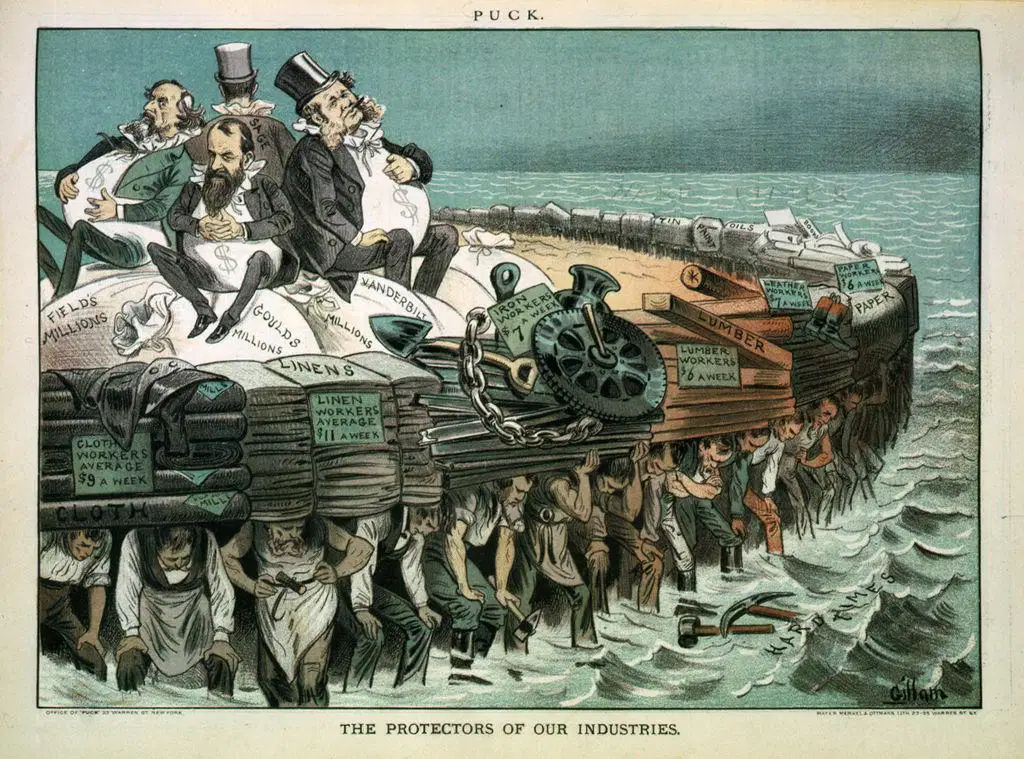
The image above shows:
a)
Robber Barons
b)
Captains of Industry
c)
Congress
d)
U.S Military
43.
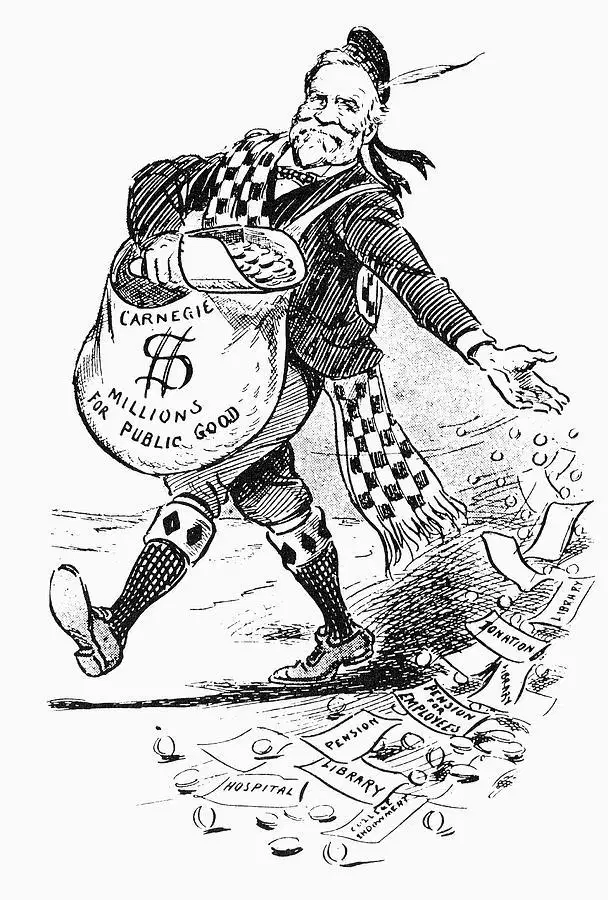
The image above shows:
a)
Robber Barons
b)
Captains of Industry
c)
Congress
d)
U.S Military
44.
Who was the only president before Trump to serve 2 non-consecutive terms. He was known for his integrity and fought political corruption.
a)
Grover Cleveland
b)
James A. Garfield
c)
William Jennings Bryan
d)
Boss Tweed
e)
Brigham Young
45.
Toured the nation giving his “Cross of Gold" speech. Ran for President of the United States in 1896 and 1900. (Lost each time)
a)
William Jennings Bryan
b)
James A. Garfield
c)
Boss Tweed
d)
Brigham Young
e)
Bill Pickett
46.
Is known by historians as the “American Moses.”
a)
Brigham Young
b)
James A. Garfield
c)
William Jennings Bryan
d)
Boss Tweed
e)
Bill Pickett
47.
President who was assassinated because he didn’t give a supporter a political job.
a)
James A. Garfield
b)
William Jennings Bryan
c)
Boss Tweed
d)
Brigham Young
e)
Bill Pickett
48.
A Political Boss who bilked New York City out of millions of dollars.
a)
Boss Tweed
b)
James A. Garfield
c)
William Jennings Bryan
d)
Brigham Young
e)
Bill Pickett
49.
Civil War hero who sought glory in the Indian Wars. He and his entire regiment was killed in the Battle of Little Bighorn.
a)
George Armstrong Custer
b)
James A.Garfield
c)
William Jennings Bryan
d)
Boss Tweed
e)
Brigham Young
50.
All of these contributed to the growth of Westward expansion during the 1800s except
a)
Manifest Destiny
b)
Homestead Act
c)
Pendleton Act
d)
Transcontinental Railroad
51.
All of these are reasons settlers pushed Native Americans off their land Except...
a)
Natives betrayed previous treaties, which upset the white Americans.
b)
US Government gave the land to the settlers.
c)
Gold and Silver were found on Native lands.
d)
They wanted to build a Railroad through tribal lands.
52.
All of these are examples of ways Native Americans were forced to assimilation" EXCEPT...
a)
Culture and Rituals were outlawed.
b)
Forced to move to Canada
c)
Use farming to sustain life
d)
Sent children to boarding schools
53.
What did the Transcontinental Railroad connect?
a)
Mexico to Canada
b)
The United States to Mexico
c)
East Coast to West Coast
d)
The United States to Canada
54.
Who was Sitting Bull?
a)
Native leader killed by General Custer
b)
Native leader who tried to resolve issues peacefully
c)
Native leader who led the slaughter of a U.S. general and his soldiers
d)
U.S. general was killed by Native Americans
55.
What happened at the Battle of Wounded Knee?
a)
Sitting Bull and his Native army mascaraed General Custer and his men.
b)
Hundreds of Natives were killed by United States soldiers.
c)
Sitting Bull narrowly escaped with his life, having been shot in the knee.
d)
The Lakota Natives finally won their independence.
56.
All of these are true about the Nez Perce Chief Joseph Except...
a)
He tried to flee with his people to Canada
b)
He went to Washington to fight for the rights of his people
c)
He attacked stagecoaches and settlements trying to push US settlers off his land.
d)
He gave the famous quote, “I will fight no more forever.”
57.
What did settlers have to do in order to get their land under the Homestead Act?
a)
Stay for five years and improve the land.
b)
Make peace with local Native Americans.
c)
Pay a fee of 25 American Dollars per acre.
d)
Bribe a government official.
58.
Which Wizard of Oz character could be said to represent the politicians of this time?
a)
The Wizard
b)
The Tin-Man
c)
The Winkies
d)
The Scarecrow
59.
Who helped teach the “American Cowboy” how to be cowboys?
a)
Vaqueros
b)
Exodusters
c)
Longhorns
d)
The Mormons
60.
What religious ceremony was practiced with the main goal of “banishing settlers from the land”?
a)
Eagle Call
b)
Ghost Dance
c)
Tatanka Ride
d)
Spirit Journey
61.
All of the following are true about Populism Except...
a)
It was a political party that was strongly supported by the Farmers of America.
b)
They wanted to get rid of the gold standard in America
c)
The wanted more regulation on Banks and Railroads
d)
They represented the rich in America.
62.
Where did the 2 railroads of the Transcontinental RR meet up?
a)
Omaha, Nebraska
b)
Promontory Pointe, Utah
c)
Sacramento, California
d)
New York, New York
63.
All of these are conflicts between the Native Americans and the US Military, EXCEPT...
a)
Battle of Little Bighorn
b)
Wounded Knee
c)
Sand Creek
d)
Tammany Hall
64.
All of these were important Native American leaders EXCEPT...
a)
Chief Joseph
b)
Sitting Bull
c)
Crazy Horse
d)
Custer
65.
The Westward expansion of the railroads did all of the following EXCEPT...
a)
Expanded the economy
b)
Created more tension between settlers and Native Americans
c)
Led to tension between Mexico and Canada
d)
Provide cheap land for settlers to purchase through land grants offered to the railroad companies
66.
All of the following contributed to the end of the open range cattle system in the late 19th century EXCEPT
a)
The invention and widespread use of barbed wire, which fenced off grazing lands.
b)
Price of beef plummeted around the 1880s
c)
Harsh winters and scorching summers killed large numbers of cattle.
d)
Federal laws that strictly limited the number of cattle ranches in the West.
67.
All of the following are true about Cow-Towns EXCEPT...
a)
They were famous for having a lot of colorful characters like Jessie James and Doc Holiday.
b)
It was where the cowboys and cattle stayed before they were sent off on the cattle drives
c)
It was the birthplace of the rodeos
d)
It was where the cattle drives ended
68.
All of these are true about Political cartoons EXCEPT...
a)
They attacked the corruption in politics and other injustices
b)
They were paid for by politicians
c)
They helped express complex political ideas to illiterate Americans.
d)
Their humor helps drive home the message.
69.
All of the following are reasons why the farmers struggled financially in the late 1800s EXCEPT...
a)
Railroads kept changing their rates
b)
Banks charged high-interest rates on loans
c)
Prices for grains rose
d)
The cost of farming supplies rose
70.
How did Boss Tweed and Tammany Hall gain and maintain power in New York City?
a)
By supporting labor unions and farmers
b)
By controlling immigration and trade
c)
By helping immigrants in exchange for votes
d)
By promoting women’s suffrage
71.
Who was the author of the book "The Jungle?"
a)
Thomas Nast
b)
Ida Tarbell
c)
Upton Sinclair
d)
Jacob Riis
72.
Which Amendment gave women the right to vote?
a)
16th Amendment
b)
17th Amendment
c)
18th Amendment
d)
19th Amendment
73.
Which Amendment allows for an income tax?
a)
16th Amendment
b)
17th Amendment
c)
18th Amendment
d)
19th Amendment
74.
Which Amendment, known as the “Prohibition” Amendment, made the production and sale of alcohol illegal?
a)
16th Amendment
b)
17th Amendment
c)
18th Amendment
d)
19th Amendment
75.
Which Amendment allowed the people to directly vote for their congressmen?
a)
16th Amendment
b)
17th Amendment
c)
18th Amendment
d)
19th Amendment
76.
Who was the first woman to win a Nobel Prize for creating the Hull House (Settlement Housing) in an attempt to improve urban living conditions?
a)
Carrie Nation
b)
Jane Adams
c)
Susan B. Anthony
d)
Queen Liliuokalani
77.
@@@When the voters put forth a law to be voted on by other citizens it is called a/an…
a)
Referendum
b)
Reconstruction
c)
Recall
d)
Initiative
78.
When the voters get to vote on whether a law is in or it is out…
a)
Referendum
b)
Reconstruction
c)
Recall
d)
Initiative
79.
What was the name given to writers of magazine articles and books who made people more aware of economic problems at the start of the Progressive Era?
a)
Muckrakers
b)
Carpetbaggers
c)
Socialists
d)
Elitists
80.
Which organization was created in 1910 by African Americans and some whites to challenge cases of segregation, lynching, discrimination, and racism?
a)
CIA
b)
FBI
c)
NAACP
d)
WNBA
81.
What important book exposed the unsafe and unhealthy practices of Chicago’s meat-packing industry?
a)
The Meat-Packer’s Plight
b)
The Industry
c)
The City
d)
The Jungle
82.
Which Civil Rights leader pushed for more immediate reform and started the Niagara Movement.
a)
WEB DuBois
b)
Booker T Washington
c)
William McKinley
d)
Teddy Roosevelt
83.
Which Civil Rights leader encouraged the black community to work hard and be patient?
a)
WEB DuBois
b)
Booker T Washington
c)
William McKinley
d)
Teddy Roosevelt
84.
Which leader was shot and killed shortly after starting his second term?
a)
WEB DuBois
b)
Booker T Washington
c)
William McKinley
d)
Teddy Roosevelt
85.
Which leader was shot and yet still went on to deliver his 90 min speech?
a)
DuBois
b)
Booker T Washington
c)
William McKinley
d)
Teddy Roosevelt
86.
When a stronger nation takes charge of a weaker nation through diplomacy and or military strength.
a)
Nationalism
b)
Imperialism
c)
Communism
d)
Diplomatic Relations
87.
Which Nation did not have a Sphere of Influence in China during the Age of Imperialism and therefore was pushing for an “Open Door Policy.”
a)
The US
b)
Great Britain
c)
France
d)
Japan
88.
The Rough Riders were a volunteer cavalry regiment, led by Theodore Roosevelt during the __________________________.
a)
Spanish-American War
b)
Philippine Insurrection
c)
Overthrow of Hawaii’s Queen
d)
Acquisition of Alaska
89.
Named himself President of the Republic of Hawaii after he and other business owners overthrew Queen Liliuokalani.
a)
Sanford Dole
b)
George Dewey
c)
Alfred Mahan
d)
Theodore Roosevelt
90.
Exaggerated form of journalism which helped rally American Support for the Spanish-American War.
a)
Creative Journalism
b)
Yellow Journalism
c)
Diplomatic Journalism
d)
War-mongering Journalism
91.
Led an unsuccessful rebellion in the Philippines against the US.
a)
Queen Lilioukalani
b)
General Pershing
c)
Sanford Dole
d)
Emilio Aguinaldo
92.
What was the first of two events that led to war between the United States and Spain?
a)
A Spanish ambassador accused President McKinley of being weak
b)
A Spanish ambassador accused Americans of being weak.
c)
A Spanish Ambassador ordered the assassination of President McKinley
d)
A Spanish ambassador executed thousands of Americans in Cuba
93.
What was the second of the two events that led to war between the United States and Spain?
a)
The discovery of Spanish spies in Miami
b)
The sinking of the U.S.S. Maine
c)
The Spanish invasion of Texas
d)
The Cuban Missile Crisis
94.
All of the following were results of the Spanish-America War EXCEPT...
a)
Cuba gained independence.
b)
U.S. took control of the Philippines.
c)
U.S. took control of Puerto Rico and Guam.
d)
The Boxer Rebellion started
95.
Peasants from northern China started the Boxer Rebellion in opposition to ______________.
a)
increased European and American influence
b)
high taxes imposed by the Chinese government
c)
a failed Chinese healthcare system.
d)
Europe’s treatment of the United States
96.
Who did the Bull Moose Party represent?
a)
Socialists- Debs
b)
Progressives- Roosevelt
c)
Democrats- Wilson
d)
Republicans- Taft
97.
The United States wanted overseas territories because the territories had all of the following EXCEPT...
a)
access to naval ports
b)
customers who buy U.S. products
c)
good strong governments.
d)
access to raw materials
98.
Which President is most closely associated with the phrase “Speak softly and carry a big stick”?
a)
Woodrow Wilson
b)
William McKinley
c)
Theodore Roosevelt
d)
William Howard Taft
99.
The Spanish-American War (1898) was significant in U.S. history because it
a)
Marked the end of slavery in the United States.
b)
Led to the U.S. gaining overseas territories and becoming a world power.
c)
Ended the U.S. policy of isolationism that began after World War I.
d)
Brought the U.S. into conflict with Germany and France over colonies
100.
What was World War I called at the time it was fought?
a)
The European War
b)
The Global War
c)
The Great War
d)
The Last War
101.
What were the four MAIN causes of World War I?
a)
Money, Alliances, Industry, Nationalism
b)
Militarism, Alliances, Imperialism, Nationalism
c)
Markets, Armies, Isolation, Neutrality
d)
Militaries, Armies, Industry, Neutrality
102.
The Triple Alliance was formed by which three nations?
a)
Germany, Australia, and Italy
b)
Germany, Great Britain, and France
c)
Germany, the Austria-Hungary, and Italy
d)
Germany, Russia, and the United States
103.
The Triple Entente was formed by which three nations?
a)
Russia, the Ottoman Empire, and Belgium
b)
France, Russia, and Italy
c)
Great Britain, France, and Germany
d)
Great Britain, France, and Russia
104.
Which group was responsible for assassinating Archduke Franz Ferdinand?
a)
Red Hand
b)
Black Cross
c)
Black Hand
d)
White Serbs
105.
Why did most nations that fought in World War I go to war?
a)
They were honoring alliances.
b)
They wanted to conquer the world.
c)
They wanted to stop Germany.
d)
They wanted to establish democracy.
106.
The dangerous area between opposing trenches was known as________
a)
The Dead Zone
b)
No Man’s Land
c)
The Neutral Zone
d)
The Killing Ground
107.
The main reason Russia exited the war in 1917 was:
a)
Germany invaded Moscow
b)
A famine killed millions
c)
The Bolshevik (Communist) Revolution
d)
Russia joined the Central Powers
108.
Which leader of the Bolsheviks took over Russia in 1917?
a)
Vladimir Lenin
b)
Leon Trotsky
c)
Joseph Stalin
d)
Nicholas II
109.
What happened to Tsar Nicholas II and his family after the Bolsheviks took control of Russia in 1917?
a)
They were exiled to France
b)
They were imprisoned and later executed by the Bolsheviks
c)
They escaped to Germany and lived in hiding
d)
They were elected as symbolic leaders under the new government
110.
All of the following statements concerning trench warfare during World War I are true EXCEPT...
a)
Both sides reached a stalemate.
b)
Winning battles were easier.
c)
Hundreds of thousands died.
d)
The ground between trenches was called “no man’s land.”
111.
Name of the German flying ace whose talent in dog fights won him world wide recognition?
a)
Alvin York
b)
Red Baron
c)
Woodrow Wilson
d)
Kaizer Wilhelm II
112.
The two sides that fought in World War I were called:
a)
the Rebel Alliance and the Empire.
b)
the Triple Alliance and the Axis.
c)
the Axis and the Allies.
d)
the Allies and the Central Powers.
113.
All of the following events pressured the United States government to join World War I EXCEPT...
a)
Germany planned to ally with Mexico. (Ziimmerman Telegram)
b)
American passengers died when German U-boats sunk the Lusitania
c)
Russia invaded Germany
d)
Germany began practicing unrestricted submarine warfare.
114.
What brought about the death of 50 million people during WW1?
a)
Zeppelins
b)
Artillery
c)
Spanish Flu
d)
Trench Foot
115.
All are true about the Harlem Hellfighters EXCEPT...
a)
They served with distinction under the French Army
b)
The were an all black unit from New York
c)
They were celebrated by parades and even got to meet the President in the White House
d)
They won many French Crosses (medal's of honor)
116.
President Wilson wanted the Treaty of Versailles to:
a)
decrease the chances of future wars.
b)
punish Germany by making them pay reparations.
c)
restrict free trade across the oceans.
d)
establish larger military forces.
117.
Of the Fourteen Points, which was the most important to President Wilson but was strongly opposed by Congress and many in America?
a)
Justice League
b)
World Trade Organization
c)
League of Nations
d)
Federation of Nations
118.
Each of these are true about the Treaty of Versailles except:
a)
the treaty severely punished Russia for dropping out of the War
b)
the treaty required Germany to pay $33 billion in reparations
c)
the United States did not ratify the Treaty
d)
It created the League of Nations that was weak
119.
The Espionage and Sedition Acts were passed to:
a)
Raise money for the war
b)
Limit anti-war speech and criticism
c)
Encourage immigration
d)
Train spies for combat
120.
@@@How did American farmers benefit from World War I?
a)
Farmers saw an increase in profits.
b)
Many refugees from Europe wanted industrial jobs.
c)
American soldiers didn’t like European food.
d)
Many American farms went out of business.
121.
Mass Media changed American because it created:
a)
a fascination with technology
b)
a less informed public
c)
an unhealthy addiction to television
d)
a cultural identity- Mass Culture
122.
During the 1920s people were moving around to all the following places EXCEPT the...
a)
Suburbs
b)
Cities
c)
Farms
d)
Factories
123.
Which description best describes “The Lost Generation?”
a)
Americans (particularly writers) who felt disconnected from their country and its ideals
b)
European authors of the 1920s
c)
The orphans of fathers who died in mining accidents
d)
American anarchists, communists, and radicals
124.
What is the name of the African American literary awakening of the 1920s?
a)
Jazz Awakening
b)
The Great Migration
c)
New Orleans Renaissance
d)
Harlem Renaissance
125.
Where did Jazz originate?
a)
Paris, France
b)
The American South, New Orleans
c)
London, Britain
d)
West Africa
126.
Which act was designed to help enforce the 18th Amendment (Prohibition)?
a)
The Volstead Act
b)
The Capone Act
c)
Kellogg-Briand Pact
d)
Laissez-Faire Pact
127.
Which act was designed to outlaw war?
a)
The Volstead Act
b)
The Capone Act
c)
Kellogg-Briand Pact
d)
Laissez-Faire Pact
128.
What did the Scopes "Monkey" Trial demonstrate about US during the 1920s?
a)
America needs more Zoos to help educate the students
b)
Science and religion were at odds with one another
c)
Nativism and the fear of immigrants was on the rise in the 1920s
d)
Government was corrupt and controlled by organized crime (bootleggers)
129.
What did the Trial and Execution of Sacco and Vanzetti demonstrate about US during the 1920s
a)
That politicians were growing more corrupt during this time period
b)
that science and religion were at odds with one another
c)
That nativism and the fear of immigrants was on the rise in the 1920s
d)
That government was corrupt and controlled by organized crime (bootleggers)
130.
What was the primary cause of the Red Summer of 1919?
a)
The Garvey Movement
b)
The labor Strikes
c)
The beginning of Prohibition
d)
Racial Tension
131.
Who was the first person to fly across the Atlantic Ocean from New York to Paris?
a)
Amelia Earhart
b)
Charles Lindbergh
c)
Louis Armstrong
d)
Jeanette Rankin
132.
Whose plane was lost during their attempt to circumvent (go around) the world?
a)
Amelia Earhart
b)
Charles Lindbergh
c)
Louis Armstrong
d)
Jeanette Rankin
133.
The Jazz Age is a term used to describe which period?
a)
The 1900s
b)
The 1920s
c)
The 1930s
d)
The 1940s
134.
Ran for President but lost. (Many believe it was because of his religion).
a)
Duke Ellington
b)
Al Smith
c)
Silent Cal
d)
Warren G. Harding
135.
President during the Teapot Dome Scandal. Died on the campaign trail
a)
Duke Ellington
b)
Al Smith
c)
Silent Cal
d)
Warren G. Harding
136.
All of the following are true about the 1920s EXCEPT
a)
Mass Media discouraged a national identity
b)
Sports became a big business
c)
Movies started to set trends
d)
Many individuals started to move to the cities
137.
All of the following is true about Henry Ford EXCEPT
a)
He successfully implemented the use of Assembly Lines in his factories.
b)
Henry Ford invented the automobile
c)
He made cars affordable for the "everyday people"
d)
He raised wages and lowered working hours for his employees
138.
All of the following demonstrate America's Nativism during the 1920s EXCEPT...
a)
Ku Klux Klan
b)
Emergency Quota Act- (1921)
c)
National Origins Act (1924)-
d)
Kellogg-Briand Pact
139.

(Cartoon) is probably trying to show us…
a)
Bankers and railroad workers are more important than farmer
b)
Farmers own more horses than people in other professions
c)
Farmers feed people of all social classes and backgrounds
d)
Blacks and other minorities are not fed by American farmers
140.

This cartoon is an example of...
a)
Nationalism
b)
Yellow Journalism
c)
Expansionism
d)
Spheres of Influence
100 %