
NEW
Font size
 Worksheets
Chem Midterm Review #2
Total questions: 31
Worksheet time: 16mins
Chipped or cracked glassware is okay to use
True
False
All chemicals in the lab are to be considered dangerous.
True
False
Fill in the blank: 12 inches = ___ foot
1
2
3
0.5
The extremely small, positively charged, dense center of an atom that contains the protons and neutrons—
electron
nucleon
orbital
nucleus
The number of protons in an atom is referred to as the ________________. It identifies the atom as an atom of a particular element.
mass number
atomic mass unit
atomic number
atomic mass
Who was the first person to suggest the idea of an indivisible particle called "atomos"?
John Dalton
James Chadwick
Democritus
J.J. Thompson
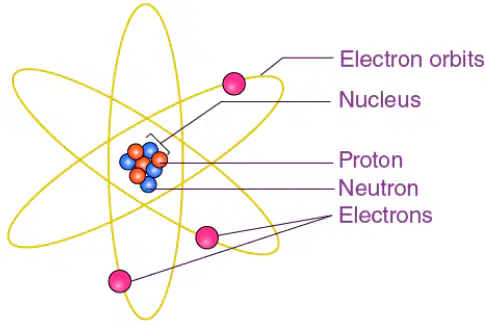
Which scientist created the following model?
Ernest Rutherford
Niels Bohr
J.J. Thompson
Democritus
Which sequence of elements is arranged in order of decreasing atomic radii?
Al, Si, P
Li, Na, K
Cl, Br, I
N, C, B
Which list of elements from Group 2 on the Periodic Table is arranged in order of increasing atomic radius?
Be, Mg, Ca
Ca, Mg, Be
Ba, Ra, Sr
Sr, Ra, Ba
What is the total number of valence electrons in an atom of xenon, Xe?
0
2
8
18
On the Periodic Table of the Elements, all the elements within Group 16 have the same number of
valence electrons
energy levels
protons
neutrons
An element with a partially filled d sublevel in the ground state is classified as
a halogen
a transition metal
an alkali metal
an alkaline earth metal
The Group 17 element with the highest electronegativity is
fluorine
chlorine
bromine
iodine
Which of these elements has the least attraction for electrons in a chemical bond?
oxygen
fluorine
nitrogen
chlorine
How many electrons are required to completely fill the 3rd energy level?
0
8
18
32
What is the electron configuration for manganese, atomic number 25?
1s2 2s2 2p6 3s2 3p6 4s2 3d5
1s2 2s2 2p6 3s2 3p6 4s2 3d10
1s2 2s2 2p6 3s2 3p6 4s2
1s2 2s2 2p6 3s2 3p6
How many double bonds are in the Lewis structure for carbon dioxide, CO2?
none
one
two
three

Choose the correct Lewis Dot diagram for Carbon.
F: [Diagram of C with 2 dots above]
G: [Diagram of C with 4 dots around]
H: [Diagram of C with 6 dots around]
J: [Diagram of C with 8 dots around]
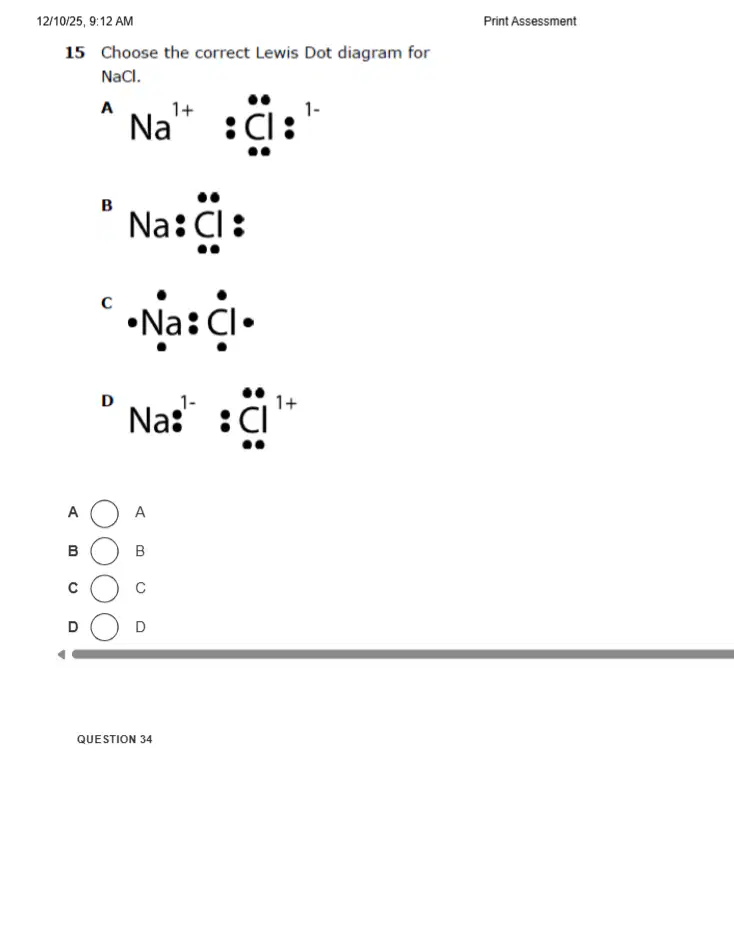
Choose the correct Lewis Dot diagram for NaCl.
A
B
C
D
Choose the correct Lewis Dot diagram for NH3.
F
G
H
J
A property of some metals is the ability to be drawn into a wire. This is called —
malleability
ductility
permeability
conductivity
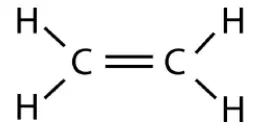
Classify the following bond:
F dimorphic bond
G ionic bond
H metallic bond
J covalent bond
In which of the following molecular compounds are all the bonds single bonds?
N2
NH3
CO2
CO
The total number of non bonding electron pairs present in the Lewis structure of CH₄ is
2
3
1
0
The Lewis structure for the polyatomic ion NO⁺² contains
1 double bond, 1 single bond, and 12 nonbonding electrons.
2 single bonds and 12 nonbonding electrons.
2 double bonds and 8 nonbonding electrons
2 triple bonds and 4 nonbonding electrons.
Which molecule contains a triple covalent bond?
O₂
H₂
Cl₂
N₂
Which elements combine by forming an ionic bond?
sodium and oxygen
sodium and potassium
carbon and oxygen
carbon and sulfur
Which type of bond is found in sodium bromide?
covalent
ionic
hydrogen
metallic
The formula for sodium sulfide is
NaS.
K2S.
NaS2.
Na2S.
Which is the formula for lead(IV) chloride?
Pb4Cl
PbCl2
PbCl3
PbCl4
Name the compound NO2
mononitrogen dioxygen
nitrogen dioxide
dinitrogen monoxide
nitrogen oxide

