
Font size
 Worksheets
Science Final Review
Total questions: 129
Worksheet time: 2hrs 37mins
What type of wave moves up and down, such as light waves?
Longitudinal waves
Transverse waves
Mechanical waves
Electromagnetic waves
Which part of a transverse wave refers to the highest point?
Trough
Crest
Amplitude
Wavelength
What is the term for the energy of a wave, such as how tall or loud it is?
Frequency
Wavelength
Amplitude
Compression
Which type of wave moves back and forth, such as sound waves?
Transverse waves
Electromagnetic waves
Longitudinal waves
Mechanical waves
What is the relationship between frequency and energy in the electromagnetic spectrum?
Lower frequency equals higher energy
Higher frequency equals higher energy
Frequency and energy are unrelated
Higher frequency equals lower energy
Which type of wave requires a medium to travel through?
Electromagnetic waves
Mechanical waves
Transverse waves
Longitudinal waves
Which type of wave does NOT require a medium to travel through?
Mechanical waves
Longitudinal waves
Electromagnetic waves
Sound waves
What is the distance between crests or compressions in a wave called?
Frequency
Amplitude
Wavelength
Compression
Which wave has more energy: ultraviolet light or visible light?
Ultraviolet light
Visible light
Both have the same energy
Neither has energy
How can you tell the wavelength on a wave diagram?
Measure the height of the wave
Measure the distance between crests or compressions
Count the number of waves per second
Measure the loudness of the wave
A falling object has which types of energy?
Kinetic energy only
Potential energy only
Both kinetic and potential energy
Elastic potential energy
Why does a metal pan heat faster than a wooden spoon?
Metal is a better conductor of heat than wood
Metal is heavier than wood
Metal has a higher boiling point than wood
Metal absorbs more radiation than wood
Identify the heat transfer method for the following: Sun warming your face.
Conduction
Convection
Radiation
Evaporation
Identify the heat transfer method for the following: Boiling water circulating in a pot.
Conduction
Convection
Radiation
Evaporation
Explain how a roller coaster transfers energy.
It converts potential energy into kinetic energy
It converts kinetic energy into elastic potential energy
It converts chemical energy into mechanical energy
It converts electrical energy into magnetic energy
Which of the following is an example of a physical property?
Flammability
Density
Reactivity with acid
Ability to rust
What is the definition of conduction?
Energy transfer through space
Energy transfer through direct contact
Energy transfer through fluid movement
Energy transfer through magnetic fields
Which type of energy is stored due to an object's height or position?
Kinetic energy
Potential energy
Elastic potential energy
Mechanical energy
What type of energy transformation occurs in muscles?
Chemical to mechanical
Electrical to magnetic
Potential to kinetic
Elastic to potential
Which heat transfer method involves the movement of fluids?
Conduction
Convection
Radiation
Evaporation
Is freezing point a physical or chemical property?
Physical property
Chemical property
Both physical and chemical property
Neither physical nor chemical property
Rust forming on metal is what type of change?
Physical change
Chemical change
Both physical and chemical change
No change
Why does wood float but metal sinks?
Wood is denser than water, and metal is less dense.
Wood is less dense than water, and metal is denser.
Both wood and metal are less dense than water.
Both wood and metal are denser than water.
Classify the following as physical or chemical: Ice melting.
Physical change
Chemical change
Both physical and chemical change
No change
Classify the following as physical or chemical: Gas forming during a reaction.
Physical change
Chemical change
Both physical and chemical change
No change
Which state of matter has particles that vibrate in place?
Solid
Liquid
Gas
Plasma
Which state of matter has particles that slide past each other?
Solid
Liquid
Gas
Plasma
Which state of matter has particles that move freely?
Solid
Liquid
Gas
Plasma
Which state of matter has very high energy particles?
Solid
Liquid
Gas
Plasma
What happens to particle movement when temperature increases?
Particles move slower.
Particles stop moving.
Particles move faster.
Particles remain stationary.
Do solids have moving particles?
Yes, but they vibrate in place.
No, they are stationary.
Yes, they move freely.
No, they only move when heated.
What is the charge of a proton?
Positive
Negative
No charge
Neutral
What is the relationship between atomic number and protons?
Atomic number equals the number of neutrons
Atomic number equals the number of protons
Atomic number equals the number of electrons and neutrons combined
Atomic number equals the mass number
What is the mass number of an atom with 10 protons and 12 neutrons?
10
12
22
2
What is the smallest unit of an element?
Molecule
Atom
Proton
Electron
What happens to the number of electrons as the atomic number increases?
The number of electrons decreases
The number of electrons stays the same
The number of electrons increases
The number of electrons becomes zero
What is the difference between an atom and a molecule?
An atom is the smallest unit of an element, while a molecule is two or more atoms bonded together
An atom is made of molecules, while a molecule is made of protons
An atom is larger than a molecule
An atom and a molecule are the same
If an atom has a mass number of 40 and 20 protons, how many neutrons does it have?
20
40
60
10
Which element would have the most electrons?
The element with the smallest atomic number
The element with the largest atomic number
The element with the smallest mass number
The element with the largest number of neutrons
What is the term used to describe the distance from crest to crest in a wave?
Frequency
Amplitude
Wavelength
Compression
Why does ultraviolet light have more energy than visible light?
It has a longer wavelength.
It has a higher frequency.
It travels faster.
It is closer to the Earth.
Which type of energy is present at the top of a hill before an object starts moving?
Kinetic energy
Potential energy
Thermal energy
Chemical energy
What is an example of convection?
Sun warming your face
Boiling water circulating
Heat from a light bulb
A metal rod conducting heat
Which of the following is a physical property?
Rusting of iron
Melting of ice
Burning of wood
Cooking an egg
What is a good conductor of heat?
Plastic
Metal
Wood
Rubber
What type of energy is involved when energy changes between potential energy at the top and kinetic energy while moving?
Thermal energy
Mechanical energy
Chemical energy
Electrical energy
What is an example of radiation?
Sun warming your face
Boiling water circulating
A metal rod conducting heat
Heat from friction
What is the term for a change that results in the formation of a new substance?
Physical property
Chemical change
Mechanical change
Thermal change
Which of the following statements is true about density?
Wood is more dense than water; metal is less dense than water.
Wood is less dense than water; metal is more dense than water.
Wood and metal have the same density as water.
Metal is less dense than wood but more dense than water.
What type of change occurs when ice melts?
Physical change
Chemical change
Nuclear change
Biological change
What happens to particle motion when the state of matter changes to gas?
Particle motion decreases.
Particle motion increases.
Particles stop moving.
Particles vibrate in place.
What is the smallest unit of an element?
Molecule
Atom
Proton
Neutron
Which type of wave does not need particles to travel?
Sound waves
Radio waves
Water waves
Seismic waves
What happens to energy as the wavelength of a wave becomes shorter?
Energy decreases.
Energy remains the same.
Energy increases.
Energy disappears.
What does amplitude measure in a wave?
How fast the wave travels
How tall or loud the wave is
The color of the wave
The type of wave
What is the distance between waves called?
Frequency
Wavelength
Amplitude
Speed
Which of the following requires matter to travel?
Light
Sound
Heat
Electricity
What type of wave has more energy?
Taller waves
Shorter waves
Slower waves
Wider waves
What does "kinetic" energy mean?
Stored energy
Energy in motion
Energy from sunlight
Energy from heat
How does heat move?
By touch, movement, or sunlight
By sound waves
By chemical reactions
By magnetic fields
What is the process called when a spoon gets hot in soup?
Radiation
Conduction
Convection
Evaporation
What type of change occurs when rust forms?
Physical change
Chemical change
Density change
Energy change
What does "protons" determine in an atom?
Atomic number
Mass of the atom
Movement of electrons
Density of the atom
What do neutrons add to an atom?
Atomic number
Mass
Energy
Charge
What is the role of electrons in an atom?
They determine the atomic number
They add mass
They move around the nucleus
They create new substances
Atomic number tells:
neutrons
electrons
protons
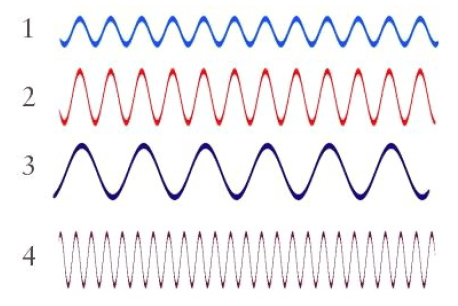
Which wave in the diagram has the greatest frequency?

The positive or negative direction of motion
The reference point of an object
The rate at which an object moves
A reference frame

An object speeding up or slowing down
The momentum of a moving object
Acceleration divided by time
Speed in a certain direction

Acceleration is (a)

An example of velocity is (a)

a finish line
a stationary point to compare distance and time to
a measure of distance
the fastest velocity of an object

(a)

Deceleration is (a)

increasing velocity
changing direction
going at a steady rate in one direction
decreasing velocity

(a)

a speed skater leaving the starting line
a skier going down a slope
a truck going 60 mph
a runner slowing to a walk after crossing the finish line


the action force
the reaction force
neither, they are the same

(a)

The acceleration of gravity is (a)

The object in our solar system that has the greatest amount of gravity is the (a)

A person uses a bow to shoot an arrow at a target. In which diagram does the bow and arrow have the greatest amount of potential energy?


In a car accident, a seat belt helps prevent injuries by applying a force
(1) less than the force of the moving passenger
(2) greater than the force of the moving car
(3) in the same direction as the car’s motion
(4) in the opposite direction of the passenger’s motion

The diagram represents a person pushing a 50-kg box up a ramp. Which force will decrease if the surface of the ramp is made smoother?
(1) gravity
(2) magnetism
(3) friction
(4) electricity
Energy is defined as
power
food
ability to produce heat
ability to do work or cause change
Thermal energy is associated with
kinetic and potential energy of particles
position or shape
chemical reactions
chemical bonds

The diagram above shows a Bunsen burner heating a beaker of water on a beaker stand. The arrows represent the transfer of heat energy in the water. Which process is primarily responsible for the transfer of heat in the beaker as indicated by the arrows in the diagram?
conduction
radiation
convection
condensation

What kind of wave is pictured below?
¿Qué tipo de ola se muestra a continuación?
compressional wave
onda de compresión
transverse wave
onda transversal
sound wave
onda sonora
mechanical wave
onda mecánica

Which vocabulary term is used to identify the distance between points C & E?
¿Qué término de vocabulario se utiliza para identificar la distancia entre los puntos C y E?
Amplitude
Amplitud
Crest
Cresta
Frequency
Frecuencia
Wavelength
Longitud de onda
The matter (solid, liquid, or gas) through which waves can travel
La materia (sólida, líquida o gaseosa) a través de la cual las ondas pueden viajar
Medium
Medio
Object
Objeto
Transverse Wave
Onda transversal
Wavelength
Longitud de onda
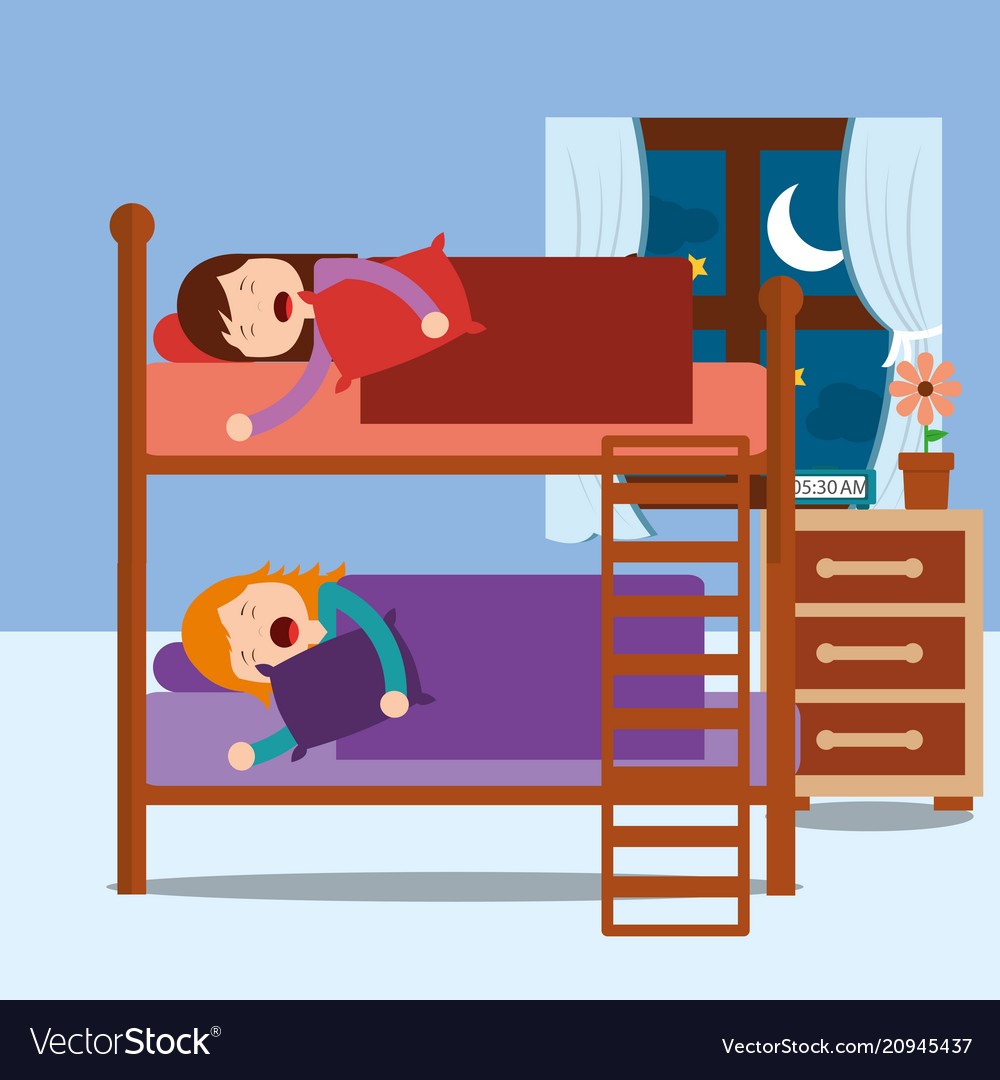
Match the following scenarios with the type of heat transfer they represent.
Convection
Warm air rising to the top bunk
Conduction
Heat transfer through a metal rod
Radiation
Sunlight warming your skin

Heat transfers from an area of (a) temperature to an area of (b) temperature.
Label the following types of heat transfer.
Convection
Conduction
Radiation

Boiling Water demonstrates TE transfer by (a)
Conduction
Convection
Radiation
Heat transfers from an area of (a) temperature to an area of (b) temperature.
high to low
low to high
high to high

A heater circulating warm air in a room is an example of (a) . When you can feel the warmth of the heater from the couch, you are feeling (b) . If you accidentally bump the heater and burn yourself, the heat moved by (c)

crest
A
amplitude
C
wavelength
B
Trough
D
wavelength
E
Put the correct label on the wave.
Compression
Rarefaction
Wavelength

Match the following terms with their definitions related to ocean waves.
Frequency
The number of waves passing a given point every second.
Wavelength
The distance between successive crests of a wave.
Amplitude
The height of the wave from the rest position to the crest.
The Law of (a) of Energy states that (b) cannot be (c) or destroyed, it can only be (d) (or converted).
Force is a (a) or (b) on an object
simple
up
in
push
pull
complex
down
out
30 mph west is an example of (a)
Match the following
how far an object has moved.
Displacement
distance and direction of an object’s change in position; difference from starting to ending point.
Velocity
the distance an object travels per unit of time.
Speed
the speed of an object and the direction of its motion.
Distance
In thermodynamics, what does the first law state?
Energy cannot be created or destroyed, only transformed.
Entropy of an isolated system always increases.
Heat cannot spontaneously flow from a colder location to a hotter location.
The total energy of a system and its surroundings is constant.

Which letter represents an electron?
A
B
C
D
E
Which of the following is correct?
Protons (positive);
Neutrons (negative);
Electrons (neutral)
Protons (positive); Neutrons (neutral); Electrons (negative)
Protons (negative);
Neutrons (neutral);
Electrons (positive)
Protons (neutral);
Neutrons (positive);
Electrons (negative)

How many neutrons does Phosphorus have? ...remember APE MAN
46
31
15
16

What is the atomic number of this atom?
7
14
21
9

Valence electrons determine an element's reactivity (chemical properties). How many valence electrons does this atom have?
8
2
1
11

What is the mass of this atom?
10
9
6
3
How many electrons can fit on the first two shells (energy levels)?
1 electron on the first and 2 electrons on the second
10 electrons on the first and 20 electrons on the second
2 electrons on the first and 8 electrons on the second
3 electrons on the first and 7 electrons on the second
Which of the following determines the identity of the element? (if you know this, then you can find out which element it is)
The number of protons
The mass
The number of neutrons
The number of electrons

Which is FALSE about the nucleus? Click all that apply
It is the location of electrons
It is where the mass of the atom is found
It has an overall positive charge
It can have a neutral charge

A student needs to know which element this is? What is the first thing she should be counting?
A
B
C
D


How many neutrons does calcium have?
20
40
60
0

What is the atomic mass of Neon?
10
20
30


What is the atomic number?
35
18
17
52

The smallest particle of an element.
Element
Molecule
Atom


What is the atomic number of this element?
17
18
35
35.453

If an atom of Phosphorus has 16 neutrons, what is it's mass number?
15
16
30.974
31

