
 Worksheets
5th Grade Test PART 2
Total questions: 70
Worksheet time: 35mins
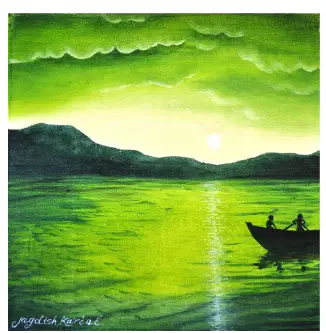
An artist wants a deeper, darker green. What should they mix?
Green + white
Green + black
Green + complementary color
Green + analogous color
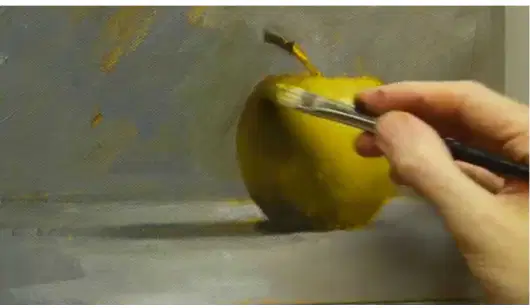
When creating a shade, what effect does adding black have on the color?
It makes it lighter
It increases saturation
It darkens the color
It turns the color neutral
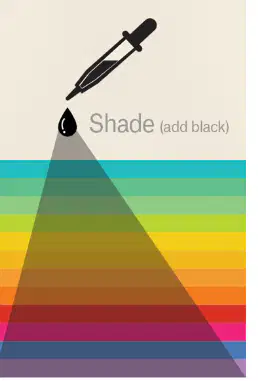
Which option best describes a shade in color theory?
A color mixed with its complement
A color lightened with white
A color mixed with gray
A color darkened with black
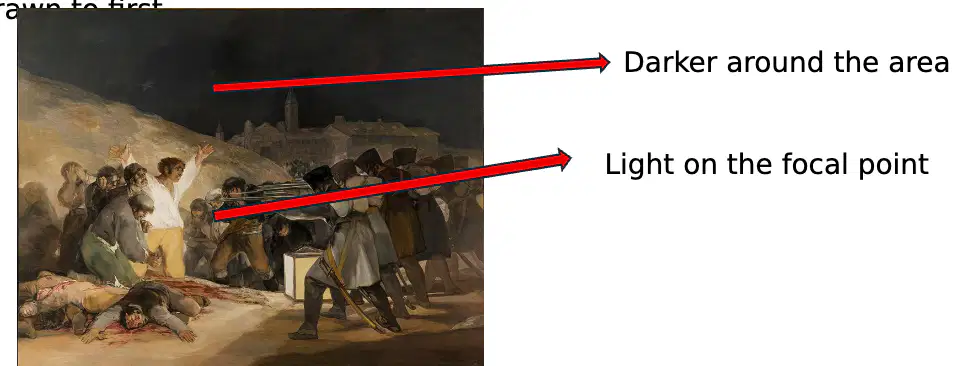
5. It is a principle of art used to draw the viewer’s attention to a particular area or element. It creates a focal point — the spot your eye is naturally drawn to first. (Refer to the image: Darker around the area, Light on the focal point) What is the name of this principle of art?
Emphasis
Balance
Rhythm
Unity
It’s the relationship in size between parts of an artwork. When this is “right,” the artwork looks natural or believable.
contrast
balance
emphasis
proportion

It’s the relationship in size between parts of an artwork. When this is “right,” the artwork looks natural or believable.
contrast
balance
emphasis
proportion
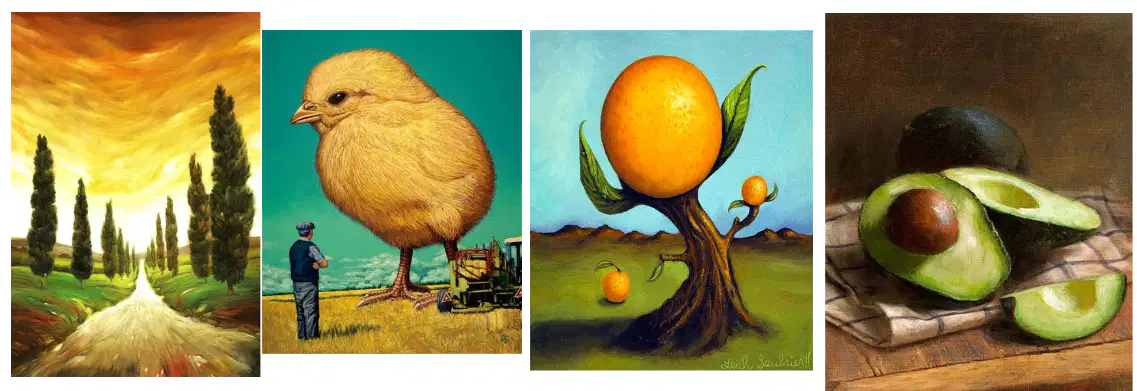
Which artwork showing the “realistic/right” proportion.
The landscape and the avocados show realistic/right proportion.
The chicken and the oranges show realistic/right proportion.
The avocados and the oranges show realistic/right proportion.
The chicken and the avocado show realistic/right proportion.
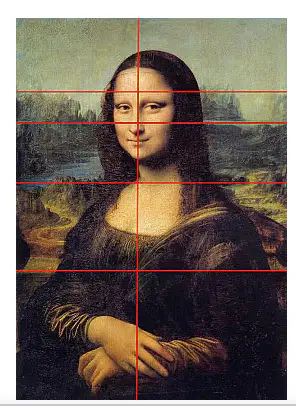
Why do artists use balance in their compositions?
To make the artwork appear chaotic
To create stability and harmony
To add texture only to the background
To eliminate focal points
Write the element of art that correspond to correct definition. They can be straight, zigzag, curved, spiral, etc.
Line
Shape
Color
Texture
Write the element of art that correspond to correct definition. Could be warm, cool, complementary, etc.
Color
Shape
Texture
Value
Write the element of art that correspond to correct definition. How to create a bright reflect on the water ________________
Texture
Line
Shape
Value
Write the element of art that correspond to correct definition. Using trees in different height creating distance ________________
Space
Line
Color
Texture
Write the element of art that correspond to correct definition. This element shows darker or lighter of a color ________________
Value
Shape
Texture
Line
What is the principle of rhythm in art?
The use of light and shadow to create depth
The repetition of elements to create a sense of movement
The balance of visual weight in a composition
The use of color to show emotion
Which of the following is NOT a type of line?
curved
Zigzag
realistic
dotted

The principle of rhythm in art refers to a repetition of elements (like line, shape, or color) that creates a feeling of organized movement, much like a beat in music. What painting shows this principle of rhythm?
Mona Lisa by Leonardo da Vinci
The Persistence of Memory by Salvador Dalí
The Starry Night by Vincent van Gogh
Composition II in Red, Blue, and Yellow by Piet Mondrian
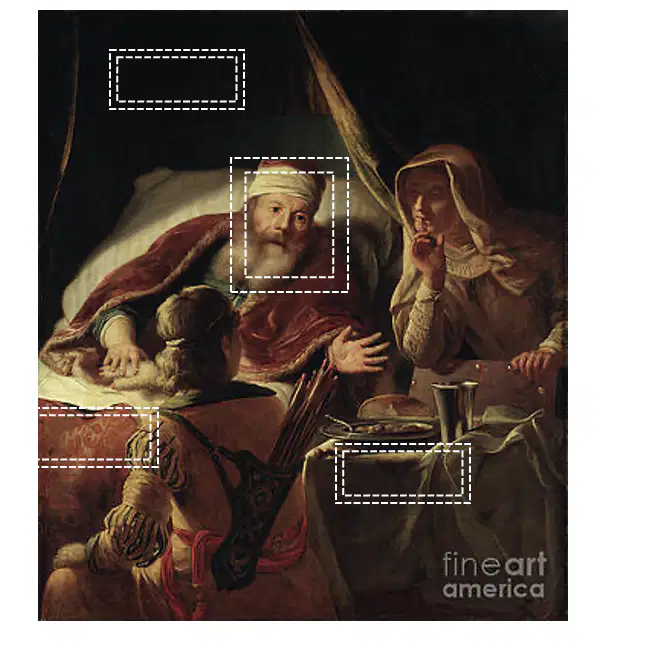
The artist employed contrast in this well-known painting to draw the viewer’s attention to the focal point. Identify the area where this contrast is most evident. Choose the correct answer.
Upper left corner
Center figure's face
Lower left area
Right bottom side
If you want to create an artwork where you can show the colors, textures, shapes and everybody can see it from all sides and angles, what is the best technique you will choose to make it?
watercolor and tissue paper
fabric- collage
clay - sculpture
oil pastels and paper

What colors are shown in this palette?
Primary colors
Secondary colors
Complementary colors
warm colors

What colors are shown in this palette?
Primary colors
Secondary colors
Complementary colors
Cool colors
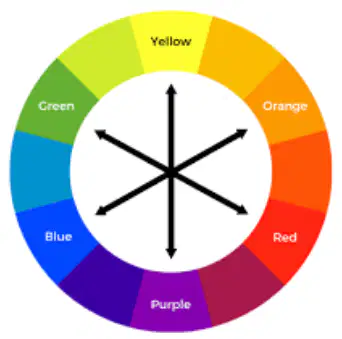
What are called the opposite colors on the color wheel?
neutral colors
cool colors
complementary colors
primary colors
How can you create a neutral tone?
mixing primary colors together
mixing secondary colors together
mixing complementary colors together
mixing metallic colors
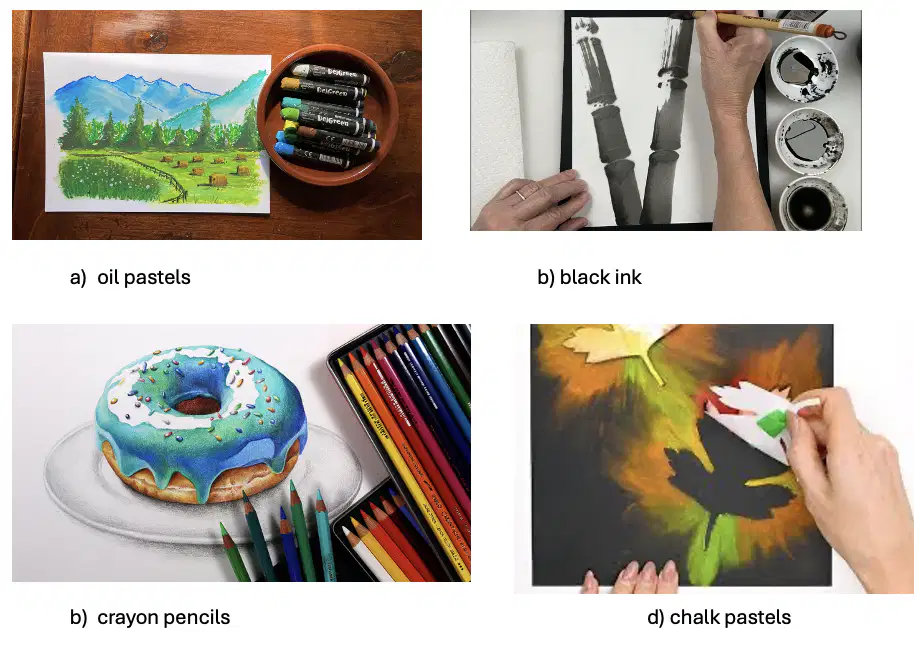
Which one is considered “wet medium”?
oil pastels
black ink
crayon pencils
chalk pastels
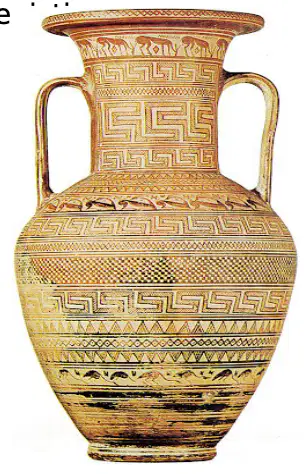
In this Greek ancient pottery, the lines, patterns and symbols are de ...
Portraits of Greek gods
It reflects borrowed symbols from African culture
This represents stories, identity of the Greek population.
This is an image of clothing designs
This describes the Renaissance period in art:
artists looked at the world around them and used images of things you might see every day, such as food, toys, brand logos (like the McDonald's arches), and movie stars.
an art style where artists make dream-like images by combining everyday things in strange ways to create something that seems both real and unreal
Artists studied things like human anatomy to make their paintings look like real life, rather than flat or symbolic.
artists used quick, visible brushstrokes and lots of bright colors to show how light looked at a certain time of day.

What is an example of a "Pop Art" painting?
Renaissance portrait
Heinz ketchup with fries
surrealist painting
impressionist painting

The painting 'Impression, Sunrise' of Claude Monet is the origin of the art-style originated by Claude Monet because....
Louis Leroy used the term in a newspaper article to describe the painting as highly realistic and meticulously detailed, emphasizing its photographic accuracy.
Louis Leroy invented the term in a scientific journal to discuss the chemistry of oil paints, unrelated to any artistic style or critique.
Art critic Louis Leroy coined the term in a serious essay praising the painting, calling it a perfect example of classical technique rather than an 'impression.'
Art critic Louis Leroy used the term in a satirical article to mock the painting and other works in the exhibition, describing them as mere 'impressions' rather than finished works.
The famous painting Mona Lisa belongs to what art-style
Impressionism
Pop art
Renaissance
Surrealism
Andy Warhol’s one of the most famous paintings is:
Stary Night
Campbell’s soup cans
Sunflowers
Girl with a Pearl Earing
Art style that looks like when you dream and nothing makes sense:
Pop Art
Renaissance
Impressionism
Surrealism
The paintings look modern, use bright colors, cartoon look like...
Pop Art
Renaissance
Impressionism
Surrealism
The paintings have real places, realistic people and animals, excellence in proportion and realistic textures and lots of details.
Pop Art
Renaissance
Impressionism
Surrealism
Use of marked brushstrokes, less detailed, looks like a sketch or a first attempt of a painting.
Pop Art
Renaissance
Impressionism
Surrealism
Uses commercial objects used in daily life and artist faces,
Pop Art
Renaissance
Impressionism
Surrealism

What is the Art style this painting belongs to?
Renaissance
Surrealism
Pop Art
Impressionism
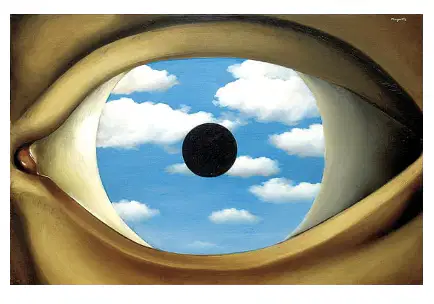
What is the Art style this painting belongs to?
Renaissance
Surrealism
Pop Art
Impressionism
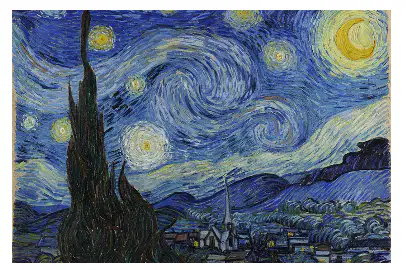
What is the Art style this painting belongs to?
Renaissance
Surrealism
Pop Art
Impressionism
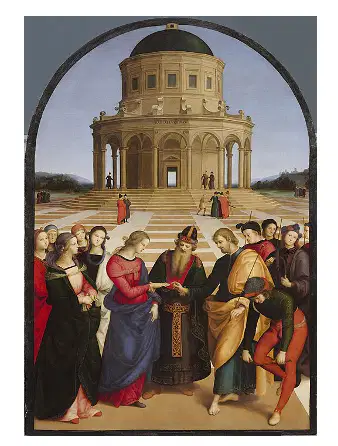
What is the Art style this painting belongs to?
Renaissance
Surrealism
Pop Art
Impressionism
What type of visual art can be seen from all angles and different perspectives and textures?
painting
sculpture
collage 2D
design in a magazine
What artwork is made using paper, glue and different textures 2D?
painting
sculpture
collage 2D
design in a magazine

What type of art is shown in the picture?
painting
sculpture
collage
watercolor
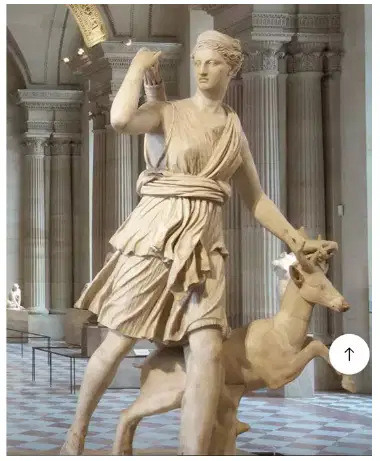
How can you describe a sculpture like the one in the picture?
It can be made using clay and scrapers, wire, sandpaper, etc.
This is a piece that can be seen only from one side
It is a type of art that has 2 dimensions
This is a fabric, glue and pencil art piece.
What art style has these characteristics: Artists strived for lifelike accuracy in their depictions of human anatomy, movement, and expressions, the development of linear perspective, the artists were inspired by the ancient Rome, mythology and architectural styles, use of light and shadows, portraits and religious art.
Contemporary
Surrealism
Renaissance
Cubism
The art style that describes and shows beauty in human and perfection in nature in a realistic way.
Impressionism
Contemporary
Surrealism
Renaissance
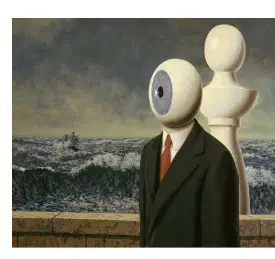
Which art movement features dreamlike imagery, explores the unconscious mind, and depicts scenes that are not realistic?
Surrealism
Renaissance
Contemporary
Impressionism
Art movement that used short, broken, or "dabbled" brushstrokes to create a sense of movement and vibrancy, depict scenes of modern life, landscapes, using a brighter-light, more vibrant palette than was previously common.
Surrealism
Renaissance
Contemporary
Impressionism
Which of the following can help reveal a unified emotional message?
Comparing the signatures
Comparing the mood or feeling in each painting
Counting how many characters appear
Checking the price tags
Which art movement express identity, emotion and social, political, and technological messages.
Surrealism
Renaissance
Contemporary
Impressionism
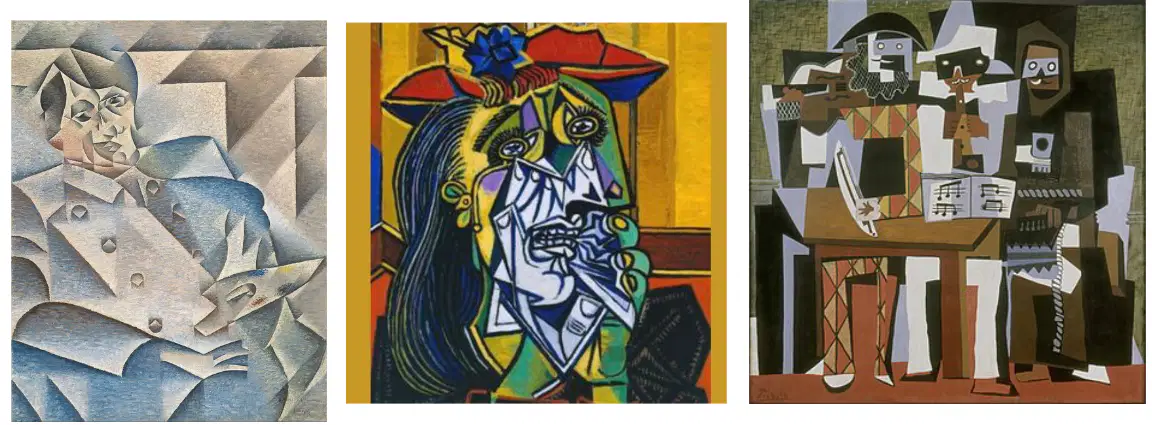
Art style known for depicting objects from multiple viewpoints and perspectives simultaneously within a single painting.
Surrealism
Renaissance
Contemporary
Impressionism
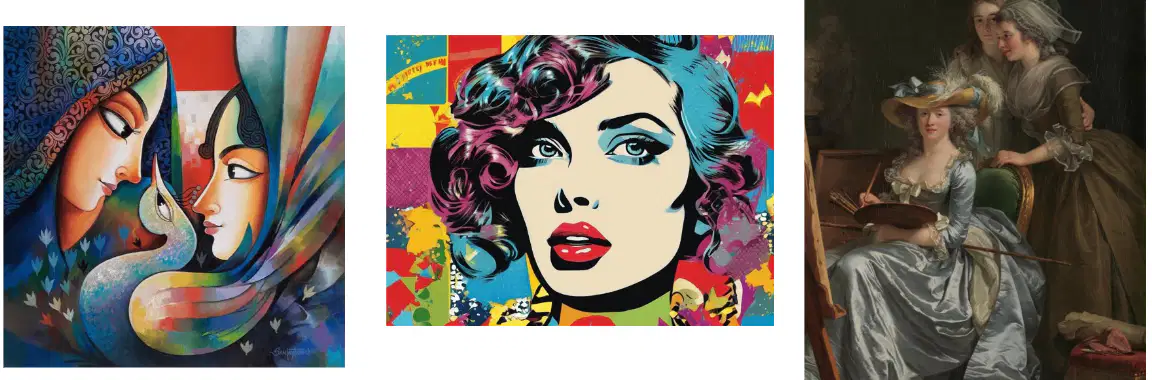
What is one thing these paintings have in common?
This is a comparison of materials and paper used in each
They describe the foreground and background in each painting.
Showing the time and place they were created
The painting shows women in different art styles.
48. The first step in discovering a shared message among several paintings is:
Identifying common themes or elements
Analyzing the artist's biography
Researching the historical context
Comparing painting techniques
Which of the following is the best way to analyze a group of paintings?
Counting how many colors each painting uses
Looking for common themes or ideas
Researching the price of the paintings
Measuring the size of each canvas
Which of the following can help reveal a unified emotional message?
Comparing the signatures
Comparing the mood or feeling in each painting
Counting how many characters appear
Checking the price tags
Identify the areas in the following paintings where the artist applied techniques to guide the viewer’s attention toward the focal point.
The brightly lit central figure
The background landscape
The upper corners of the painting
The frame surrounding the artwork

Observe the first painting (Nighthawks by Edward Hopper). The scene inside the diner is brightly lit and occupied by a few people, while the outside is dark and empty. What might the artist be trying to convey?
A sense of isolation and loneliness despite being in a public place.
A lively and crowded city atmosphere.
A celebration of community and togetherness.
A focus on the natural beauty outside the diner.
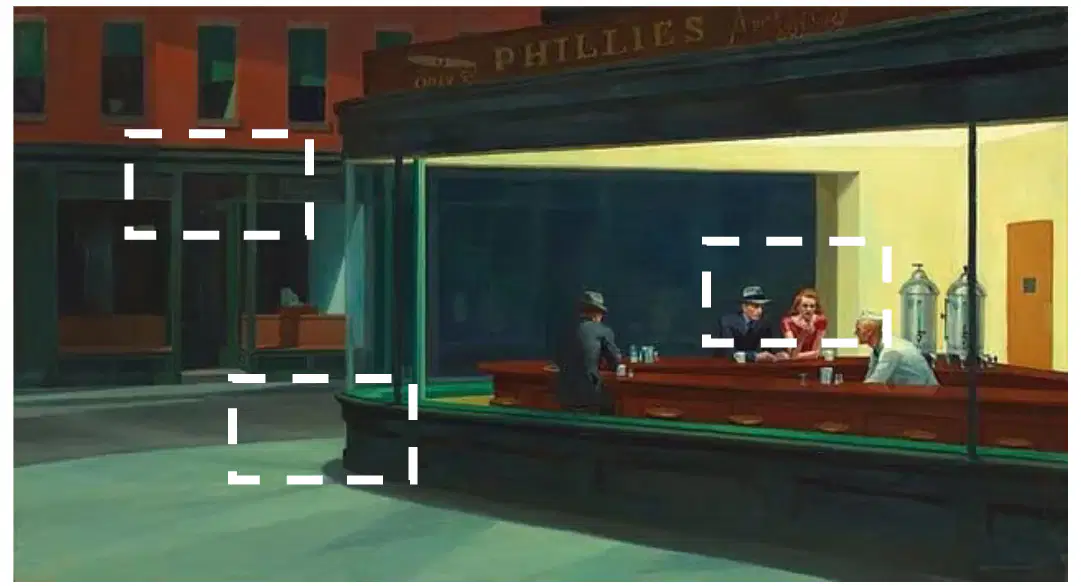
The dashed rectangles in the second painting are highlighted to:
Draw attention to specific details the artist wants you to notice.
Decorate the painting with geometric shapes.
Show areas that need to be repainted.
Indicate the artist's signature location.

The third painting evokes which of the following emotions or thoughts, considering the subject's expression, posture, and the overall mood of the artwork?
A sense of melancholy and introspection
Excitement and joy
Anger and aggression
Indifference and boredom
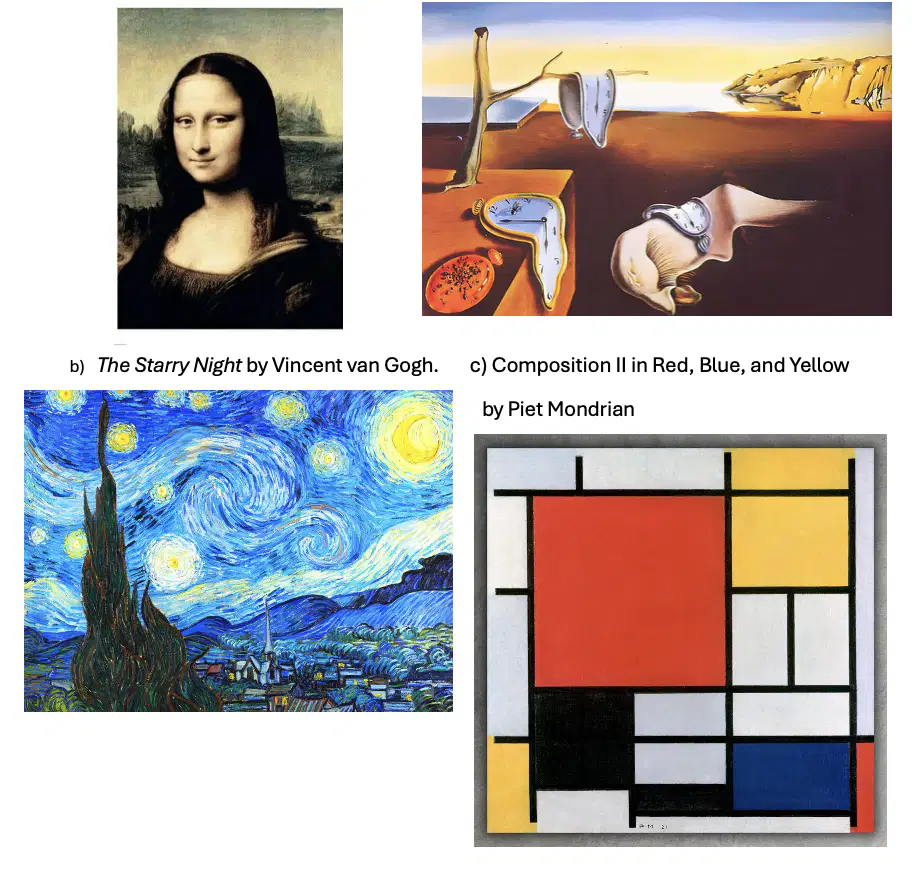
The principle of rhythm in art refers to a repetition of elements (like line, shape, or color) that creates a feeling of organized movement, much like a beat in music.
What painting shows this principle of rhythm?
a) Mona Lisa by Leonardo da Vinci
b) The Persistence of Memory by Salvador Dalí
c) The Starry Night by Vincent van Gogh
d) Composition II in Red, Blue, and Yellow
by Piet Mondrian
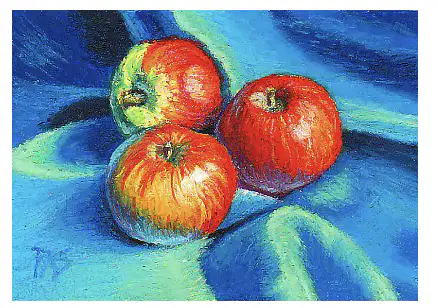
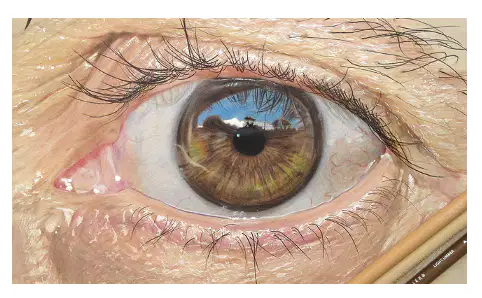
What is the correct art technique used in this artwork?
Watercolor
acrylic
oil pastel
pencil
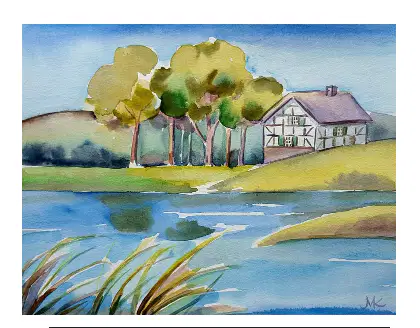
What is the correct art technique used in this artwork?
Watercolor
acrylic
oil pastel
colored pencils
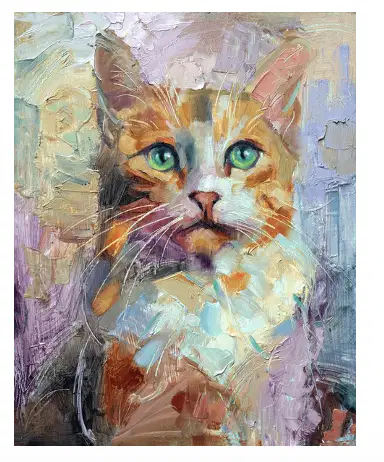
What is the correct art technique used in this artwork?
Watercolor
acrylic
oil pastel
colored pencils
What is the correct art technique used in this artwork?
Watercolor
acrylic
oil pastel
colored pencils
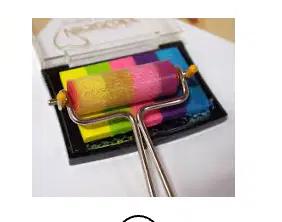
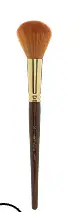
What do you use this art supply for?
Rolling out ink
Spread thick paint
shading
applying liquid paint
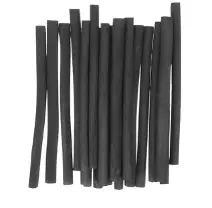
What do you use this art supply for?
Rolling out ink
Spread thick paint
shading
applying liquid paint
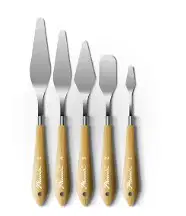
What do you use this art supply for?
Rolling out ink
Spread thick paint
shading
applying liquid paint
What do you use this art supply for?
Rolling out ink
Spread thick paint
shading
applying liquid paint

Who painted this?
Edvard Munch
Leonardo Da Vinci
Frida Kahlo
Vincent Van Gogh

Who painted this?
Edvard Munch
Leonardo Da Vinci
Frida Kahlo
Vincent Van Gogh
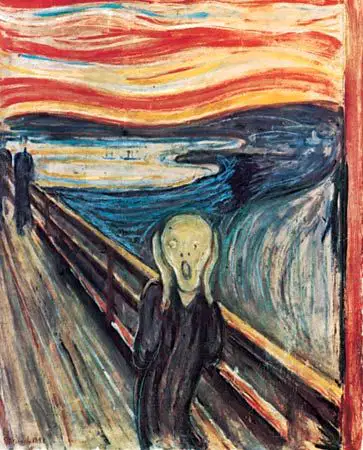
Who painted this?
Edvard Munch
Leonardo Da Vinci
Frida Kahlo
Vincent Van Gogh
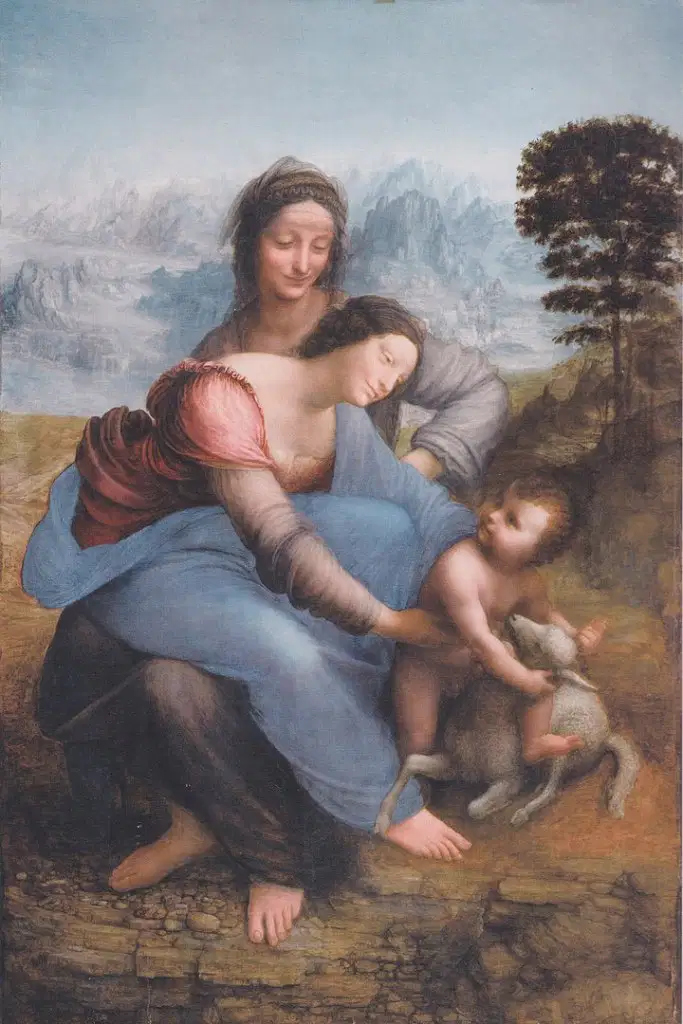
Who painted this?
Edvard Munch
Leonardo Da Vinci
Frida Kahlo
Vincent Van Gogh

