
 Worksheets
25-26 S1 DP final review
Total questions: 55
Worksheet time: 28mins
Composition refers to the ordered arrangement of the elements in a work of art according to the ________.
principles of design
rules of perspective
color wheel
artist's mood
What is a line in art? Fill in the blank: A line is a continuous mark made on some surface by a ________ point.
moving
fixed
broken
colored
What is the definition of "Shape?"
An enclosed space having only two dimensions
A three-dimensional object
A type of color
A kind of texture
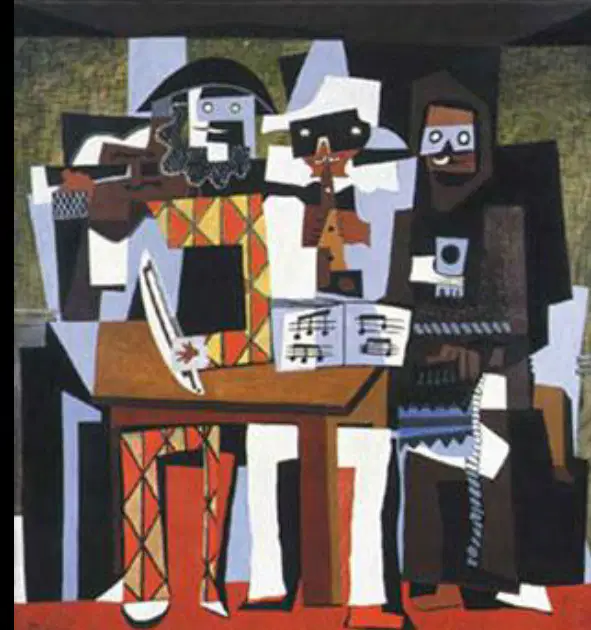
Who is the artist of the painting titled 'Three Musicians', 1921, shown in the image?
Pablo Picasso
Piet Mondrian
Vincent van Gogh
Claude Monet
Fill in the blank: In art, a ______ is an enclosed space having only two dimensions.
shape
form
texture
color
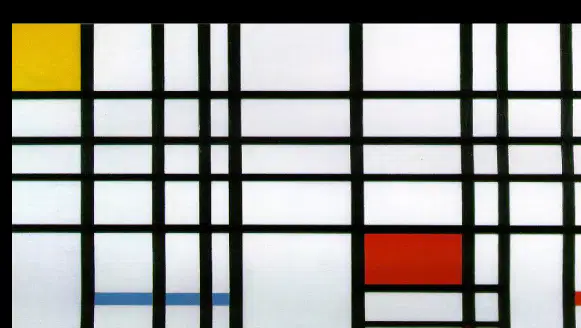
What are Geometric Shapes?
Shapes found in nature
Shapes derived from mechanical, human-made objects, such as circles, squares, and triangles
Shapes with no specific form
Shapes made of flowers
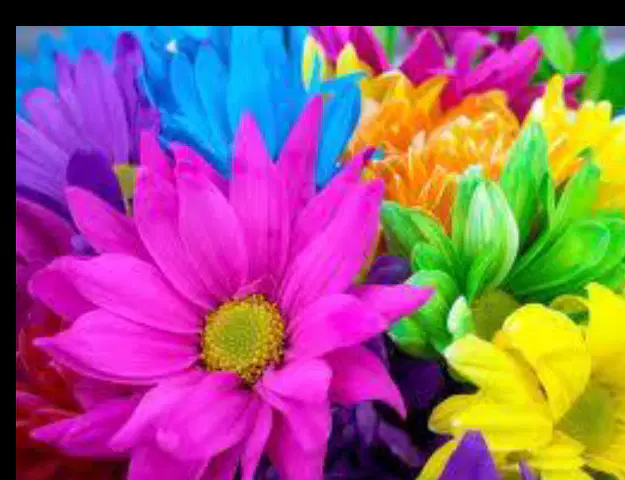
What are Organic Shapes?
Shapes with straight lines
Shapes found in nature
Shapes made by humans
Shapes with only circles
Fill in the blank: Geometric shapes are derived from ________, human-made objects, such as circles, squares, and triangles.
mechanical
organic
natural
biological
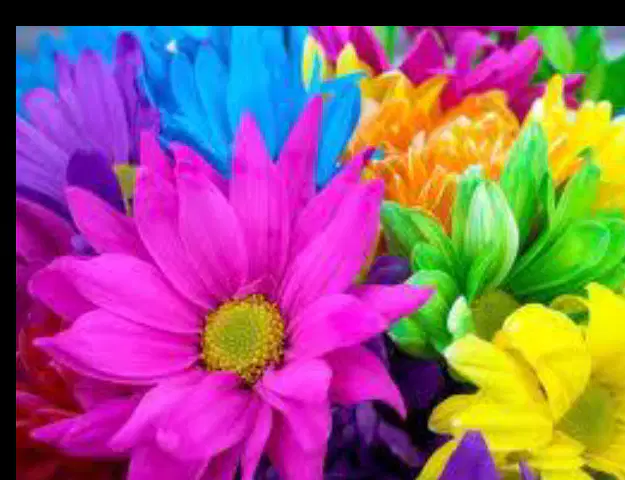
Which type of shape is shown in the image below?
Organic Shapes
Geometric Shapes
Irregular Shapes
Symmetrical Shapes
What does 'Form' mean in art?
The use of color in a painting
Actual 3 dimensionality or the illusion of 3 dimensions on a 2D surface.
The use of lines in a sketch
The texture of a sculpture
Fill in the blank: In art, 'Form' refers to the illusion of ________ in 2D art like drawing and painting.
three-dimensions
color
texture
movement
What does 'Space' refer to in art?
The use of color
The distance or area between, around, above or within things
The type of material used
The artist's signature
Space in art indicates areas in a work of _____
art
science
music
literature

In the provided painting, which area is labeled as the 'Background'?
The area at the back of the painting, behind the figures and objects, is labeled as the 'Background'.
The area in the center of the painting, where the main figures are located, is labeled as the 'Background'.
The area at the front of the painting, closest to the viewer, is labeled as the 'Background'.
The area on the left side of the painting, beside the main objects, is labeled as the 'Background'.
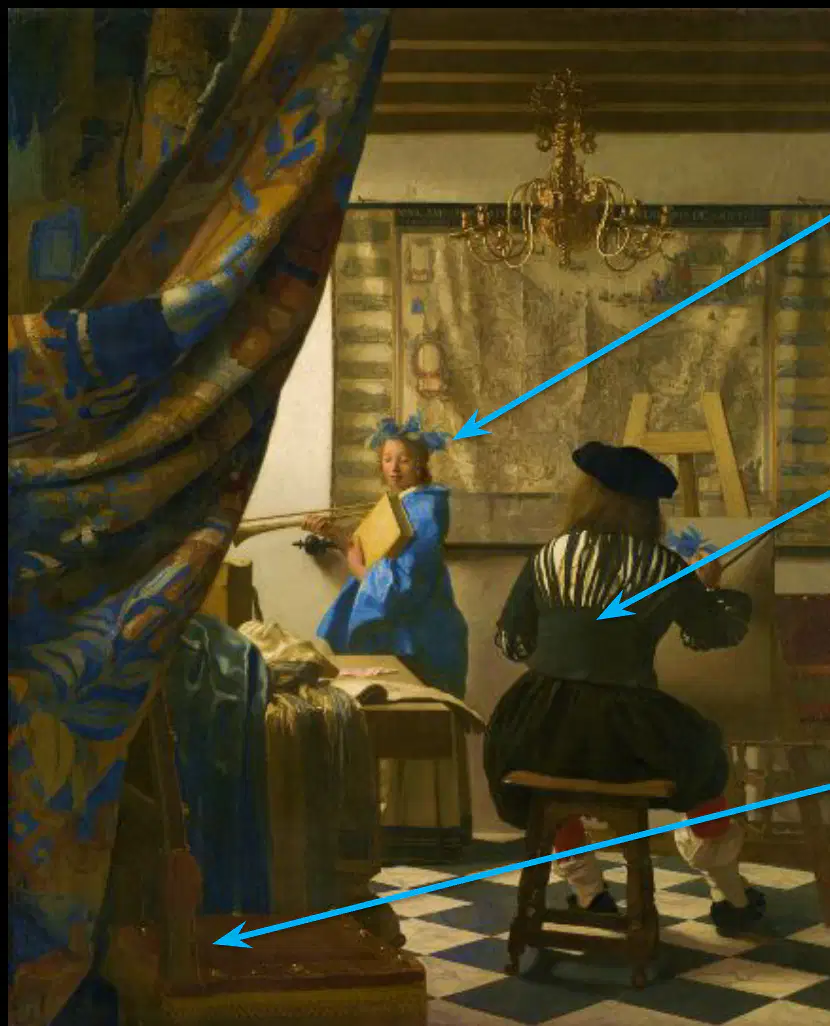
In the provided painting, which area is labeled as the 'Middle ground'?
The area in the middle of the painting, where the standing figure is located, is labeled as the 'Middle ground'.
The area at the bottom of the painting, near the edge, is labeled as the 'Middle ground'.
The area at the top of the painting, where the sky is visible, is labeled as the 'Middle ground'.
The area on the far left side of the painting, next to the tree, is labeled as the 'Middle ground'.
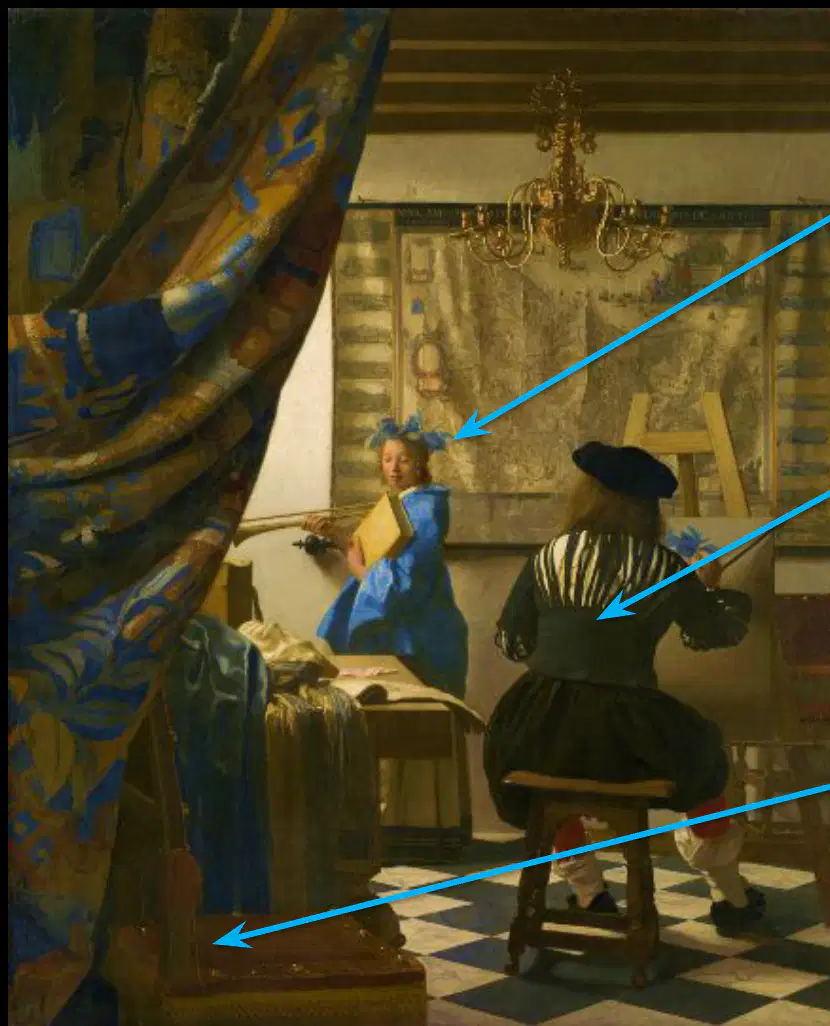
In the provided painting, which area is labeled as the 'FOREGROUND'?
The area at the front of the painting, closest to the viewer, is labeled as the 'FOREGROUND'.
The area at the back of the painting, farthest from the viewer, is labeled as the 'FOREGROUND'.
The area in the middle of the painting, between the front and back, is labeled as the 'FOREGROUND'.
The area above the painting, outside the frame, is labeled as the 'FOREGROUND'.
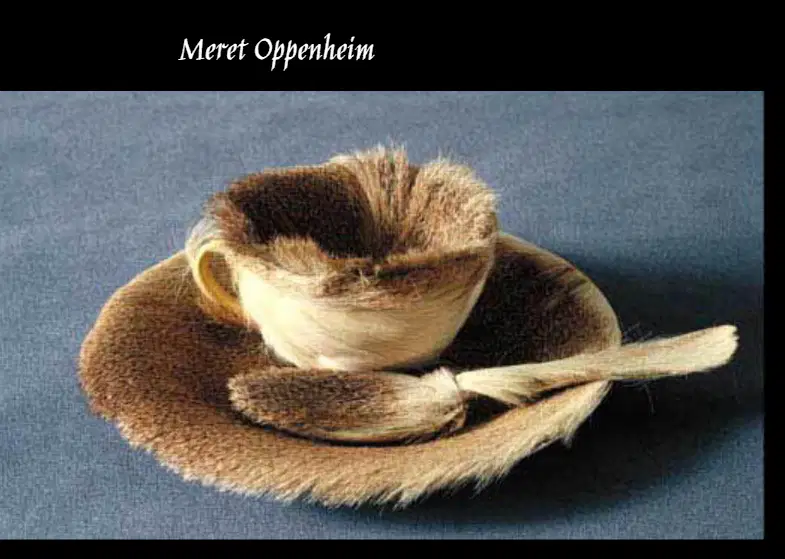
What does 'Texture' refer to in art?
The color of an object
The surface quality or 'feel' of an object, such as roughness, smoothness, or softness
The size of an object
The shape of an object
Explain the difference between actual texture and simulated texture as described in the image.
Actual texture is the physical feel of a surface, while simulated texture is the visual representation of how a surface might feel.
Actual texture is created digitally, while simulated texture is created by hand.
Actual texture and simulated texture are both only visual effects.
Actual texture is used in paintings, while simulated texture is used in sculptures.
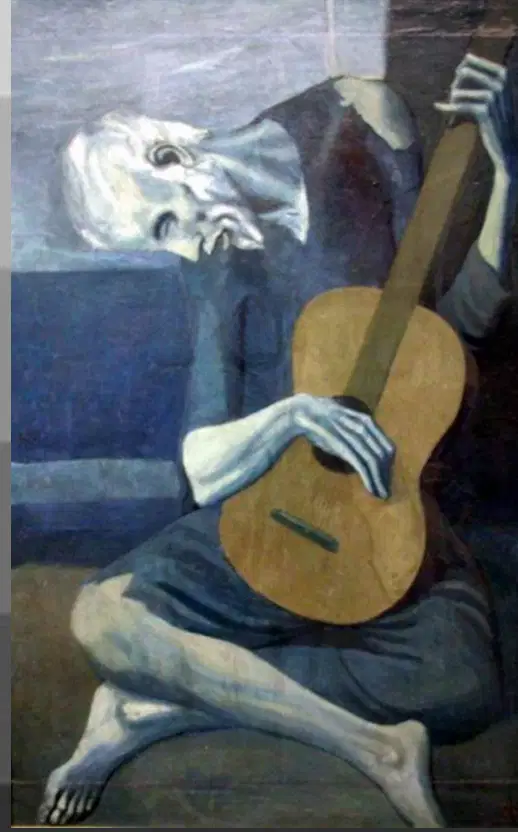
What does 'Value' refer to in art?
The price of an artwork
The lightness or darkness of a color or tone
The size of an artwork
The texture of a surface
What does 'Unity' in art relate to?
The use of bright colors
The sense of wholeness which results from the successful combination of the component elements of an artwork
The repetition of shapes
The use of perspective
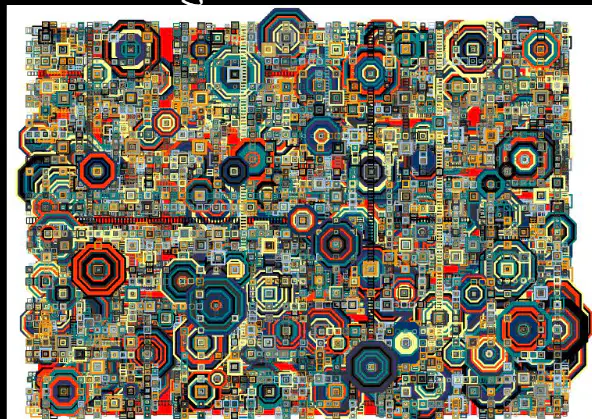
What is unity in art?
where all elements work together harmoniously
An artwork with clashing colors and styles
An artwork with random, unrelated objects
An artwork with no clear focal point
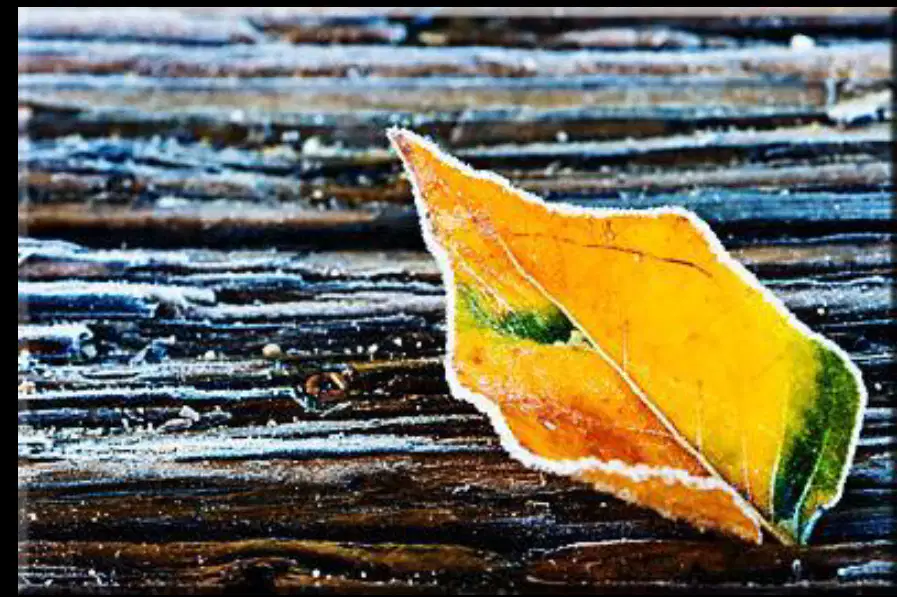
What does 'Contrast' refer to in art?
A) Similarities between elements
B) Differences between elements such as color, texture, value, and shape
C) The use of only one color
D) The repetition of shapes
What is 'Emphasis' in artwork?
Using similar colors throughout the artwork
Using opposing sizes, shapes, contrasting colors, or other means to place greater attention on certain areas, objects, or feelings in artwork
Repeating patterns in the artwork
Creating a sense of movement in the artwork
What is rhythm in art?
Associated with color blending
Associated with movement, may be achieved through repetition, alteration, or progression of an element.
Associated with perspective
Associated with texture
Rhythm in art is associated with ________, and may be achieved through repetition, alteration, or progression of an element.
movement
color
texture
balance
What is the definition of 'Pattern (repetition)'?
The repetition of elements, or combinations of elements, in a consistent and recognizable organization.
The random arrangement of elements.
The use of only one element in a design.
The absence of organization in elements.
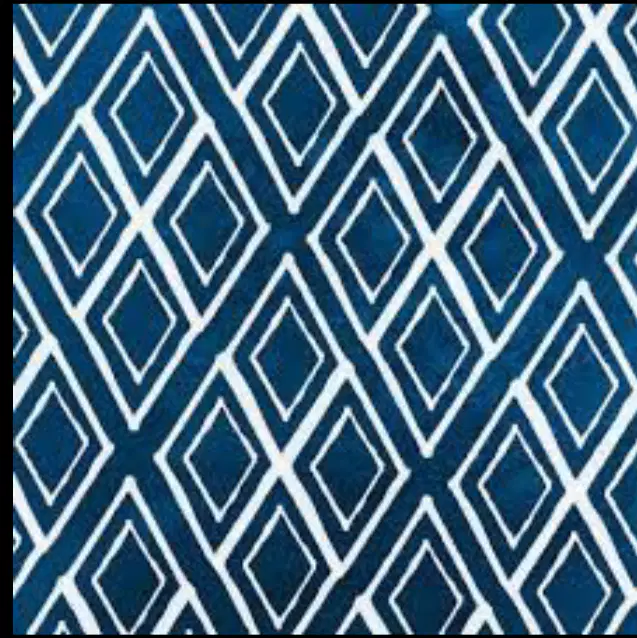
Look at the first image (left). Is this an example of a pattern (repetition)?
True
False
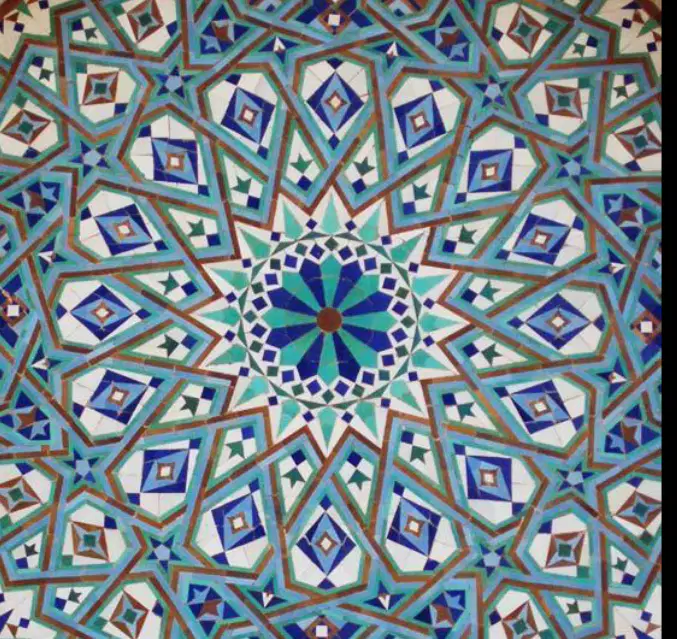
Look at the second image (right). Is this an example of a pattern (repetition)?
True
False
Which of the following best describes 'Movement' in art?
The use of color to create mood
The path the viewer’s eye takes through the work of art
The balance of elements in a composition
The repetition of shapes and lines
Fill in the blank: ______ refers to the arrangement of visual elements to create stability in an artwork.
Balance
Contrast
Emphasis
Rhythm
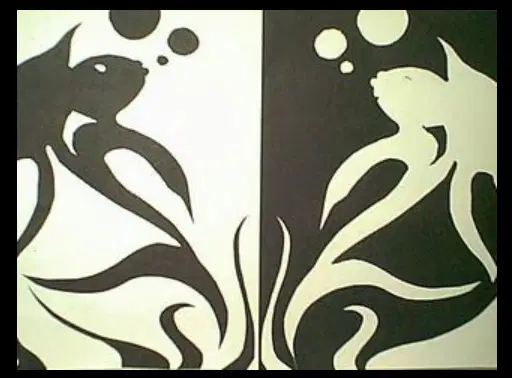
Which type of balance is shown in the first image (two mirrored fish-like shapes)?
Symmetrical
Radial
Asymmetrical
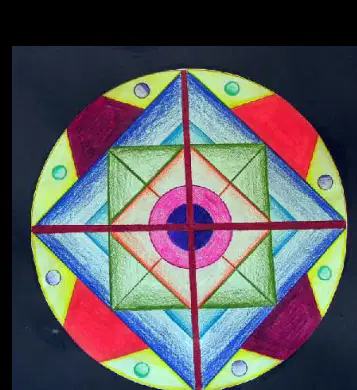
Which type of balance is shown in the second image (circular, colorful geometric design)?
Symmetrical
Radial
Asymmetrical
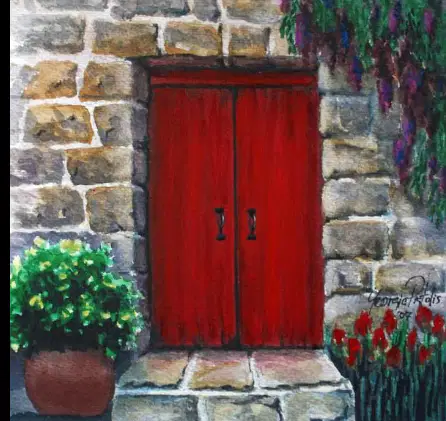
Which type of balance is shown in the third image (red door, stone wall, and plants)?
Symmetrical
Radial
Asymmetrical

Which pencil makes the lightest mark?
8B
9H
HB
2B
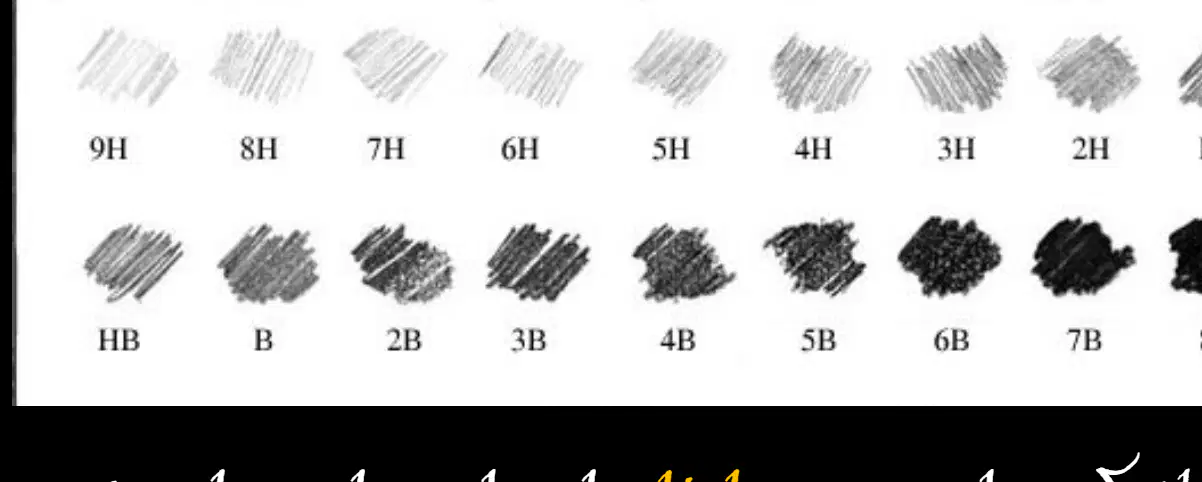
Which pencil makes the darkest mark?
9H
HB
8B
2H

Look at the images provided. What art technique is used to create these images?
Cross-hatching
Stippling
Shading
Blending
What is the art technique called that uses parallel lines to create shading?
Hatching
Stippling
Blending
Scumbling
Which of the following techniques uses parallel lines to create shading?
Hatching
Stippling
Blending
Smudging
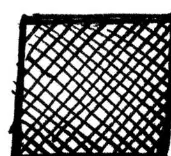
Look at the two diagrams: one labeled 'Hatching' and one labeled 'Cross-Hatching'. Which diagram shows lines crossing over each other to create shading?
Hatching
Cross-Hatching
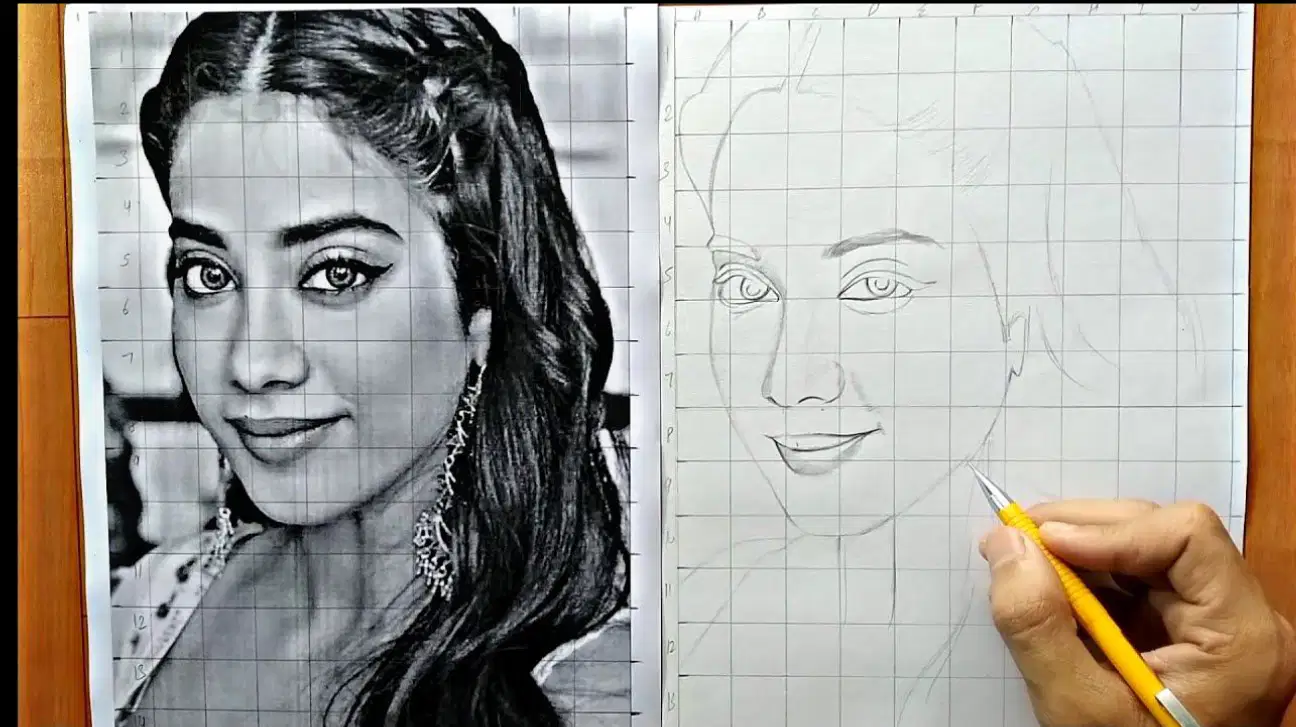
What is the grid drawing technique?
A method of coloring images using a grid
A technique where a grid is used over an original image to create accurate proportions for a copy of the original
A way to measure the size of an image
A technique for drawing cartoons

Look at the image of Prismacolor pencils. What is the binder in Prismacolor pencils?
Oil
Wax
Water
Clay
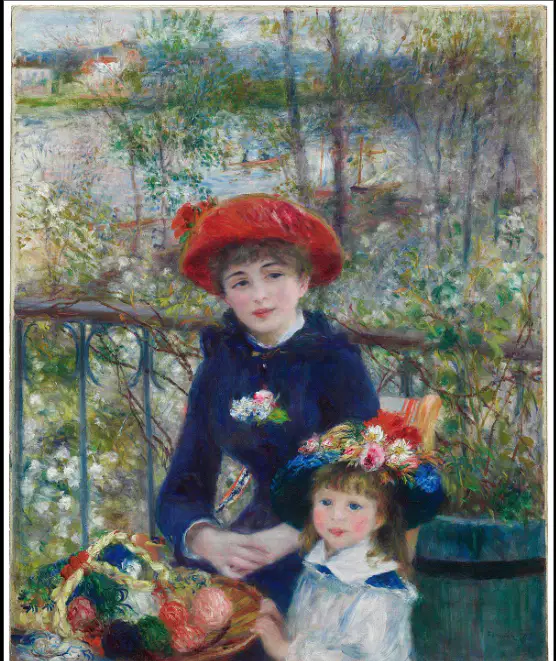
Who painted the artwork 'Two Sisters'?
Claude Monet
Auguste Pierre Renoir
Edgar Degas
Mary Cassatt
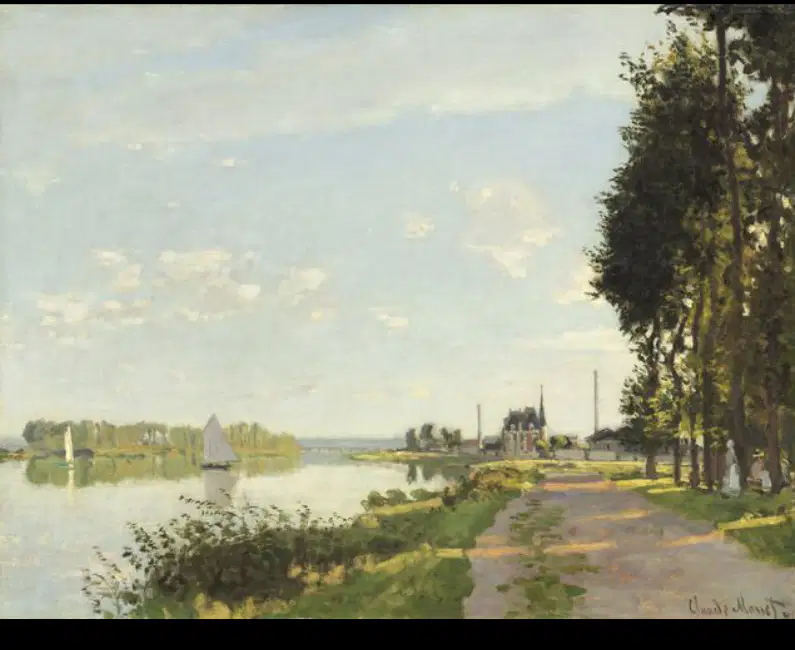
What is the title of the painting by Claude Monet shown in the image?
Argenteuil
Water Lilies
Impression, Sunrise
The Japanese Bridge
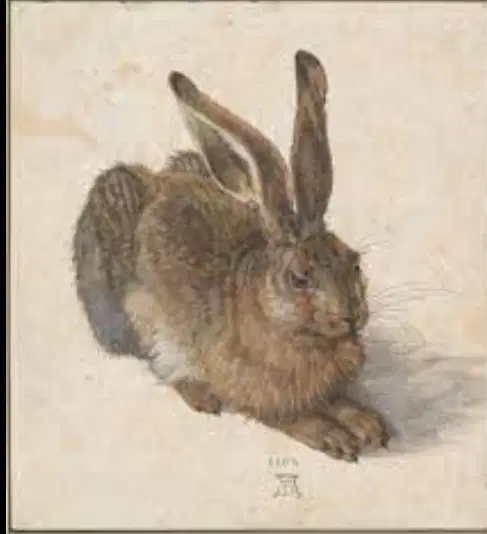
Who is the artist of the painting titled "Hare"?
A) Andrea Mantegna
B) Albrecht Durer
C) Leonardo da Vinci
D) Michelangelo
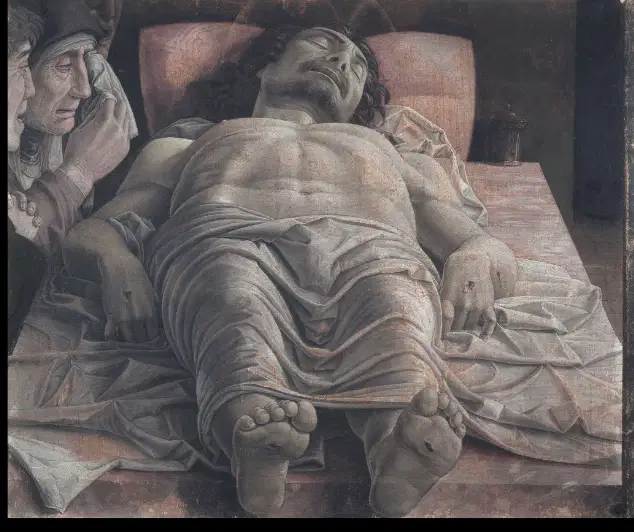
What is the title of the artwork created by Andrea Mantegna shown in the image?
Hare
Dead Christ
The Last Supper
The Birth of Venus
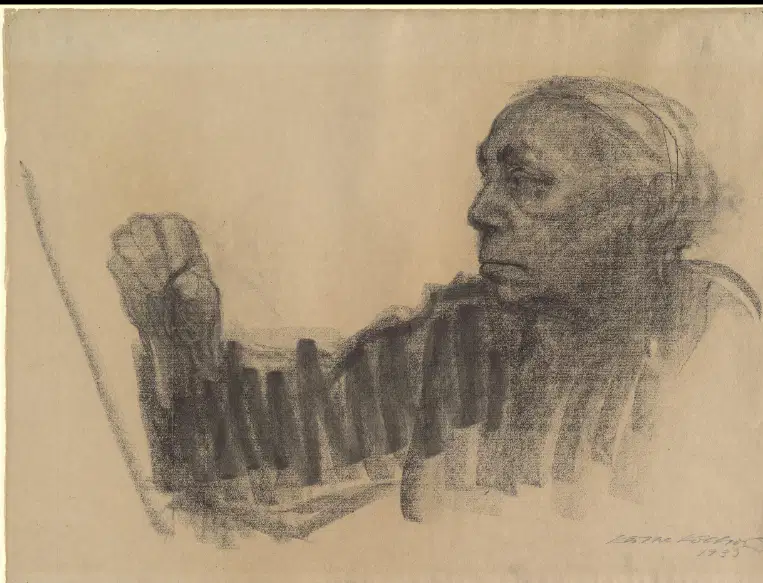
Who is the Expressionist artist of 'Self-Portrait'?
Kathe Kollwitz
Georges Rouault
Pablo Picasso
Claude Monet
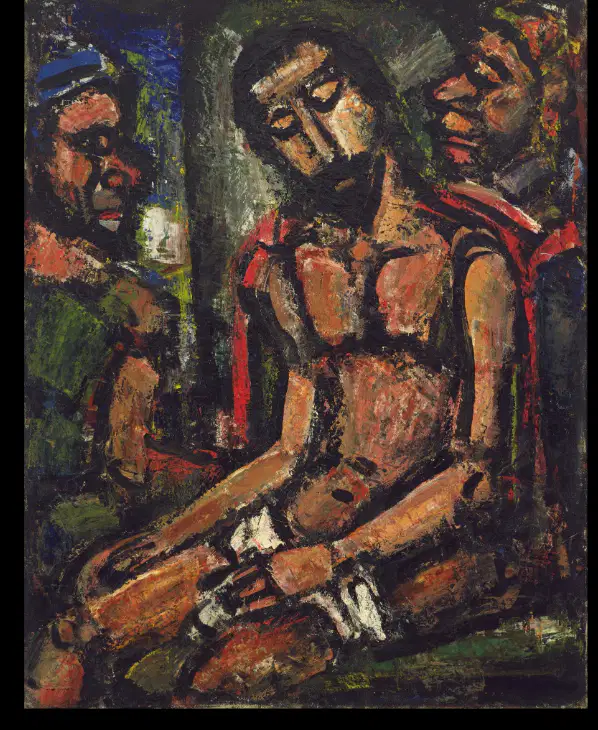
What Expressionist artist painted 'Christ Mocked by Soldiers'?
Kathe Kollwitz
Georges Rouault
Edvard Munch
Egon Schiele
What is Abstract Expressionism?
A) A style of realistic painting from the 1800s
B) A development of abstract art that originated in New York in the 1940s and 1950s and aimed at subjective emotional expression with particular emphasis on the creative spontaneous act.
C) A type of sculpture from the Renaissance period
D) A form of digital art from the 21st century

Which Abstract Expressionist artist created 'Woman I', an example of Action Painting?
Helen Frankenthaler
Willem de Kooning
Jackson Pollock
Mark Rothko
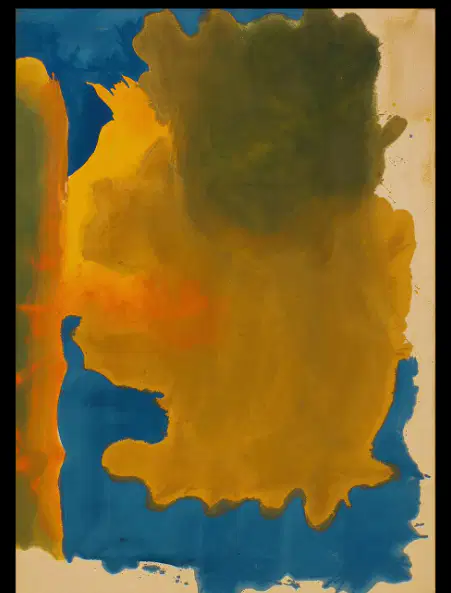
Which Abstract Expressionist artist created 'The Canal', an example of Color Field Painting?
Willem de Kooning
Helen Frankenthaler
Jackson Pollock
Mark Rothko
What is Surrealism?
A) A style of art and literature developed in the 20th century, stressing the subconscious or dreamlike imagery that made little or no sense because of the placement of things (juxtaposition) in the composition.
B) A style of art focused on realistic depictions of nature.
C) A style of art that only uses geometric shapes.
D) A style of literature from the 18th century.
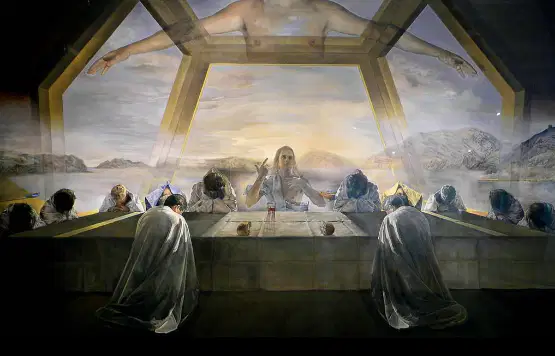
Who painted 'The Sacrament of the Last Supper'?
Salvador Dali
Joan Miro
Wilfred Lam
Pablo Picasso

Which Surrealist artist painted "Dutch Interior?"
Salvador Dali
Vincent Van Gogh
Joan Miro
Claude Monet

What art movement is Wilfred Lam's art considered to be in?
Impressionism
Surrealism
expressionism
Pointilism

What surrealist technique is being used in this painting?
Distortion
Transformation
Juxtaposition
Metamorphosis

