
Font size
 Worksheets
ART 2-Final Exam Review
Total questions: 90
Worksheet time: 45mins
What is the “Principles of Design?”
Describe the ways that artists use and arrange the elements of art.
The rules/guidelines an artist follows to create an effective composition.
Both A & B
None of the above
What is Unity?
Describes how rough or smooth an artwork appears.
Measures how well each elements of a design works together.
How light or how dark the elements of art appear on the artwork.
None of the above
What is Balance?
The visual harmony of the elements used within a work of art.
The visual opposition of the elements of art being used within an artwork.
The distribution of the visual weight of the art elements within an artwork.
None of the above
How many types of Balance are there?
3
4
5
6
Name the types of Balance.
Symmetrical
Asymmetrical
Radial
Approximate Symmetry
All of the above
What is Symmetrical Balance?
When the elements are arranged equally on either side of an axis, resulting in an identical reflection of elements used.
A form of balance achieved by the use of similarly compositional units of elements on either side of an axis, but not an exact reflection of the elements used.
When an artwork has dissimilar sides of a design and have positioned visual weight unequally.
When the elements are arranged around a central point.
None of the above
What is Approximate Symmetry?
When the elements are arranged equally on either side of an axis, resulting in an identical reflection of elements used.
A form of balance achieved by the used of similarly compositional units of elements on either side of an axis, but not an exact reflection of the elements used.
When an artwork has dissimilar sides of a design and have positioned visual weight unequally.
When the elements are arranged around a central point.
None of the above
What is Asymmetrical Balance?
When the elements are arranged equally on either side of an axis, resulting in an identical reflection of elements used.
A form of balance achieved by the use of similarly compositional units of elements on either side of an axis, but not an exact reflection of the elements used.
When an artwork has dissimilar sides of a design and have positioned visual weight unequally.
When the elements are arranged around a central point.
None of the above
What is Radial Balance?
When the elements are arranged equally on either side of an axis, resulting in identical reflection of elements used.
A form of balance achieved by the use of similarly compositional units of elements on either side of an axis, but not an exact reflection of the elements used.
When an artwork has dissimilar sides of a design and have positioned visual weight unequally.
When the elements are arranged around a central point.
None of the above
What is a Triptych?
Three pieces of art typically hinged together side-by-side.
Two pieces of art typically hinged together side-by-side.
One piece of art displayed individually.
None of the above
Identify the Balance type for the image shown.
Symmetrical Balance
Asymmetrical Balance
Approximate Symmetry
Radial Balance
Identify the Balance type for the image shown.
Symmetrical Balance
Asymmetrical Balance
Approximate Symmetry
Radial Balance
Identify the Balance type for the image shown.
Symmetrical Balance
Asymmetrical Balance
Approximate Symmetry
Radial Balance
Identify the Balance type for the image shown.
Symmetrical Balance
Asymmetrical Balance
Approximate Symmetry
Radial Balance
Identify the Balance type for the image shown.
Symmetrical Balance
Asymmetrical Balance
Approximate Symmetry
Radial Balance
Identify the Balance type for the image shown.
Symmetrical Balance
Asymmetrical Balance
Approximate Symmetry
Radial Balance
Identify the Balance type for the image shown.
Symmetrical Balance
Asymmetrical Balance
Approximate Symmetry
Radial Balance
Identify the Balance type for the image shown.
Symmetrical Balance
Asymmetrical Balance
Approximate Symmetry
Radial Balance
Identify the Balance type for the image shown.
Symmetrical Balance
Asymmetrical Balance
Approximate Symmetry
Radial Balance
Identify the Balance type for the image shown.
Symmetrical Balance
Asymmetrical Balance
Approximate Symmetry
Radial Balance
What is Art Criticism?
It is the description, analysis, interpretation & judgment of works of art.
It allows artists to constructively critique their own works of art and the works of others.
Both A & B
None of the above
How many steps of Art Criticism are there?
2
3
Is Art Criticism negative or positive?
It can vary in degrees of positive comments as well as negative comments.
It only includes positive comments because artists are sensitive and only want to hear praises.
It only includes negative comments because artists are only interested in finding ways to improve their work.
None of the above
What is the 1st stage of Art Criticism?
Description
Interpretation
Analysis
Judgment
Conclusion
Define “Description” in the context of Art Criticism.
Identifying subject matter and/or elements of art in a work. In this stage, artists are not to express their opinions; they are only to tell what they see.
Relies on individual’s knowledge of the elements and principles of design; how they are used and arranged. Expression of individual’s thoughts on the message/idea of the artwork may be included.
Identifying meaning, individual’s personal opinion, make educated guesses on how an individual sees the artist’s expression of feelings, moods, and ideas in a work.
Assessing the meaning and artistic merit in a work; the artworks’ level of success in regard to delivering the main message and the level of execution.
What is the 2nd step of Art Criticism?
Description
Interpretation
Analysis
Judgment
Conclusion
Define “Analysis” in the context of Art Criticism.
Identifying subject matter and/or elements of art in a work. In this stage, artists are not to express their opinions; they are only to tell what they see.
Relies on individual’s knowledge of the elements and principles of design; how they are used and arranged. Expression of individual’s thoughts on the message/idea of the artwork may be included.
Identifying meaning, individual’s personal opinion, make educated guesses on how an individual sees the artist’s expression of feelings, moods, and ideas in a work.
Assessing the meaning and artistic merit in a work; the artworks’ level of success in regard to delivering the main message and the level of execution.
What is the 3rd stage of Art Criticism?
Description
Interpretation
Analysis
Judgment
Conclusion
Define “Interpretation” in the context of Art Criticism.
Identifying subject matter and/or elements of art in a work. In this stage, artists are not to express their opinions; they are only to tell what they see.
Relies on individual’s knowledge of the elements and principles of design; how they are used and arranged. Expression of individual’s thoughts on the message/idea of the artwork may be included.
Identifying meaning, individual’s personal opinion, make educated guesses on how an individual sees the artist’s expression of feelings, moods, and ideas in a work.
Assessing the meaning and artistic merit in a work; the artworks’ level of success in regard to delivering the main message and the level of execution.
What is the 4th stage of Art Criticism?
Description
Interpretation
Analysis
Judgment
Conclusion
Define “Judgement” in the context of Art Criticism.
Identifying subject matter and/or elements of art in a work. In this stage, artists are not to express their opinions; they are only to tell what they see.
Relies on individual’s knowledge of the elements and principles of design; how they are used and arranged. Expression of individual’s thoughts on the message/idea of the artwork may be included.
Identifying meaning, individual’s personal opinion, make educated guesses on how an individual sees the artist’s expression of feelings, moods, and ideas in a work
Assessing the meaning and artistic merit in a work; the artworks’ level of success in regard to delivering the main message and the level of execution.
Define Pattern.
The repetition of the art elements, regular arrangement of repeated same elements.
Refers to the arrangement of opposite elements.
Both A & B
None of the above
Define Contrast.
The repetition of the art elements, regular arrangement of repeated same elements.
Refers to the arrangement of opposite elements.
Both A & B
None of the above
Select the best example for Line Pattern.
Repeating a vertical line throughout a piece of drawing paper.
Alternating between vertical and horizontal lines throughout a piece of drawing paper.
Both A & B
None of the above
Select the best example for Shape Pattern.
A circle drawn in the center of a piece of drawing paper.
Drawing a circle next to a letter on a piece of drawing paper.
Both A & B
None of the above
Select the best example for Color Pattern.
Repeating a triangle throughout a piece of drawing paper.
Repeating a vertical line throughout a piece of drawing paper.
Both A & B
None of the above
Select the best example for Value Pattern.
Alternating between black and white on a piece of drawing paper.
Alternating between different grays on a piece of drawing paper.
Both A & B
None of the above
How can you create Contrast using Lines?
Repeating a vertical line throughout a piece of drawing paper.
Drawing a straight line next to a zig-zag line on a piece of drawing paper.
Both A & B
None of the above
How can you create Contrast using Shapes?
Drawing a free-form shape next to a geometric shape on a piece of drawing paper.
Drawing a triangle next to a hand shape on a piece of drawing paper.
Both A & B
None of the above
How can you create Contrast using Colors?
Using complimentary colors like green next to red.
A shade of blue next to a tint of blue.
Both A & B
None of the above
How can you create Contrast using Value?
Using complimentary colors like green next to red.
Alternating between black and white.
Both A & B
None of the above
How can you create Contrast using Texture?
Smooth next to rough.
Dark next to light.
Both A & B
None of the above
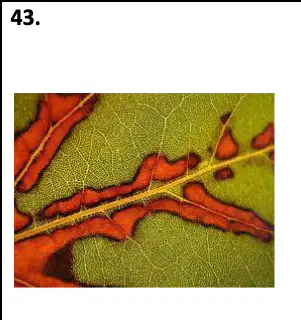
Directions (questions 43-50): For the following images, select... 43. (Refer to the image provided)
If you see only Pattern
If you see only Contrast
If you see both Pattern and Contrast
If you see neither Pattern or Contrast
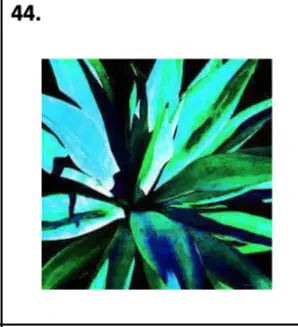
Directions (questions 43-50): For the following images, select...
If you see only Pattern
If you see only Contrast
If you see both Pattern and Contrast
If you see neither Pattern or Contrast
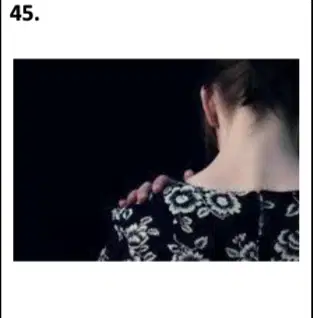
Directions (questions 43-50): For the following images, select... 45. (Refer to the image provided)
If you see only Pattern
If you see only Contrast
If you see both Pattern and Contrast
If you see neither Pattern or Contrast
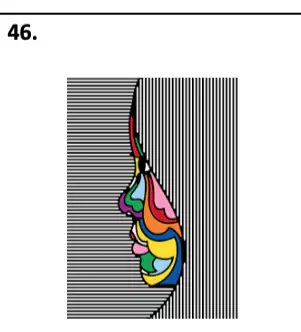
Directions (questions 43-50): For the following images, select...
If you see only Pattern
If you see only Contrast
If you see both Pattern and Contrast
If you see neither Pattern or Contrast
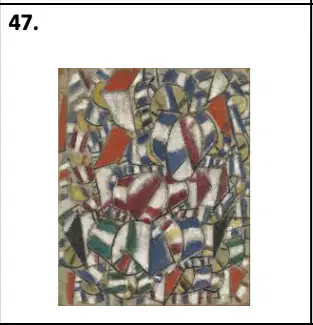
Directions (questions 43-50): For the following images, select... 47. (Refer to the image provided)
If you see only Pattern
If you see only Contrast
If you see both Pattern and Contrast
If you see neither Pattern or Contrast

Directions (questions 43-50): For the following images, select...
If you see only Pattern
If you see only Contrast
If you see both Pattern and Contrast
If you see neither Pattern or Contrast

Directions (questions 43-50): For the following images, select... 49. (Refer to the image provided)
If you see only Pattern
If you see only Contrast
If you see both Pattern and Contrast
If you see neither Pattern or Contrast

Directions (questions 43-50): For the following images, select...
If you see only Pattern
If you see only Contrast
If you see both Pattern and Contrast
If you see neither Pattern or Contrast
Define Emphasis.
Refers to an area in the composition that has the most significance, an area that the artist wants to draw attention to as the most important aspect.
Refers to an area or areas within a composition that plays a supporting role.
Define Focal Point.
Refers to an area in the composition that has the most significance, an area that the artist wants to draw attention to as the most important aspect.
Refers to an area or areas within the composition that play a supporting role.
Is defined as an area or object within the artwork that draws attention.
None of the above
Define Subordination.
Refers to an area in the composition that has the most significance, an area that artist wants to draw attention to as the most important aspect.
Refers to an area or areas within a composition that plays a supporting role.
Is defined as an area or object within the artwork that draws attention.
None of the above
Select the best example for creating a Focal Point using Color.
A painting of a blue sky and to the right-hand corner, the artist paints a vibrant red-orange sun with radiating sun rays.
A painting of purple balloons filling the entire composition.
Both A & B
None of the above
Select the best example for creating a Focal Point using Shape.
Repeating same sized triangles throughout a composition.
Repeating same sized ovals throughout a composition, and placing a big circle in the center, overlapping the under layered ovals.
Both A & B
All of the above
Select the best example for creating a Focal Point using Texture.
Alternating between black and white on a piece of drawing paper.
Alternating between different grays on a piece of drawing paper.
Both A & B
None of the above
Select the best example for creating a Focal Point using Line.
Repeating a vertical line throughout a piece of drawing paper.
Drawing a straight line next to a zig-zag line on a piece of drawing paper, both lines being the same length and thickness.
Both A & B
None of the above
Circle the best example for creating a Focal Point using Space.
An empty background with a detailed painting of an apple placed in the center of the composition.
A drawing of textile pattern.
Both A & B
None of the above
Select the best example for creating a Focal Point using Contrast.
One small green apple amongst medium sized red apples.
Dark circles surrounding a centralized, vibrant red triangle.
Both A & B
None of the above
What is Mixed Media?
When artists mix their own paint in order to create variety of hues.
When artists use different art materials to create a composition.
Both A & B
None of the above
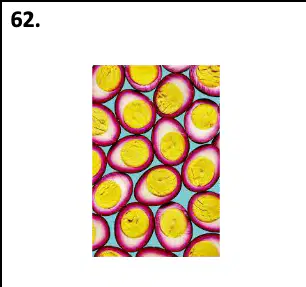
PICK THE APPROPRIATE ANSWER BASED ON THE SHOWN IMAGE
a. If the artist has an area of interest within his/her art
b. If the artist DOES NOT HAVE an area of interest within his/her art
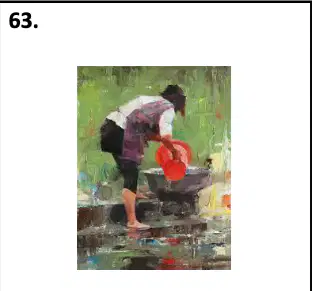
PICK THE APPROPRIATE ANSWER BASED ON THE SHOWN IMAGE
a. If the artist does include an area of interest within his/her art
b. If the artist DOES NOT include an area of interest within his/her art
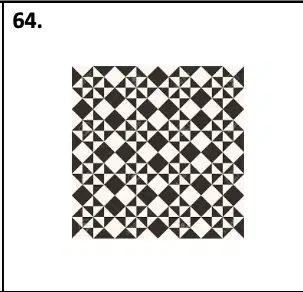
PICK THE APPROPRIATE ANSWER BASED ON THE SHOWN IMAGE
a. If the artist has an area of interest within his/her art
b. If the artist does not include an area of interest within his/her art
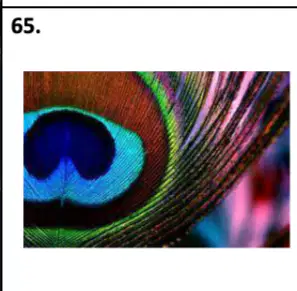
PICK THE APPROPRIATE ANSWER BASED ON THE SHOWN IMAGE
a. If the artist has an area of interest within his/her art
b. If the artist DOES NOT HAVE AN area of interest within his/her art

PICK THE APPROPRIATE ANSWER BASED ON THE SHOWN IMAGE
b. If the artist does not include an area of interest within his/her art
a. If the artist does include an area of interest within his/her art
What is an Artist Statement?
A written piece about the artists’ creation.
A written piece about the message behind the artwork.
Both A & B
None of the above
What should be included in an Artist Statement?
Explanation of subject matter/theme.
The title of the artwork.
The artwork’s size and medium.
All of the above
What is Facial Proportions?
Refers to the relationship in size and placement between facial features.
Refers to the distortion of size and placement of facial features.
Both A & B
None of the above
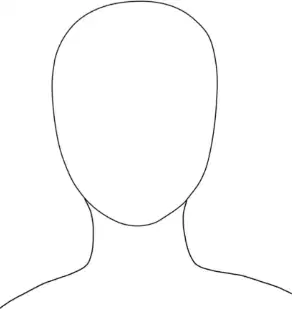
Where is the eye-level line located on a face?
Halfway in between the tip of the nose and the tip of the chin.
Halfway in between the top of the skull and the tip of the chin.
Halfway in between the jawline and the tip of the chin.
Halfway in between top of the skull and the tip of the nose.
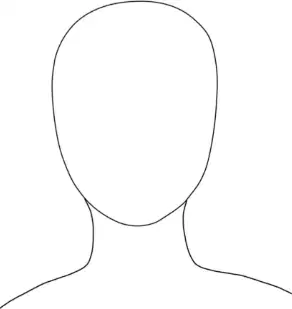
On the eye-level line, how many eyes can fit across?
4 eyes across
5 eyes across
6 eyes across
7 eyes across
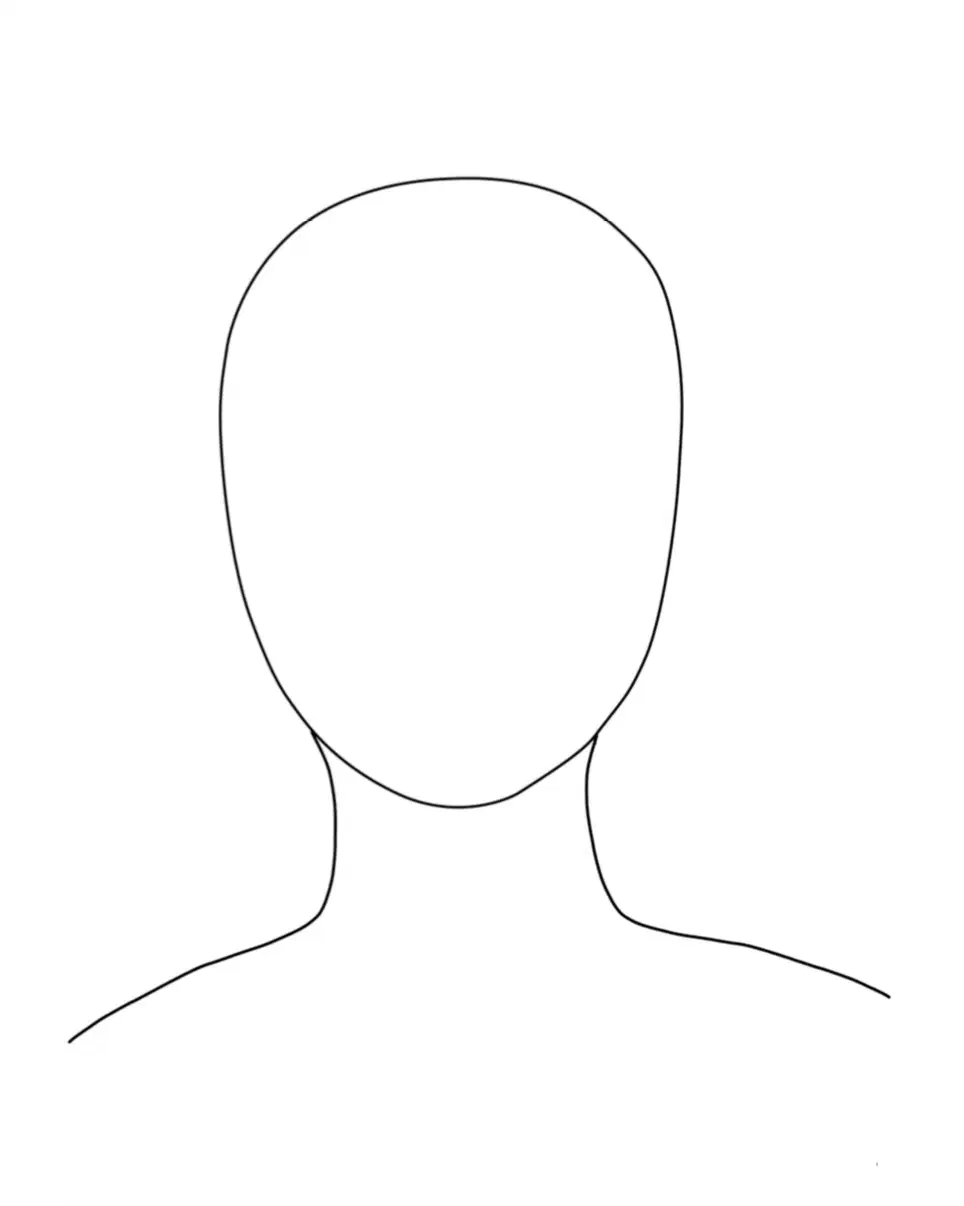
Where is the tip of the nose located?
Halfway in between the top of the skull and the tipoff the chin.
Halfway in between the eye-level line and the tip of the chin.
Halfway in between the jawline and the tip of the chin.
Halfway in between the top of the skull and the eye-level line.
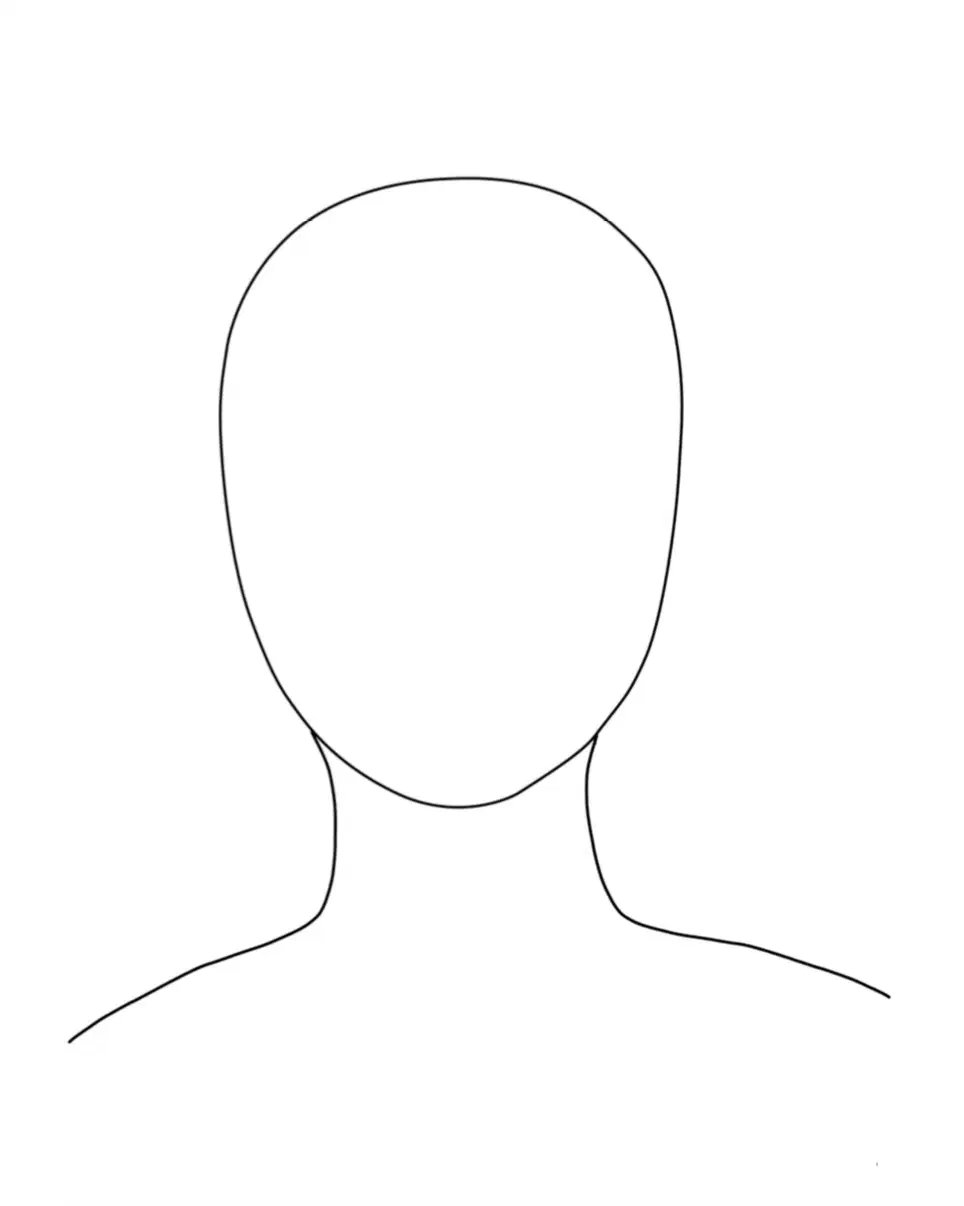
How wide is the width of nose?
The width of an eye
The width of 2 eyes
The width of 3 eyes
None of the above
Where is the jaw line located?
Halfway in between the tip of the nose and the tip of the chin.
Halfway in between the top of the skull and the tip of the chin.
Halfway in between top of the skull and the tip of the nose.
None of the above
How wide should the lips be?
As wide as the width of the nose.
As wide as the distance between the tails of the left and right eye.
As wide as the distance between the central points of the left and right eye.
None of the above
The upper lip should be located where?
Above the jaw line
Below the jaw line
Both A & B
None of the above
The bottom lip should be located where?
Above the jaw line
Below the jaw line
Both A & B
None of the above
The hairline should be located halfway in between the ________ line and the ________ line.
Top of skull, eye-level
Top of skull, chin
Top of skull, tip of nose
None of the above
The placement of eyebrows should be located in between the ________ line and the ________ line.
Top of skull, eye-level
Hair, eye-level
Eye-level, tip of nose
None of the above
What is Variety?
It is achieved when the art elements are combined in various ways to increase visual interest.
Refers to a way of utilizing the art elements to produce the look and feel of structured movement with a visual tempo or beat.
Is the process of printing multiple copies of one design/artwork.
The design principle that uses some of the elements of art to produce the look of action or to cause the viewer’s eye to sweep over the artwork in a certain manner.
How can Shape be Varied?
Changing the size of a particular shape.
Utilizing both geometric and free-form shapes.
Both A & B
None of the above
How can Line be Varied?
Changing the length of a line.
Changing the thinness and thickness of a line.
Changing the texture of a line.
All of the above (A, B & C)
None of the above
How can Texture be Varied?
Changing the degree of smoothness
Changing the degree of roughness
Both A & B
None of the above
What is Rhythm?
It is achieved when the art elements are combined in various ways to increase visual interest.
Refers to a way of utilizing the art elements to produce the look and feel of structured movement with a visual tempo or beat.
Is the process of printing multiple copies of one design/artwork.
The design principle that uses some of the elements of art to produce the look of action or to cause the viewer’s eye to sweep over the artwork in a certain manner.
What is Movement?
It is achieved when the art elements are combined in various ways to increase visual interest.
Refers to a way of utilizing the art elements to produce the look and feel of structured movement with a visual tempo or beat.
Is the process of printing multiple copies of one design/artwork.
The design principle that uses some of the elements of art to produce the look of action or to cause the viewer’s eye to sweep over the artwork in a certain manner.
What is Printmaking?
Is the process of creating artworks by printing, multiple copies, normally on paper.
Is the process of creating artworks using clay to build three-dimensional, free-standing sculptures.
Is the process of creating artworks using tracing paper to create multiple copies of a design/artwork.
None of the above
What is a Matrix in the context of Printmaking?
Refers to a rectangular array of numbers, symbols, or expressions, arranged in rows and columns.
Refers to the tissue in animal or plant cells, in which more specialized structures are embedded.
Refers to a science fiction action film written and directed by Wachowskis.
Refers to a printing plate, the surface on which the picture or design is made. The plate can be anything from copper to plastic cutting board.
What are the Printmaking Techniques?
Hatching, Cross-Hatching, Stippling & Scribbling
Contour Line, Cross-Contour, Gesture, Continuous & Blind-Contour
Relief, Intaglio, Lithography, Silkscreen, Collagraph & Monoprint
All of the above (A, B & C)
None of the above
What is Relief Printmaking?
The artist cut away parts of the surface of a plate. The part that isn’t cut away will stand out and be printed.
The artist cut away parts of the surface of a plate. The part that is carved away will receive ink and print.
Printmaking that has lines or images that can only be made once.
None of the above
A Brayer is a tool used in Printmaking to?
Burnish the ink on the plate onto the printing paper.
Roll ink onto a plate for printing.
Carve away parts of the plate.
All of the above (A, B & C)
None of the above
How many Elements of Art are there?
6
7
8
9

