

wayground logo

Free Printable Worksheets

Font size

S
M
L
XL
Worksheets

Atom

Total questions: 35

Worksheet time: 29mins
Name
Class
Date
1.
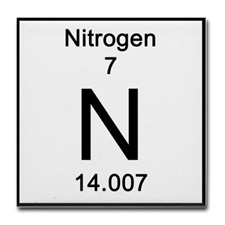
What is the number of protons that the element in this image contain?
a)
14
b)
7
c)
15
d)
18
2.

What element has only one proton?

a)

Helium

b)

Carbon

c)

Lithium

d)

Hydrogen

3.

What is the relative charge of an electron?

a)

1

b)

Neutral

c)

-1

4.

The central region of an atom where its neutrons and protons are is its

a)

nucleus

b)

core

c)

electron cloud

d)

centre

5.
The particles with no charge in an atom are the _______.
a)
electrons
b)
neutrons
c)
protons
d)
protons and neutrons
6.

All matter is made of

a)

energy

b)

electrons

c)

atoms

d)

compounds

7.
Most of the atom is filled with
a)
electrons
b)
empty space
c)
the nucleus
d)
protons
8.
Which two particles make up the nucleus of an atom?
a)
Protons and Electrons
b)
Protons and Neutrons
c)
Molecules and Compounds
d)
Neutrons and Electrons
9.
What number indicates the nucleus?
a)
1
b)
2
c)
3
d)
4
10.
Which statement best describes an electron?
a)
Smaller mass than a proton and a negative charge
b)
Smaller mass than a proton and a positive charge
c)
Greater mass than a proton and a negative charge
d)
Greater mass than a proton and a positive charge
11.
Which element has 31 protons ?
a)
Gallium 
b)
Germanium
c)
Gadolinium
d)
Polonium
12.

The atomic number = the protons

a)

True

b)

False

13.

Neutrons are neutral

a)

True

b)

False

14.

Electrons have a negative charge

a)

True

b)

False

15.

Protons have a + charge

a)

True

b)

False

16.
The negatively charged particles of an atom are the ______.
a)
electrons
b)
protons
c)
neutrons
d)
protons & neutrons
17.
The particles with no charge in an atom are the _______.
a)
electrons
b)
neutrons
c)
protons
d)
protons and neutrons
18.
The positively charged particles of an atom are the ________.
a)
electrons
b)
protons
c)
neutrons
d)
protons & neutrons
19.
In an atom, what is the number of protons equal to?
a)
The number of electrons.
b)
The number of neutrons.
c)
The number of molecules.
d)
The number of nuclei.
20.
What is at the center of every atom?
a)
An electron
b)
A compound
c)
A molecule
d)
A nucleus
21.
What is the atomic number?
a)
number of protons
b)
number of neutrons
22.
An element is made up of only one kind of _____.
a)
isotope
b)
plastic
c)
atom
d)
metal
23.
The amount of space something takes up
a)
density
b)
volume
c)
mass
d)
matter
24.
Something that takes up space and has mass.
a)
volume
b)
matter
c)
mass
d)
density
25.
The particles that are found in the nucleus of an atom are
a)
neutrons and electrons
b)
electrons only
c)
protons and neutrons
d)
protons and electrons
26.
Particles in an atom that are neutral and have no charge are 
a)
negatrons 
b)
electrons 
c)
neutrons 
d)
protons 
27.
The positive particles of an atom are 
a)
electrons 
b)
positrons 
c)
neutrons 
d)
protons 
28.
How many Protons are in one atom of Lithium?
a)
3
b)
6
c)
7
d)
6.941
29.
Of the three subatomic particles, which is the smallest and the lightest?
a)
protons 
b)
neutrons
c)
electrons
d)
They are all equal.
30.
What does the nucleus of an atom contain?
a)
Electrons and neutrons
b)
Protons and neutrons
c)
Neutrinos and positrons
d)
DNA and RN
31.

The positive particles of an atom are called _____.

a)

electrons

b)

positrons

c)

neutrons

d)

protons

32.

Particles in an atom that are neutral which means they have no charge are _____.

a)

negatrons

b)

electrons

c)

neutrons

d)

protons

33.

A particle that moves around the nucleus of an atom is an _______.

a)

Proton

b)

Neutron

c)

Electron

d)

Quark

34.

An atom is made up of three basic parts which are Protons, Neutrons, and Electrons.

a)

True

b)

False

35.

An atom is too small to see

a)

True

b)

False
