
 Worksheets
CJ central Heating 8202
Total questions: 73
Worksheet time: 37mins
What is one of the objectives of the session for learners in the Level 3 Advanced Technical Diploma in Plumbing?
To design new plumbing systems
To obtain information on system faults
To install new plumbing systems
To learn about plumbing history
Which task is included in the session objectives for learners?
Conducting diagnostic checks
Learning about electrical systems
Designing plumbing layouts
Studying water conservation methods
What is the final step mentioned in the session objectives for learners?
Installation of new systems
Repair and rectify
Learning theoretical concepts
Conducting safety checks
What is one of the key steps an engineer should take when obtaining information for diagnostic, repair, and rectification procedures?
Ignore the end user's input
Refer to manufacturer's instructions
Avoid using fault diagnosis charts
Skip checking service histories of appliances
Why is it important for an engineer to discuss the problem with the end user during diagnostic procedures?
To avoid using technical resources
To ensure accurate understanding of the issue
To bypass service histories of appliances
To ignore fault diagnosis charts
Which of the following is NOT a recommended step for an engineer during preparation for repair procedures?
Refer to fault diagnosis charts
Check service histories of appliances
Refer to unrelated documents
Refer to manufacturer's instructions
What should an engineer check to understand the maintenance history of an appliance?
Fault diagnosis charts
Service histories of appliances
Manufacturer's instructions
User manuals
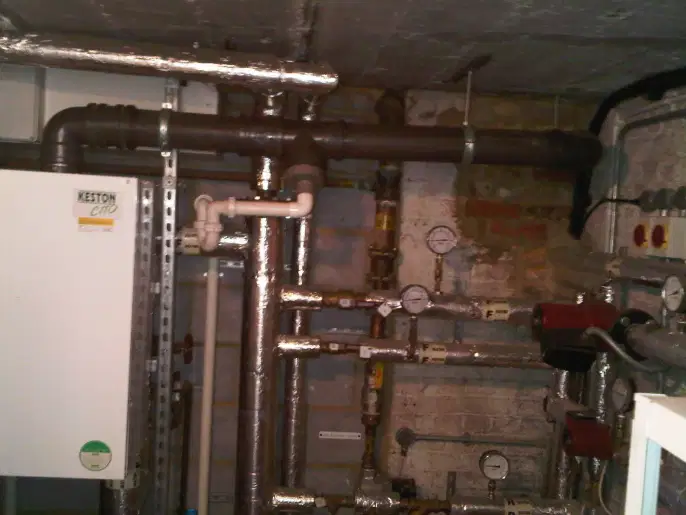
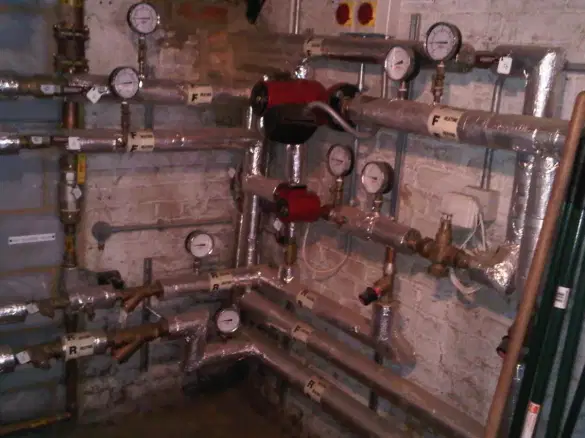
What components are commonly found in a boiler room as shown in the image?
Pumps, timers, switches, sensors, and isolation points
Fans, lights, thermostats, and radiators
Boilers, air conditioners, and heaters
Pipes, valves, and ducts only
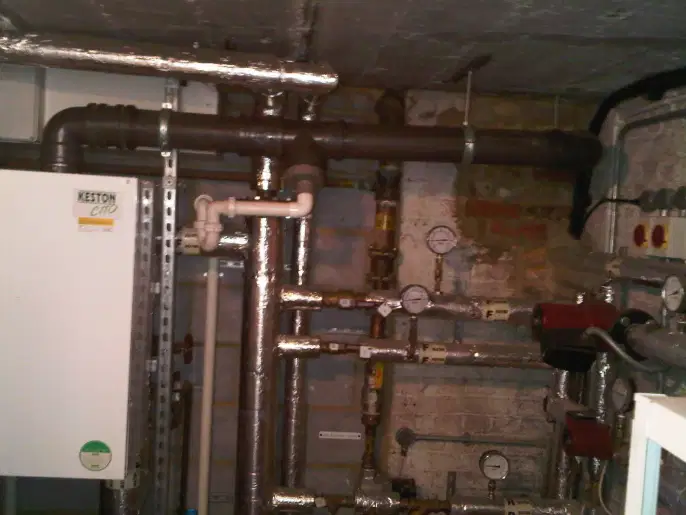
Which of the following is NOT typically found in a boiler room setup?
Pumps
Timers
Air conditioners
Isolation points
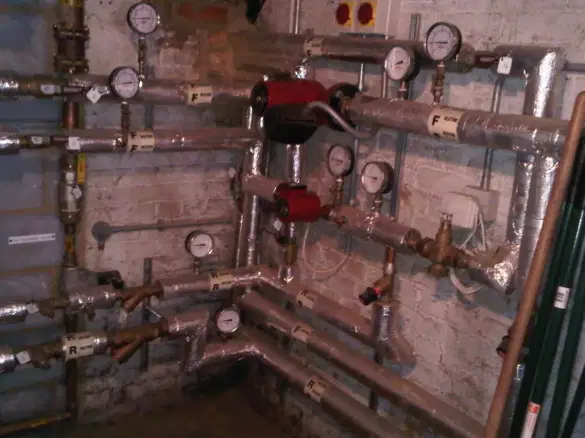
What is the primary purpose of isolation points in a boiler room?
To control the temperature of the room
To isolate sections of the system for maintenance or repair
To regulate the flow of air in the room
To monitor the pressure in the system
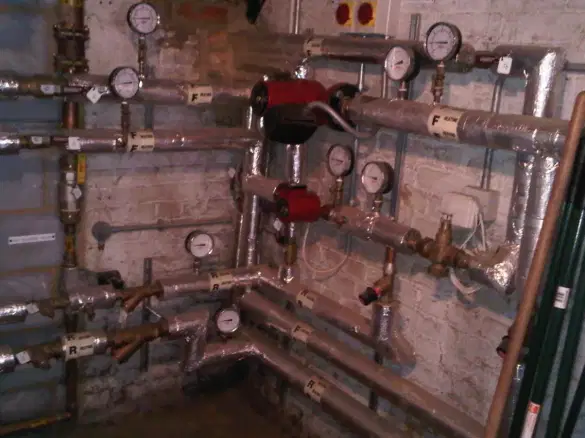
Which component in a boiler room is responsible for monitoring system pressure?
Timers
Sensors
Isolation points
Pumps
What is the function of pumps in a boiler room system?
To circulate water or other fluids through the system
To measure the temperature of the system
To isolate sections of the system
To control the timing of operations
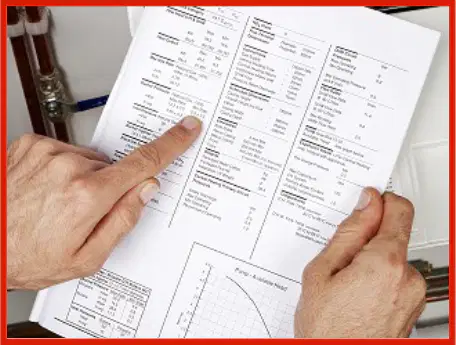
What is the purpose of comparing the diagnosed fault with the manufacturer’s instructions?
To identify the appliance model
To confirm the warranty status
To help diagnose faults and offer solutions
To check the installation date
Why is combustion analysis important in the diagnosis and rectification process?
It ensures the appliance is installed correctly
It confirms the efficiency of the appliance
It checks the gas rating of the appliance
It verifies the appliance’s warranty
What do manufacturer’s instructions flow charts assist with?
Identifying the appliance’s age
Diagnosing faults and offering solutions
Checking the gas rating
Confirming the combustion analysis results
What additional check is required by many manufacturers apart from the appliance gas rating?
Installation verification
Combustion analysis
Warranty confirmation
Electrical safety test
What is the purpose of the manufacturer's flow charts in heating systems?
To design new heating systems
To identify and remedy common faults and problems
To install heating systems
To improve energy efficiency

Which component is checked first in the sequence of operation shown in the flow chart?
Boiler
Zone valves
Programmer
Pump
What should be done at each stage of the sequence of operation to assist with basic fault diagnosis?
Components should be replaced
Components should be visually and manually checked
Components should be disconnected
Components should be recalibrated

Which of the following is NOT part of the sequence of operation in the flow chart?
Thermostat
Zone valves
Radiator
Pump

What should be done if the processes listed in the manufacturer's flow chart do not function after a visual inspection and changing control settings does not resolve the issue?
Replace the equipment immediately.
Begin investigation using electrical test equipment.
Ignore the issue and continue operation.
Consult the manufacturer's literature only.
What is a key step to take before testing or referring begins during fault finding?
Replace the faulty equipment.
Talk to the customer about the problem.
Skip the visual inspection.
Use electrical test equipment immediately.
Which of the following is emphasized as essential for successful fault finding?
Complexity and advanced tools.
Simplicity and a logical approach.
Immediate replacement of components.
Avoiding customer interaction.

What sequence is followed in the manufacturer's flow chart for fault finding?
Boiler → Pump → Zone valves → Thermostat → Programmer.
Programmer → Thermostat → Zone valves → Pump → Boiler.
Zone valves → Programmer → Boiler → Pump → Thermostat.
Thermostat → Boiler → Pump → Zone valves → Programmer.

What is the first step in the basic sequence of operation for a gas-fired, fanned flued boiler?
Fan operates
Signal to boiler control panel from zone valve
Pressure switch senses pressure change
Ignition process begins via control panel

Which component is responsible for sensing pressure changes in the sequence of operation for a gas-fired, fanned flued boiler?
Boiler thermostat
Pressure switch
Gas valve solenoid
Main burner

What happens immediately after the ignition process begins via the control panel in the sequence of operation for a gas-fired, fanned flued boiler?
Fan operates
Flame verified
Gas valve solenoid opens
Main burner ignites

What is the final step in the basic sequence of operation for a gas-fired, fanned flued boiler?
Gas valve solenoid opens
Main burner ignites
Flame verified
Pressure switch senses pressure change

What is the role of the boiler thermostat in the sequence of operation for a gas-fired, fanned flued boiler?
Senses pressure change
Calls for heat
Opens the gas valve solenoid
Verifies the flame
What is the most important document to consult when identifying faults with hot water systems?
Fault finding charts
Manufacturer’s instructions
Replacement parts list
Plumbing guidelines
What section in the manufacturer’s instructions is considered an invaluable source of information for fault finding?
Replacement parts list
Fault finding section
System maintenance guide
Installation instructions
What is advisable to use when ordering replacement parts for hot water systems?
The system’s installation guide
The model number and parts number
The fault finding chart
The plumbing handbook
Why is it important to ensure the correct original part is purchased when replacing components?
To avoid system failure
To ensure compatibility and proper functioning
To reduce costs
To simplify installation
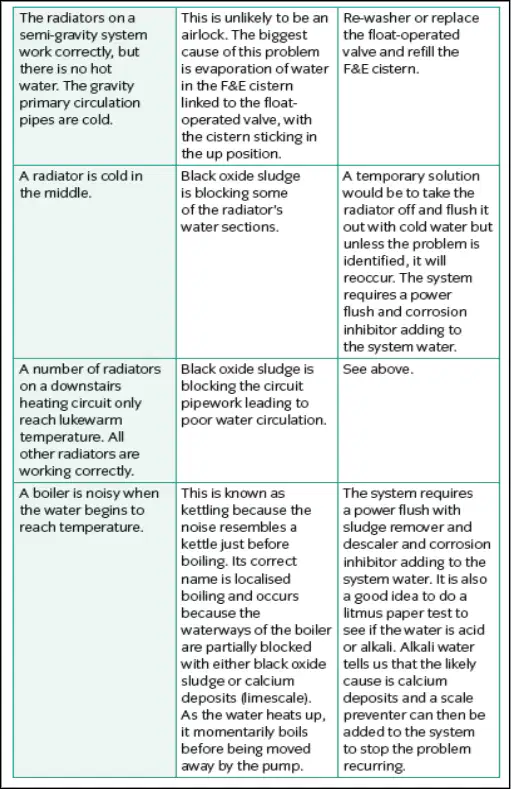
Refer to the fault finding chart showing common issues and solutions for hot water systems. Which of the following is a common issue identified in hot water systems according to the chart?
No hot water
Leaking roof
Broken window
Faulty air conditioner
What is a typical problem with a heating system that results in either no heating or hot water?
Failure of the zone valve to operate
Failure of the thermostat to adjust temperature
Blockage in the water pipes
Overheating of the boiler
What are the two most likely reasons for a zone valve not opening?
The control thermostat has failed or the servo motor has burnt out
The boiler has overheated or the pipes are blocked
The wiring is faulty or the thermostat is set incorrectly
The water pressure is too high or the motor is disconnected
If the problem existed from the beginning in a new installation, what is the likely cause?
A wiring issue
A faulty thermostat
A burnt-out motor
A disconnected lever mechanism
What is the first step to check for power to a component in a heating system?
Live testing with a voltage indicator or test lamp
Checking the water pressure
Inspecting the boiler temperature
Replacing the thermostat
What tool can be used to perform a dead test to confirm if the motor has burnt out?
A calibrated multimeter
A voltage indicator
A test lamp
A pressure gauge
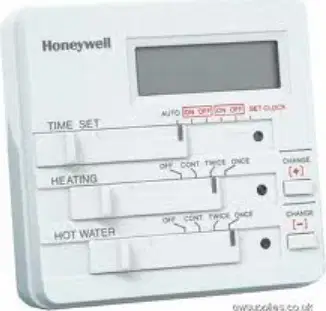
What is the primary function of programmers in a property?
To control the water pressure in pipes.
To provide independent timed control of hot water and central heating.
To monitor the temperature of the property.
To regulate the flow of gas in heating systems.
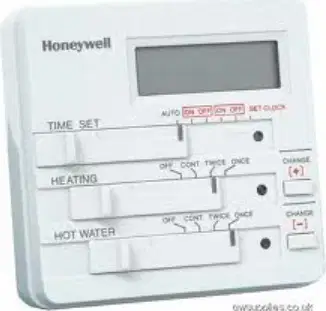
Where are programmers commonly situated in a property?
In the bathroom.
In the kitchen or airing cupboard.
In the basement.
In the living room.
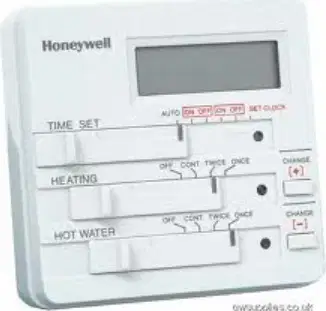
What is the first step in diagnosing operational problems in programmers?
Replacing the programmer entirely.
Inspecting the wiring and performance of the electronic device.
Checking the function of buttons, sliders, and override functions.
Cleaning the programmer thoroughly.

What can be inspected to diagnose operational problems in programmers?
The water flow in pipes.
The wiring and performance of the electronic device.
The gas supply to the heating system.
The temperature settings of the programmer.
What is the recommended height for installing a room thermostat on a wall?
1.5m
2m
3m
0.5m
Why should a room thermostat not be installed on an outside wall?
It may be exposed to direct sunlight.
It may not accurately measure room temperature.
It may interfere with Wi-Fi signals.
It may be difficult to access.
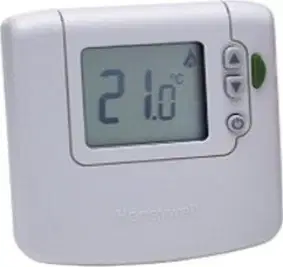
Which type of room thermostat is commonly fitted to compensate for temperature variations?
Bi-metallic type
Programmable type
Compensating type
App-activated type
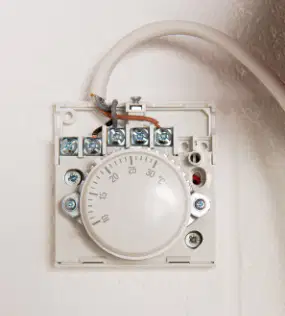
What should be investigated when diagnosing faults in a room thermostat?
The function of the zone valve, calibration, and wiring
The type of thermostat used
The location of the thermostat
The customer’s requirements
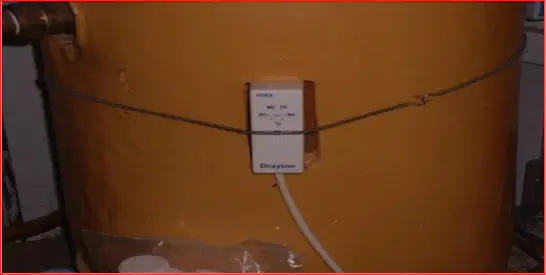
What is the purpose of performing a visual check on the location of a thermostat on a hot water cylinder?
To ensure the thermostat is connected to the wiring connectors.
To confirm the thermostat is located 1/3 of the way up the cylinder for accurate temperature governing.
To verify the thermostat is of the bi-metallic strip type.
To check the thermostat's compatibility with the cylinder material.
Which type of thermostat is mentioned in the text as being used for hot water cylinders?
Digital thermostat.
Bi-metallic strip or liquid expansion type.
Mercury-based thermostat.
Infrared thermostat.
Why is it important to verify the switching at the wiring connectors of a thermostat?
To ensure the thermostat is properly calibrated.
To check the zone valve response to temperature changes.
To confirm the thermostat is securely attached to the cylinder.
To test the thermostat's compatibility with the cylinder material.
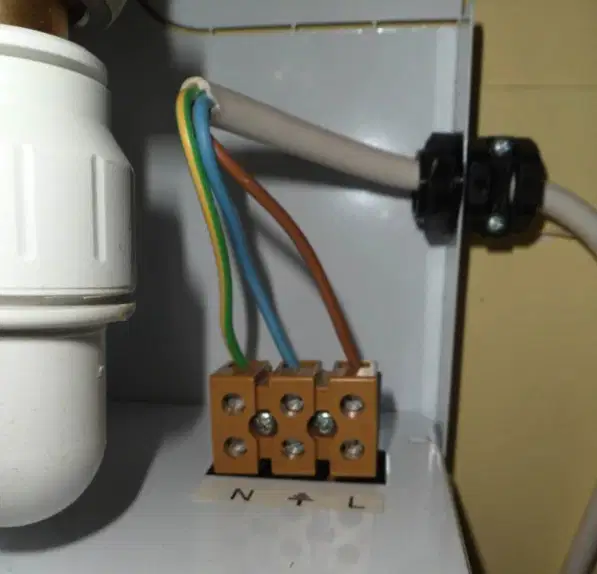
What issue is identified when neutral and earth conductors are connected incorrectly?
Increased efficiency in wiring
Risk of electrical shock
Improved circuit performance
Reduced power consumption
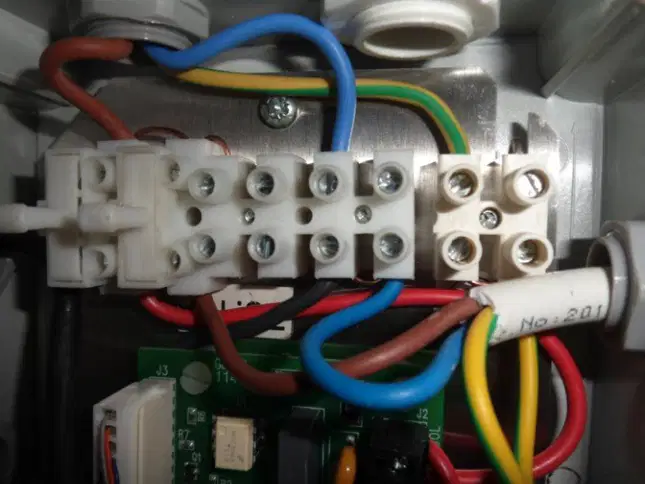
What is the danger associated with exposed conductors linking connections?
Enhanced electrical flow
Risk of short circuits and fire hazards
Improved safety measures
Reduced voltage output
What is the purpose of safe isolation in plumbing systems?
To prevent water leakage
To confirm the circuit is locked off and safe using a voltage detector
To increase water pressure in the system
To ensure the boiler operates efficiently
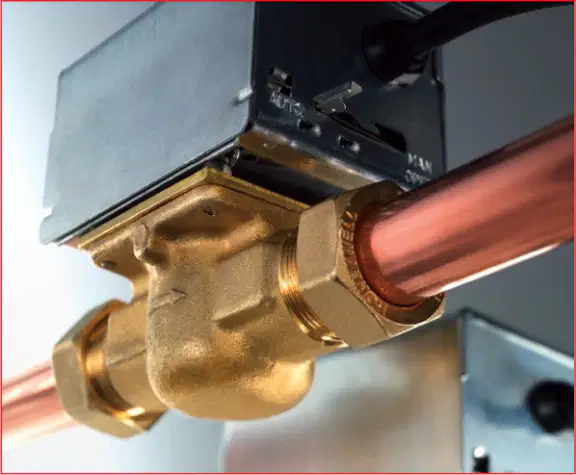
What component is shown in the image labeled "Two-port zone valve"?
A boiler
A pump
A two-port zone valve
A thermostat
What should be consulted when performing safe isolation in plumbing systems?
The plumber's handbook
Manufacturer’s instructions
The building blueprint
The wiring diagram
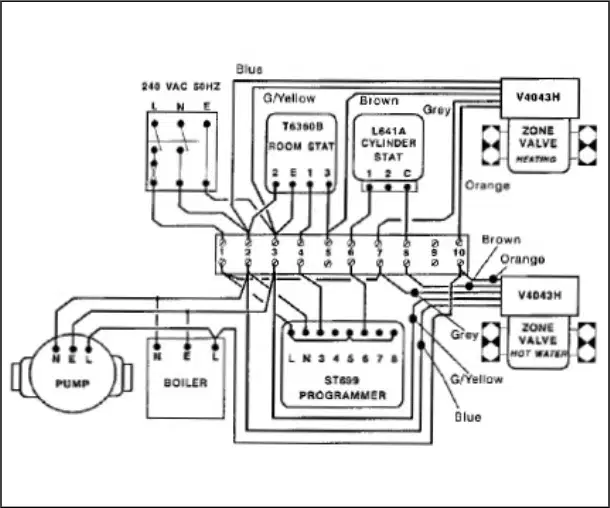
What does the wiring layout in the image represent?
A Y plan system wiring layout
An S plan system wiring layout using two-port valves
A boiler installation guide
A pump wiring diagram
Which tool is used to confirm safe isolation?
A pressure gauge
A voltage detector
A wrench
A thermometer
What is essential to ensure proper activation of a zone valve?
Ensuring the zone valve is activated by a room or cylinder thermostat.
Checking the water pressure in the circuit.
Replacing the zone valve motor regularly.
Cleaning the zone valve manually.
What should be checked to prevent unwanted circulation in zones within the circuit?
The physical operation of the manual lever.
The temperature of the water in the circuit.
The size of the zone valve.
The type of thermostat used.
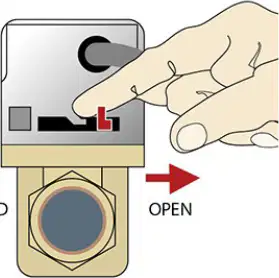
What is often required when diagnosing the performance of the zone valve motor?
Replacement of the zone valve motor.
Cleaning the thermostat.
Adjusting the water pressure.
Replacing the manual lever.
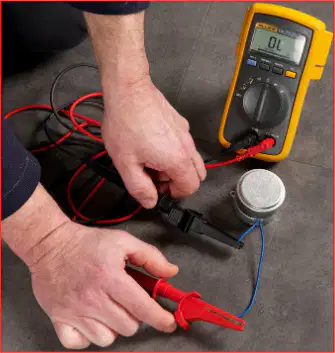
What does an infinity (OL) reading on the resistance scale indicate when testing a motor?
The motor is operational and working correctly.
The motor is no longer operational and should be replaced.
The motor is functioning but needs maintenance.
The motor is producing excessive resistance.
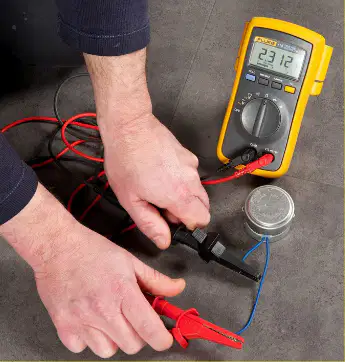
What is the purpose of using the Ω scale during resistance testing of a motor?
To measure the voltage of the motor.
To determine the current flowing through the motor.
To find out the level of resistance in the motor coil and ascertain its functionality.
To test the temperature of the motor.
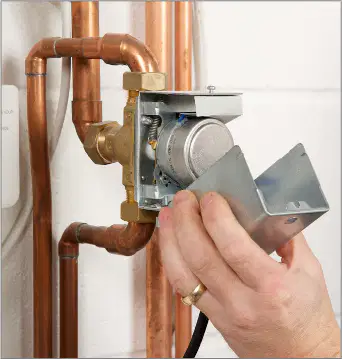
What should be done if the resistance reading of a motor does not match the manufacturer’s expected values?
The motor should be replaced.
The motor should be cleaned and re-tested.
The motor should be disconnected and left idle.
The motor should be tested for voltage instead.
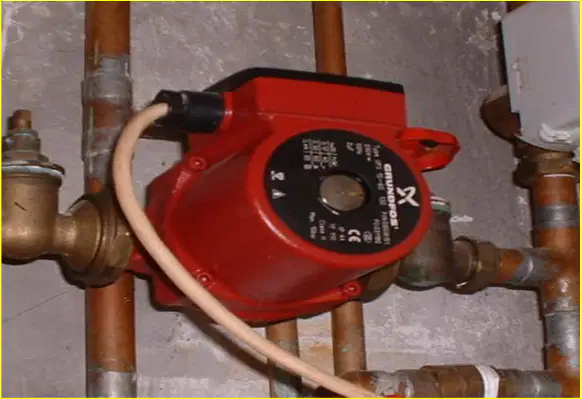
What is the purpose of checking the rubber or fibre washers in pump flanges?
To ensure the pump is securely fastened to the system.
To maintain a watertight seal.
To prevent air locks in the system.
To check the motor's performance.
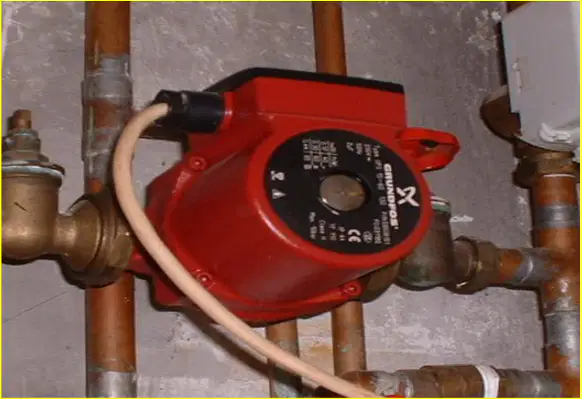
What should be done if the system has been out of action for a while and the impeller jams?
Replace the pump motor.
Turn the impeller manually to activate the boiler.
Vent the pump to remove air locks.
Close the full bore valves to drain the system.
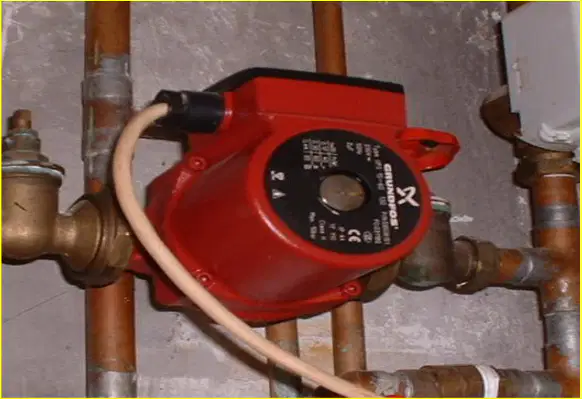
Why should pumps be vented regularly?
To prevent air locks, noise, and damage.
To ensure the pump motor operates efficiently.
To maintain a watertight seal.
To allow the pump to be removed without draining the system.
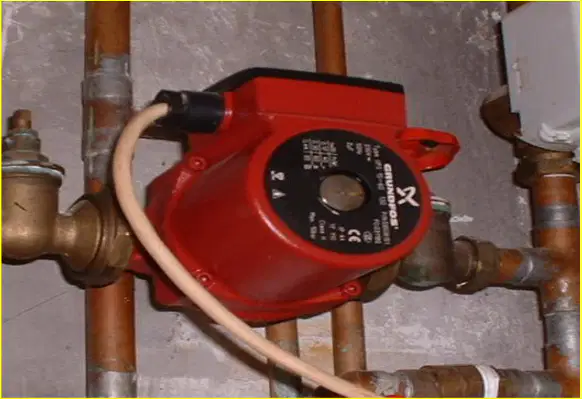
What could be the reason for radiators not heating up and hot water being only lukewarm?
A sluggish or poor-performing pump.
Air locks in the pump.
A jammed impeller.
Incorrectly installed pump flanges.
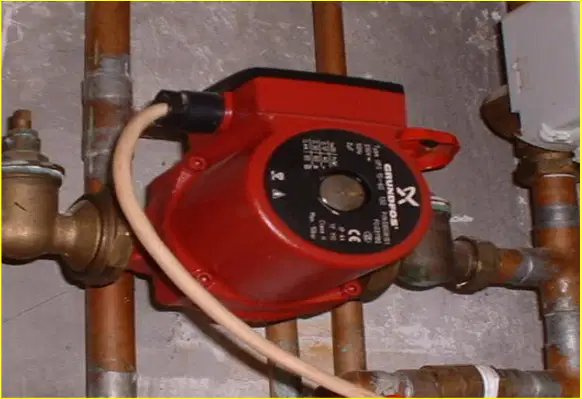
How can the pump motor be checked?
By venting the pump.
In a similar way to the synchron motor on the zone valve.
By manually turning the impeller.
By replacing the rubber washers.
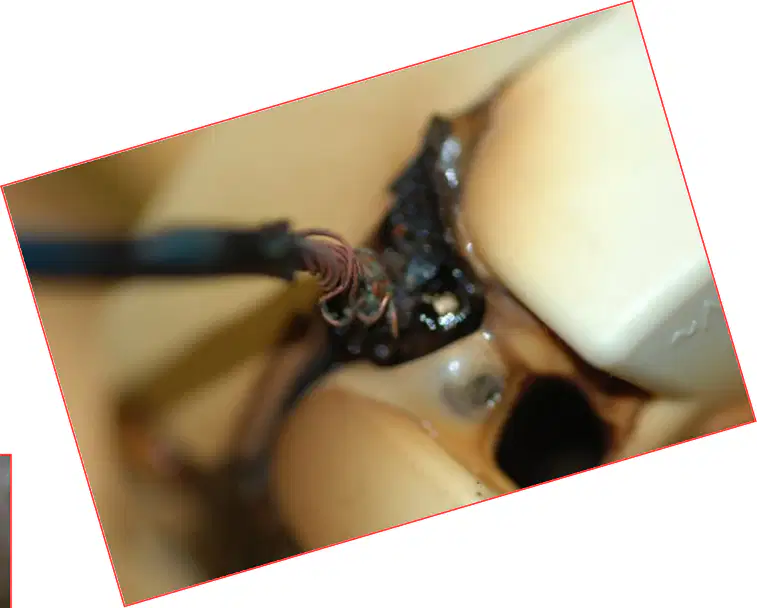
What is one of the key steps in diagnosing faults in a pump circulator?
Inspecting the impeller, motor capacitor, and wiring connections
Replacing the pump without inspection
Ignoring loose wiring and focusing on external components
Tightening screws without checking other components
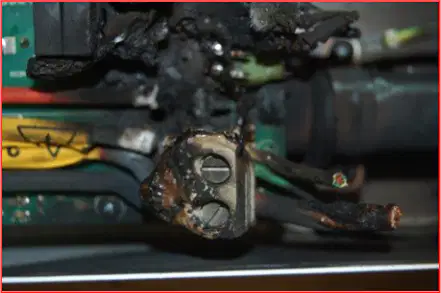
What can loose and incorrect wiring of conductors cause?
A range of electrical problems
Improved pump efficiency
Reduced electrical conductivity
Enhanced motor performance
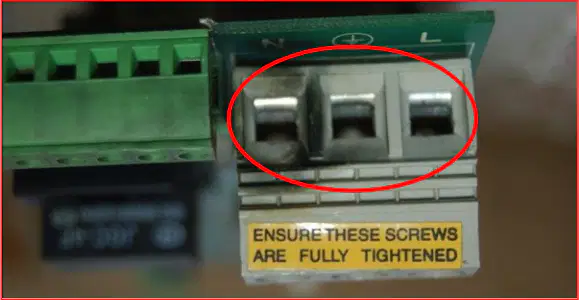
What should be ensured when tightening screws in pump connections?
Screws are fully tightened
Screws are loosely fitted
Screws are removed completely
Screws are replaced with new ones
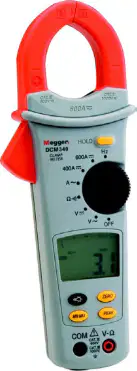
What tool can be used to measure the current drawn from a pump motor to diagnose nuisance tripping of an MCB when the heating is on?
Clamp-on ammeter
Multimeter
Pressure gauge
Thermometer
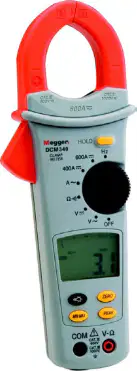
What is the advantage of using a clamp-on ammeter for diagnosing faults in a pump motor?
It allows testing without disconnecting the supply.
It measures pressure in the system.
It provides temperature readings.
It requires disconnection of the supply for accurate results.

