
Font size
 Worksheets
Review for the Final Exam: Spanish 1 — Worksheet Questions
Total questions: 139
Worksheet time: 1hrs 10mins
Replace each subject with the appropriate Spanish subject pronoun. Subject: Cristina
yo
tú
ella
él
Replace each subject with the appropriate Spanish subject pronoun. Subject: Charlie y yo
nosotros
ustedes
ellos
vosotros
Replace each subject with the appropriate Spanish subject pronoun. Subject: Elsa y Alma
ellas
ellos
ustedes
nosotras
Replace each subject with the appropriate Spanish subject pronoun. Subject: Fred y tú
ustedes
vosotros
ellos
nosotros
Replace each subject with the appropriate Spanish subject pronoun. Subject: El señor Kim
usted
él
ellos
yo
Choose the Spanish question that would elicit the given answer in a greeting conversation. Answer: Me llamo Carlos.
¿Cómo te llamas?
¿Cómo estás?
¿De dónde eres?
¿Cuántos años tienes?
Choose the Spanish question that would elicit the given answer in a greeting conversation. Answer: Es el primero de octubre.
¿Cuál es la fecha de hoy?
¿Qué hora es?
¿Cuándo es tu cumpleaños?
¿Qué día es mañana?
Choose the Spanish question that would elicit the given answer in a greeting conversation. Answer: Es cuatro-tres-cero-dos-cinco-uno-dos.
¿Cuál es tu número de teléfono?
¿Cuál es tu número de estudiante?
¿Cuál es tu dirección?
¿Cuál es tu edad?
Choose the Spanish question that would elicit the given answer in a greeting conversation. Answer: Es ele-o-u-uno-dos arroba ce-o-erre-e-o punto ce-o-eme.
¿Cuál es tu correo electrónico?
¿Cuál es tu apellido?
¿Cuál es tu nombre?
¿Cuál es tu clase favorita?

Write what time it is, then include whether it is in the morning or in the afternoon/evening. Time shown: 10:25 AM.
Son las diez y veinticinco de la mañana
Son las diez y veinticinco de la noche
Es la una y veinticinco de la mañana
Son las nueve y veinticinco de la mañana

Write what time it is, then include whether it is in the morning or in the afternoon/evening. Time shown: 9:50 PM.
Son las diez menos diez de la noche
Son las nueve y cincuenta de la mañana
Son las diez y diez de la noche
Es la una menos diez de la noche

Write what time it is, then include whether it is in the morning or in the afternoon/evening. Time shown: 5:45 AM.
Son las seis menos cuarto de la mañana
Son las cinco y cuarenta y cinco de la noche
Son las seis y cuarto de la mañana
Son las cinco y media de la mañana

Write what time it is, then include whether it is in the morning or in the afternoon/evening. Analog clock shows the hour hand on 11 and the minute hand on 12.
Son las once en punto
Son las diez y media
Son las once y cuarto
Son las doce en punto

Write what time it is, then include whether it is in the morning or in the afternoon/evening. Analog clock shows the hour hand near 10 and the minute hand on 2.
Son las diez y diez
Son las dos y diez
Son las diez menos diez
Son las once menos cincuenta
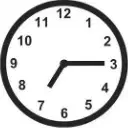
Write what time it is, then include whether it is in the morning or in the afternoon/evening. Analog clock shows the hour hand on 3 and the minute hand on 12.
Son las tres en punto
Son las tres y media
Son las dos y media
Son las cuatro en punto
Write what time it is, then include whether it is in the morning or in the afternoon/evening. Analog clock shows the hour hand near 1 and the minute hand on 7.
Es la una y treinta y cinco
Son las siete y cinco
Es la una y media
Es la una menos veinticinco

Fill in the rule about telling time in Spanish. Use ______ when the time is one o’clock. Use ______ when it is any other hour.
Es; Son
Son; Es
Fue; Era
Está; Están
Choose the correct form of ser to complete the sentence: Yo ________ de Perú.
soy
eres
es
somos
Choose the correct form of ser to complete the sentence: Alberto ________ de Madrid.
soy
eres
es
son
Choose the correct form of ser to complete the sentence: Claudia y María ________ de México.
es
somos
son
soy
Choose the correct form of ser to complete the sentence: Usted ________ de Colombia.
eres
es
son
soy
Choose the correct form of ser to complete the sentence: Tú ________ de Estados Unidos.
soy
eres
es
son
Write the birthday in Spanish. Carmen: January 25. Choose the best complete sentence.
El cumpleaños de Carmen es el 25 de enero.
El cumpleaños de Carmen es el 25 de julio.
El cumpleaños de Carmen es el 25 de marzo.
El cumpleaños de Carmen es el 15 de enero.
Write the birthday in Spanish. Melanie: April 1. Choose the best complete sentence.
El cumpleaños de Melanie es el 1 de abril.
El cumpleaños de Melanie es el primero de abril.
El cumpleaños de Melanie es el 1 de mayo.
El cumpleaños de Melanie es el primero de marzo.
Write the birthday in Spanish. Iris: September 14. Choose the best complete sentence.
El cumpleaños de Iris es el 14 de septiembre.
El cumpleaños de Iris es el 4 de septiembre.
El cumpleaños de Iris es el 14 de agosto.
El cumpleaños de Iris es el 24 de septiembre.
Write the birthday day in Spanish. Ariel: Tuesday. Choose the best complete sentence.
El cumpleaños de Ariel es el martes.
El cumpleaños de Ariel es el jueves.
El cumpleaños de Ariel es el domingo.
El cumpleaños de Ariel es el sábado.
Write the birthday day in Spanish. Joaquín: Sunday. Choose the best complete sentence.
El cumpleaños de Joaquín es el lunes.
El cumpleaños de Joaquín es el viernes.
El cumpleaños de Joaquín es el domingo.
El cumpleaños de Joaquín es el miércoles.
Based on the statement Yo soy bastante tímido. Which does this person like more? (los libros, las fiestas)
los libros
las fiestas
Based on the statement Soy muy romántica. Which does this person like more? (las películas de terror, las películas de amor)
las películas de terror
las películas de amor
Based on the statement Me gusta mucho la comida italiana. Which does this person like more? (las hamburguesas, la pizza)
las hamburguesas
la pizza
Based on the statement Yo no soy muy atlética. Which does this person like more? (los videojuegos, los deportes)
los videojuegos
los deportes
Based on the statement Yo soy intelectual y seria. Which does this person like more? (la música de fiesta, la música de Beethoven)
la música de fiesta
la música de Beethoven
Based on the statement Me gusta la comida italiana. Which does this person like more? (las hamburguesas, el helado)
las hamburguesas
el helado
Based on the statement Yo soy extrovertido. Which does this person like more? (las fiestas, los juegos de mesa)
las fiestas
los juegos de mesa
Complete the description with ser and correct adjective agreement: Nosotras, inteligente. Choose the best sentence.
Nosotras somos inteligentes.
Nosotras es inteligente.
Nosotras son inteligente.
Nosotras somos inteligente.
Complete the description with ser and correct adjective agreement: Elisabeth y Marta, bonito. Choose the best sentence.
Elisabeth y Marta son bonitos.
Elisabeth y Marta son bonitas.
Elisabeth y Marta es bonita.
Elisabeth y Marta somos bonitas.
Complete the description with ser and correct adjective agreement: La profesora, intelectual. Choose the best sentence.
La profesora son intelectual.
La profesora es intelectual.
La profesora somos intelectual.
La profesora eres intelectual.
Complete the description with ser and correct adjective agreement: Los amigos, trabajador. Choose the best sentence.
Los amigos son trabajadores.
Los amigos es trabajador.
Los amigos somos trabajador.
Los amigos son trabajador.
Complete the description with ser and correct adjective agreement: Sara, cómico. Choose the best sentence.
Sara es cómico.
Sara son cómica.
Sara es cómica.
Sara somos cómico.
Choose the interview question that matches the answer: Tengo catorce años.
¿Cuántos años tienes?
¿Cómo te llamas?
¿De dónde eres?
¿Qué te gusta hacer?
Choose the interview question that matches the answer: Mi cumpleaños es el seis de diciembre.
¿Cuál es tu color favorito?
¿Qué día es hoy?
¿Cuándo es tu cumpleaños?
¿Dónde vives?
I Gramática: Use the correct prepositions and pronouns to complete the sentences. Fill each blank with the appropriate phrase such as A mí, A ti, A él/ella, A nosotros, or A ellos. Soy bastante atlética. (1) ______ me gusta correr y patinar.
A mí
A ti
A él
A nosotros
I Gramática: Use the correct prepositions and pronouns to complete the sentences. Fill each blank with the appropriate phrase such as A mí, A ti, A él/ella, A nosotros, or A ellos. Diego y Susie no son muy activos. (2) ______ gusta navegar por Internet.
A él
A nosotros
A ellos
A ti
I Gramática: Use the correct prepositions and pronouns to complete the sentences. Fill each blank with the appropriate phrase such as A mí, A ti, A él/ella, A nosotros, or A ellos. ¿(3) ______ te gusta salir?
A mí
A ti
A él
A ellos
I Gramática: Use the correct prepositions and pronouns to complete the sentences. Fill each blank with the appropriate phrase such as A mí, A ti, A él/ella, A nosotros, or A ellos. Samuel y yo siempre vamos al centro comercial. (4) ______ nos gusta ir de compras.
A mí
A ti
A él
A nosotros
I Gramática: Use the correct prepositions and pronouns to complete the sentences. Fill each blank with the appropriate phrase such as A mí, A ti, A él/ella, A nosotros, or A ellos. A Samuel le gusta comer mucho. (5) ______ le gusta comprar comida.
A él
A mí
A nosotros
A ellos
J Vocabulario: Adjetivos. Choose the Spanish word that means the opposite of the given word. cómico
serio
alto
bueno
simpático
J Vocabulario: Adjetivos. Choose the Spanish word that means the opposite of the given phrase. el pelo largo
corto
rizado
ondulado
lacio
J Vocabulario: Adjetivos. Choose the Spanish word that means the opposite of the given word. bajo
alto
corto
malo
divertido
J Vocabulario: Adjetivos. Choose the Spanish word that means the opposite of the given phrase. el pelo ondulado
lacio
largo
corto
rubio
J Vocabulario: Adjetivos. Choose the Spanish word that means the opposite of the given word. trabajador
perezoso
malo
bueno
simpático
J Vocabulario: Adjetivos. Choose the Spanish word that means the opposite of the given word. malo
bueno
serio
alto
aburrido
J Vocabulario: Adjetivos. Choose the Spanish word that means the opposite of the given word. antipática
simpática
divertida
seria
trabajadora
J Vocabulario: Adjetivos. Choose the Spanish word that means the opposite of the given word. divertida
aburrida
mala
seria
alta
K Gustar & Vocabulario: Read the sentence and choose the word or phrase that fits most logically. A Juan le gusta practicar deportes.
va al cine
juega al béisbol
come
K Gustar & Vocabulario: Read the sentence and choose the word or phrase that fits most logically. A mí me gusta ver la televisión.
salgo con amigos
voy al cine
alquilo videos
K Gustar & Vocabulario: Read the sentence and choose the word or phrase that fits most logically. A Liliana le gusta hacer ejercicio.
voy al gimnasio
paso el rato sola
canto
K Gustar & Vocabulario: Read the sentence and choose the word or phrase that fits most logically. A Maya y a Olivia les gusta ir de compras.
van al centro comercial
van al cine
salen con amigos
K Gustar & Vocabulario: Read the sentence and choose the word or phrase that fits most logically. A Jorge le gusta ir a la playa.
corre
nada
monta en bicicleta
K Gustar & Vocabulario: Read the sentence and choose the word or phrase that fits most logically. A Óscar le gusta escuchar música.
navega por Internet
estudia
toca el piano
L Gramática: Conjugating. Choose the correct present-tense form of the verb to complete the sentence. Las chicas ______ (to practice) los deportes.
practica
practican
practicamos
practico
L Gramática: Conjugating. Choose the correct present-tense form of the verb to complete the sentence. Sally y Anita ______ (to dance) en la iglesia.
baila
bailan
bailamos
bailo
L Gramática: Conjugating. Choose the correct present-tense form of the verb to complete the sentence. Usted ______ (to talk) a las reuniones los lunes.
hablo
habla
hablan
hablamos
L Gramática: Conjugating. Choose the correct present-tense form of the verb to complete the sentence. Yo ______ (to skate) en el parque con mis amigos.
patino
patina
patinamos
patinan
L Gramática: Conjugating. Choose the correct present-tense form of the verb to complete the sentence. Dalia ______ (to study) todos los días.
estudio
estudia
estudiamos
estudian
L Gramática: Conjugating. Choose the correct present-tense form of the verb to complete the sentence. Él y yo ______ (to work) mucho los fines de semana.
trabajo
trabaja
trabajamos
trabajan
L Gramática: Conjugating. Choose the correct present-tense form of the verb to complete the sentence. Marta ______ (to listen) música.
escucho
escucha
escuchamos
escuchan
L Gramática: Conjugating. Choose the correct present-tense form of the verb to complete the sentence. Tú ______ (to walk) con tu familia los fines de semana.
camino
caminas
camina
caminamos
L Gramática: Conjugating. Choose the correct present-tense form of the verb to complete the sentence. Tú y yo ______ (to watch) tenis en el colegio.
veo
ves
vemos
ven
L Gramática: Conjugating. Choose the correct present-tense form of the verb to complete the sentence. Leo y Beto ______ (to sing) al ensayo hoy.
canto
canta
cantan
cantamos
According to the places given, choose the activity you would do there: Voy al parque para ________.
correr
jugar al fútbol
leer en voz alta
nadar
According to the places given, choose the activity you would do there: Voy a la piscina (pool) para ________.
nadar
bailar
estudiar
cantar
According to the places given, choose the place that completes the sentence: Voy al ________ porque necesito dinero ($$).
banco
cine
biblioteca
parque
According to the places given, choose the word that completes the sentence: Voy al auditorio a tocar mi ________.
guitarra
balón
libro
computadora
According to the places given, choose the activity you would do there: Voy al gimnasio para ________.
hacer ejercicio
dormir
pintar cuadros
escuchar música
Write an appropriate phrase to describe the weather in each picture. Choose the best description for picture 1.
Hace sol
Está nublado
Hace viento
Está nevando
Write an appropriate phrase to describe the weather in each picture. Choose the best description for picture 2.
Está nublado
Hace mucho calor
Está lloviendo
Hay tormenta eléctrica
Write an appropriate phrase to describe the weather in each picture. Choose the best description for picture 3.
Está lloviendo
Hace frío
Hace sol
Nieva mucho
Write an appropriate phrase to describe the weather in each picture. Choose the best description for picture 4.
Hace viento
Está nevando
Hay niebla
Está nublado
Write an appropriate phrase to describe the weather in each picture. Choose the best description for picture 5.
Está nevando
Hace calor
Hay granizo
Está parcialmente soleado
Write a complete sentence saying that the person listed goes to that place (use ir): Los chicos _________ a un partido de béisbol.
voy
vas
va
vamos
van
Write a complete sentence saying that the person listed goes to that place (use ir): Mis amigos y yo __________ a un concierto.
voy
vas
va
vamos
van
Write a complete sentence saying that the person listed goes to that place (use ir): Los estudiantes __________ al almuerzo.
voy
vas
va
vamos
van
Write a complete sentence saying that the person listed goes to that place (use ir): Miguel __________ a la clase.
voy
vas
va
vamos
van
Write a complete sentence saying that the person listed goes to that place (use ir): Ana y Roberto __________ a la clase de educación física.
voy
vas
va
vamos
van
Stem‑changing verbs: Conjugate the verb jugar correctly for the sentence: Mis amigos ______ los deportes en la escuela.
juego
juegas
juega
jugamos
juegan
Stem‑changing verbs: Conjugate the verb jugar correctly for the sentence: Yo ______ el fútbol.
juego
juegas
juega
jugamos
juegan
Stem‑changing verbs: Conjugate the verb jugar correctly for the sentence: Mis amigos y yo ______ al tenis.
juego
juegas
juega
jugamos
juegan
Stem‑changing verbs: Conjugate the verb jugar correctly for the sentence: Los estudiantes ______ al fútbol americano.
juego
juegas
juega
jugamos
juegan
Stem‑changing verbs: Conjugate the verb jugar correctly for the sentence: Ana ______ al volibol.
juego
juegas
juega
jugamos
juegan
Stem‑changing verbs: Conjugate the verb jugar correctly for the question: ¿Y tú?, ¿Qué ______?
juego
juegas
juega
jugamos
juegan
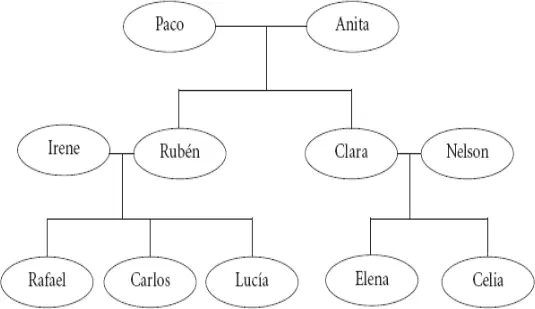
Use the family tree to answer: ¿Quiénes son los padres de Elena?
Clara y Nelson
Irene y Rubén
Paco y Anita
Nelson y Rubén
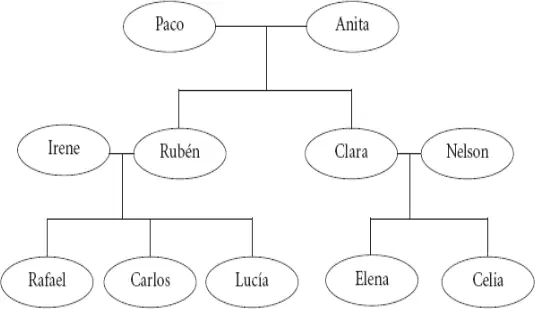
Use the family tree to answer: ¿Cómo se llama el tío de Elena?
Rubén
Paco
Carlos
Rafael
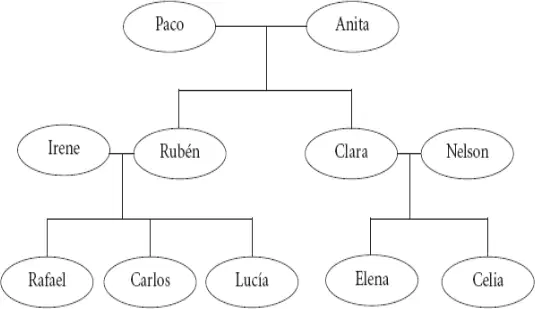
Use the family tree to answer: ¿Cómo se llama la hermana de Elena?
Celia
Lucía
Irene
Anita
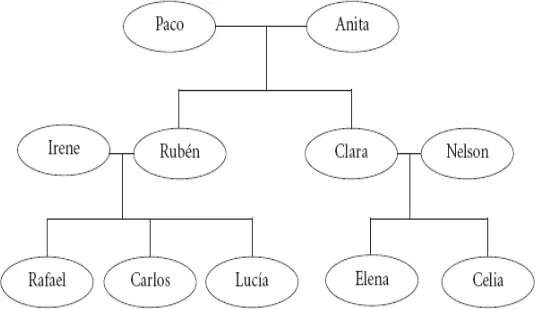
Use the family tree to answer: ¿Cómo se llama la abuela de Celia?
Anita
Clara
Irene
Lucía
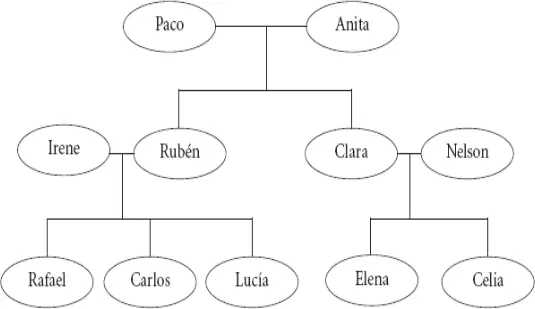
Use the family tree to answer: ¿Cuántos nietos tienen Paco y Anita?
3
4
5
6
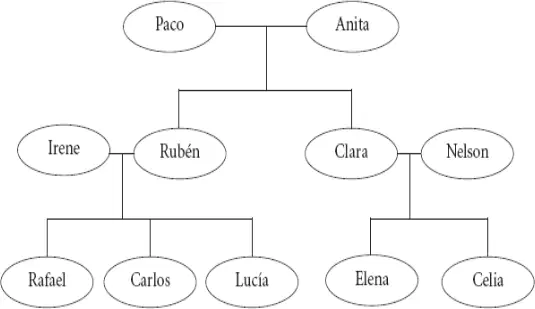
Use the family tree to answer: ¿Quiénes son las primas de Rafael?
Lucía
Elena
Celia
Carlos
You are describing your crazy family to your teacher. Choose the correct form of the verb "ser" to complete the Spanish sentence: Mi hermano _____ muy cómico.
somos
eres
son
es
You are describing your crazy family to your teacher. Choose the correct form of the verb "ser" to complete the Spanish question: Y tú, ¿Cómo _____?
son
eres
somos
es
You are describing your crazy family to your teacher. Choose the correct form of the verb "ser" to complete the Spanish sentence: Mi familia y yo _____ altos.
soy
somos
son
es
You are describing your crazy family to your teacher. Choose the correct form of the verb "ser" to complete the Spanish sentence: Mi familia _____ morena.
somos
soy
son
es
You are describing your crazy family to your teacher. Choose the correct form of the verb "ser" to complete the Spanish sentence: Ana y Fernando _____ de Costa Rica.
somos
soy
son
es
Carlota’s family is very different from Julio’s. Read Carlota’s description and choose the statement that gives the opposite description of Julio’s family: el perro de Mario es joven.
pequeño
viejo
bajo
Carlota’s family is very different from Julio’s. Read Carlota’s description and choose the statement that gives the opposite description of Julio’s family: El gato tiene el pelo largo.
el pelo corto
el pelo rizado
el pelo moreno
Carlota’s family is very different from Julio’s. Read Carlota’s description and choose the statement that gives the opposite description of Julio’s family: Mi hermana tiene el pelo rizado.
el pelo castaño
el pelo moreno
el pelo liso
Carlota’s family is very different from Julio’s. Read Carlota’s description and choose the statement that gives the opposite description of Julio’s family: Mi primo tiene un pájaro.
un blanco
un pez
los ojos
Carlota’s family is very different from Julio’s. Read Carlota’s description and choose the statement that gives the opposite description of Julio’s family: Mi tío tiene un gato.
un pelo
una hija
un perro
Use the correct form of gustar (singular or plural) and a pronoun to complete the Spanish sentence: A Natasha _____ _____ el jugo de naranja.
le gusta
me gusta
les gusta
le gustan
Use the correct form of gustar (singular or plural) and a pronoun to complete the Spanish sentence: A Raúl y a María _____ _____ las uvas.
les gustan
les gusta
nos gustan
le gustan
Use the correct form of gustar (singular or plural) and a pronoun to complete the Spanish sentence: A mí _____ _____ las hamburguesas.
me gustan
me gusta
te gustan
les gustan
Use the correct form of gustar (singular or plural) and a pronoun to complete the Spanish sentence: A Jorge _____ _____ comer el desayuno.
le gusta
les gusta
le gustan
me gusta
Use the correct form of gustar (singular or plural) and a pronoun to complete the Spanish sentence: A nosotros _____ _____ el sándwich de jamón y queso.
nos gusta
nos gustan
les gusta
le gustan
Use the correct form of gustar (singular or plural) and a pronoun to complete the Spanish sentence: A Sra. Díaz _____ _____ los huevos y pan para el desayuno.
le gustan
le gusta
les gustan
me gustan
Use the correct form of gustar (singular or plural) and a pronoun to complete the Spanish sentence: A ti _____ _____ beber los refrescos.
te gusta
te gustan
le gusta
me gusta
Use the correct form of gustar (singular or plural) and a pronoun to complete the Spanish sentence: A vosotros _____ _____ la sopa.
os gusta
os gustan
les gusta
te gustan
Use the correct form of the verb in parentheses to complete the Spanish sentence: Sr. Sánchez _____ la fruta. (vender)
vende
vendes
venden
vendemos
Use the correct form of the verb in parentheses to complete the Spanish sentence: Yo _____ el desayuno con mis amigos. (compartir)
comparto
compartes
comparte
compartimos
Use the correct form of the verb in parentheses to complete the Spanish sentence: Ellos _____ las hamburguesas para el almuerzo. (comer)
comen
come
comemos
comes
Use the correct form of the verb in parentheses to complete the Spanish sentence: Elena y yo _____ la leche con el desayuno. (beber)
bebemos
bebéis
beben
bebe
Use the correct form of the verb in parentheses to complete the Spanish sentence: Tú _____ un menú nuevo. (escribir)
escribes
escribe
escribo
escribimos
Choose the correct words to complete the sentence: A ti ______ ______ beber los refrescos.
te gusta
me gusta
le gusta
nos gusta
Choose the correct words to complete the sentence: A vosotros __________ la sopa.
te gusta
les gusta
os gusta
nos gusta
Use the correct form of the verb in parentheses to complete the sentence: Sr. Sánchez __________ la fruta. (vender)
vendo
vendes
vende
venden
Use the correct form of the verb in parentheses to complete the sentence: Yo __________ el desayuno con mis amigos. (compartir)
comparto
comparte
compartimos
comparten
Use the correct form of the verb in parentheses to complete the sentence: Ellos __________ las hamburguesas para el almuerzo. (comer)
como
come
comen
comemos
Use the correct form of the verb in parentheses to complete the sentence: Elena y yo __________ la leche con el desayuno. (beber)
bebo
beben
bebe
bebemos
Use the correct form of the verb in parentheses to complete the sentence: Tú __________ un menú nuevo. (escribir)
escribo
escribe
escribes
escribimos
Fill in with the correct possessive adjective to complete the sentence: Antonio es el padre de Maribel. Es ______ padre.
su
tu
mi
nuestro
Fill in with the correct possessive adjective to complete the sentence: Cristina y José son los padres de mí. Son ______ padres.
mis
tus
sus
nuestros
Fill in with the correct possessive adjective to complete the sentence: Ana es la hermana de Rodrigo. Es ______ hermana.
su
tu
mi
nuestra
Fill in with the correct possessive adjective to complete the sentence: Pedro es el primo de tú. Es ______ primo.
tu
su
mi
nuestro
Fill in with the correct possessive adjective to complete the sentence: Lucia y Nina son las gatas de nosotros. Son ______ gatas.
nuestras
sus
tus
mis
Fill in with the correct possessive adjective to complete the sentence: Cristóbal es el abuelo de Timoteo y Juan. Es ______ abuelo.
su
tu
mi
nuestro
Fill in with the correct possessive adjective to complete the sentence: Laura y Camila son las tías de María y tú. Son ______ tías.
vuestras
nuestras
sus
tus
Fill in with the correct possessive adjective to complete the sentence: Hoy es el cumpleaños de Miguel. Es ______ cumpleaños.
su
tu
mi
nuestro
Translate the comparative sentence into Spanish: Felipe is more artistic than José.
Felipe es más artístico que José.
Felipe es menos artístico que José.
Felipe es tan artístico como José.
Felipe es el más artístico de José.
Translate the comparative sentence into Spanish: Felipe is less athletic than José.
Felipe es más atlético que José.
Felipe es menos atlético que José.
Felipe es tan atlético como José.
Felipe es el menos atlético de José.
Translate the comparative sentence into Spanish: Felipe is as organized as José.
Felipe es más organizado que José.
Felipe es menos organizado que José.
Felipe es tan organizado como José.
Felipe es lo más organizado que José.
Translate the comparative sentence into Spanish: Ana is taller than Lisa.
Ana es más alta que Lisa.
Ana es menos alta que Lisa.
Ana es tan alta como Lisa.
Ana es la más alta de Lisa.

