
 Worksheets
WW1 and RR Test Review
Total questions: 19
Worksheet time: 10mins
LIST and EXPLAIN the four main causes of WW1: 1. M - ________ 2. A - ________ 3. I - ________ 4. N - ________ Fill in the blanks for each cause.
1. Militarism 2. Alliances 3. Imperialism 4. Nationalism
1. Monarchy 2. Agriculture 3. Industrialization 4. Neutrality
1. Migration 2. Aristocracy 3. Isolationism 4. Nationalization
1. Modernism 2. Anarchy 3. Integration 4. Nomadism
The “spark” that caused WW1 was:
The assassination of Archduke Franz Ferdinand
The signing of the Treaty of Versailles
The bombing of Pearl Harbor
The Russian Revolution
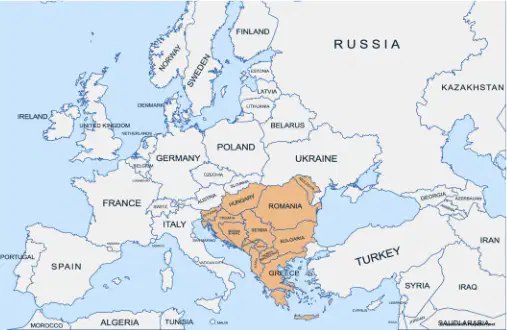
The “Powder Keg of Europe” was located in which region?
The Balkans
Scandinavia
Iberian Peninsula
British Isles
The Balkans were called the “Powder Keg of Europe” because:
There was much ethnic and political tension, making the region fragile and prone to conflict.
It was the most peaceful region in Europe before WW1.
It was the economic center of Europe before WW1.
It was completely unified under one government.
The type of warfare used during WW1 was:
Trench warfare
Guerrilla warfare
Nuclear warfare
Cyber warfare
The major change in how WW1 was fought (compared to previous conflict) was:
the use of trench warfare and new technology
the use of cavalry charges
the reliance on medieval weapons
the absence of any alliances
What was the Lusitania? What happened with the Lusitania?
British ship sunk by the unrestricted submarine warfare of the Germans.
German battleship that won the Battle of Jutland.
American passenger ship that sank due to a storm.
French cargo ship captured by pirates.
What are the major effects of WW1?
Treaty of Versailles, WW2 will occur, Failure of League of Nations, Development of future dictatorships (Hitler), World Unrest
Discovery of America, Industrial Revolution, Renaissance, French Revolution, Space Race
Invention of the steam engine, Signing of the Magna Carta, Fall of Constantinople, American Civil War, Moon Landing
Formation of the United Nations, End of Cold War, Cuban Missile Crisis, Korean War, Vietnam War
What was the Treaty of Versailles?
Treaty or agreement that ended WW1
Agreement that started the Cold War
Treaty that ended the American Civil War
Pact that formed the United Nations
Define and explain the B.R.A.T. of the Treaty of Versailles:
B - Blame - Germany will take full responsibility (Blame) for the war R - Reparations to be paid by the Germans A - Army - Germany had to reduce the size of its military T - Territory - Germany and other central powers had to reduce the size of their territory
B - Balance - Germany will maintain peace R - Rights to be restored to Germany A - Allies - Germany will join the Allies T - Trade - Germany will increase trade with other nations
B - Borders - Germany will expand its territory R - Resources to be given to Germany A - Agreement - Germany will sign a peace agreement T - Taxes - Germany will reduce taxes
B - Benefits - Germany will receive economic aid R - Recognition of German leadership A - Alliance with Central Powers T - Technology transfer to Germany
How do you think The Treaty of Versailles is connected to WW2?
The conditions of the treaty will leave Germany in an angry and weakened state. Causing dictatorship to form under Hitler. Hitler's aggression will lead to declaration of WW2.
The treaty led to immediate peace and prosperity in Europe, preventing any future wars.
The Treaty of Versailles resulted in Germany forming strong alliances with France and Britain, ensuring lasting peace.
The treaty had no significant impact on Germany or the rise of any political movements.
Why do political revolutions often occur?
Existing government is resistant to change, money issues, issues with rights.
To increase the population rapidly.
To promote traditional monarchies.
Because of natural disasters.
What were the main causes of the Russian Revolution?
Differences between economic classes, Government is resisting change
Discovery of oil, Expansion of the navy
Colonization of Africa, Spread of Buddhism
Invention of the printing press, Rise of the middle class
Why did so many Russian citizens support the Bolsheviks and Lenin?
Promise of peace with Germany (exit to WW1), dictators (Lenin) are promising improved society, promise to remove the bad government.
Desire to expand the Russian Empire into Western Europe.
Support for the Tsar’s return to power.
Belief that the Bolsheviks would increase taxes on peasants.
What happened with Russia and WW1? Explain:
Russia was losing, had shortage of military supplies. Germany signs the Treaty of Brest-Litovsk with Russia allowing Russia to exit WW1.
Russia won WW1 and gained territory from Germany.
Russia remained neutral throughout WW1 and did not participate in the conflict.
Russia joined the Allies late in the war and helped defeat Germany.
What was the slogan of the Bolsheviks/ Marxists? What did it mean?
Peace - Russia out of WW1 (Peace settlement with Germany) Land - Redistribute land to peasants Bread - Food and money to feed families
Unity - All classes working together for industrial growth Order - Strict laws to maintain discipline Prosperity - Economic reforms for the wealthy
Freedom - Independence from all foreign influence Justice - Equal rights for the nobility Glory - Expansion of Russian territory
Strength - Military power above all Tradition - Preservation of monarchy Faith - Support for the Orthodox Church
What type of government did Lenin propose? Fill in the blank:
Communism (anti monarchy/ czarist system)
Monarchy (czarist system)
Democracy (parliamentary system)
Theocracy (religious rule)
What are the major effects of the Russian Revolution? Fill in the blank:
Lenin comes to power, Communism, End of the monarchy, Czar Nicolas II and family are executed
Industrial Revolution begins, Capitalism spreads, Monarchy strengthened, Czar Nicolas II becomes emperor
French Revolution starts, Napoleon rises, Democracy established, Romanovs rule longer
World War II ends, United Nations formed, Cold War begins, Stalin becomes king
What is a stalemate?And what caused it during WWI
-Trench Warfare
-Communism
-When neither side is winning or losing the war. It is a standstill
-Weapon technology
-End of Monarchy
-Technology
-Differences between economic classes
-Government resisting change

